Baked Salmon With Avocado Salsa – Fresh, Bright, And Weeknight-Easy
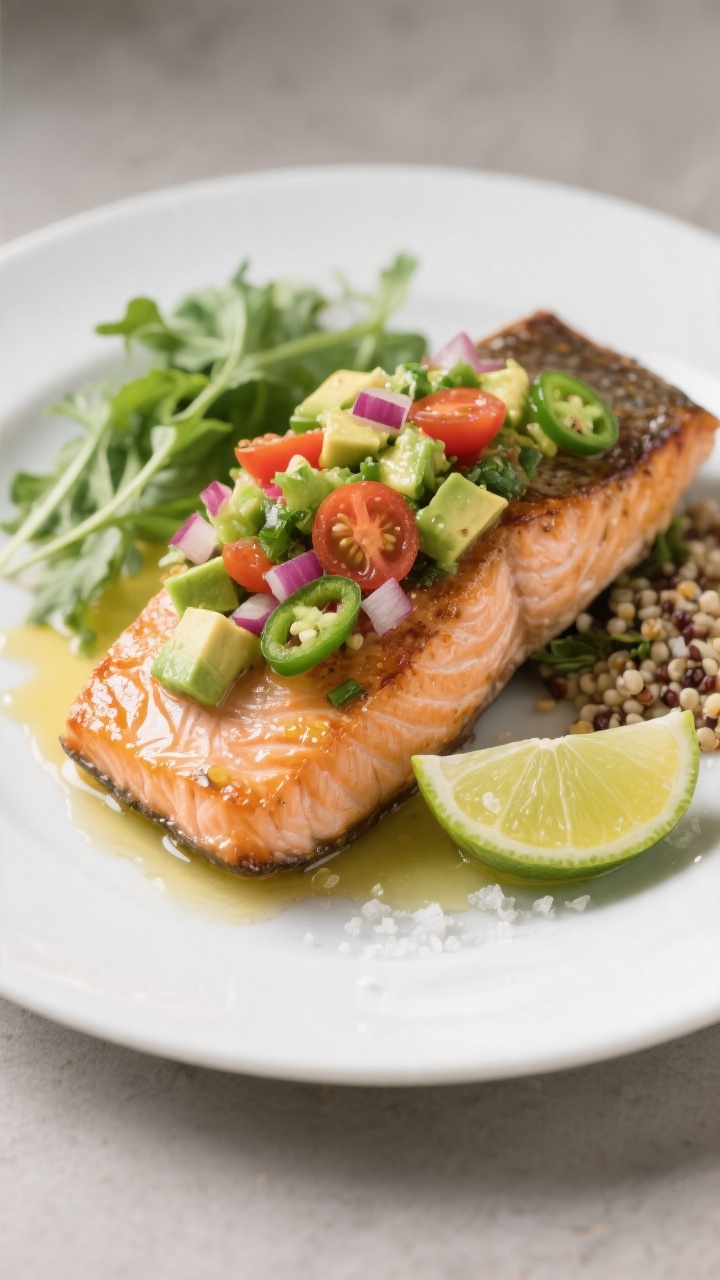
Baked salmon with avocado salsa is one of those dishes that feels special but takes very little effort. The salmon turns buttery and tender in the oven while the salsa brings freshness and crunch. You get rich, flaky fish balanced with creamy avocado, zesty lime, and a little heat.
FREE 7-Day Easy Dinner Reset
FREE 7-Day Easy Dinner Reset
It’s a great option for busy nights, but polished enough for guests. If you like big flavor without fuss, this one belongs in your regular rotation.
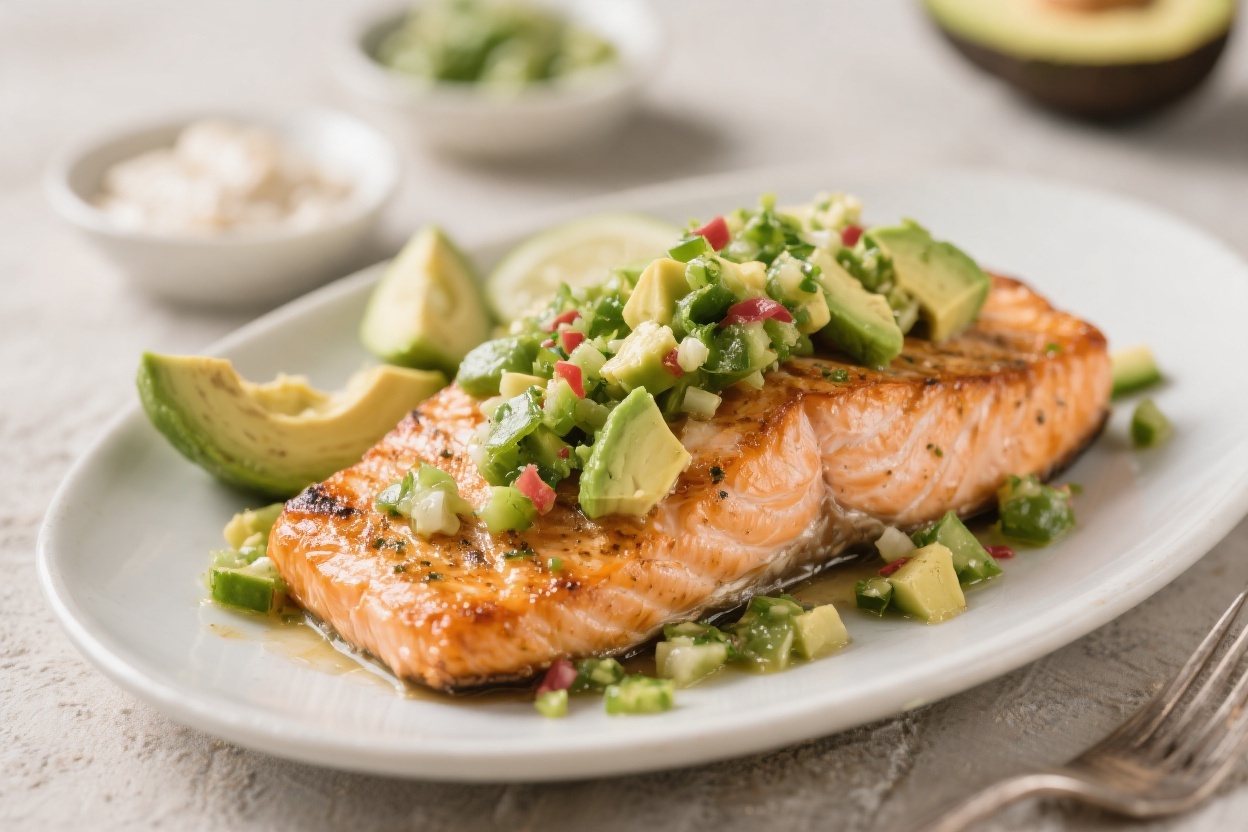
Baked Salmon With Avocado Salsa - Fresh, Bright, And Weeknight-Easy
Ingredients
Method
- Heat the oven: Preheat to 400°F (200°C).Line a baking sheet with parchment for easy cleanup.
- Prep the salmon: Pat the fillets dry with paper towels. Dry surfaces help you get better browning and less steaming.
- Make the seasoning: In a small bowl, combine 2 tablespoons olive oil, lime zest, minced garlic, chili powder or paprika, cumin, 3/4 teaspoon salt, and 1/4 teaspoon black pepper. Stir into a paste.
- Season the fish: Brush or rub the paste over the top and sides of the salmon.Place fillets on the prepared sheet, skin-side down if using skin-on.
- Bake: Cook for 10–14 minutes, depending on thickness. Salmon is done when it flakes easily and the center is just opaque. For many fillets, 12 minutes is the sweet spot.
- Make the avocado salsa: While the salmon bakes, combine the diced avocados, cherry tomatoes, red onion, jalapeño, and cilantro in a bowl.Add 1–2 tablespoons lime juice, 1 tablespoon extra-virgin olive oil, and a pinch each of salt and pepper. Toss gently to avoid mashing the avocado.
- Taste and adjust: Add more lime for brightness, more salt if it tastes flat, or extra jalapeño for heat. The salsa should be punchy and fresh.
- Rest the salmon: Let the salmon rest for 2–3 minutes after baking so the juices settle.
- Serve: Spoon the avocado salsa over the warm salmon.Finish with an extra squeeze of lime, if you like.
What Makes This Special
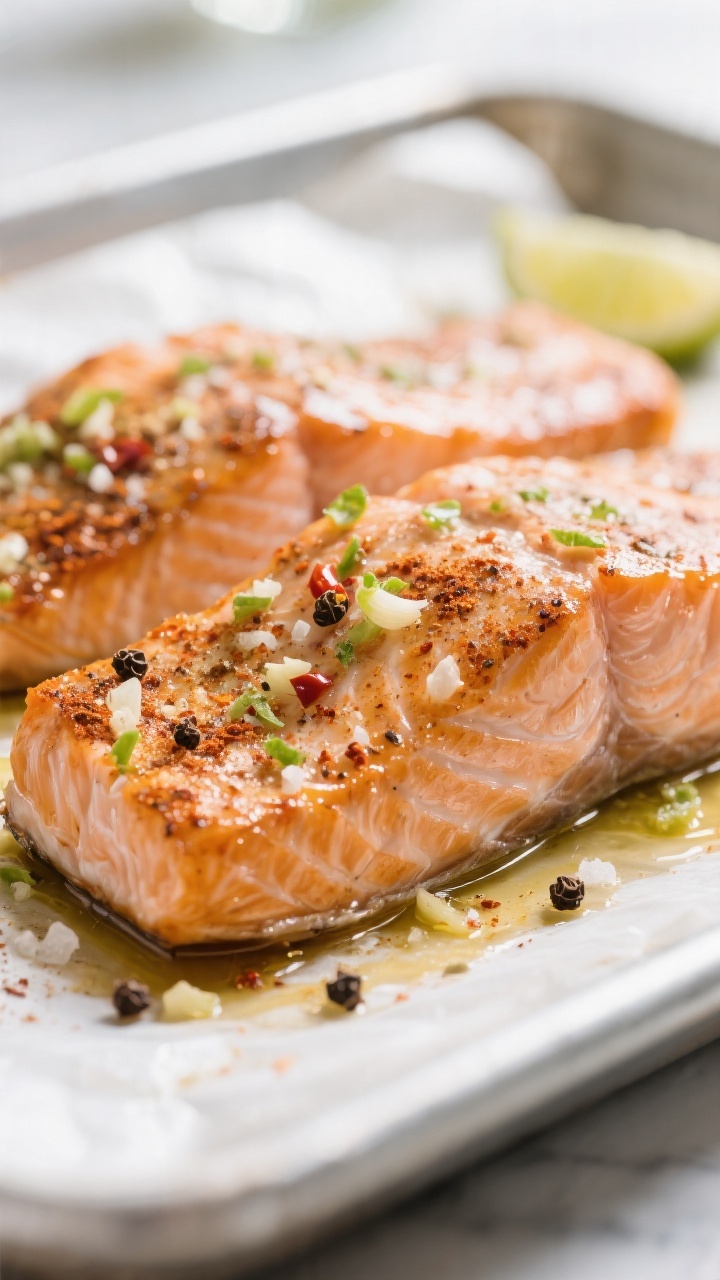
This recipe pairs warm, savory salmon with a cool, vibrant salsa. The contrast in temperature and texture keeps every bite interesting.
You also get a complete, satisfying meal without heavy sauces or complicated steps. The oven does most of the work, and the salsa comes together in minutes. Plus, the ingredients are easy to find and flexible, so you can adjust to your taste.
What You’ll Need
- Salmon: 4 fillets (about 6 ounces each), skin-on or skinless
- Olive oil: 2 tablespoons
- Lime: Zest and juice of 1 lime (plus more lime for serving, optional)
- Garlic: 2 cloves, minced
- Chili powder or paprika: 1 teaspoon (adjust to taste)
- Ground cumin: 1/2 teaspoon
- Salt and black pepper: About 1 teaspoon salt and 1/2 teaspoon pepper, divided
- Avocados: 2 ripe, diced
- Cherry tomatoes: 1 cup, quartered (or 1 large tomato, diced)
- Red onion: 1/4 cup, finely chopped
- Jalapeño or serrano: 1 small, seeded and finely chopped (optional for heat)
- Cilantro: 1/4 cup, chopped
- Extra lime juice: 1–2 tablespoons for the salsa
- Extra-virgin olive oil: 1 tablespoon for the salsa
Step-by-Step Instructions
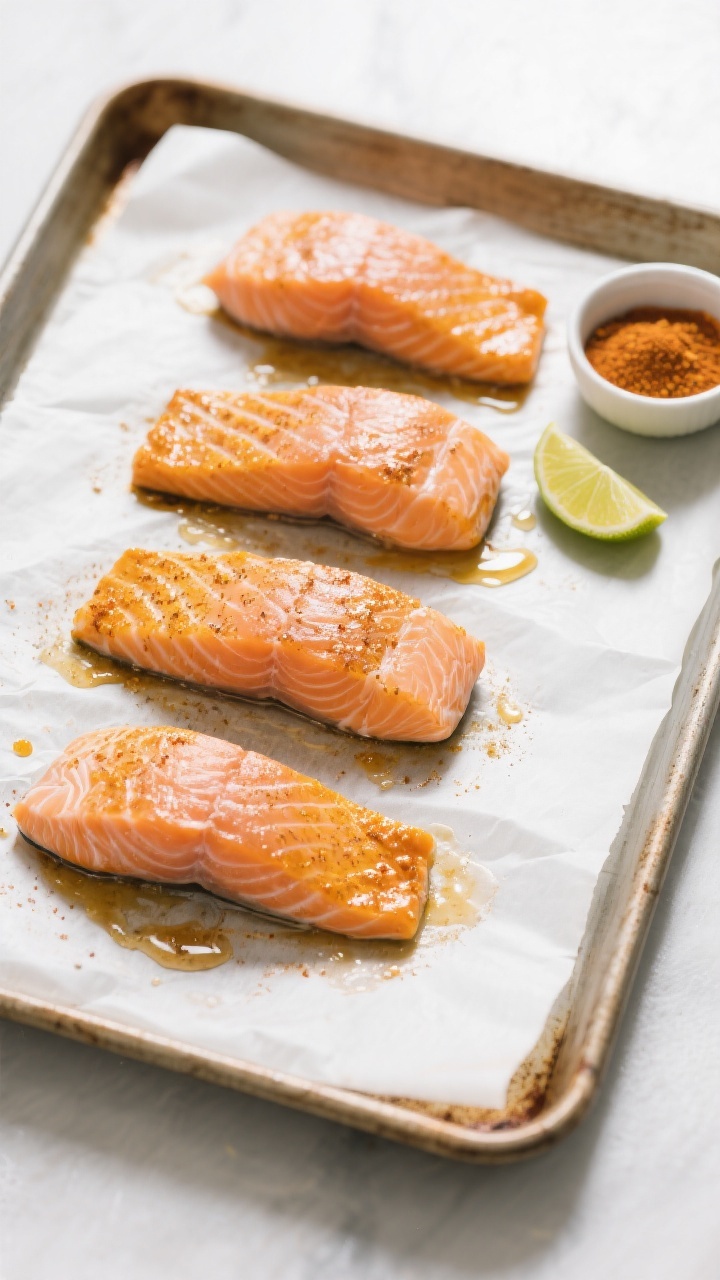
- Heat the oven: Preheat to 400°F (200°C).
Line a baking sheet with parchment for easy cleanup.
- Prep the salmon: Pat the fillets dry with paper towels. Dry surfaces help you get better browning and less steaming.
- Make the seasoning: In a small bowl, combine 2 tablespoons olive oil, lime zest, minced garlic, chili powder or paprika, cumin, 3/4 teaspoon salt, and 1/4 teaspoon black pepper. Stir into a paste.
- Season the fish: Brush or rub the paste over the top and sides of the salmon.
Place fillets on the prepared sheet, skin-side down if using skin-on.
- Bake: Cook for 10–14 minutes, depending on thickness. Salmon is done when it flakes easily and the center is just opaque. For many fillets, 12 minutes is the sweet spot.
- Make the avocado salsa: While the salmon bakes, combine the diced avocados, cherry tomatoes, red onion, jalapeño, and cilantro in a bowl.
Add 1–2 tablespoons lime juice, 1 tablespoon extra-virgin olive oil, and a pinch each of salt and pepper. Toss gently to avoid mashing the avocado.
- Taste and adjust: Add more lime for brightness, more salt if it tastes flat, or extra jalapeño for heat. The salsa should be punchy and fresh.
- Rest the salmon: Let the salmon rest for 2–3 minutes after baking so the juices settle.
- Serve: Spoon the avocado salsa over the warm salmon.
Finish with an extra squeeze of lime, if you like.
How to Store
- Cooked salmon: Store in an airtight container for up to 3 days in the fridge. Reheat gently in a low oven or enjoy cold over a salad.
- Avocado salsa: Best eaten fresh. If storing, press plastic wrap directly onto the surface and refrigerate for up to 1 day.
Add a little extra lime juice to slow browning.
- Meal prep tip: Keep the salmon and salsa separate until serving. If you plan ahead, mix everything for the salsa except the avocado, and add the avocado right before eating.
Health Benefits
- Omega-3s: Salmon is rich in EPA and DHA, fats that support heart and brain health and help reduce inflammation.
- High-quality protein: Each fillet delivers complete protein for muscle repair and steady energy.
- Healthy fats: Avocado brings monounsaturated fats that support heart health and help you feel satisfied.
- Vitamins and minerals: Lime, tomatoes, and cilantro add vitamin C, potassium, and antioxidants. You get flavor and nutrition without heavy sauces.
- Balanced meal: Pair with a side of greens or quinoa for fiber and complex carbs, and you’ve got a well-rounded plate.
Common Mistakes to Avoid
- Overcooking the salmon: Dry salmon is the quickest way to ruin this dish.
Check early and pull it when the center is just barely opaque.
- Skipping the pat-dry step: Moisture on the surface prevents browning. A quick blot with paper towels makes a big difference.
- Overmixing the salsa: Stir gently so the avocado stays chunky. A smashed salsa can feel heavy and muddy in flavor.
- Underseasoning: Salmon needs salt, and the salsa needs a bright hit of lime and a pinch of salt to pop.
Taste as you go.
- Using underripe avocados: Hard avocados don’t add creaminess. Choose ones that yield slightly to gentle pressure.
Variations You Can Try
- Tropical twist: Add diced mango or pineapple to the salsa for sweetness that plays well with the chili and lime.
- Herb swap: Use fresh basil, dill, or parsley if cilantro isn’t your thing.
- Spice it up: Rub the salmon with a little chipotle powder or cayenne for smoky heat.
- Citrus change-up: Replace lime with lemon or a mix of lemon and orange zest for a softer citrus profile.
- Grain bowl: Serve the salmon and salsa over brown rice, farro, or quinoa with a handful of arugula.
- Dairy add-on: A dollop of plain Greek yogurt or a crumble of queso fresco adds tang and creaminess.
- Sheet pan meal: Roast asparagus, zucchini, or sliced bell peppers on the same tray, adding them 5–10 minutes before the salmon so everything finishes together.
FAQ
Can I use frozen salmon?
Yes, just thaw it overnight in the fridge or under cold running water. Pat dry very well before seasoning so it roasts instead of steams.
What if I don’t like cilantro?
Stop wondering what's for dinner.
Get 7 healthy, family-friendly dinners complete with recipes and simple meal plans delivered straight to your inbox.
Use parsley, basil, or dill.
The salsa will still be fresh and bright with lime, onion, and tomato.
How do I know when the salmon is done?
It should flake easily with a fork and look just opaque in the center. An instant-read thermometer should read about 125–130°F for medium, or 135°F if you prefer it more done.
Can I grill the salmon instead of baking?
Absolutely. Oil the grates and grill over medium-high heat for 3–4 minutes per side, depending on thickness.
Top with the salsa right before serving.
What sides go well with this?
Try cilantro-lime rice, quinoa, roasted asparagus, sautéed green beans, or a simple mixed salad. Corn tortillas also make it fun and casual.
How can I make it spicier?
Add more jalapeño, use a serrano pepper, or include a pinch of cayenne in the salmon rub. A drizzle of hot sauce at the table works too.
Can I make the salsa ahead?
Partly.
Chop the onion, tomato, jalapeño, and cilantro up to a day ahead and refrigerate. Add avocado, lime, and oil right before serving for the best texture.
Is skin-on or skinless salmon better?
Either works. Skin-on helps keep the fillet moist and is easy to remove after baking.
If you prefer skinless, just be careful not to overcook.
What if my avocado browns?
Extra lime juice helps, and pressing plastic wrap onto the surface of the salsa slows browning. Even if it darkens a bit, it’s still fine to eat within a day.
Can I use a different fish?
Yes. Try trout, Arctic char, or cod.
Adjust cooking times since thinner fillets cook faster and lean white fish benefits from careful timing.
Wrapping Up
Baked salmon with avocado salsa checks all the boxes: fast, flavor-packed, and nourishing. The warm, spiced fish and cool, citrusy salsa create a balance that never gets old. Keep the ingredients on hand, and you can make this any night of the week.
With a few simple steps and a handful of fresh produce, dinner feels bright and satisfying from the first bite to the last.
Printable Recipe Card
Want just the essential recipe details without scrolling through the article? Get our printable recipe card with just the ingredients and instructions.
Loved This Recipe?
If you're looking for more simple, healthy dinners your family will actually eat, grab my FREE 7-Day Easy Dinner Reset. You'll get 7 easy dinner recipes, simple grocery lists, and a done-for-you plan that takes the stress out of mealtime.