Easy Low Carb Chicken Stir Fry – Fast, Flavorful, and Weeknight-Friendly
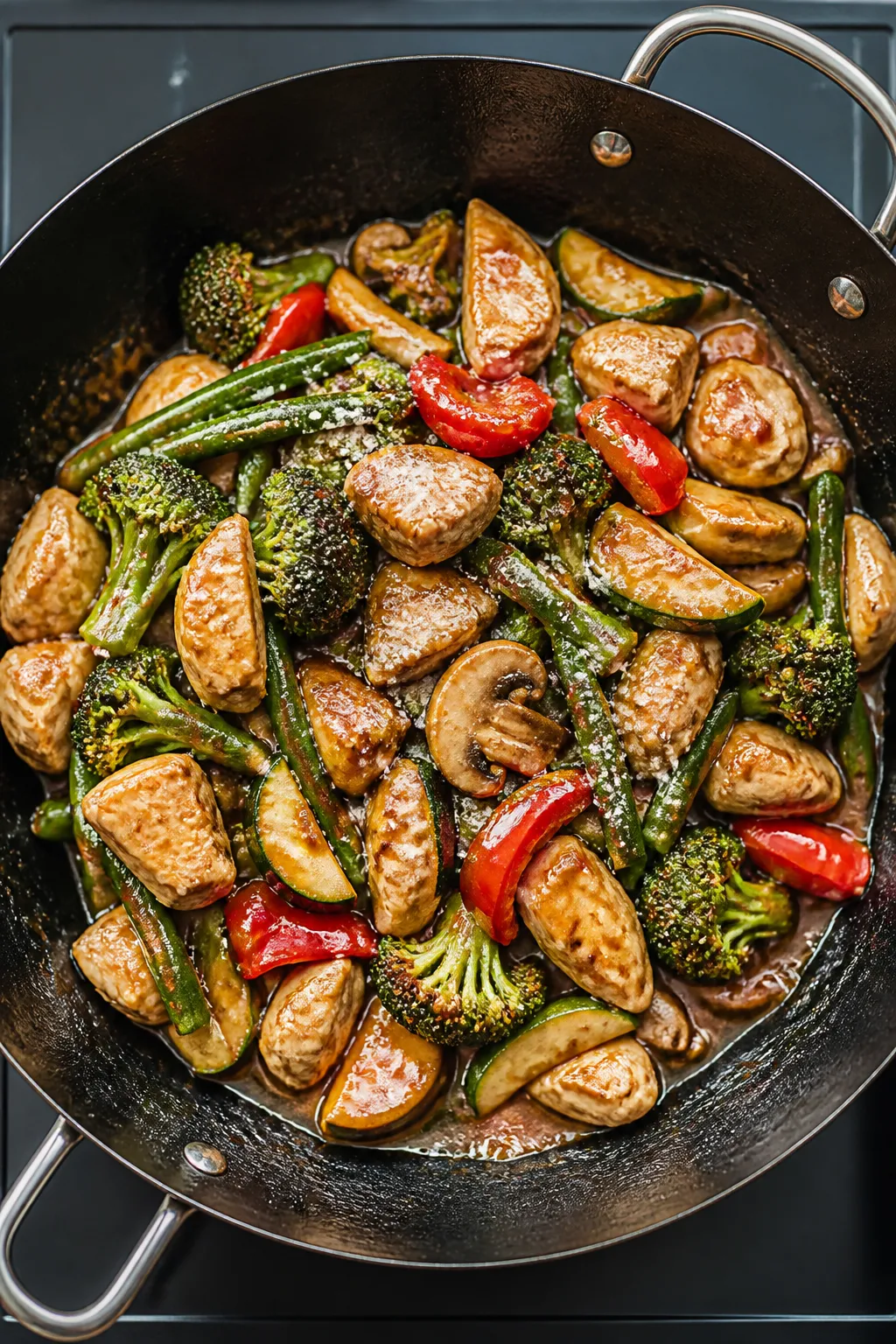
This Easy Low Carb Chicken Stir Fry is a quick, colorful dinner that tastes like takeout but keeps things light. Juicy chicken, crisp-tender veggies, and a savory sauce come together in under 30 minutes. It’s the kind of meal you can throw together with what you have in the fridge and still feel good about serving.
FREE 7-Day Easy Dinner Reset
FREE 7-Day Easy Dinner Reset
No special equipment, no complicated steps—just straightforward cooking with big flavor.
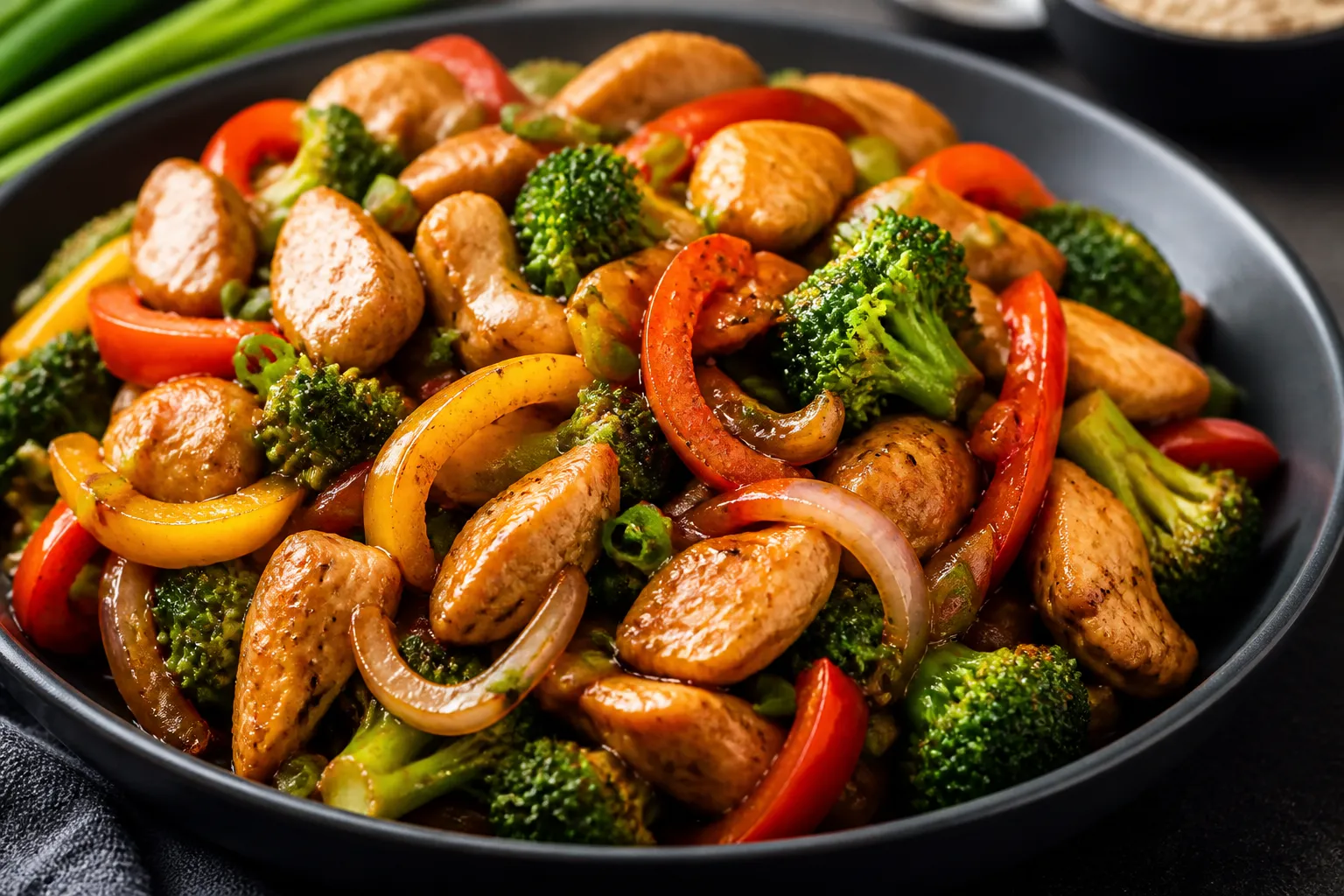
Easy Low Carb Chicken Stir Fry - Fast, Flavorful, and Weeknight-Friendly
Ingredients
Method
- Prep the chicken. Slice chicken into thin strips, about 1/4 inch thick, against the grain. Pat dry.Toss with a pinch of salt and pepper. Set aside.
- Make the sauce. In a small bowl, whisk 1/3 cup tamari or coconut aminos, 1 tablespoon rice vinegar, 1 teaspoon toasted sesame oil, 1–2 teaspoons low-carb sweetener (optional), 1 teaspoon grated ginger, and 2 minced garlic cloves. If using heat, add a pinch of red pepper flakes.Set aside.
- Prep the veggies. Cut broccoli into small florets. Slice bell pepper and zucchini into thin strips. Trim snap peas or cut green beans into bite-size pieces.Slice mushrooms if using. Keep veggies in separate piles according to how fast they cook.
- Heat the pan. Place a large skillet or wok over medium-high to high heat. Add 1 tablespoon oil and swirl to coat.
- Sear the chicken. Add half the chicken in a single layer.Cook 2–3 minutes per side until golden with just-cooked centers. Remove to a plate. Repeat with remaining chicken, adding a little oil if needed.Do not crowd the pan.
- Stir fry the hardy veggies. Add another teaspoon of oil if the pan is dry. Toss in broccoli and green beans or snap peas. Stir fry 2–3 minutes until they brighten and get a bit tender at the edges.
- Add the quick-cook veggies. Stir in bell pepper, zucchini, and mushrooms.Cook 2–3 minutes more, stirring often. Veggies should be crisp-tender, not soft.
- Return chicken and add sauce. Add chicken and any juices back to the pan. Pour in the sauce and toss to coat.Let it bubble for 1–2 minutes to reduce slightly. For a thicker glaze, sprinkle a tiny pinch of xanthan gum over the surface and toss quickly. Use very little—about 1/16 teaspoon—so it doesn’t get gummy.
- Finish and taste. Turn off the heat. Drizzle with a small splash of toasted sesame oil.Taste and adjust salt, acidity, or heat. Top with sliced green onions and sesame seeds.
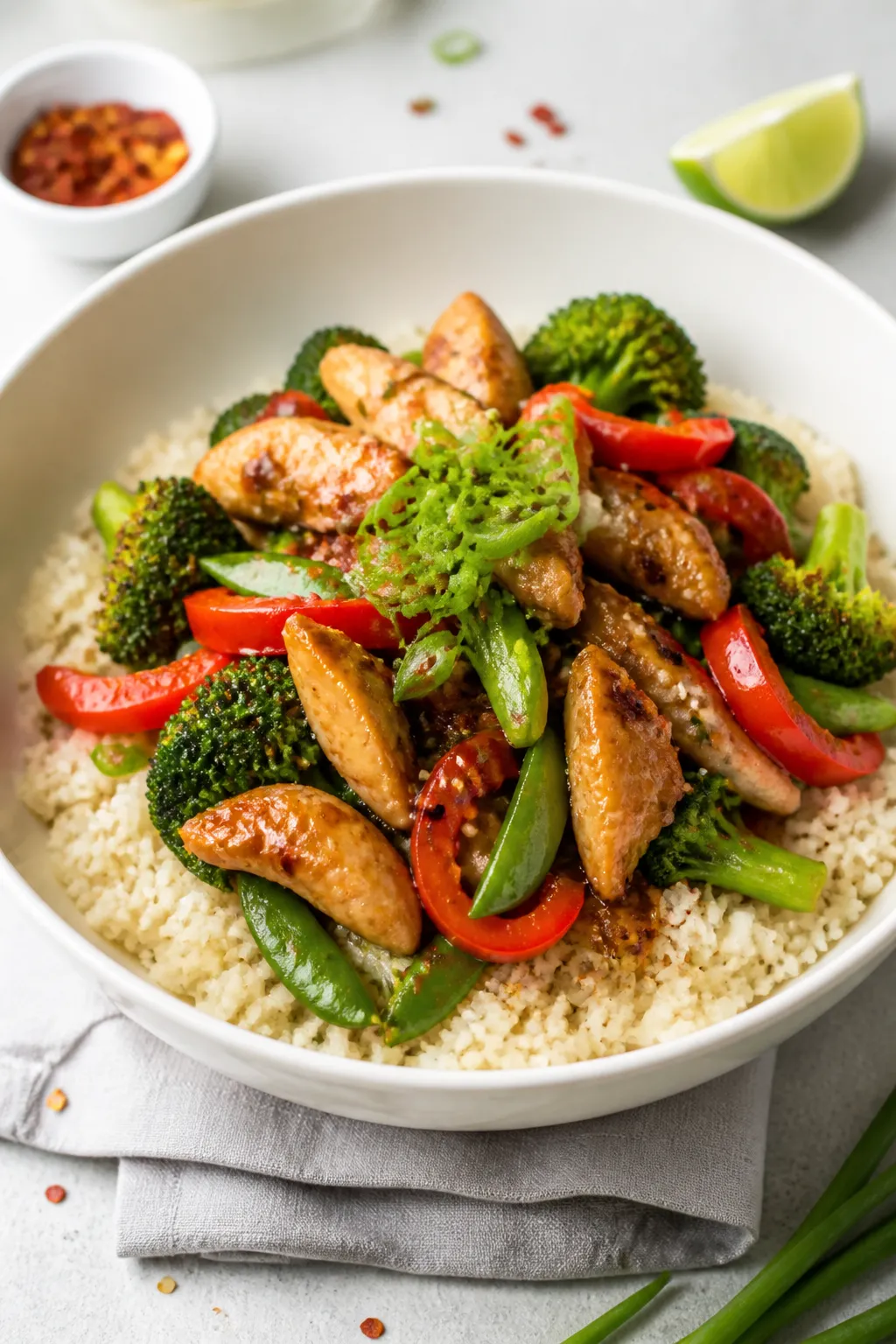
- Serve. Spoon over warm cauliflower rice or a bed of lightly sautéed shredded cabbage for a filling, low-carb base.
Why This Recipe Works
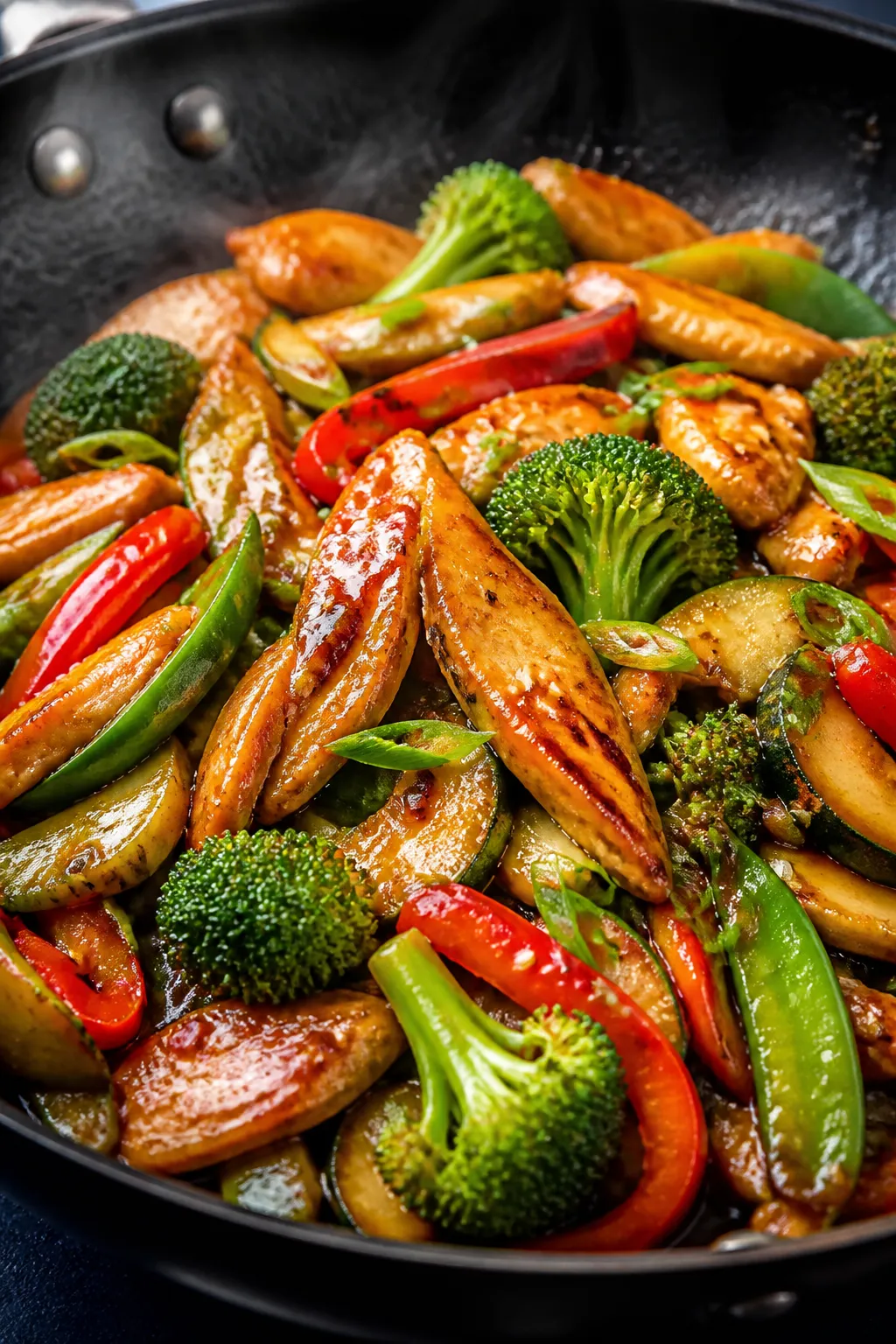
This stir fry leans on simple techniques that deliver consistent results. Slicing chicken thin and cooking it first ensures it stays tender and cooks evenly. High heat gives vegetables a slight char while keeping them crisp.
The sauce is balanced—salty, slightly sweet, and umami-rich—without added sugar. Using low-carb ingredients like tamari or coconut aminos and skipping starchy thickeners keeps carbs low while preserving that classic stir fry taste.
Shopping List
- Chicken: 1.25–1.5 pounds boneless, skinless chicken breasts (or thighs)
- Low-carb sauce base: Tamari (gluten-free soy sauce) or coconut aminos
- Aromatics: Fresh garlic, fresh ginger, green onions
- Veggies: Broccoli florets, red bell pepper, zucchini, snap peas or green beans, mushrooms (optional)
- Oil: Avocado oil or light olive oil (high smoke point)
- Acidity: Rice vinegar or lime juice
- Heat (optional): Red pepper flakes or a little chili-garlic sauce
- Thickener (low carb): Xanthan gum (a pinch) or reduce the sauce by simmering
- Sweetness (low carb, optional): A few drops liquid stevia or 1–2 teaspoons allulose/erythritol blend
- Sesame elements: Toasted sesame oil and sesame seeds for finishing
- Serving ideas: Cauliflower rice or shredded cabbage
- Salt and pepper
Step-by-Step Instructions
- Prep the chicken. Slice chicken into thin strips, about 1/4 inch thick, against the grain. Pat dry.
Toss with a pinch of salt and pepper. Set aside.
- Make the sauce. In a small bowl, whisk 1/3 cup tamari or coconut aminos, 1 tablespoon rice vinegar, 1 teaspoon toasted sesame oil, 1–2 teaspoons low-carb sweetener (optional), 1 teaspoon grated ginger, and 2 minced garlic cloves. If using heat, add a pinch of red pepper flakes.
Set aside.
- Prep the veggies. Cut broccoli into small florets. Slice bell pepper and zucchini into thin strips. Trim snap peas or cut green beans into bite-size pieces.
Slice mushrooms if using. Keep veggies in separate piles according to how fast they cook.
- Heat the pan. Place a large skillet or wok over medium-high to high heat. Add 1 tablespoon oil and swirl to coat.
- Sear the chicken. Add half the chicken in a single layer.
Cook 2–3 minutes per side until golden with just-cooked centers. Remove to a plate. Repeat with remaining chicken, adding a little oil if needed.
Do not crowd the pan.
- Stir fry the hardy veggies. Add another teaspoon of oil if the pan is dry. Toss in broccoli and green beans or snap peas. Stir fry 2–3 minutes until they brighten and get a bit tender at the edges.
- Add the quick-cook veggies. Stir in bell pepper, zucchini, and mushrooms.
Cook 2–3 minutes more, stirring often. Veggies should be crisp-tender, not soft.
- Return chicken and add sauce. Add chicken and any juices back to the pan. Pour in the sauce and toss to coat.
Let it bubble for 1–2 minutes to reduce slightly. For a thicker glaze, sprinkle a tiny pinch of xanthan gum over the surface and toss quickly. Use very little—about 1/16 teaspoon—so it doesn’t get gummy.
- Finish and taste. Turn off the heat. Drizzle with a small splash of toasted sesame oil.
Taste and adjust salt, acidity, or heat. Top with sliced green onions and sesame seeds.
- Serve. Spoon over warm cauliflower rice or a bed of lightly sautéed shredded cabbage for a filling, low-carb base.
Keeping It Fresh
Leftovers keep well for up to 3 days in the fridge. Store the stir fry and cauliflower rice separately to prevent sogginess.
Reheat in a hot skillet with a splash of water to revive the sauce and keep veggies crisp. If freezing, freeze the cooked chicken and sauce, but avoid freezing the vegetables—they can turn mushy. Instead, stir fry fresh veggies when you’re ready to reheat the protein.
Benefits of This Recipe
- Low carb without compromise: You get all the flavor of takeout-style stir fry with fewer carbs and no heavy thickeners.
- Fast and flexible: From start to finish, it’s about 25–30 minutes.
Swap veggies based on what you have.
- High in protein: Chicken keeps you full and supports muscle recovery.
- Veggie-forward: Colorful vegetables add fiber, vitamins, and texture.
- Meal prep friendly: Great for cooking once and enjoying for lunch the next day.
Pitfalls to Watch Out For
- Overcrowding the pan: This steams the chicken and veggies. Cook in batches for better browning.
- Overcooking vegetables: Aim for crisp-tender. Soft veggies lose color, nutrients, and texture.
- Too much xanthan gum: A tiny pinch is enough.
Too much makes the sauce unpleasantly gummy.
- Weak heat: Stir fry needs high heat to sear and reduce the sauce quickly. Preheat your pan well.
- Salty surprises: Different brands of tamari or coconut aminos vary in saltiness. Taste the sauce before adding to the pan.
Recipe Variations
- Spicy Garlic Chicken: Add extra minced garlic and a teaspoon of chili-garlic sauce to the pan with the sauce.
- Lemon-Ginger Twist: Swap rice vinegar for fresh lemon juice and add extra grated ginger.
Finish with lemon zest.
- Peanut-Free “Peanut” Style: Stir in 1–2 tablespoons almond butter to the sauce for a creamy, nutty vibe without the carbs of many bottled sauces.
- Teriyaki-Inspired: Use coconut aminos for natural sweetness, a splash of vinegar, and a pinch of xanthan gum to create a glossy finish.
- Veggie Swap: Try asparagus, baby bok choy, cabbage, or cauliflower florets depending on the season.
- Protein Switch: Use thin-sliced pork tenderloin, shrimp, or extra-firm tofu (pressed) for variety. Adjust cooking time accordingly.
FAQ
Stop wondering what's for dinner.
Get 7 healthy, family-friendly dinners complete with recipes and simple meal plans delivered straight to your inbox.
How can I keep the chicken tender?
Slice it thin, cook it hot and fast, and don’t overcrowd the pan. Removing it while you cook the veggies prevents overcooking.
You can also toss it with 1/2 teaspoon baking soda for 10–15 minutes before cooking for extra tenderness, then rinse and pat dry.
What can I use instead of xanthan gum?
You can skip it and simply reduce the sauce by simmering for an extra minute. The natural reduction will concentrate flavor and thicken slightly without added carbs.
Is coconut aminos really low carb?
Yes, it’s generally lower in carbs than many bottled sauces and adds mild sweetness. If strict on carbs, check the label, as brands vary.
Can I make this recipe without a wok?
Absolutely.
A large, heavy skillet works great. The key is high heat and enough room so ingredients sear rather than steam.
How do I make it spicier without adding sugar?
Use red pepper flakes, fresh sliced chilies, or a sugar-free chili-garlic paste. Adjust to taste near the end so you can control the heat.
What’s the best low-carb side?
Cauliflower rice is classic.
You can also use sautéed shredded cabbage, zucchini noodles, or steamed shirataki rice for extra-low carb counts.
Can I prep this ahead?
Yes. Slice chicken and vegetables, and mix the sauce up to 24 hours ahead. Store separately.
When ready, cook everything fresh for the best texture.
How many carbs are in a serving?
It depends on your exact veggies and sauce brand, but a typical serving with cauliflower rice usually lands in the 8–12 net carb range. Check your labels and adjust veggies to meet your goals.
In Conclusion
Easy Low Carb Chicken Stir Fry is all about smart technique and bold, clean flavors. With simple prep and high heat, you get juicy chicken, vibrant veggies, and a glossy sauce that tastes like your favorite takeout—minus the excess carbs.
Keep this recipe in your weeknight rotation, and tweak the veggies and heat to match your mood and what’s in your fridge. It’s fast, flexible, and genuinely satisfying.
Printable Recipe Card
Want just the essential recipe details without scrolling through the article? Get our printable recipe card with just the ingredients and instructions.
Loved This Recipe?
If you're looking for more simple, healthy dinners your family will actually eat, grab my FREE 7-Day Easy Dinner Reset. You'll get 7 easy dinner recipes, simple grocery lists, and a done-for-you plan that takes the stress out of mealtime.