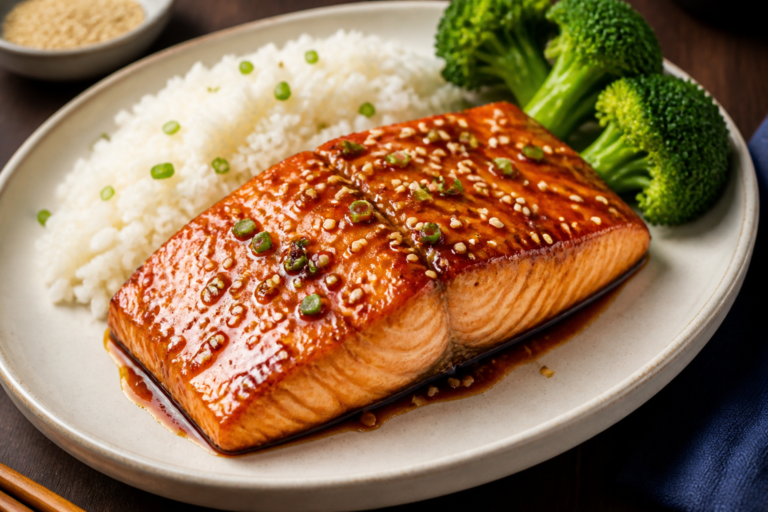
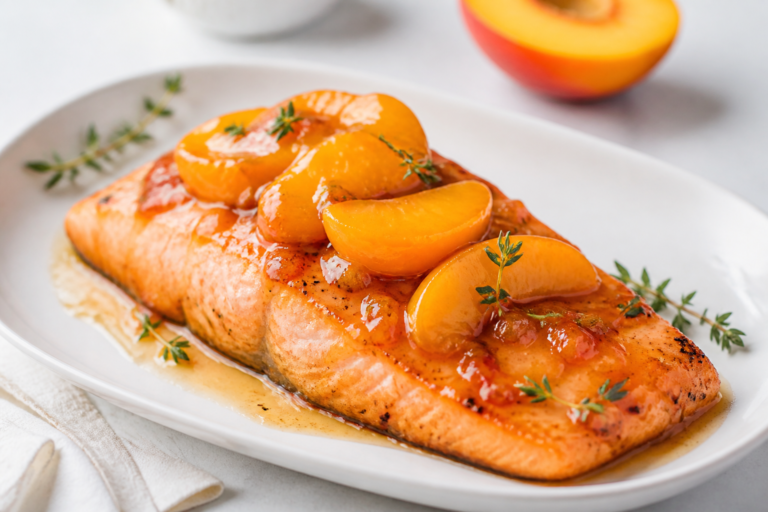
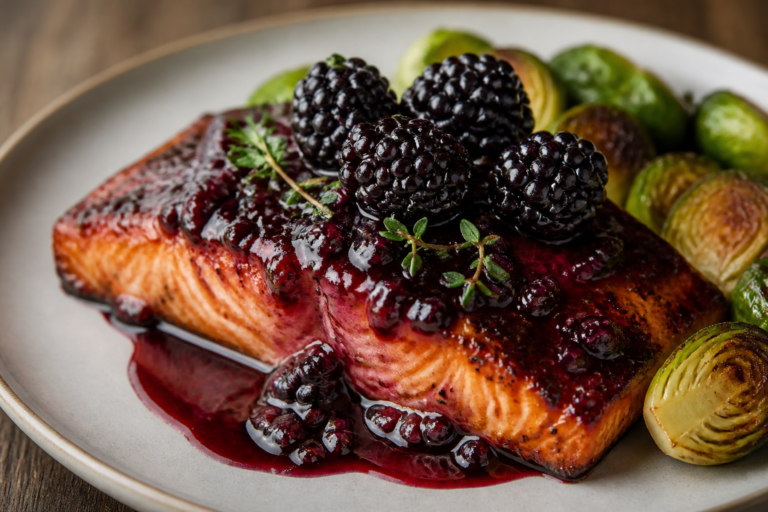
Teriyaki Glazed Salmon – Sweet, Savory, and Weeknight Easy
This teriyaki glazed salmon is a go-to when you want something fast, flavorful, and satisfying. The glaze is sticky, glossy, and perfectly balanced—just sweet enough, with a gentle kick of ginger and a hint of garlic. You can cook the salmon on the stovetop, in the oven, or under the broiler, and it turns out tender every time.
FREE 7-Day Easy Dinner Reset
FREE 7-Day Easy Dinner Reset
Pair it with rice and a crisp side of greens, and dinner feels special without the fuss.
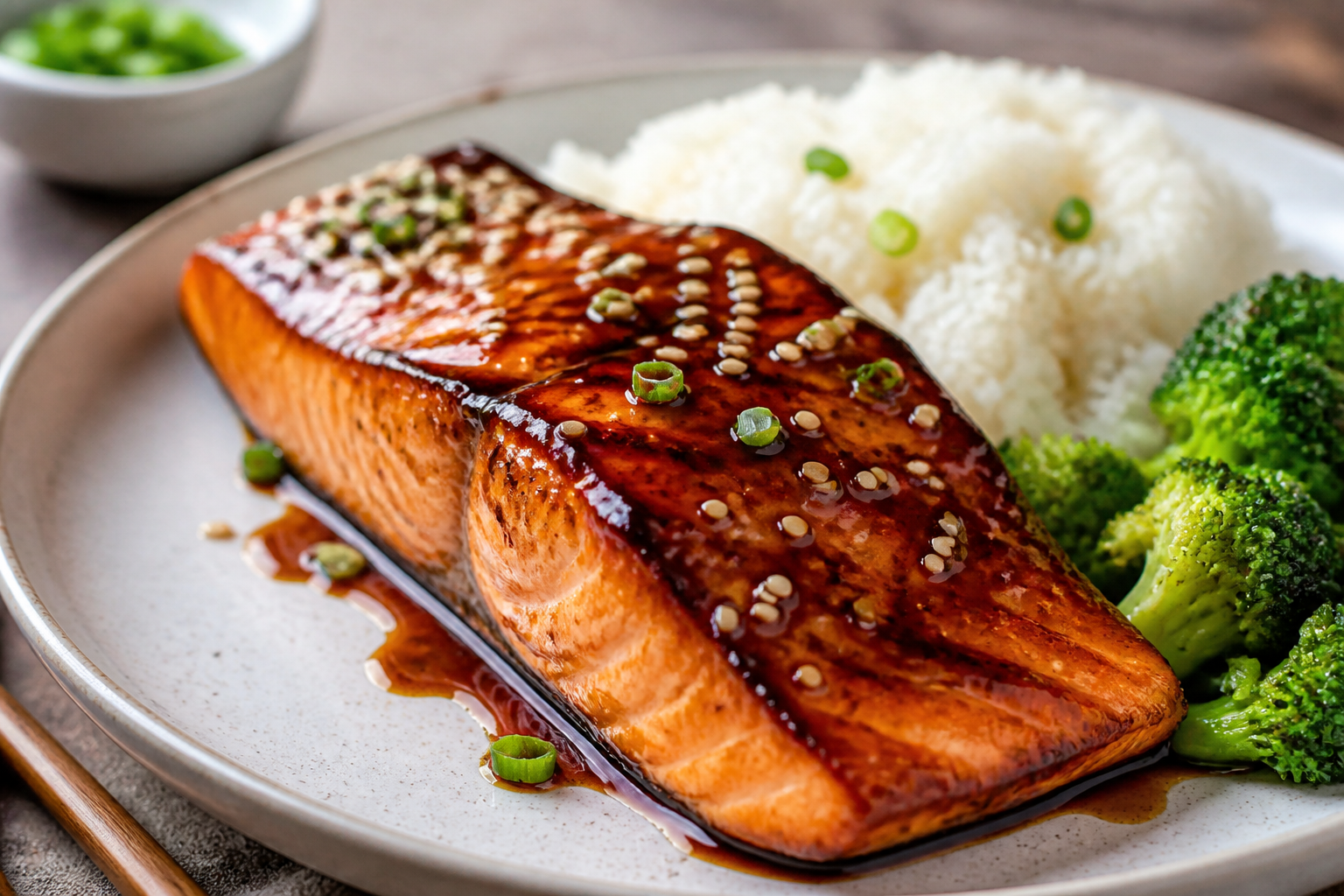
Teriyaki Glazed Salmon - Sweet, Savory, and Weeknight Easy
Ingredients
Method
- Pat the salmon dry. Season lightly with salt and pepper. If your soy sauce isn’t low sodium, go easy on the salt.
- Make the glaze base. In a small bowl, whisk soy sauce, brown sugar or honey, mirin, rice vinegar, ginger, garlic, and sesame oil.
- Reduce the sauce. Pour the mixture into a small saucepan. Bring to a gentle simmer over medium heat and cook 4–6 minutes, stirring occasionally, until glossy and slightly thickened.If using cornstarch, stir in the slurry and simmer 30–60 seconds more. Set aside.
- Sear the salmon. Heat the neutral oil in a large skillet over medium-high. Place salmon in the pan, skin-side up if using skin-on.Sear 2–3 minutes until you see a golden edge.
- Flip and glaze. Turn the salmon. Reduce heat to medium-low. Spoon some glaze over each fillet and cook 2–4 more minutes, basting as it cooks.The salmon should flake easily and be just opaque in the center. Aim for 125–130°F internal temperature for medium.
- Optional broil finish. For extra caramelization, transfer salmon to a foil-lined sheet, brush with more glaze, and broil 1–2 minutes. Watch closely to avoid burning.
- Rest and garnish. Let the salmon sit 2 minutes.Top with sesame seeds and green onions. Serve with rice, steamed broccoli, or a crunchy slaw. Pass extra glaze and citrus wedges at the table.
What Makes This Special
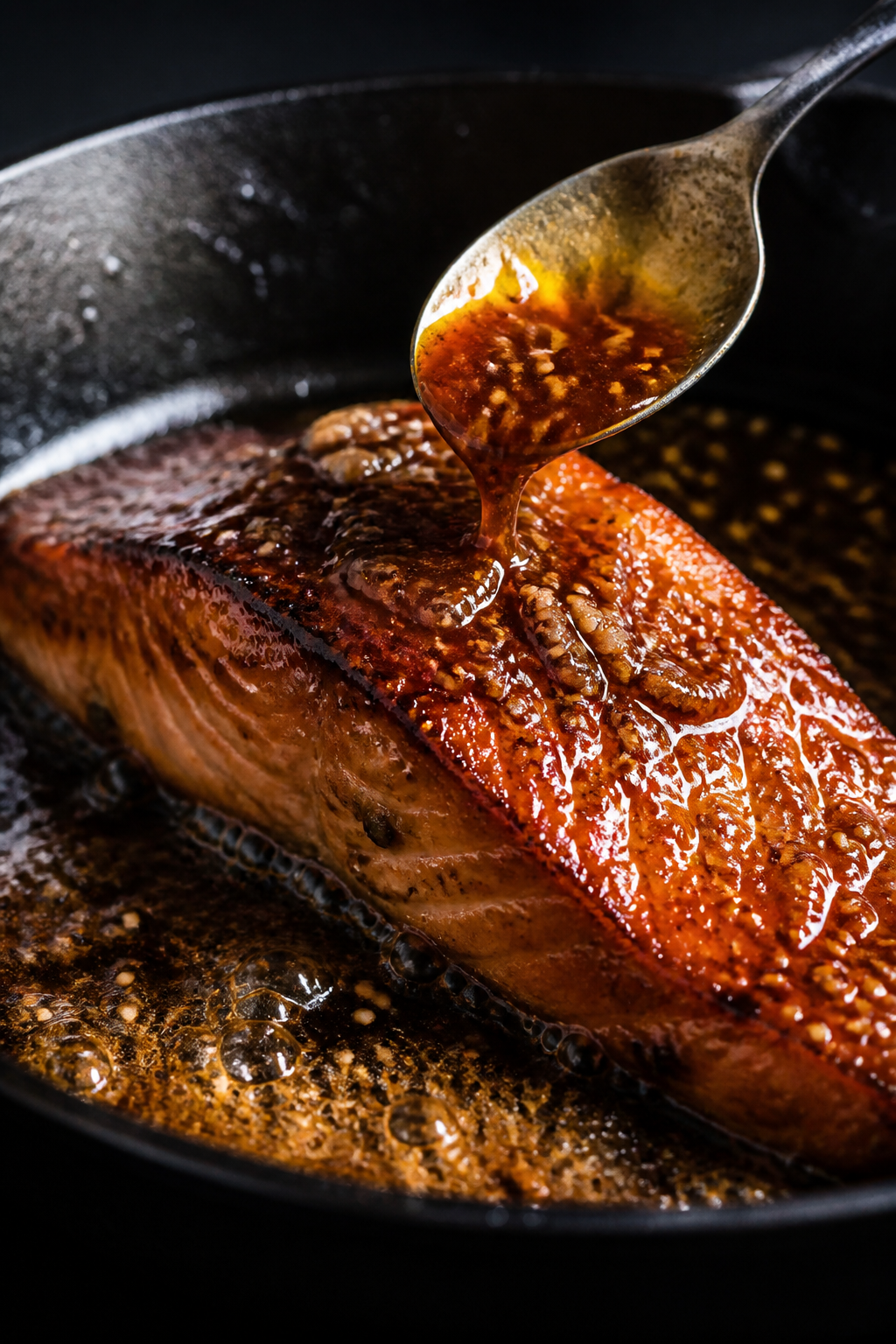
Great teriyaki is all about balance. This recipe hits that sweet-salty-sour mix with pantry staples and a quick simmer that thickens into a beautiful glaze. It clings to the salmon and caramelizes at the edges, giving you that restaurant-style finish at home.
- Fast and flexible: Ready in about 20–25 minutes, with stovetop or oven options.
- Foolproof glaze: No cornstarch needed—just reduce until syrupy.
But you can thicken it if you prefer.
- Customizable: Adjust sweetness, heat, and citrus to taste.
- Meal-prep friendly: The sauce keeps well, and leftovers stay moist.
What You’ll Need
- Salmon: 4 fillets (about 6 oz each), skin-on or skinless, pin bones removed
- Soy sauce or tamari: 1/3 cup (low sodium recommended)
- Brown sugar or honey: 3 tablespoons (adjust to taste)
- Mirin: 2 tablespoons (or sub with dry sherry plus 1 tsp sugar)
- Rice vinegar: 1 tablespoon (or apple cider vinegar)
- Fresh ginger: 1 tablespoon, finely grated
- Garlic: 2 cloves, minced
- Sesame oil: 1 teaspoon
- Neutral oil: 1 tablespoon (for searing; use avocado, canola, or grapeseed)
- Cornstarch (optional): 1 teaspoon mixed with 1 tablespoon water, if you want a thicker glaze fast
- To finish: Sesame seeds, sliced green onions, and lemon or lime wedges
Instructions
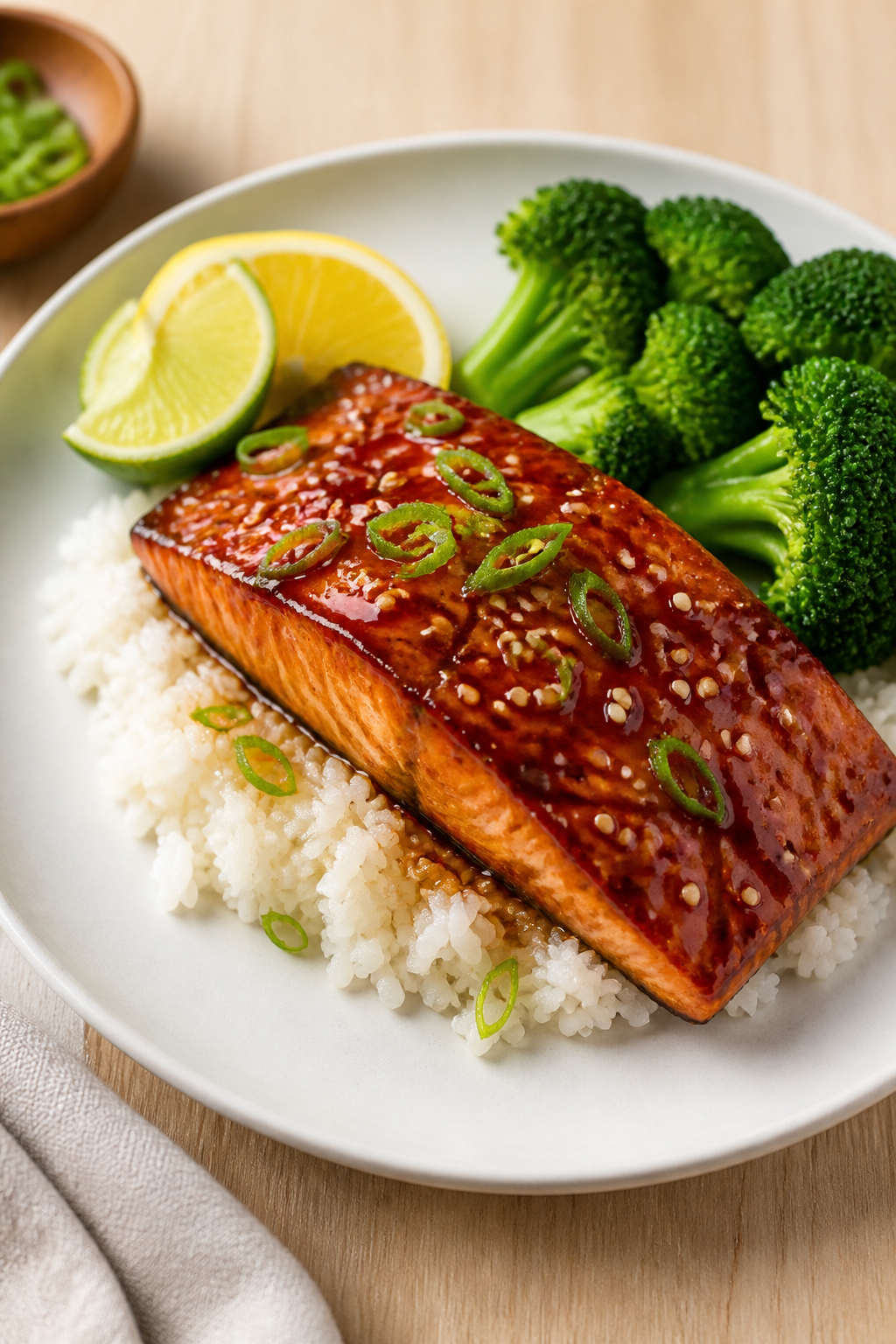
- Pat the salmon dry. Season lightly with salt and pepper. If your soy sauce isn’t low sodium, go easy on the salt.
- Make the glaze base. In a small bowl, whisk soy sauce, brown sugar or honey, mirin, rice vinegar, ginger, garlic, and sesame oil.
- Reduce the sauce. Pour the mixture into a small saucepan. Bring to a gentle simmer over medium heat and cook 4–6 minutes, stirring occasionally, until glossy and slightly thickened.
If using cornstarch, stir in the slurry and simmer 30–60 seconds more. Set aside.
- Sear the salmon. Heat the neutral oil in a large skillet over medium-high. Place salmon in the pan, skin-side up if using skin-on.
Sear 2–3 minutes until you see a golden edge.
- Flip and glaze. Turn the salmon. Reduce heat to medium-low. Spoon some glaze over each fillet and cook 2–4 more minutes, basting as it cooks.
The salmon should flake easily and be just opaque in the center. Aim for 125–130°F internal temperature for medium.
- Optional broil finish. For extra caramelization, transfer salmon to a foil-lined sheet, brush with more glaze, and broil 1–2 minutes. Watch closely to avoid burning.
- Rest and garnish. Let the salmon sit 2 minutes.
Top with sesame seeds and green onions. Serve with rice, steamed broccoli, or a crunchy slaw. Pass extra glaze and citrus wedges at the table.
Storage Instructions
- Refrigerate: Cool completely, then store in an airtight container for up to 3 days.
- Reheat gently: Warm in a covered skillet over low heat with a spoonful of water or extra glaze to keep it moist.
Avoid microwaving on high; use 50% power in short bursts.
- Freeze: Cooked salmon can freeze up to 2 months. Wrap tightly. Thaw overnight in the fridge and reheat gently.
- Sauce storage: Extra glaze keeps in the fridge for 1 week.
Reheat with a splash of water if too thick.
Health Benefits
- Omega-3 fats: Salmon is rich in EPA and DHA, which support heart health and brain function.
- High-quality protein: Helps with muscle repair and steady energy.
- Minerals and vitamins: Provides selenium, potassium, vitamin D, and B vitamins.
- Balanced approach: Using low-sodium soy sauce and adjusting sugar keeps the glaze flavorful without going overboard.
What Not to Do
- Don’t overcook the salmon. Dry, chalky salmon is a sign it went too far. Pull it off heat when it’s just turning opaque and flakes with gentle pressure.
- Don’t skip drying the fillets. Excess moisture keeps you from getting that nice sear.
- Don’t boil the glaze too hard. A rolling boil can scorch the sugars and turn it bitter. Keep it to a steady simmer.
- Don’t overcrowd the pan. Give the fillets space so they sear instead of steam.
- Don’t forget to taste. Glazes vary; taste and adjust salt, sweetness, and acidity before it hits the salmon.
Alternatives
- Protein swaps: Try cod, trout, or chicken thighs.
For tofu, press well, pan-sear until golden, then glaze.
- Gluten-free: Use tamari or coconut aminos. Check labels on mirin and vinegar.
- No mirin: Sub 2 tablespoons dry sherry or white wine with 1 teaspoon sugar, or use extra rice vinegar plus a touch more honey.
- Low sugar: Reduce sweetener to 1–2 tablespoons and rely on mirin’s subtle sweetness. Add a squeeze of orange or pineapple juice for a lighter profile.
- Spicy kick: Add a pinch of red pepper flakes or a drizzle of sriracha to the glaze.
- Cooking method: Bake at 400°F for 10–12 minutes (depending on thickness).
Brush with glaze halfway through and again at the end. Broil 1–2 minutes if you want more caramelization.
FAQ
How do I know when salmon is done?
The center should be slightly translucent and flake easily with a fork. An instant-read thermometer should read 125–130°F for medium.
It will continue to cook a bit as it rests.
Can I marinate the salmon in the teriyaki sauce?
Stop wondering what's for dinner.
Get 7 healthy, family-friendly dinners complete with recipes and simple meal plans delivered straight to your inbox.
Yes, but keep it brief—15 to 30 minutes is plenty. Longer can make the surface too salty and start to “cure” the fish. Pat dry before cooking and use fresh glaze for basting.
What’s the best pan for searing?
A heavy stainless steel or cast iron skillet gives the best crust.
Preheat well, add oil, and don’t move the fillets until they naturally release.
Can I use frozen salmon?
Absolutely. Thaw overnight in the fridge or under cold running water in sealed packaging. Pat very dry before cooking so the glaze adheres and the fish sears properly.
How can I make the glaze shiny and thick without cornstarch?
Reduce over medium heat until it coats the back of a spoon.
Stir often. The natural sugars will thicken into a syrupy consistency as water evaporates.
What sides go well with teriyaki salmon?
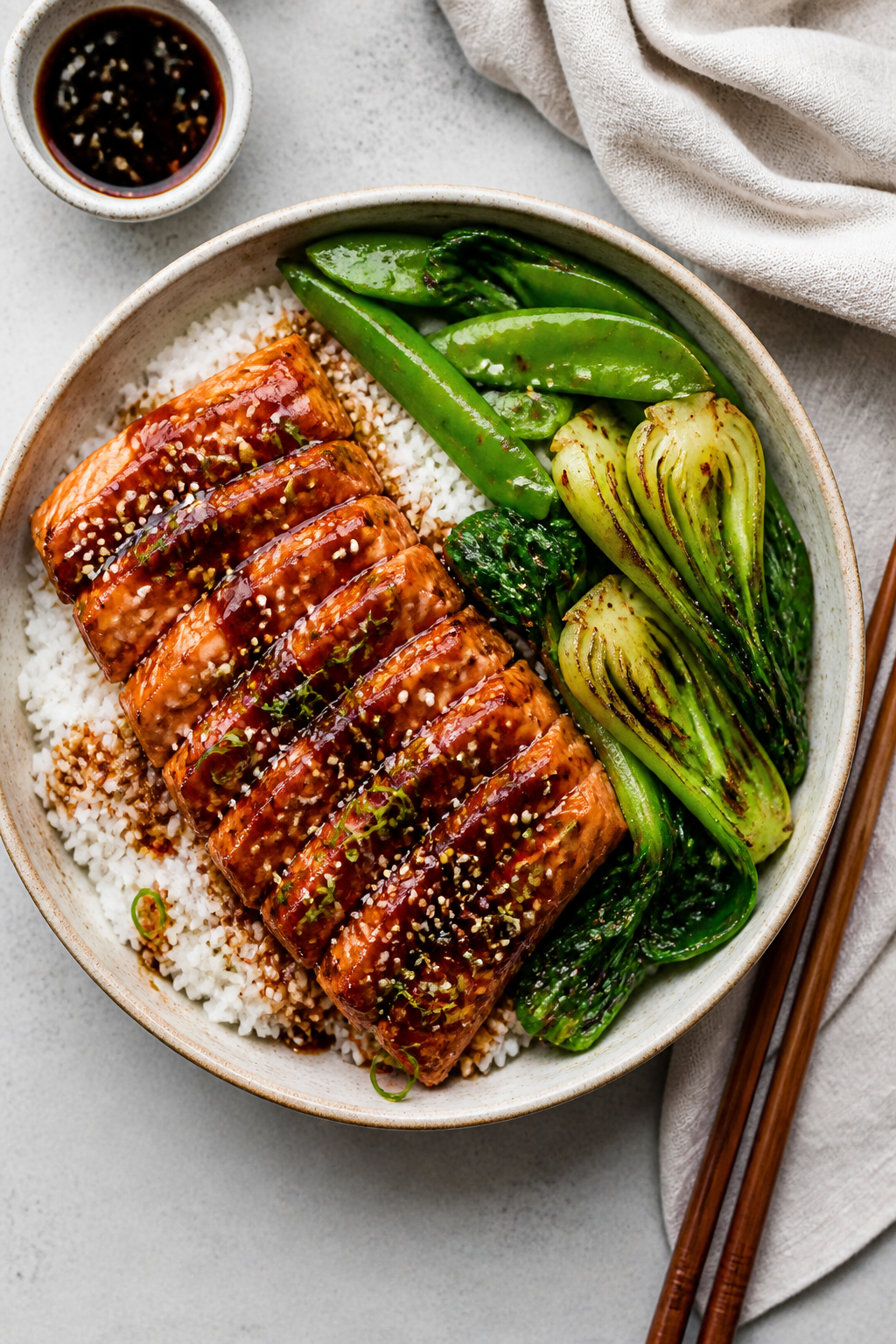
Steamed rice, coconut rice, quinoa, or brown rice are all great. For veg, try sautéed bok choy, broccoli, snap peas, or a cucumber salad for crunch and freshness.
Why did my glaze taste bitter?
It likely reduced too fast or scorched.
Lower the heat, stir often, and consider using honey instead of all brown sugar if you prefer a smoother finish. A small squeeze of citrus can also brighten it.
Can I grill the salmon?
Yes. Oil the grates well and grill over medium heat 3–4 minutes per side.
Brush with glaze during the last minute to avoid burning. Finish with a final brush off the grill.
Is skin-on or skinless better?
Skin-on helps protect the flesh and makes for easier flipping. Cook skin-side down longer, then flip briefly to finish and glaze.
How do I make it ahead?
Cook the glaze up to 1 week in advance and store chilled.
Cook the salmon fresh for best texture, then warm the glaze and brush before serving.
Wrapping Up
Teriyaki glazed salmon is simple enough for a busy night but polished enough for guests. With a balanced, glossy sauce and tender fish, it delivers big flavor with minimal effort. Keep the glaze ingredients on hand, and you can pull this together anytime.
Add a fresh side and a bowl of rice, and dinner is ready—no stress, all satisfaction.
Printable Recipe Card
Want just the essential recipe details without scrolling through the article? Get our printable recipe card with just the ingredients and instructions.
Loved This Recipe?
If you're looking for more simple, healthy dinners your family will actually eat, grab my FREE 7-Day Easy Dinner Reset. You'll get 7 easy dinner recipes, simple grocery lists, and a done-for-you plan that takes the stress out of mealtime.