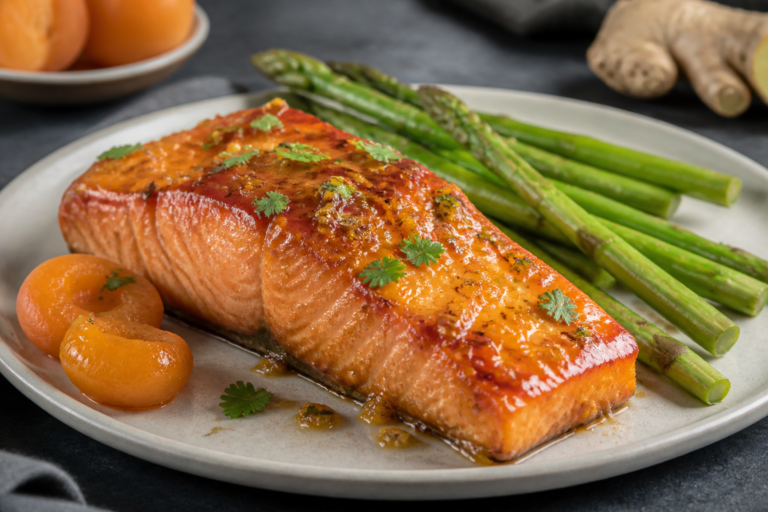
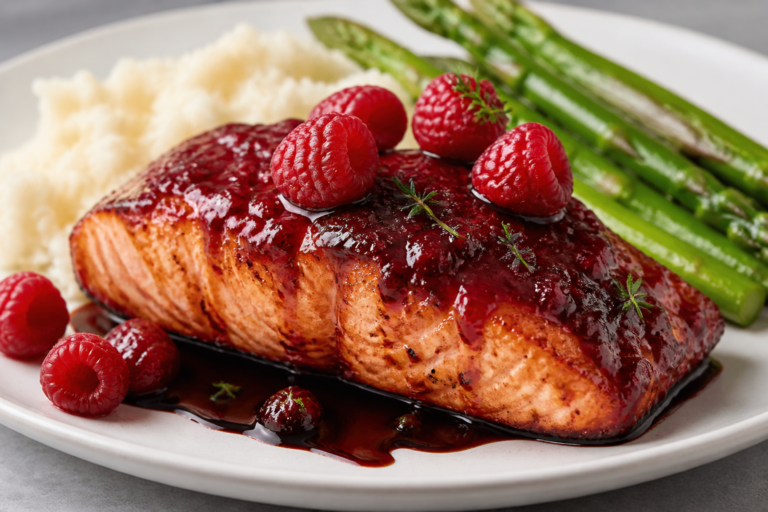
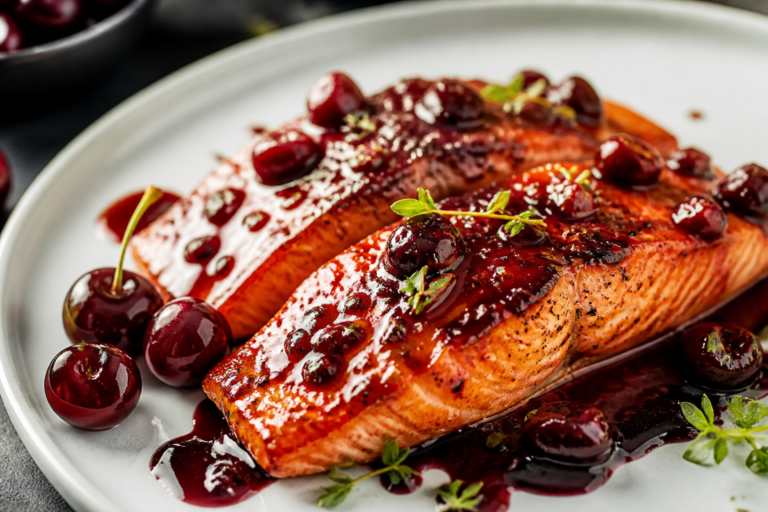
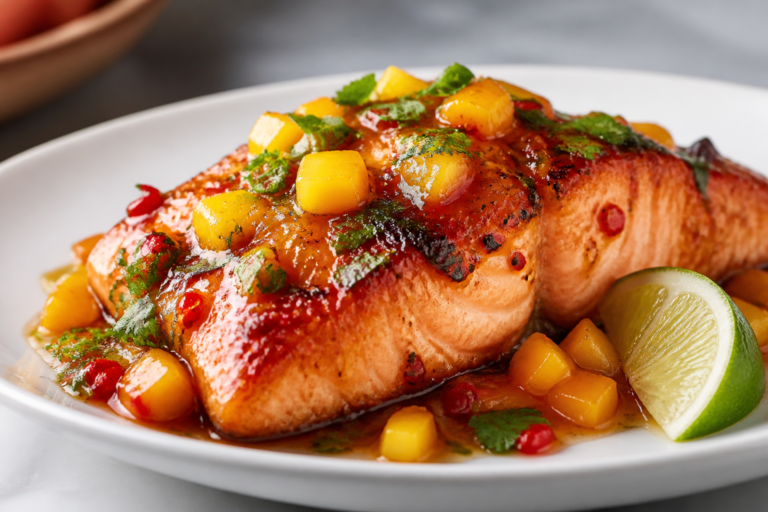
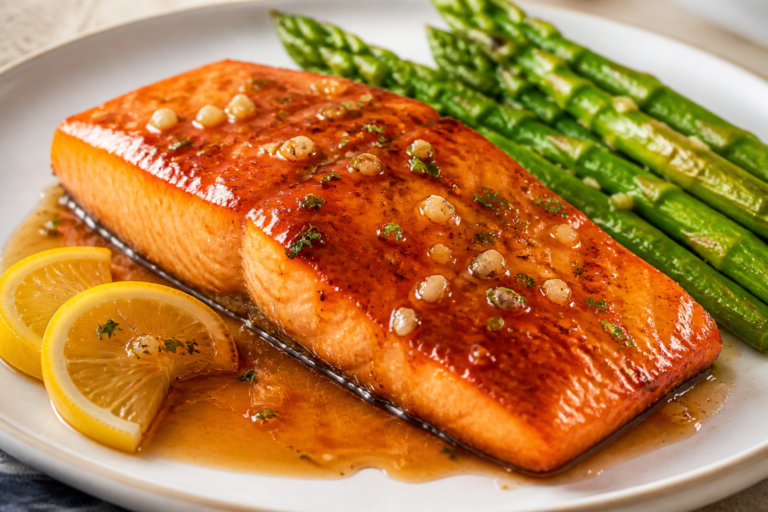
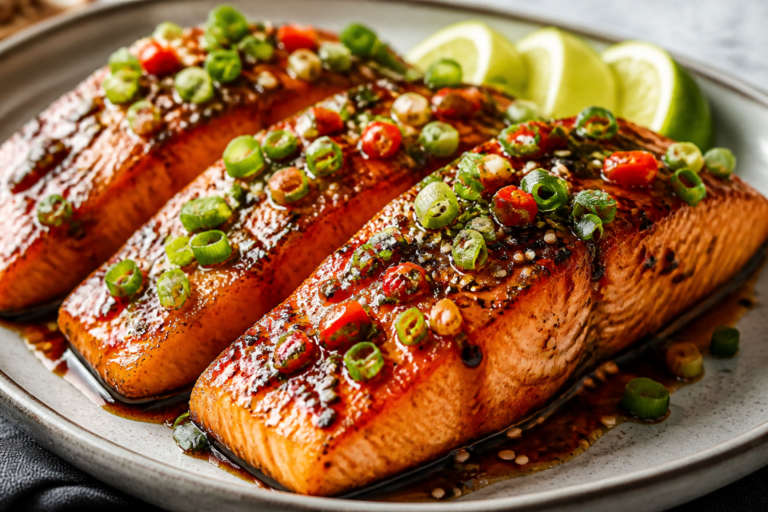
Caramelized Maple Garlic Salmon – Sweet, Savory, and Weeknight Easy
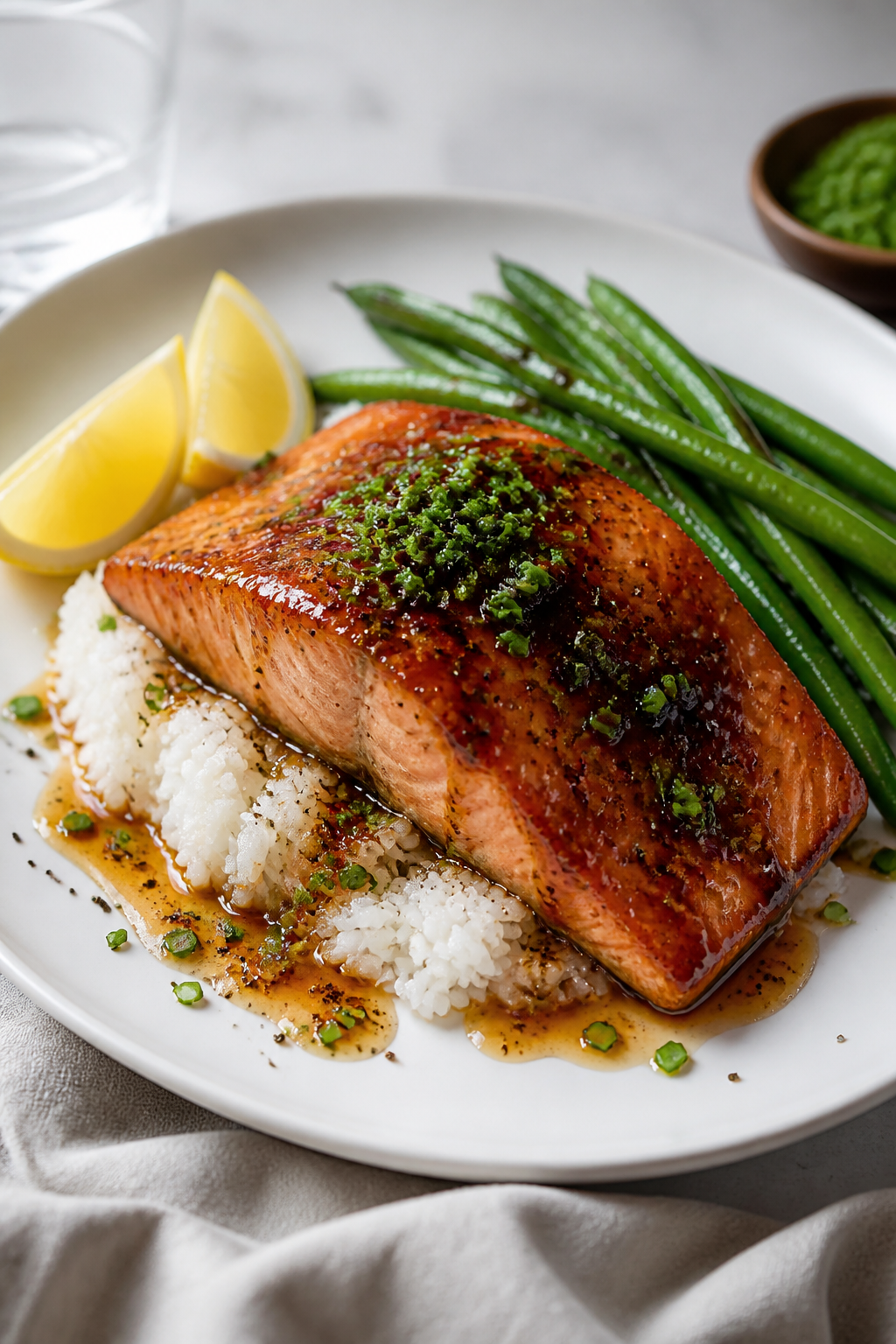
This is the kind of meal that feels special but takes less time than waiting for takeout. Caramelized Maple Garlic Salmon brings together sticky-sweet maple syrup, mellow roasted garlic, and a hint of tang for balance. The sauce clings to the fish, turning glossy and golden in the pan.
FREE 7-Day Easy Dinner Reset
FREE 7-Day Easy Dinner Reset
You end up with crisp edges, a flaky center, and a plate that smells like you cooked all day—even though you didn’t. Serve it with rice, greens, or roasted veggies, and you’ve got a complete dinner that hits all the right notes.
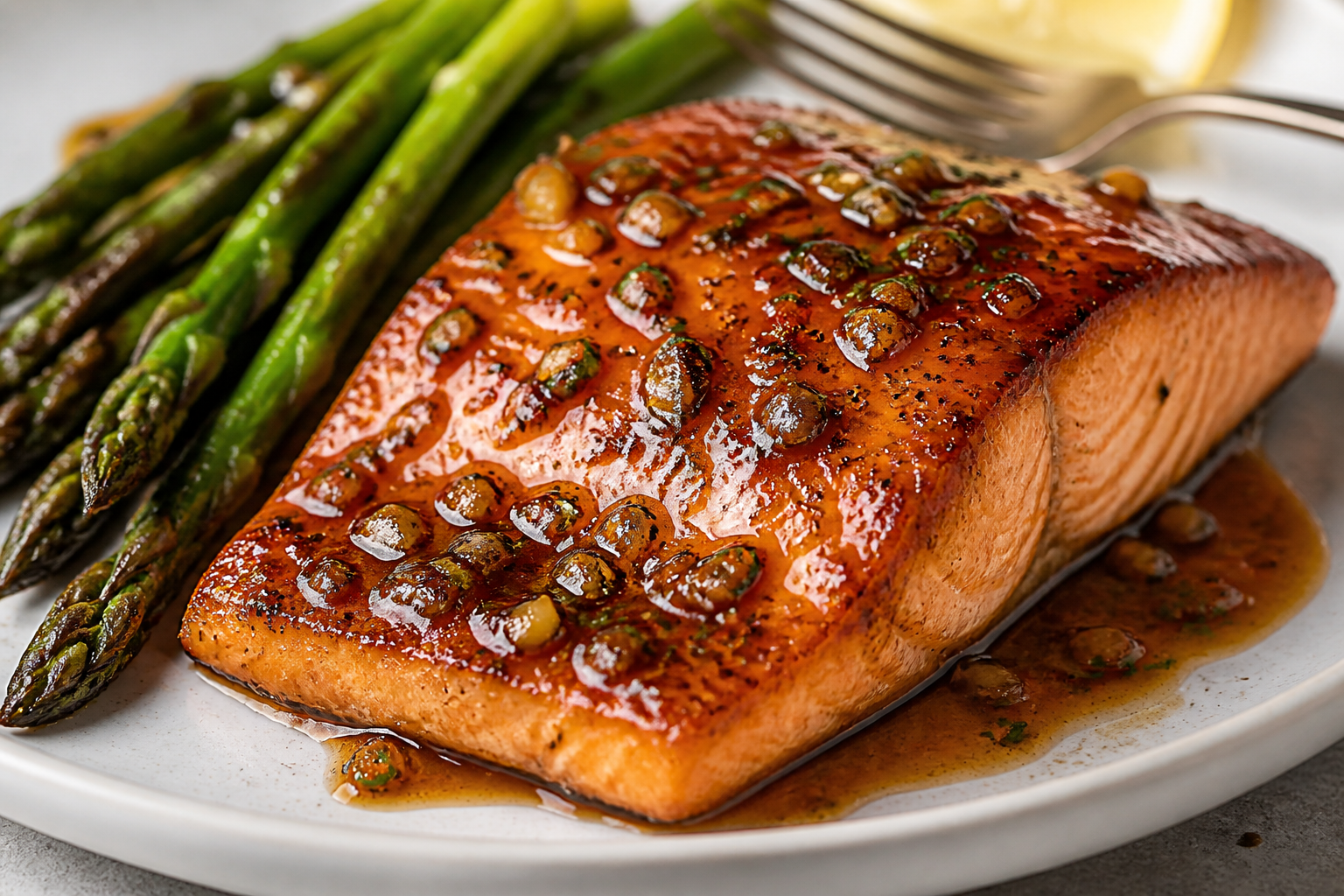
Caramelized Maple Garlic Salmon - Sweet, Savory, and Weeknight Easy
Ingredients
Method
- Pat the salmon dry. Use paper towels to remove excess moisture so you get a good sear.Lightly season with salt and a few grinds of black pepper.
- Make the glaze. In a small bowl, whisk together maple syrup, minced garlic, soy or tamari, lemon juice or vinegar, and Dijon (if using). Add a pinch of red pepper flakes if you like heat.
- Preheat your pan. Set a large skillet over medium to medium-high heat. Add oil and let it shimmer.You want the pan hot enough to sear, but not smoking.
- Sear the salmon. Place fillets in the pan, presentation side down (the side that was not skin). Cook 2–3 minutes until lightly golden and the edges begin to turn opaque. If using skin-on salmon, flip and cook skin side down for another 2 minutes.
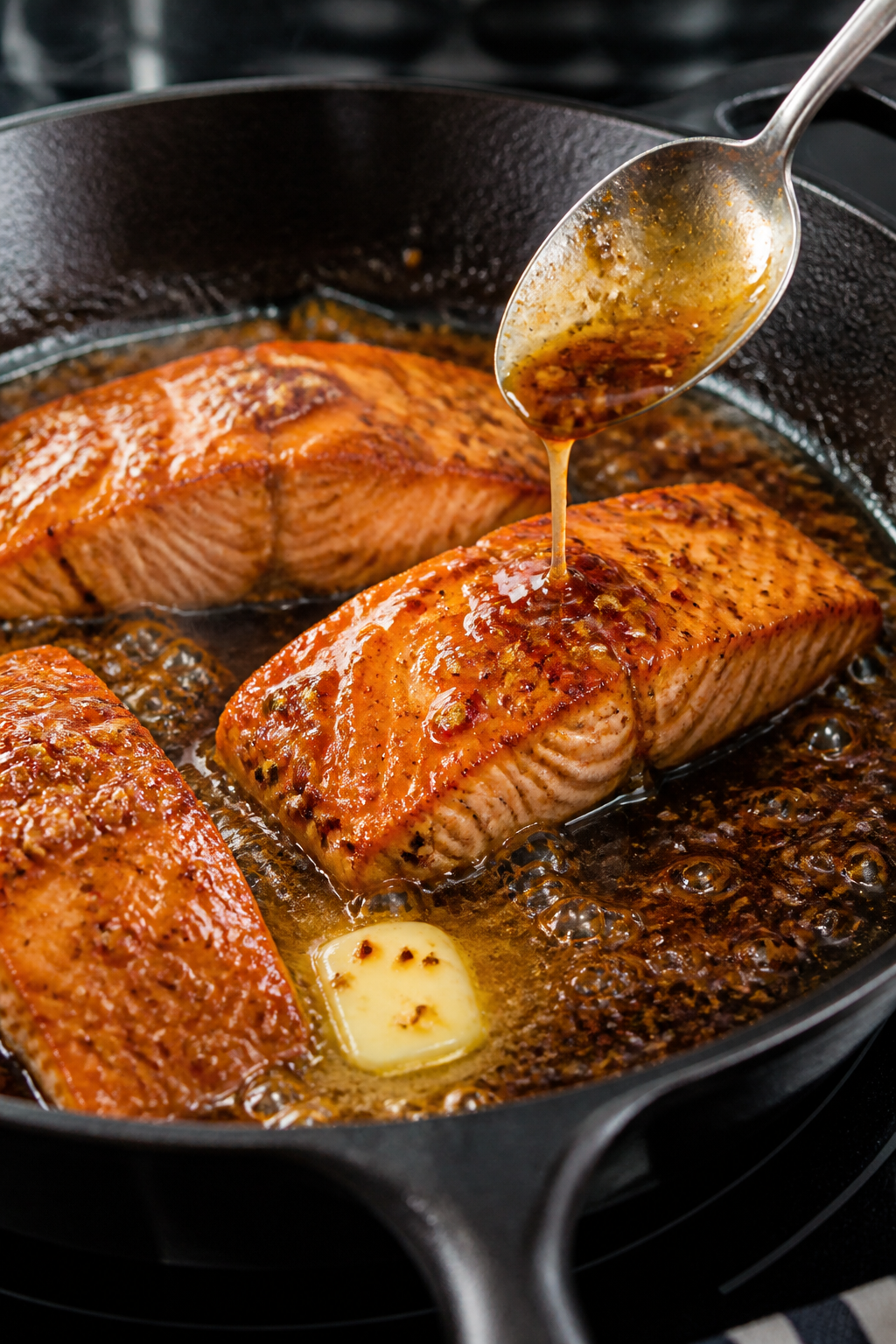
- Add the glaze. Turn heat to medium.Pour the glaze around the salmon and add butter, if using. Tilt the pan and spoon the bubbling glaze over the fillets as it thickens. This usually takes 2–4 minutes.
- Watch for caramelization. The glaze will reduce to a shiny, syrupy consistency.It should coat the back of a spoon. Avoid high heat, which can burn the sugars. If it thickens too quickly, add a splash of water to loosen.
- Finish to your preferred doneness. Salmon is medium at about 125–130°F in the center.It should flake easily but stay juicy. Remove from heat as soon as it’s nearly there; carryover heat will finish it.
- Rest and garnish. Let salmon rest 2 minutes. Spoon any remaining glaze over the top.Sprinkle with chopped parsley or chives and serve with lemon wedges.
What Makes This Special
There’s a reason this recipe becomes a go-to. It uses a short ingredient list, cooks fast, and still tastes layered and complex.
The maple syrup caramelizes, the garlic softens and sweetens, and a splash of soy or tamari brings a savory backbone. A little lemon or vinegar keeps it bright, so it never feels heavy. Best of all, it’s just as good for a weeknight as it is for company.
- Balanced flavor: Sweet, salty, garlicky, and tangy in one simple glaze.
- Quick cook time: On the table in about 20 minutes.
- Flexible: Works with fillets or a whole side of salmon and pairs with many sides.
- Minimal cleanup: One skillet or a single sheet pan if you choose to bake.
What You’ll Need
- Salmon: 4 fillets (about 5–6 ounces each), skin-on or skinless
- Maple syrup: 1/4 cup, pure maple syrup for best flavor
- Garlic: 3–4 cloves, finely minced
- Soy sauce or tamari: 1–1.5 tablespoons (use tamari for gluten-free)
- Lemon juice or apple cider vinegar: 1 tablespoon
- Dijon mustard: 1 teaspoon (optional, for a subtle tang and body)
- Red pepper flakes: A pinch, to taste (optional)
- Black pepper: Freshly ground, to taste
- Kosher salt: A light sprinkle for the salmon
- Oil: 1 tablespoon neutral oil (avocado, canola, or light olive oil) for searing
- Butter: 1 tablespoon (optional, for a richer glaze)
- Garnishes: Chopped parsley or chives, and lemon wedges
Step-by-Step Instructions
- Pat the salmon dry. Use paper towels to remove excess moisture so you get a good sear.
Lightly season with salt and a few grinds of black pepper.
- Make the glaze. In a small bowl, whisk together maple syrup, minced garlic, soy or tamari, lemon juice or vinegar, and Dijon (if using). Add a pinch of red pepper flakes if you like heat.
- Preheat your pan. Set a large skillet over medium to medium-high heat. Add oil and let it shimmer.
You want the pan hot enough to sear, but not smoking.
- Sear the salmon. Place fillets in the pan, presentation side down (the side that was not skin). Cook 2–3 minutes until lightly golden and the edges begin to turn opaque. If using skin-on salmon, flip and cook skin side down for another 2 minutes.
- Add the glaze. Turn heat to medium.
Pour the glaze around the salmon and add butter, if using. Tilt the pan and spoon the bubbling glaze over the fillets as it thickens. This usually takes 2–4 minutes.
- Watch for caramelization. The glaze will reduce to a shiny, syrupy consistency.
It should coat the back of a spoon. Avoid high heat, which can burn the sugars. If it thickens too quickly, add a splash of water to loosen.
- Finish to your preferred doneness. Salmon is medium at about 125–130°F in the center.
It should flake easily but stay juicy. Remove from heat as soon as it’s nearly there; carryover heat will finish it.
- Rest and garnish. Let salmon rest 2 minutes. Spoon any remaining glaze over the top.
Sprinkle with chopped parsley or chives and serve with lemon wedges.
Baking option: Heat oven to 400°F (205°C). Place salmon on a lined sheet pan. Brush with half the glaze and bake 8–10 minutes, depending on thickness.
Brush with remaining glaze and broil 1–2 minutes until caramelized, watching closely.
Storage Instructions
- Refrigerate: Store leftovers in an airtight container for up to 3 days.
- Reheat gently: Warm on low in a covered skillet with a splash of water, or microwave in short bursts. Avoid overheating to prevent dryness.
- Serve cold: Chilled leftover salmon is excellent flaked over salads or tucked into grain bowls.
- Freeze: For best texture, enjoy fresh. If needed, freeze tightly wrapped portions for up to 2 months.
Thaw overnight in the fridge and reheat gently.
Why This is Good for You
Salmon is rich in omega-3 fatty acids, which support heart and brain health. It’s also packed with high-quality protein and B vitamins. Garlic adds antioxidants and flavor without extra calories.
The maple syrup brings sweetness, but the total added sugar per portion stays reasonable, especially when balanced with veggies and whole grains.
What Not to Do
- Don’t crank the heat too high. Maple can burn quickly. Medium heat lets it caramelize without scorching.
- Don’t skip drying the salmon. Moisture prevents a good sear and can dilute the glaze.
- Don’t overcook. Dry salmon loses its silky texture. Pull it just shy of done and let it rest.
- Don’t overcrowd the pan. Give each fillet space for even browning and proper reduction of the glaze.
- Don’t rely solely on salt. The soy or tamari adds saltiness—taste the glaze before seasoning further.
Alternatives
- Different fish: Try Arctic char, steelhead trout, or cod.
Adjust cook times; lean white fish cooks faster.
- Gluten-free: Use tamari or coconut aminos instead of soy sauce.
- No maple syrup: Use honey. It thickens faster, so watch closely and lower the heat as needed.
- Garlic options: If raw garlic feels too sharp, gently sauté it in the oil for 30 seconds before adding salmon, or use roasted garlic for a sweeter note.
- Spice it up: Add grated ginger, a splash of sriracha, or a dash of smoked paprika.
- Citrus swap: Orange or lime juice can replace lemon for a different brightness.
- Herb finish: Top with cilantro, dill, or scallions instead of parsley.
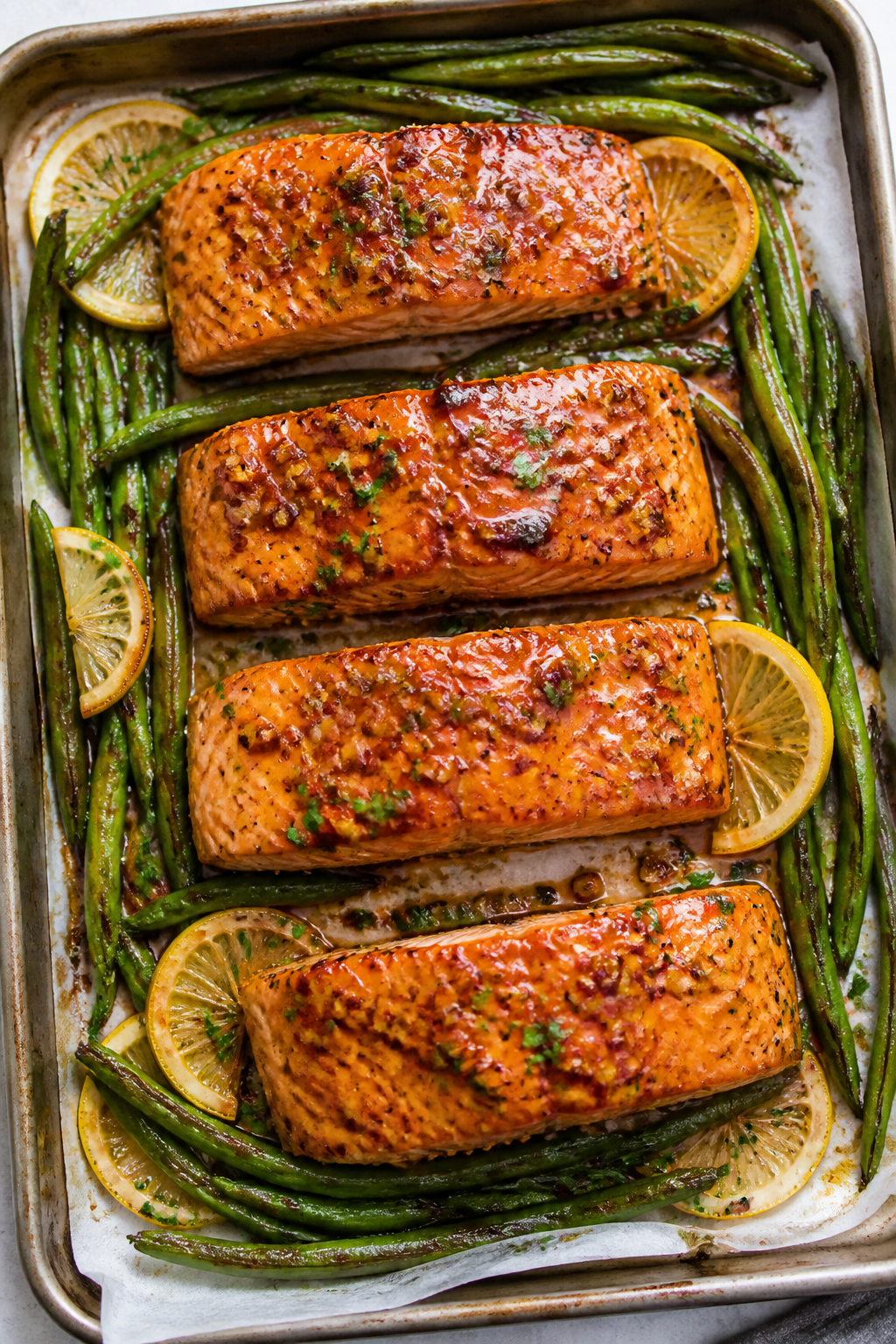
- Sheet-pan meal: Roast broccoli, carrots, or green beans alongside the salmon for an all-in-one dinner.
FAQ
How do I know when the salmon is done?
Stop wondering what's for dinner.
Get 7 healthy, family-friendly dinners complete with recipes and simple meal plans delivered straight to your inbox.
Look for flakes that separate easily with a fork and a slightly translucent center. If you use a thermometer, aim for 125–130°F for medium.
Remove from heat a couple of degrees early and rest briefly.
Can I make the glaze ahead?
Yes. Mix the glaze up to 3 days in advance and refrigerate. Stir before using.
If it thickens in the fridge, let it sit at room temperature for a few minutes.
What sides go well with this?
Steamed rice, quinoa, or mashed potatoes pair nicely. For veg, try roasted Brussels sprouts, sautéed green beans, or a crisp cucumber salad to balance the sweetness.
Is skin-on or skinless better?
Either works. Skin-on helps keep the fish moist and protects it during searing.
If you prefer skinless, be a bit gentler when flipping.
Can I grill the salmon?
Yes, but use indirect heat to avoid burning the sugars. Grill skin side down, brush with glaze in the last few minutes, and keep an eye on flare-ups.
How do I prevent a burnt glaze?
Use medium heat, add the glaze after the initial sear, and keep it moving with a spoon. If it reduces too fast, add a tablespoon of water and lower the heat.
What if my salmon is very thick?
Sear as directed, then finish in a 350°F oven until it reaches your target temperature.
This gives you control and avoids over-browning the glaze.
Can I use frozen salmon?
Absolutely. Thaw fully in the fridge overnight, then pat very dry before cooking. Frozen salmon can hold extra moisture, so drying is key for a good sear.
How can I make it less sweet?
Reduce the maple syrup to 3 tablespoons and increase lemon juice or vinegar slightly.
A touch more Dijon also helps cut the sweetness.
What wines pair well?
Try a Pinot Noir, Gamay, or a fuller-bodied white like Chardonnay. If you prefer beer, a crisp pilsner or pale ale balances the glaze.
Wrapping Up
Caramelized Maple Garlic Salmon is simple, fast, and quietly impressive. It leans on pantry staples but tastes restaurant-worthy, with a glossy glaze and tender, flaky fish.
Keep the heat moderate, pull it as soon as it’s just done, and spoon on every last drop of that sauce. Pair it with a bright side, and dinner is handled.
Printable Recipe Card
Want just the essential recipe details without scrolling through the article? Get our printable recipe card with just the ingredients and instructions.
Loved This Recipe?
If you're looking for more simple, healthy dinners your family will actually eat, grab my FREE 7-Day Easy Dinner Reset. You'll get 7 easy dinner recipes, simple grocery lists, and a done-for-you plan that takes the stress out of mealtime.