Pomegranate Glazed Salmon – Bright, Sweet, and Weeknight-Friendly
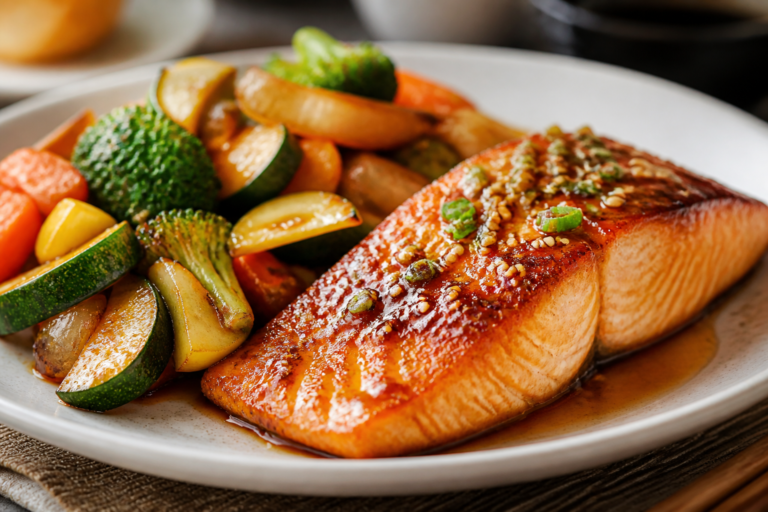
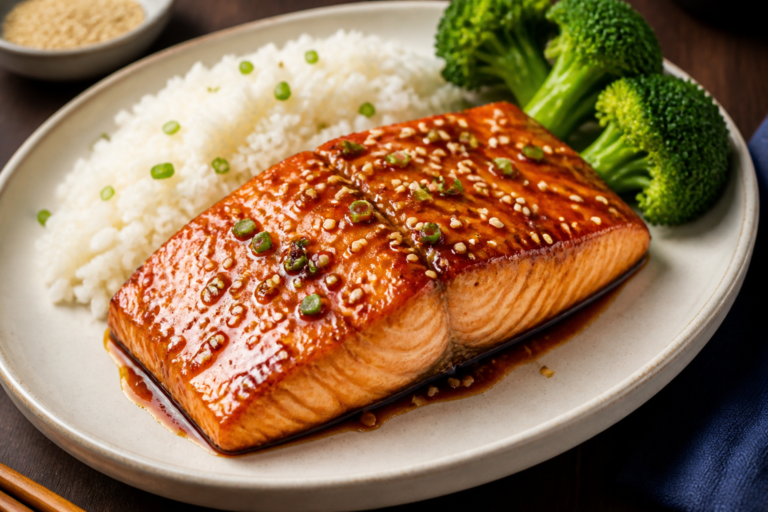
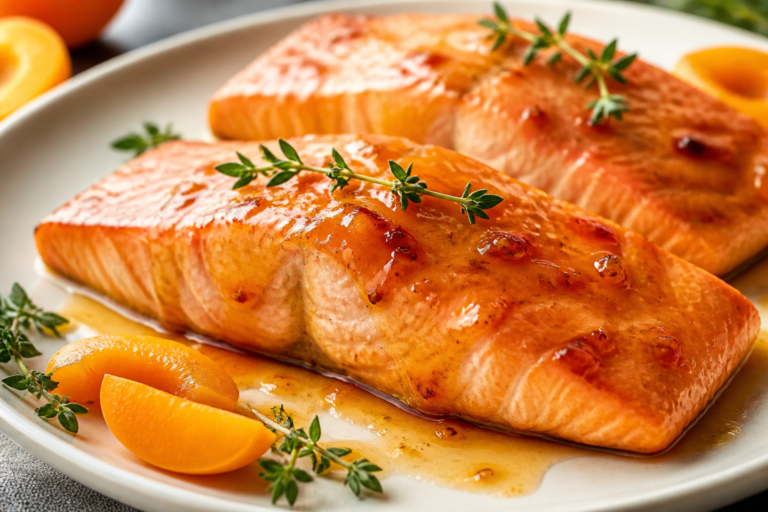
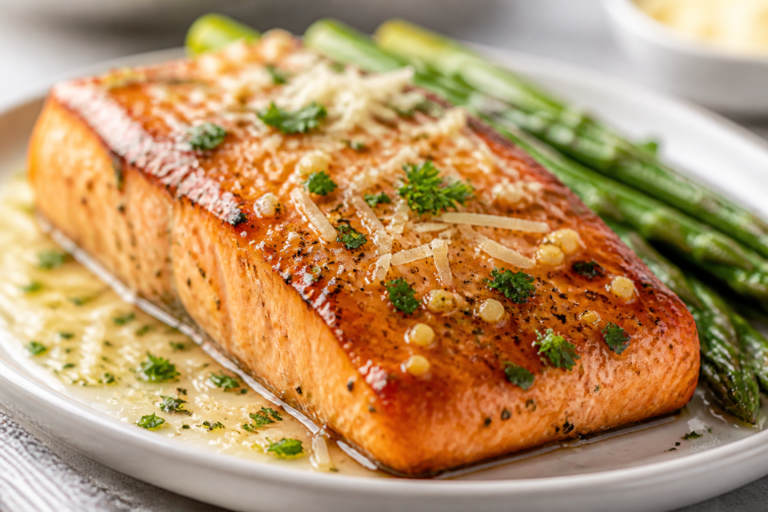
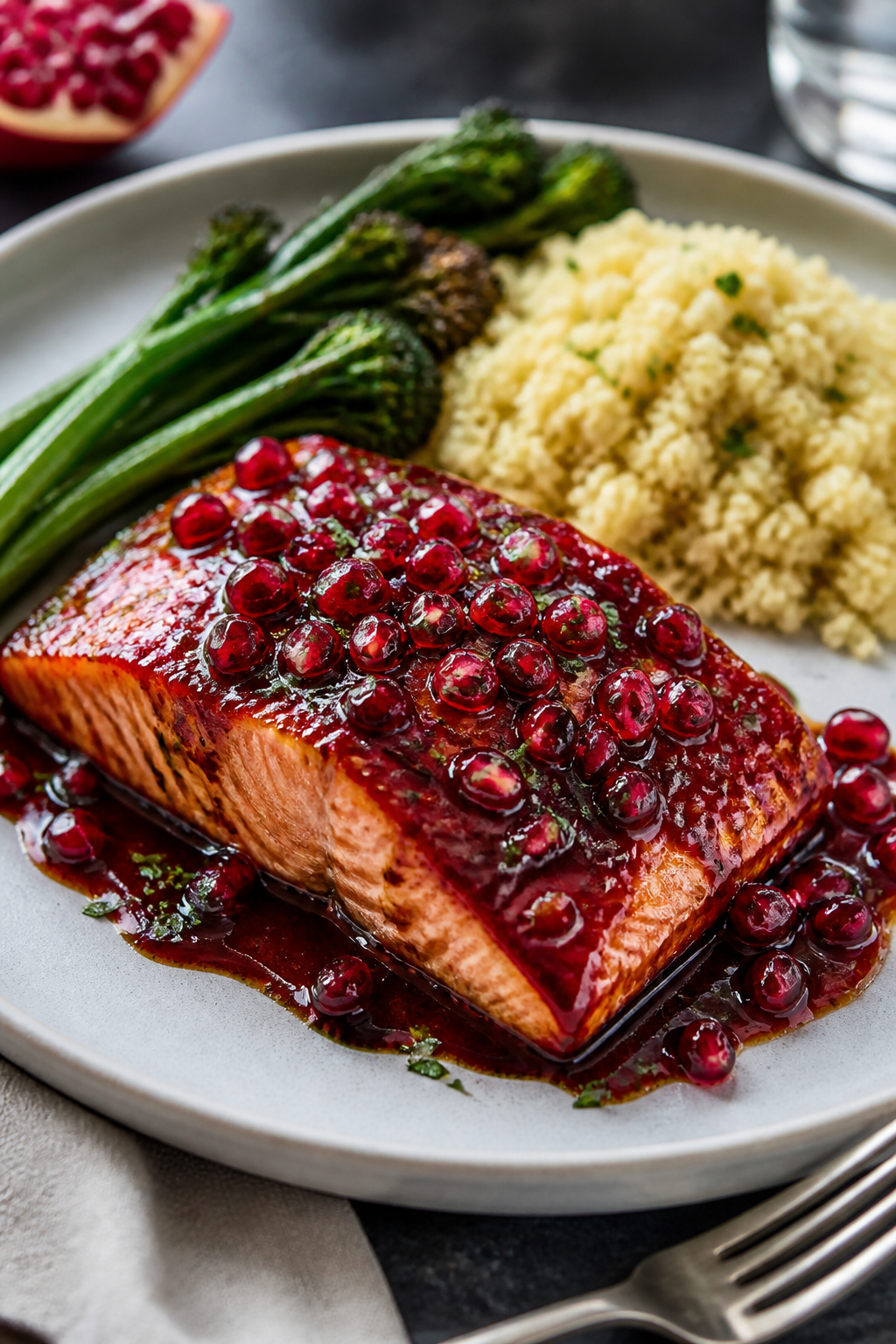
Pomegranate glazed salmon is a simple way to bring a little sparkle to your dinner routine. The glaze is tangy, lightly sweet, and glossy, and it clings to the salmon in the best way. You get juicy, flaky fish with a vibrant sauce that feels special but doesn’t take much effort.
FREE 7-Day Easy Dinner Reset
FREE 7-Day Easy Dinner Reset
It’s the kind of recipe you can pull together on a Tuesday and still be proud to serve to guests. Best of all, it uses pantry staples and just one skillet.
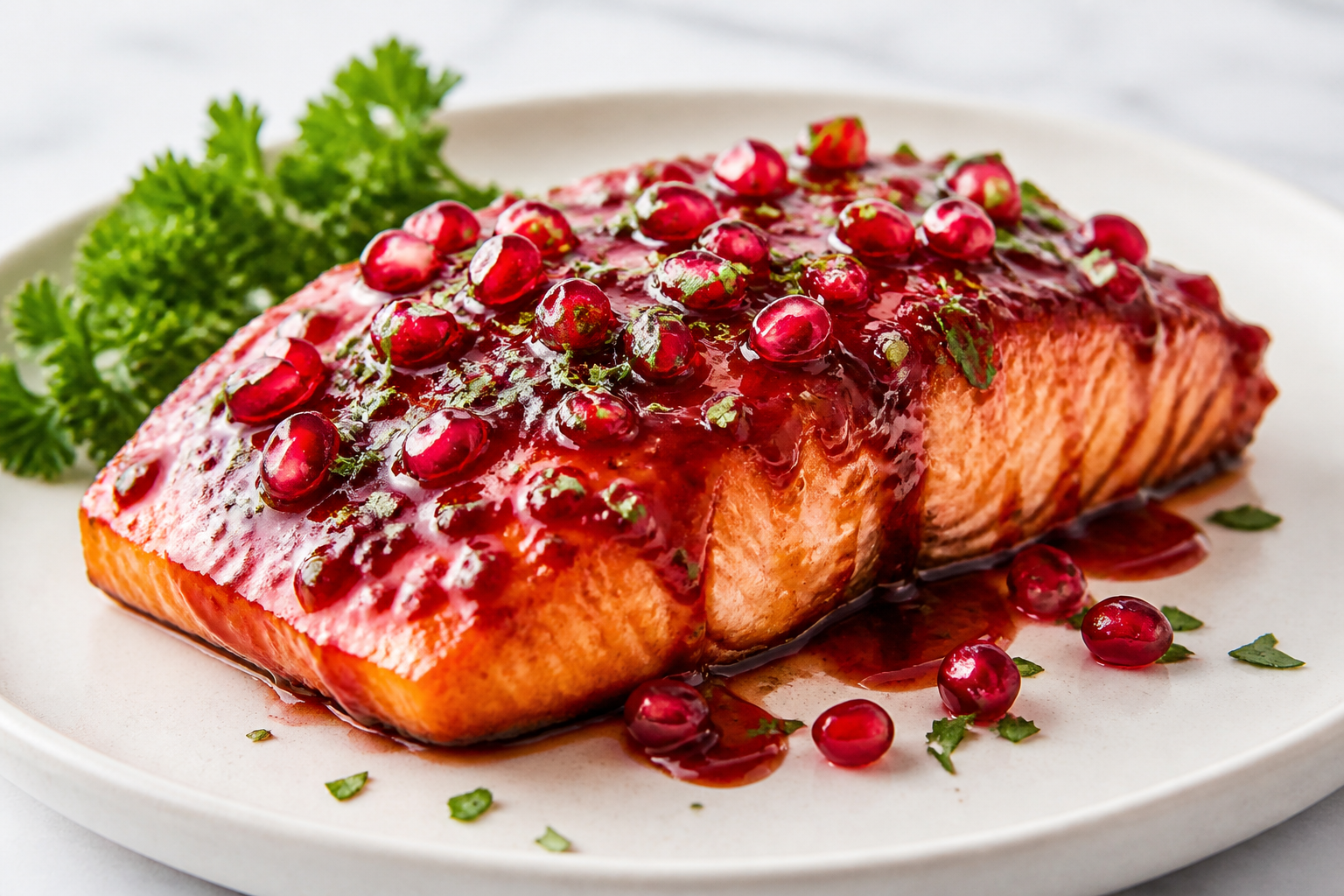
Pomegranate Glazed Salmon - Bright, Sweet, and Weeknight-Friendly
Ingredients
Method
- Pat the salmon dry. Use paper towels to remove surface moisture. Season both sides with salt and pepper.Dry fish sears better and won’t steam in the pan.
- Whisk the glaze. In a small bowl, combine pomegranate juice, honey, soy sauce, garlic, and ginger. Taste and adjust the sweet-salty balance. If your juice is very tart, add another teaspoon of honey.
- Heat the pan. Set a large skillet over medium-high heat and add oil.When the oil is shimmering, you’re ready to sear.
- Sear the salmon skin-side down. Place fillets in the pan without crowding. Press gently with a spatula for the first 15–20 seconds to keep the skin flat. Cook 3–4 minutes until the skin is crisp and the color is turning opaque halfway up the sides.
- Flip and cook briefly. Turn the salmon and cook 1–2 more minutes.You want it mostly cooked but not done yet because the glaze will finish it.
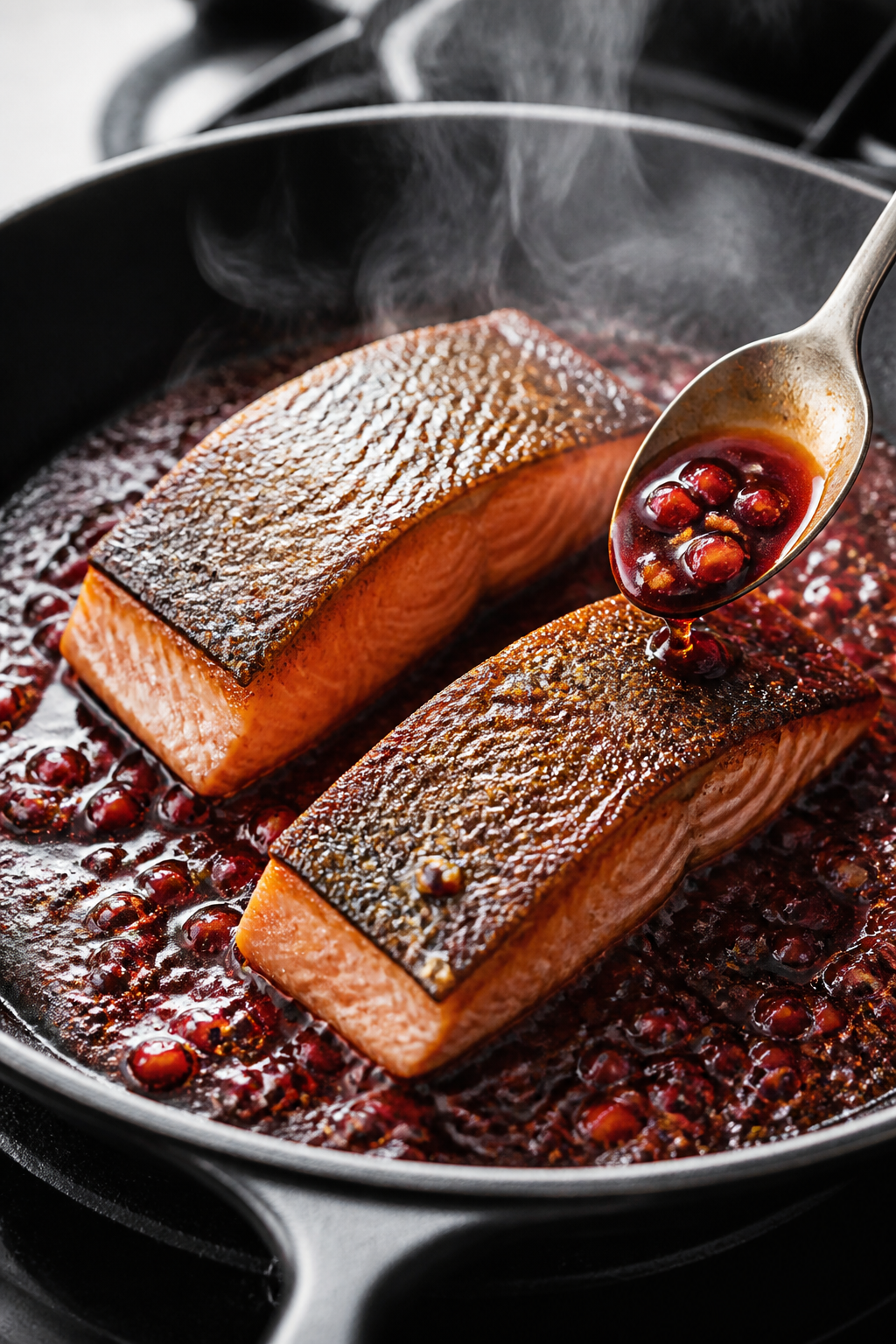
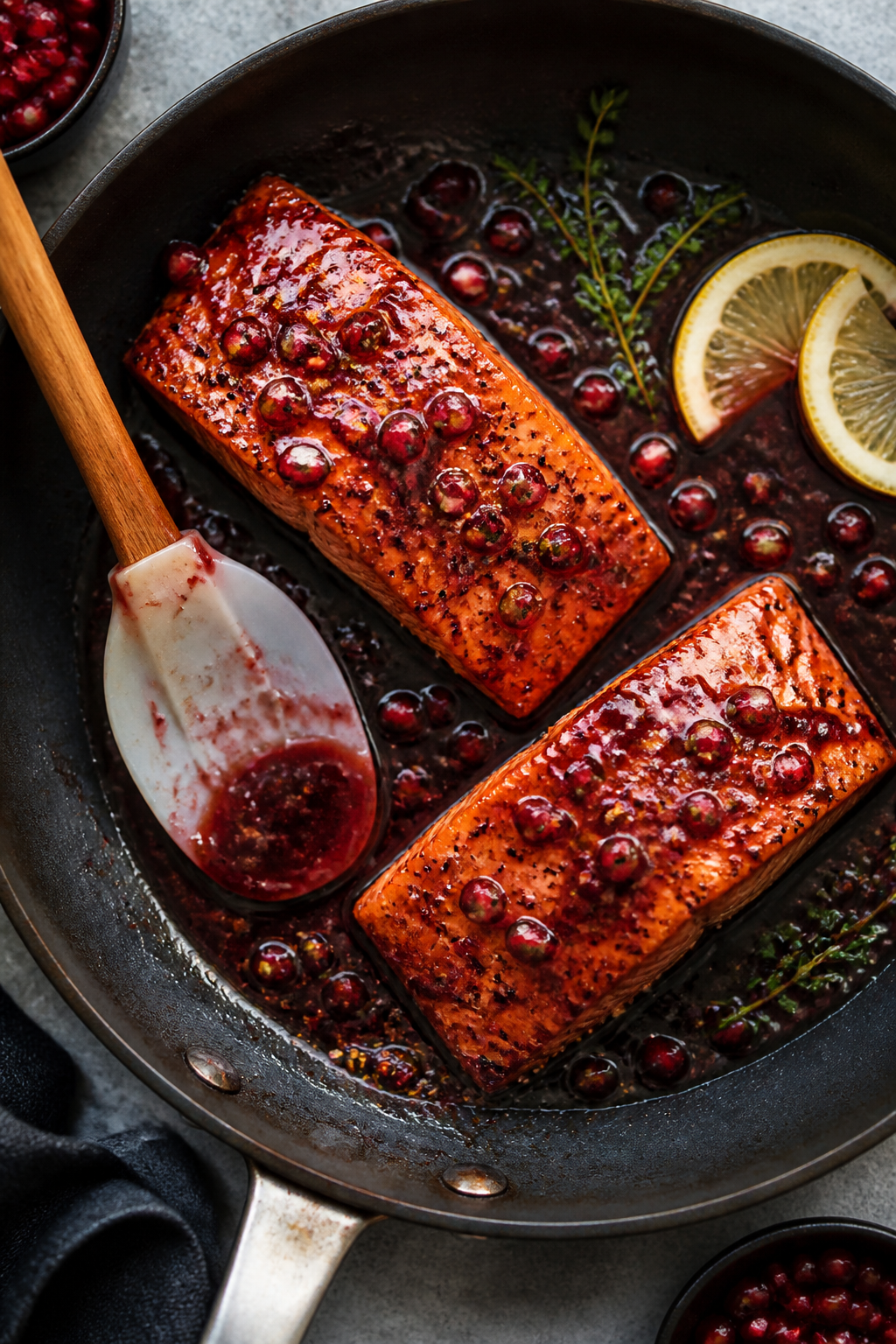
- Add the glaze. Pour the pomegranate mixture around the fish. It will bubble vigorously. Reduce heat to medium.Spoon the liquid over the fillets as it thickens.
- Reduce to a syrupy glaze. Let the sauce simmer 3–5 minutes, stirring and spooning over the salmon. When it coats the back of a spoon and looks glossy, it’s ready. If it reduces too quickly, splash in a tablespoon of water.
- Finish with lemon. Stir in the lemon juice and a pinch of red pepper flakes if using.Taste the sauce and adjust seasoning with a pinch of salt or another squeeze of lemon.
- Rest and garnish. Remove the salmon from the heat. Let it sit 2 minutes to relax the juices. Top with pomegranate arils and fresh herbs.
- Serve. Spoon extra glaze from the pan over each fillet.Serve with rice, quinoa, roasted carrots, or a bright salad.
What Makes This Recipe So Good
- Balanced flavor: Pomegranate adds bright acidity and gentle sweetness that complements rich salmon without overpowering it.
- Fast and reliable: The fish cooks in under 10 minutes, and the glaze comes together in the same pan.
- Minimal ingredients: You likely have most of the basics already, and pomegranate juice is easy to find.
- Restaurant-style finish: The glaze reduces to a shiny, spoon-coating sauce that makes the dish look impressive.
- Flexible sides: Pairs beautifully with rice, couscous, roasted vegetables, or a crisp salad.
What You’ll Need
- Salmon fillets: Four 5–6 ounce fillets, skin-on preferred for easier searing and moisture retention.
- Pomegranate juice: 1 cup, 100% juice (not from concentrate if possible for cleaner flavor).
- Honey or maple syrup: 2–3 tablespoons, to sweeten and help the glaze reduce.
- Soy sauce or tamari: 1–1.5 tablespoons, for savory depth and seasoning.
- Fresh lemon juice: 1 tablespoon, to sharpen the flavors at the end.
- Garlic: 2 cloves, minced.
- Ginger: 1 teaspoon grated fresh (optional but recommended for warmth).
- Olive oil or avocado oil: 1–2 tablespoons for searing.
- Salt and black pepper: To season the salmon.
- Red pepper flakes: A pinch for gentle heat (optional).
- Pomegranate arils: 1/4 cup for garnish (optional but adds great texture and color).
- Fresh herbs: Chopped parsley or cilantro for a fresh finish.
How to Make It
- Pat the salmon dry. Use paper towels to remove surface moisture. Season both sides with salt and pepper.
Dry fish sears better and won’t steam in the pan.
- Whisk the glaze. In a small bowl, combine pomegranate juice, honey, soy sauce, garlic, and ginger. Taste and adjust the sweet-salty balance. If your juice is very tart, add another teaspoon of honey.
- Heat the pan. Set a large skillet over medium-high heat and add oil.
When the oil is shimmering, you’re ready to sear.
- Sear the salmon skin-side down. Place fillets in the pan without crowding. Press gently with a spatula for the first 15–20 seconds to keep the skin flat. Cook 3–4 minutes until the skin is crisp and the color is turning opaque halfway up the sides.
- Flip and cook briefly. Turn the salmon and cook 1–2 more minutes.
You want it mostly cooked but not done yet because the glaze will finish it.
- Add the glaze. Pour the pomegranate mixture around the fish. It will bubble vigorously. Reduce heat to medium.
Spoon the liquid over the fillets as it thickens.
- Reduce to a syrupy glaze. Let the sauce simmer 3–5 minutes, stirring and spooning over the salmon. When it coats the back of a spoon and looks glossy, it’s ready. If it reduces too quickly, splash in a tablespoon of water.
- Finish with lemon. Stir in the lemon juice and a pinch of red pepper flakes if using.
Taste the sauce and adjust seasoning with a pinch of salt or another squeeze of lemon.
- Rest and garnish. Remove the salmon from the heat. Let it sit 2 minutes to relax the juices. Top with pomegranate arils and fresh herbs.
- Serve. Spoon extra glaze from the pan over each fillet.
Serve with rice, quinoa, roasted carrots, or a bright salad.
Storage Instructions
- Refrigerate: Cool completely, then store salmon and leftover glaze in an airtight container for up to 2 days.
- Reheat gently: Warm covered in a 275°F (135°C) oven for 10–12 minutes or in a skillet over low heat with a splash of water. Avoid microwaving at high power; it can dry the fish.
- Enjoy cold: Leftover salmon is great flaked over salads or tucked into grain bowls the next day.
- Freezing: Not ideal for glazed salmon. The texture can suffer and the sauce may separate.
Health Benefits
- Heart-healthy fats: Salmon is rich in omega-3s (EPA and DHA), which support heart, brain, and joint health.
- High-quality protein: Each serving delivers satisfying protein to keep you full and help maintain muscle.
- Antioxidants: Pomegranate juice contains polyphenols, including punicalagins, which have antioxidant properties.
- Lower sodium option: Using low-sodium soy sauce or tamari can keep salt levels in check without losing flavor.
Pitfalls to Watch Out For
- Over-reducing the glaze: If it gets too thick, it may taste bitter or burn.
Thin with water and lower the heat.
- Overcooking the salmon: Pull it when the center is just slightly translucent. Residual heat will finish it. Aim for an internal temp of about 125–130°F (52–54°C) for moist, medium doneness.
- Soggy skin: Pat the fish dry and start with a hot pan.
Press gently at the start to prevent curling.
- Unbalanced flavors: Taste the glaze before it goes in the pan. Adjust sweetness, saltiness, and acidity so it’s bright but not sharp.
Recipe Variations
- Sheet pan version: Place seasoned salmon on a lined baking sheet. Roast at 400°F (205°C) for 8–10 minutes, brushing with reduced glaze in the last few minutes.
Broil 1 minute for extra shine.
- Spice it up: Add 1/2 teaspoon Aleppo pepper or a touch of harissa to the glaze for gentle heat and depth.
- Herb-forward: Stir in finely chopped dill or mint at the end for a fresh, aromatic twist.
- Citrus swap: Use orange juice instead of lemon for a rounder, sweeter finish. Zest the citrus for extra aroma.
- Maple-mustard: Replace honey with maple syrup and whisk in 1 teaspoon Dijon mustard for a savory-sweet angle.
- No-soy option: Substitute coconut aminos and a pinch of salt to keep the glaze savory and gluten-free.
- Different fish: Try arctic char or steelhead trout. Both behave similarly to salmon and hold up to the glaze.
Stop wondering what's for dinner.
Get 7 healthy, family-friendly dinners complete with recipes and simple meal plans delivered straight to your inbox.
Can I use frozen salmon?
Yes.
Thaw it overnight in the fridge or under cold running water while still sealed. Pat very dry before cooking to get good sear and texture.
What if I don’t have pomegranate juice?
You can use cranberry juice (100% juice) as a backup, though it will be a bit sharper. Add an extra teaspoon of honey and a squeeze of orange to round out the flavor.
How do I know when the salmon is done?
The flesh should flake easily with a fork but still be moist.
Visually, it changes from translucent to opaque. For accuracy, aim for 125–130°F (52–54°C) in the thickest part.
Can I grill the salmon and finish with the glaze?
Absolutely. Grill the salmon skin-side down until nearly done, then brush with reduced glaze in the last minute or two.
Keep a close eye so the sugars don’t burn.
Is the glaze supposed to be very thick?
It should be syrupy and glossy, not sticky like candy. If it coats the back of a spoon and slowly drips, you’re there. Too thick?
Whisk in a tablespoon of water and reheat gently.
What sides go best with this?
Fluffy rice, quinoa, or couscous are great for soaking up the sauce. Roasted Brussels sprouts, broccolini, or carrots work well, and a simple arugula salad adds freshness.
In Conclusion
Pomegranate glazed salmon gives you big flavor with little fuss. The sweet-tart glaze brightens the rich fish, and the whole dish comes together quickly in one pan.
With a few smart tips, you’ll get crisp skin, flaky centers, and a glossy sauce that feels restaurant-worthy. Keep this recipe in your weeknight rotation, and don’t be surprised when it becomes a go-to for company, too.
Printable Recipe Card
Want just the essential recipe details without scrolling through the article? Get our printable recipe card with just the ingredients and instructions.
Loved This Recipe?
If you're looking for more simple, healthy dinners your family will actually eat, grab my FREE 7-Day Easy Dinner Reset. You'll get 7 easy dinner recipes, simple grocery lists, and a done-for-you plan that takes the stress out of mealtime.