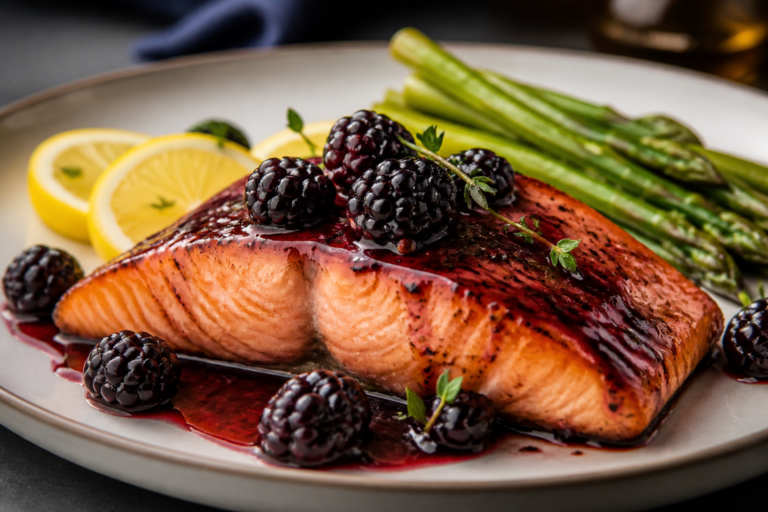
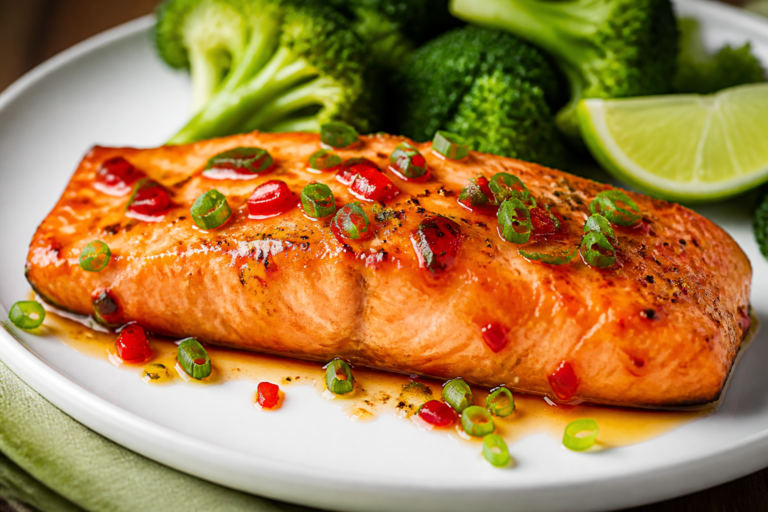
Maple Dijon Glazed Salmon – Sweet, Tangy, and Weeknight Easy
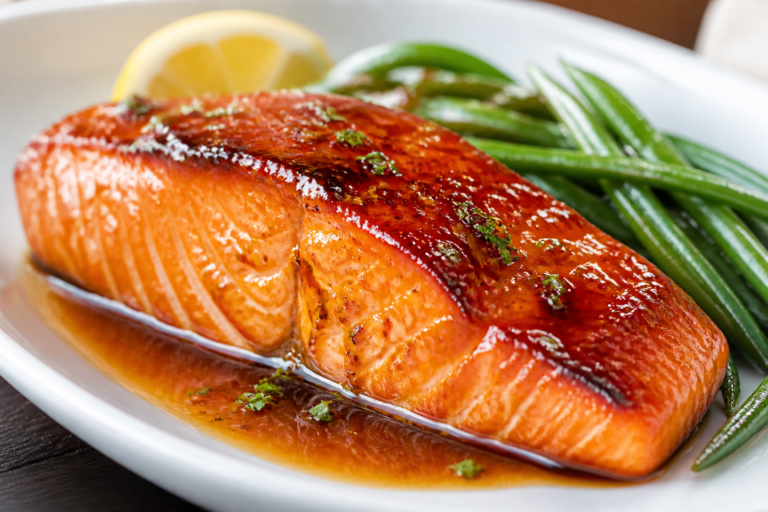
Salmon doesn’t need much to taste great, but this maple Dijon glaze takes it from simple to memorable. It’s the kind of sweet-tangy flavor combo that feels restaurant-worthy, yet you can pull it off on a busy weeknight. The glaze caramelizes in the oven, leaving the fish flaky and glossy, with crisp edges that are hard to resist.
FREE 7-Day Easy Dinner Reset
FREE 7-Day Easy Dinner Reset
You only need a handful of pantry staples and about 20 minutes. If you’re looking for a reliable, crowd-pleasing recipe, this one checks every box.
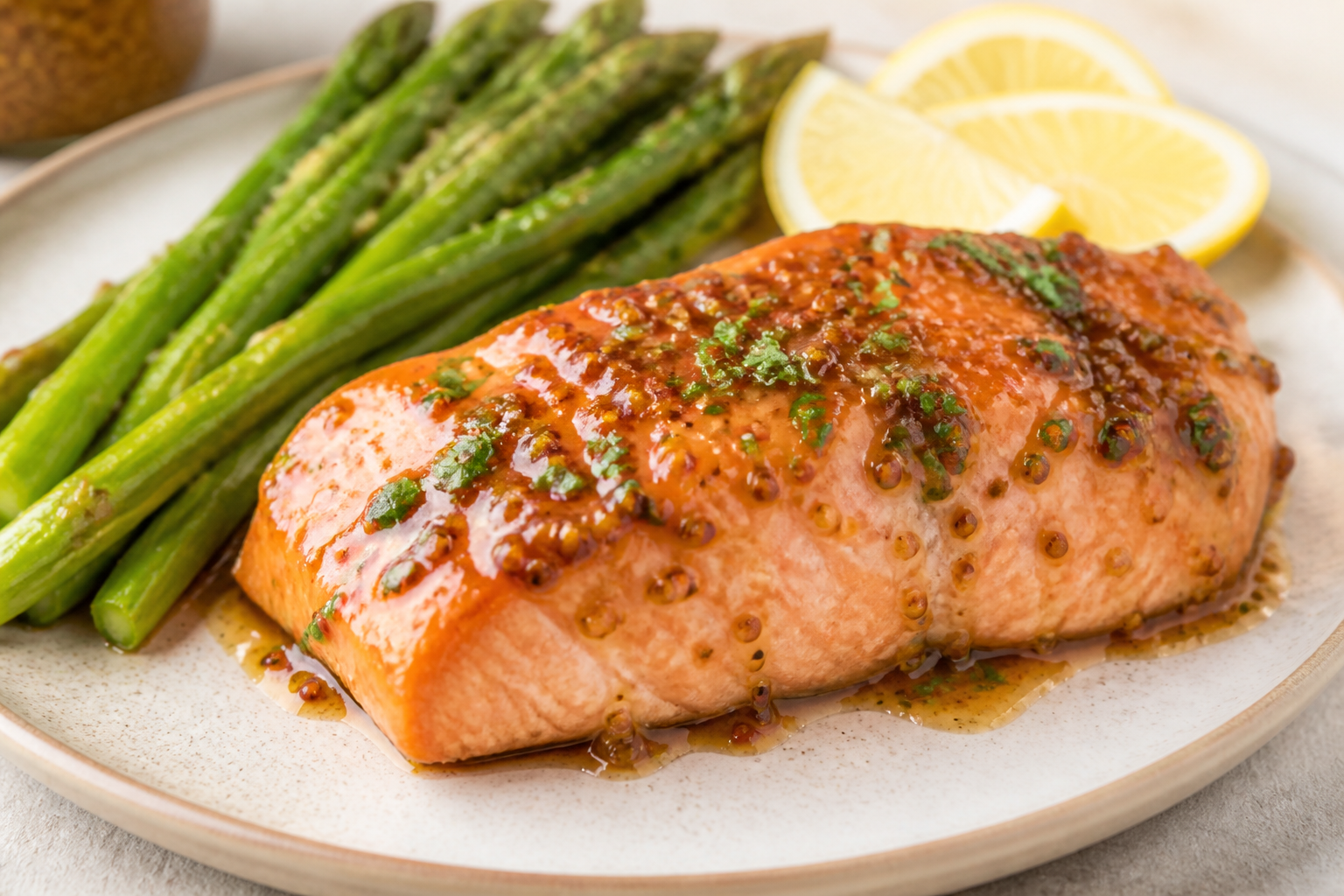
Maple Dijon Glazed Salmon - Sweet, Tangy, and Weeknight Easy
Ingredients
Method
- Preheat and prep the pan: Heat your oven to 400°F (200°C). Line a rimmed baking sheet with foil or parchment for easy cleanup.Lightly oil the surface so the salmon won’t stick.
- Mix the glaze: In a small bowl, whisk together the maple syrup, Dijon mustard, soy sauce, lemon juice, garlic, smoked paprika, and red pepper flakes. Taste and adjust—add more mustard for tang, more maple for sweetness, or more lemon for brightness.
- Season the salmon: Pat the fillets dry with paper towels. Sprinkle both sides with salt and pepper.Place them skin-side down if using skin-on fillets.
- Glaze generously: Spoon about two-thirds of the glaze over the salmon, coating the tops and sides. Reserve the rest for a final brush or drizzle after cooking.
- Bake until just done: Roast for 10–12 minutes, depending on thickness. Salmon is done when it flakes easily with a fork and the center is still slightly translucent.For thicker fillets (over 1 inch), add 2–3 minutes.
- Optional broil for caramelization: Switch to broil on high for the last 1–2 minutes to get glossy, lightly charred edges. Watch closely—sugars can burn fast.
- Finish and rest: Remove from the oven and brush with the remaining glaze. Let rest for 2 minutes to set the juices.
- Serve: Add a squeeze of fresh lemon, sprinkle with herbs, and plate with your favorite sides—roasted vegetables, rice, quinoa, or a crisp green salad.
What Makes This Special
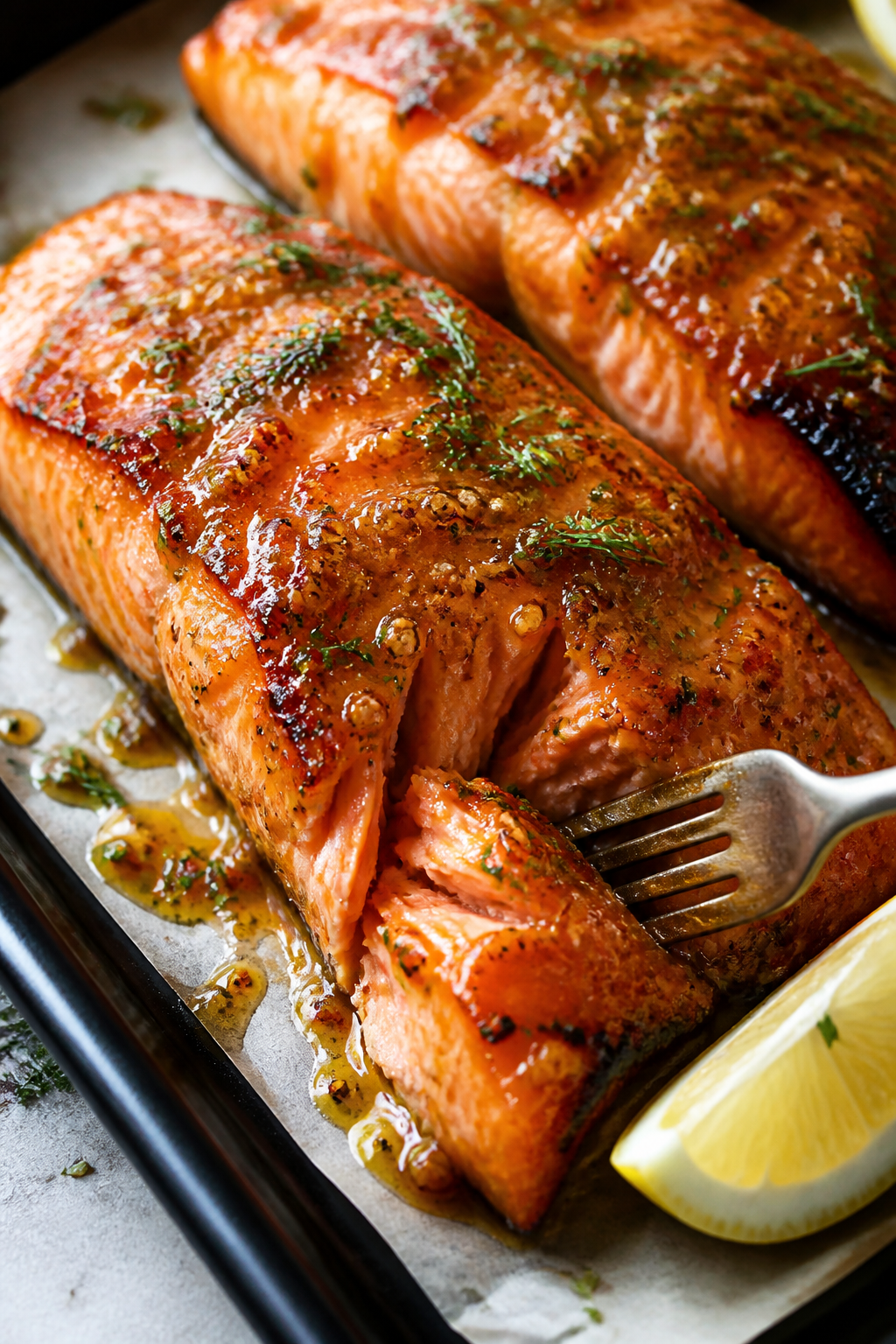
This dish balances sweet maple syrup with sharp Dijon mustard, creating a glaze that’s bold without being overpowering. The flavor hits all the right notes—sweet, salty, tangy, and a little garlicky.
It’s also wonderfully adaptable: bake, broil, or pan-sear depending on your mood. And because salmon cooks quickly, this is a great go-to when you want something satisfying with minimal effort and cleanup.
Shopping List
- 4 salmon fillets (about 6 ounces each), skin-on or skinless
- 1/4 cup pure maple syrup (not pancake syrup)
- 2 tablespoons Dijon mustard
- 1 tablespoon soy sauce or tamari
- 1 tablespoon fresh lemon juice (plus extra wedges for serving)
- 1–2 teaspoons olive oil (for the pan or foil)
- 1 garlic clove, minced (or 1/2 teaspoon garlic powder)
- 1/4 teaspoon smoked paprika (optional, for a hint of warmth)
- Pinch of red pepper flakes (optional)
- Kosher salt and freshly ground black pepper
- Fresh herbs for garnish (parsley, chives, or dill), optional
Step-by-Step Instructions
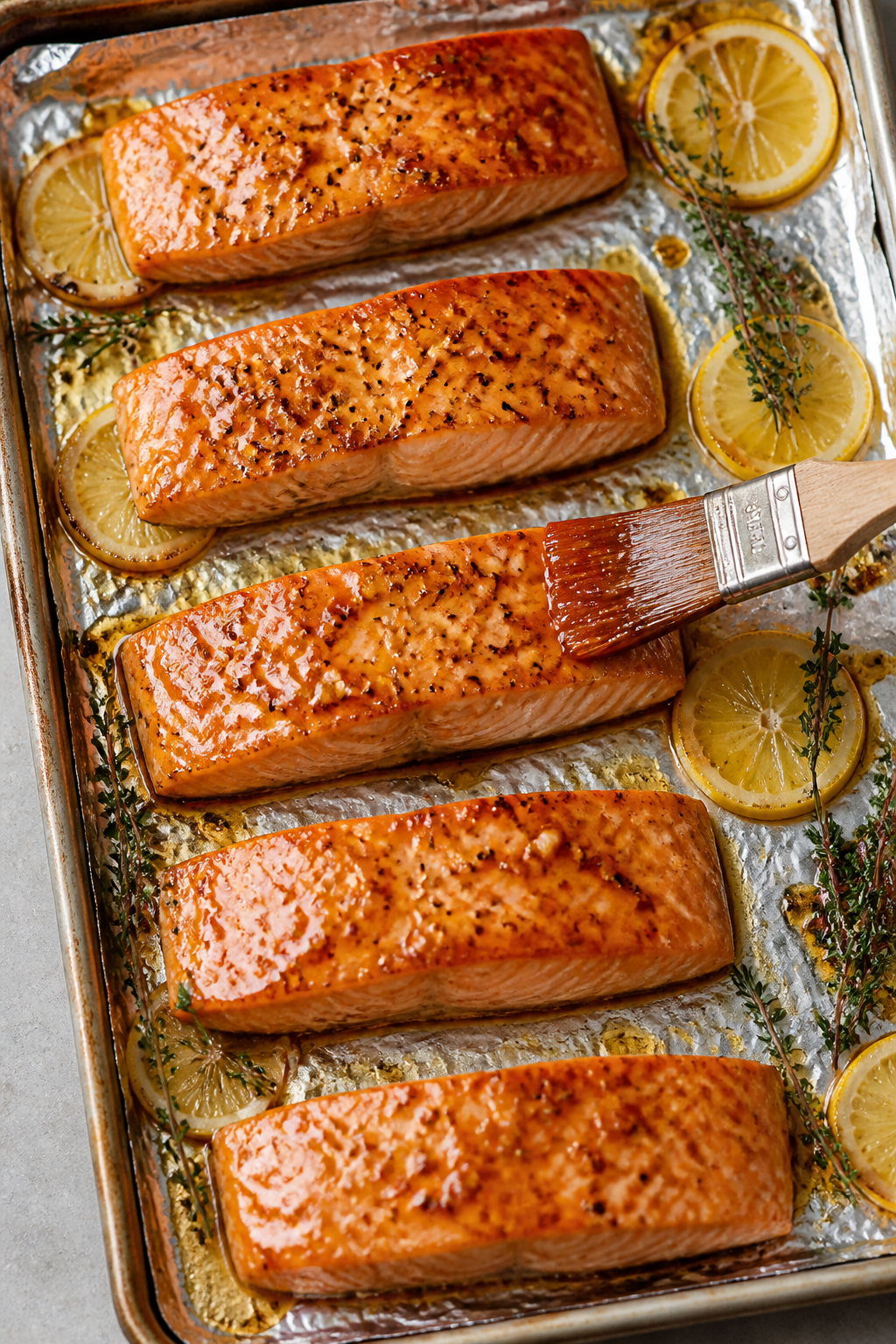
- Preheat and prep the pan: Heat your oven to 400°F (200°C). Line a rimmed baking sheet with foil or parchment for easy cleanup.
Lightly oil the surface so the salmon won’t stick.
- Mix the glaze: In a small bowl, whisk together the maple syrup, Dijon mustard, soy sauce, lemon juice, garlic, smoked paprika, and red pepper flakes. Taste and adjust—add more mustard for tang, more maple for sweetness, or more lemon for brightness.
- Season the salmon: Pat the fillets dry with paper towels. Sprinkle both sides with salt and pepper.
Place them skin-side down if using skin-on fillets.
- Glaze generously: Spoon about two-thirds of the glaze over the salmon, coating the tops and sides. Reserve the rest for a final brush or drizzle after cooking.
- Bake until just done: Roast for 10–12 minutes, depending on thickness. Salmon is done when it flakes easily with a fork and the center is still slightly translucent.
For thicker fillets (over 1 inch), add 2–3 minutes.
- Optional broil for caramelization: Switch to broil on high for the last 1–2 minutes to get glossy, lightly charred edges. Watch closely—sugars can burn fast.
- Finish and rest: Remove from the oven and brush with the remaining glaze. Let rest for 2 minutes to set the juices.
- Serve: Add a squeeze of fresh lemon, sprinkle with herbs, and plate with your favorite sides—roasted vegetables, rice, quinoa, or a crisp green salad.
Keeping It Fresh
For the best texture and flavor, use fresh, high-quality salmon.
If buying ahead, store it in the coldest part of your fridge and cook within 1–2 days. Cooked salmon keeps well in an airtight container for up to 3 days. Reheat gently at low heat or enjoy chilled over salad to avoid drying it out.
If freezing, wrap raw fillets tightly and use within 2–3 months; thaw overnight in the fridge before cooking.
Health Benefits
Salmon is rich in omega-3 fatty acids (EPA and DHA), which support heart and brain health. It also provides high-quality protein for muscle repair and satiety, along with essential nutrients like vitamin D, selenium, and B vitamins. Using maple syrup instead of refined sugar offers a touch of minerals and a cleaner flavor profile, and Dijon brings big taste with minimal calories.
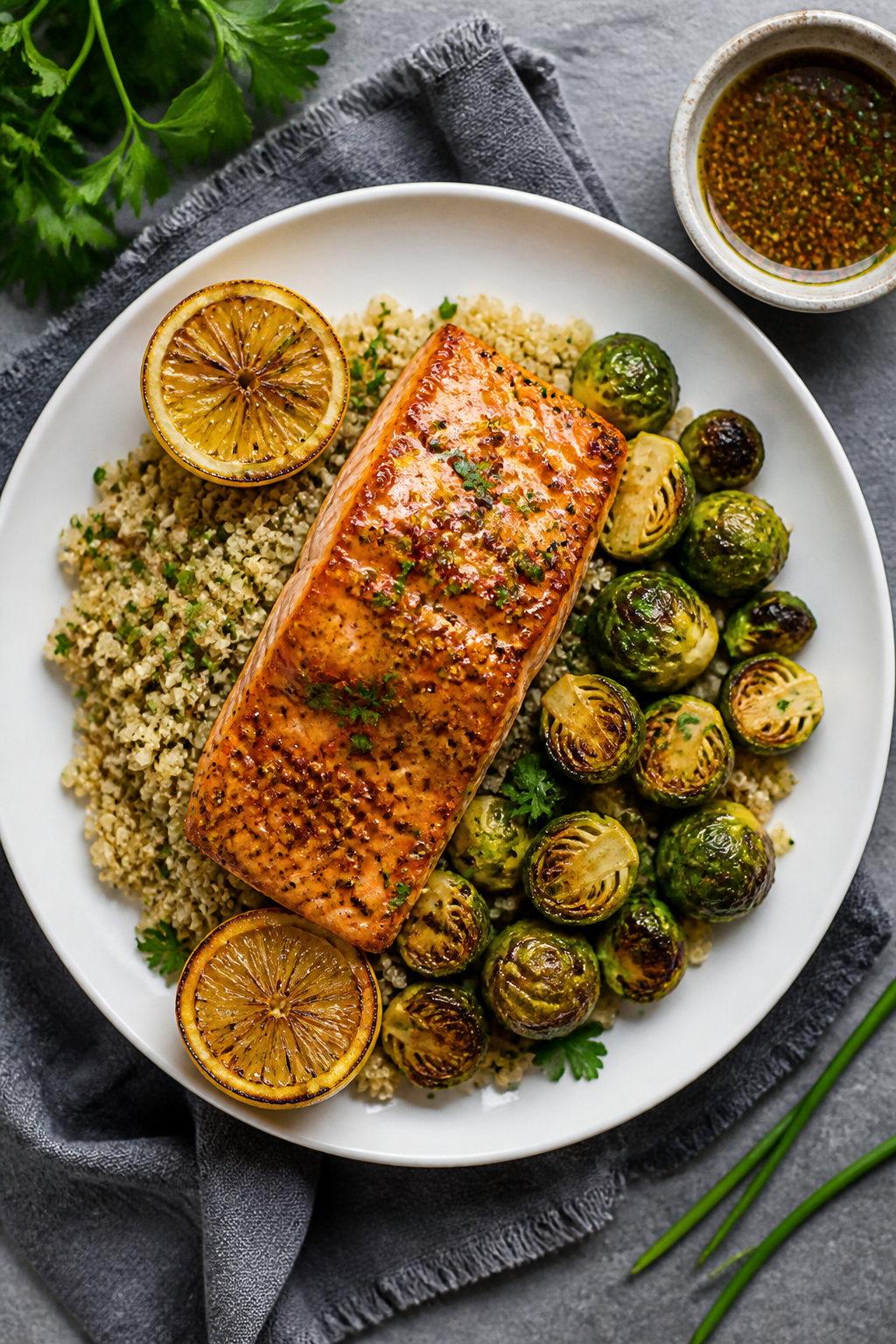
Pairing it with fiber-rich sides—like roasted Brussels sprouts, brown rice, or farro—rounds out the meal.
Pitfalls to Watch Out For
- Overcooking: This is the number one mistake. Pull the salmon when it’s just opaque and flakes easily. Aim for an internal temperature around 125–130°F (52–54°C) for moist, medium doneness.
- Too much glaze early on: Sugar burns.
If you like a heavy glaze, reserve some for the final minute or brush it on right after baking.
- Using imitation syrup: Pancake syrup is mostly corn syrup and can taste flat. Use pure maple syrup for the best flavor.
- Skipping the salt: The glaze is sweet and tangy, but you still need a light base seasoning on the fish. Salt draws out salmon’s natural flavor.
- Uneven fillets: Thicker pieces cook slower.
If sizes vary, remove thinner pieces earlier or fold the tail end under to even out thickness.
Alternatives
- Different fish: Try the glaze on Arctic char, trout, or cod. Adjust cook time—lean white fish may need a minute or two less.
- Grill it: Brush the grates with oil and grill salmon over medium heat, 3–4 minutes per side, adding extra glaze at the end.
- Pan-seared and finished in the oven: Sear salmon flesh-side down in a hot skillet for 2 minutes, flip, add glaze, and finish in a 400°F oven for 5–7 minutes.
- Spice swap: Add a pinch of cumin or coriander for warmth, or use whole-grain mustard for more texture. A bit of fresh ginger is great if you want a brighter kick.
- Lower sugar: Reduce maple syrup to 2 tablespoons and add 1 teaspoon extra lemon juice and a splash of rice vinegar for balance.
- Gluten-free: Use tamari or coconut aminos instead of soy sauce, and double-check your Dijon brand.
FAQ
How do I know when salmon is perfectly cooked?
Look for flesh that turns opaque and flakes easily with a fork, with a slightly translucent center.
Stop wondering what's for dinner.
Get 7 healthy, family-friendly dinners complete with recipes and simple meal plans delivered straight to your inbox.
If you use a thermometer, aim for 125–130°F for moist, medium doneness. Remember, it will continue to cook a bit as it rests.
Can I marinate the salmon in the glaze?
You can, but keep it short—15 to 30 minutes in the fridge is enough. Longer times can make the surface too wet and may affect texture.
The glaze works best brushed on right before and right after cooking.
What sides go best with maple Dijon salmon?
Try roasted Brussels sprouts, green beans, or asparagus; a lemony arugula salad; or grains like quinoa, brown rice, or couscous. The sweet-tangy glaze pairs especially well with something savory and a little bitter to balance it out.
Can I use frozen salmon?
Yes. Thaw it overnight in the fridge, then pat dry very well before seasoning and glazing.
Excess moisture can prevent the glaze from sticking and caramelizing.
Is there a good substitute for Dijon mustard?
Whole-grain mustard adds a similar tang with more texture. Yellow mustard is milder and less complex but can work in a pinch. You can also mix a teaspoon of prepared horseradish with whole-grain mustard for a sharper bite.
How can I make this spicier?
Add extra red pepper flakes, a squeeze of sriracha, or a teaspoon of chili-garlic sauce to the glaze.
A touch of cayenne also blends nicely without overwhelming the maple.
What if I don’t have lemon?
Use a splash of apple cider vinegar or rice vinegar. The acidity brightens the glaze and keeps it from tasting too sweet.
Can I meal prep this?
Absolutely. Cook the salmon slightly under your ideal doneness, cool, and store in the fridge.
Reheat gently at 275°F for 10–12 minutes or enjoy cold over greens with extra lemon and herbs.
Why is my glaze burning?
Sugars brown quickly near the broiler or on high heat. Keep the oven at 400°F for most of the cook, broil very briefly at the end, and avoid putting all the glaze on too early. Line the pan and watch the last two minutes closely.
Skin on or off?
Either works.
Skin-on helps keep the fish moist and makes it easier to lift off the pan. After cooking, the flesh will separate from the skin if you prefer not to eat it.
Final Thoughts
Maple Dijon Glazed Salmon delivers big flavor with almost no fuss. With a short ingredient list and a quick cook time, it’s a dependable recipe you can make on repeat and dress up as needed.
Keep pure maple syrup and good Dijon on hand, and you’ll always have a weeknight winner ready to go. Simple, satisfying, and just a little special—that’s the sweet spot.
Printable Recipe Card
Want just the essential recipe details without scrolling through the article? Get our printable recipe card with just the ingredients and instructions.
Loved This Recipe?
If you're looking for more simple, healthy dinners your family will actually eat, grab my FREE 7-Day Easy Dinner Reset. You'll get 7 easy dinner recipes, simple grocery lists, and a done-for-you plan that takes the stress out of mealtime.