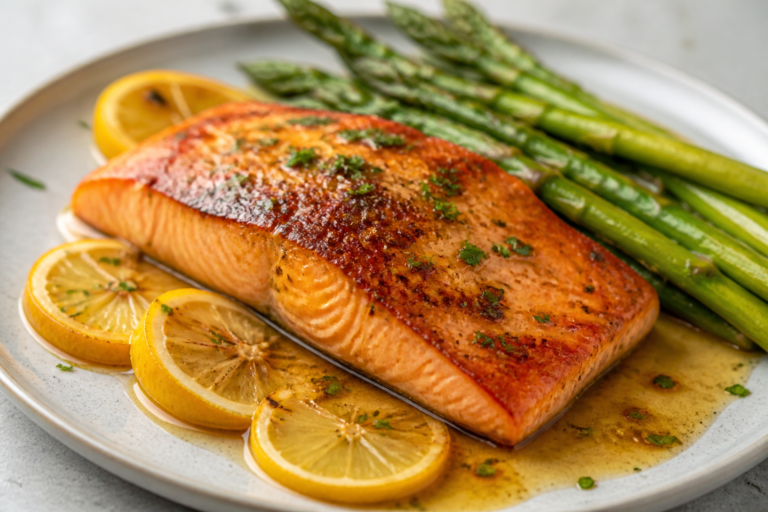
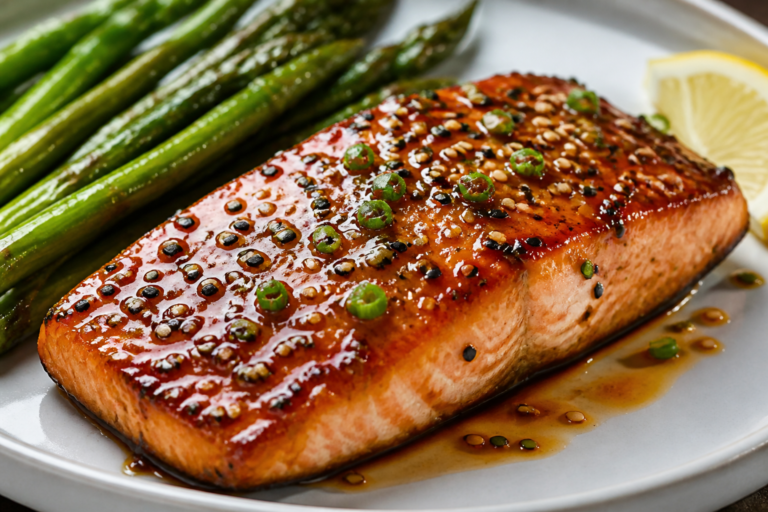
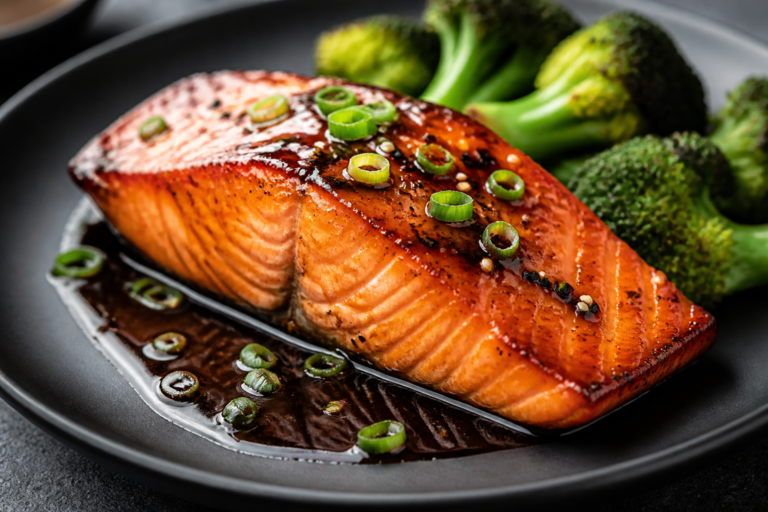
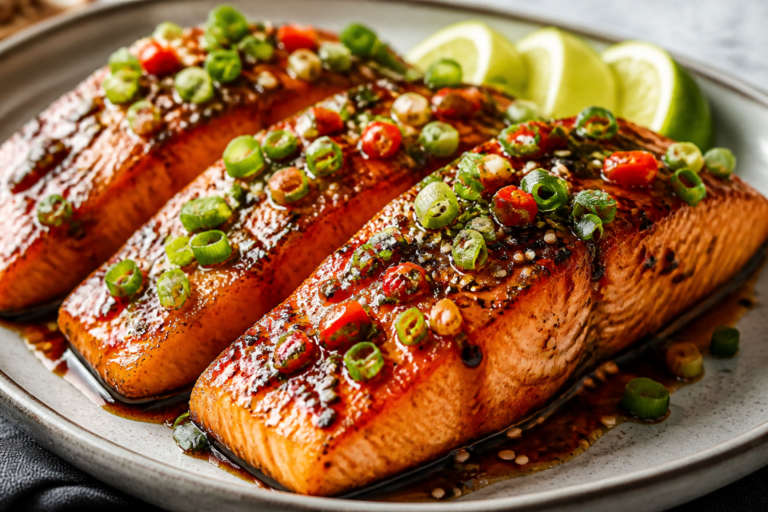
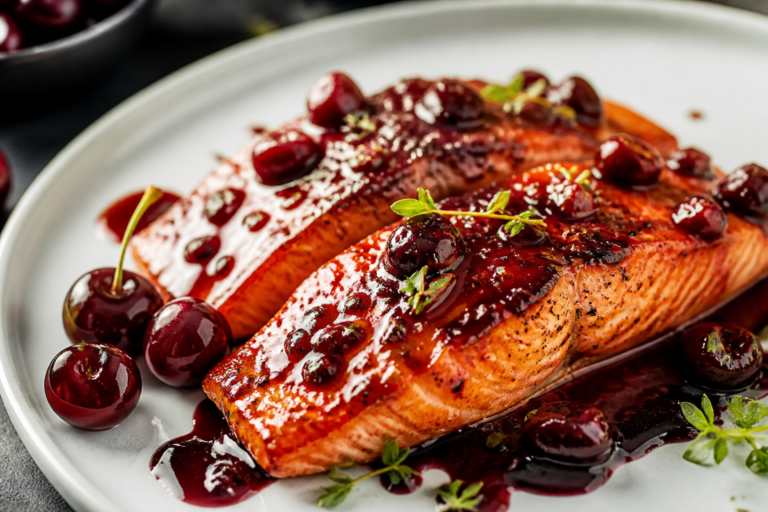
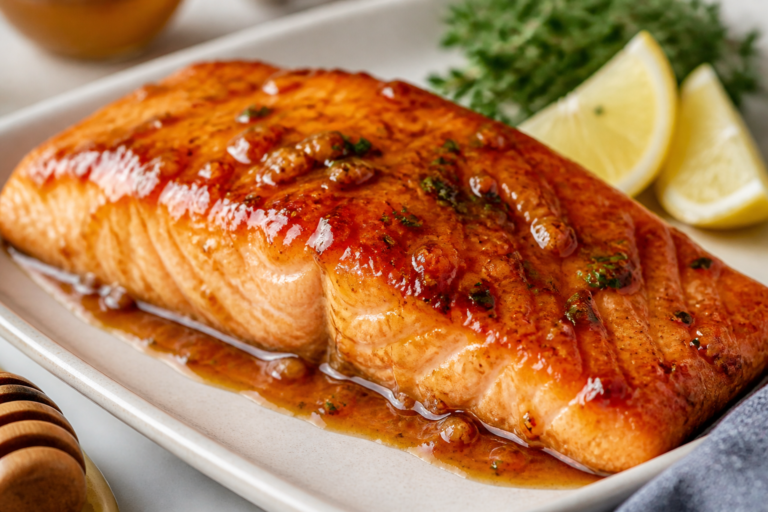
Honey Garlic Glazed Salmon – Sweet, Savory, and Ready in Minutes
This is the kind of weeknight dinner that feels restaurant-worthy without the stress. Honey garlic glazed salmon cooks fast, uses everyday ingredients, and tastes like you planned ahead. The sauce is glossy and sticky, with just the right balance of sweet and tangy.
FREE 7-Day Easy Dinner Reset
FREE 7-Day Easy Dinner Reset
You’ll get crisp edges, tender flakes, and a bright finish that makes the whole plate sing. It’s simple, reliable, and easy to make your own.
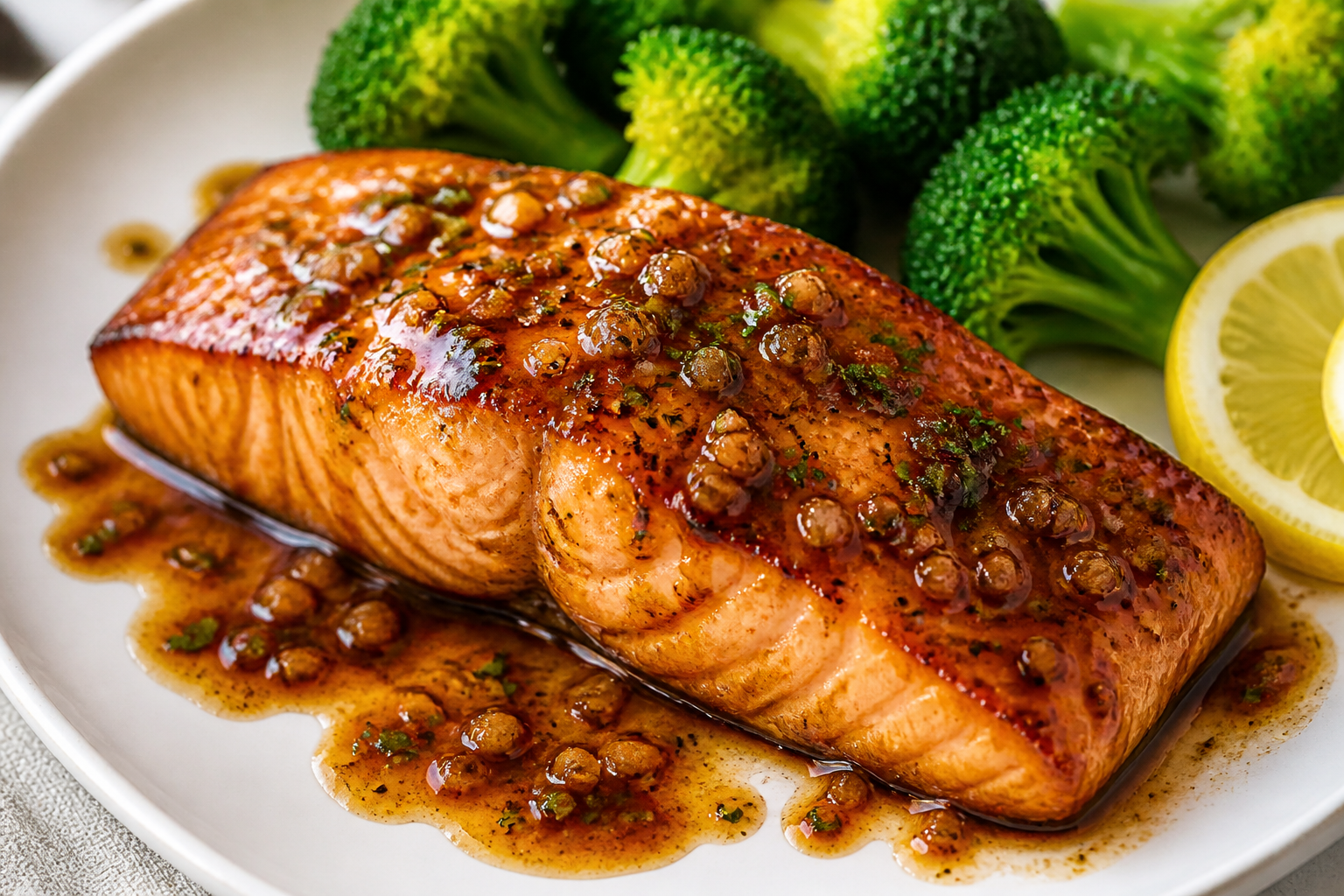
Honey Garlic Glazed Salmon - Sweet, Savory, and Ready in Minutes
Ingredients
Method
- Pat the salmon dry. Use paper towels to remove surface moisture. Season both sides with salt and pepper.Dry fish sears better and helps the glaze stick.
- Stir together the glaze. In a small bowl, mix honey, soy sauce, minced garlic, vinegar, a squeeze of lemon, and ginger if using. Add a pinch of red pepper flakes for a little heat.
- Preheat your pan. Set a large skillet over medium-high heat and add the oil. You want it hot but not smoking, so the salmon browns quickly.
- Sear the salmon skin-side down first. Place fillets in the pan and press gently with a spatula for 10–15 seconds to prevent curling.Cook 3–4 minutes until the skin is crisp and the sides look opaque halfway up.
- Flip and cook briefly. Turn the fillets and cook 1–2 minutes to get color on the top. Don’t fully cook through yet.
- Add the glaze. Pour the honey garlic mixture around the salmon. Reduce heat to medium.Spoon the bubbling glaze over the fish as it thickens, 1–3 minutes. The sauce will turn glossy and slightly sticky.
- Finish with acidity. When the salmon flakes easily with a fork and the internal temperature reaches 125–130°F for medium (or 135°F for medium-well), turn off the heat. Add another small squeeze of lemon to brighten the sauce.
- Rest and garnish. Let the salmon rest 2 minutes in the pan.Sprinkle with sesame seeds and sliced green onions. Serve with extra glaze spooned on top.
What Makes This Special
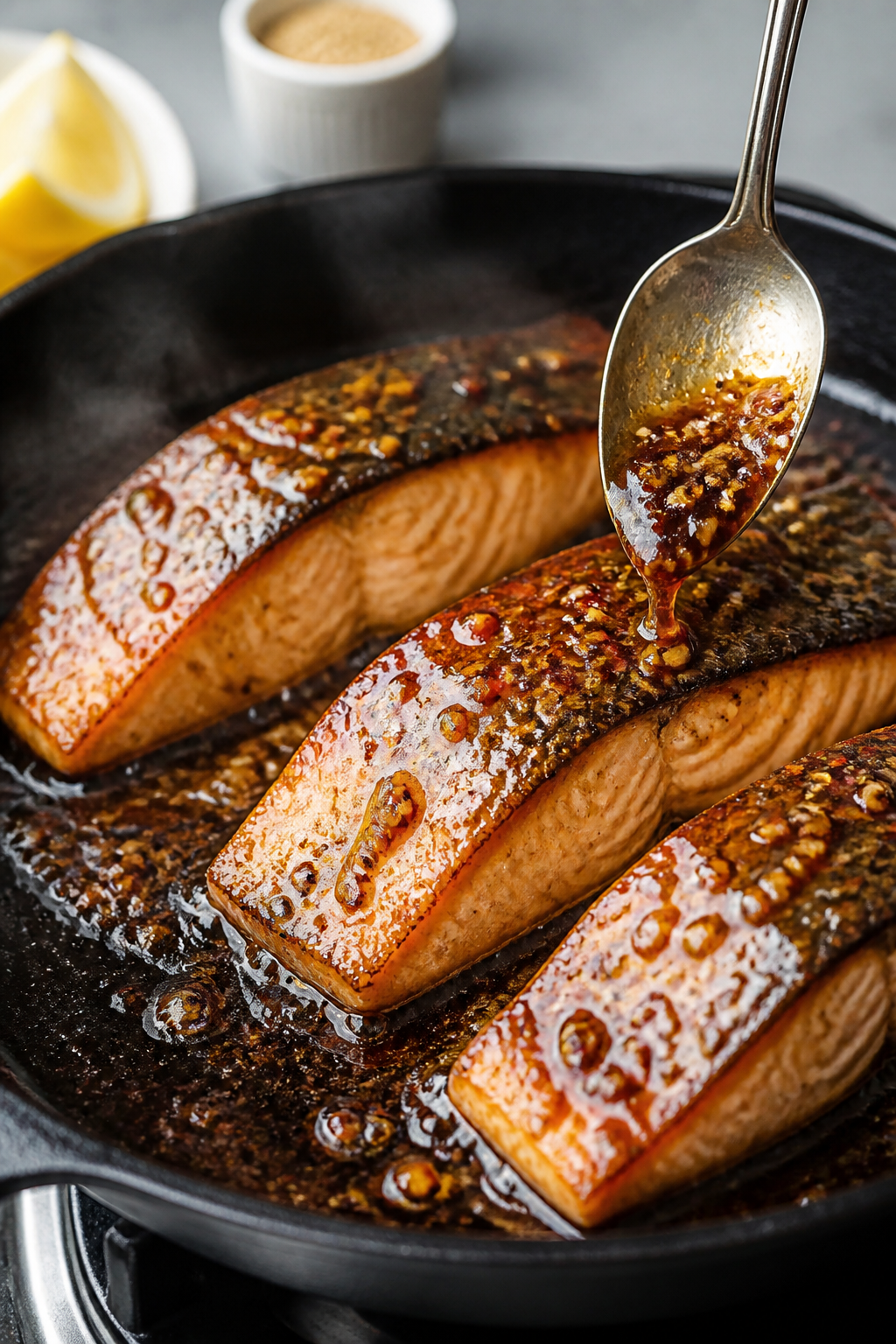
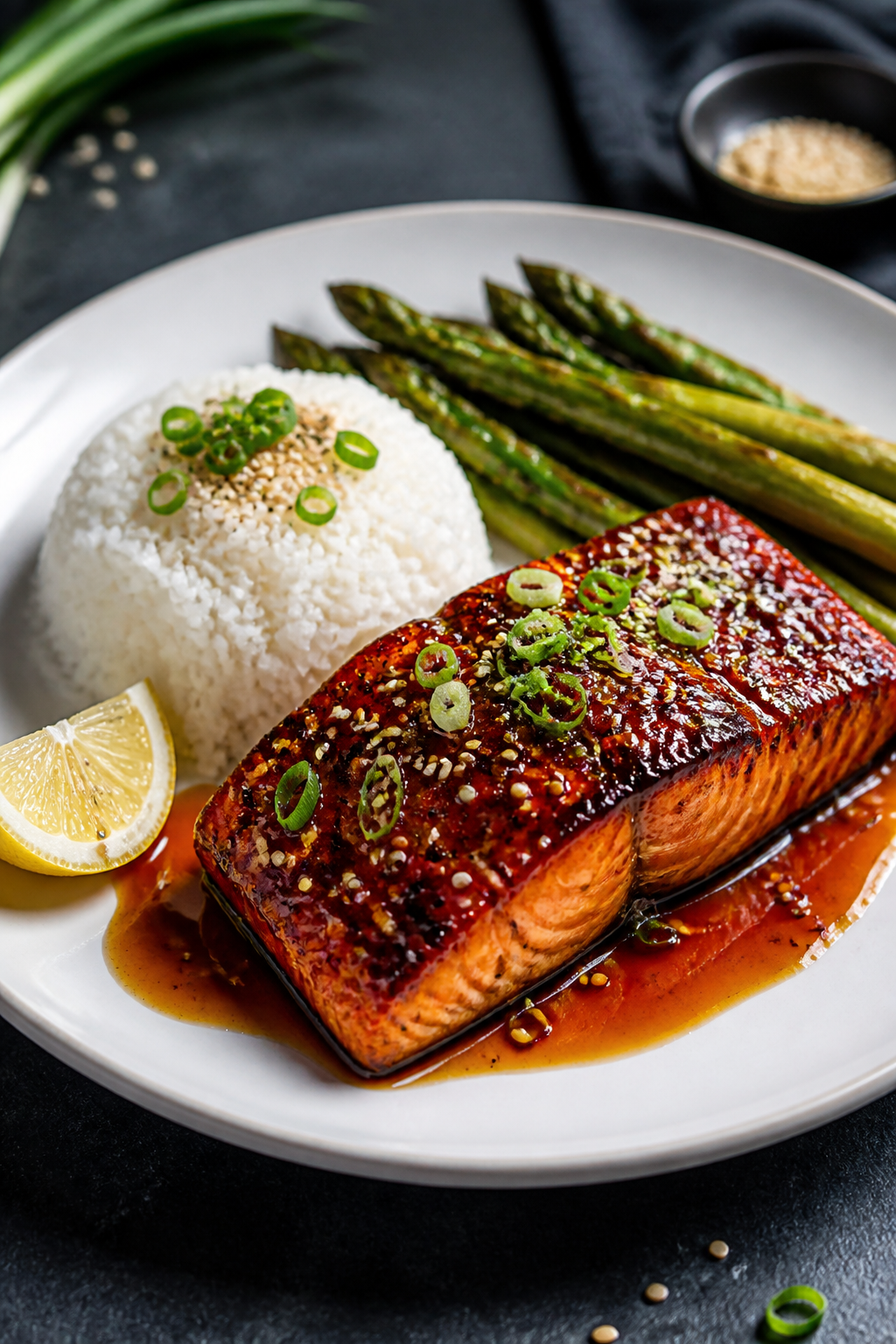
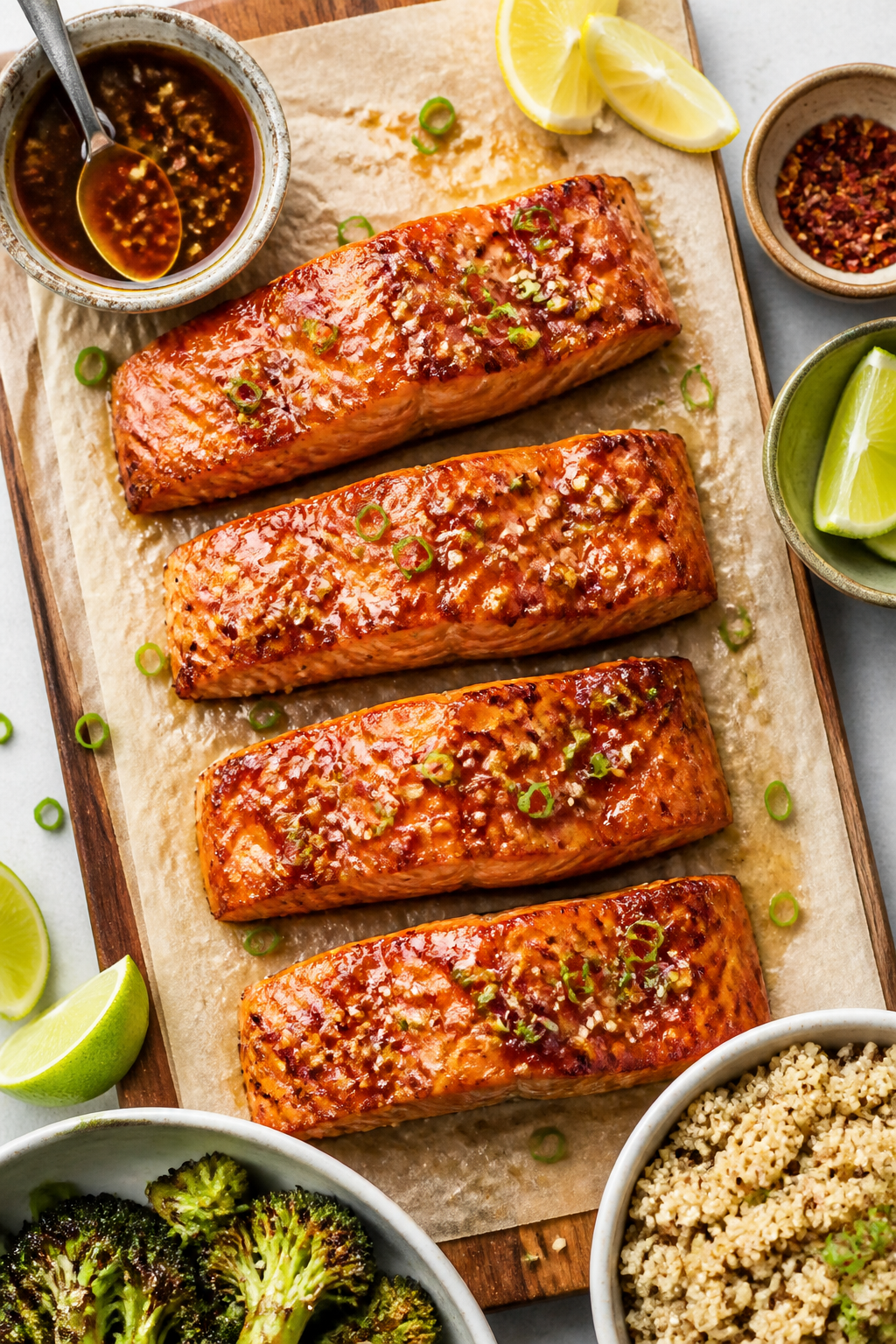
There are a lot of salmon recipes out there, but this one hits that sweet spot: bold flavor, minimal effort. The sauce caramelizes as it cooks, coating the fish in a shiny glaze that clings to every bite.
A quick sear gives you a golden crust, while the inside stays juicy and tender.
It’s also wonderfully flexible. You can make it on the stovetop, in the oven, or a mix of both. Pair it with rice, quinoa, roasted veggies, or a crisp salad.
And the sauce? It’s pantry-friendly and comes together in minutes.
Shopping List
- Salmon fillets (4 pieces, 5–6 oz each, skin-on preferred)
- Honey (about 3 tablespoons)
- Garlic (4 cloves, minced)
- Soy sauce (low-sodium preferred, 2 tablespoons)
- Rice vinegar or apple cider vinegar (1 tablespoon)
- Lemon or lime (1, for juice and optional zest)
- Fresh ginger (optional, 1 teaspoon grated)
- Red pepper flakes or a pinch of cayenne (optional, for heat)
- Olive oil or avocado oil (2 tablespoons)
- Salt and black pepper
- Sesame seeds (optional, for garnish)
- Green onions (optional, sliced for garnish)
Instructions
- Pat the salmon dry. Use paper towels to remove surface moisture. Season both sides with salt and pepper.
Dry fish sears better and helps the glaze stick.
- Stir together the glaze. In a small bowl, mix honey, soy sauce, minced garlic, vinegar, a squeeze of lemon, and ginger if using. Add a pinch of red pepper flakes for a little heat.
- Preheat your pan. Set a large skillet over medium-high heat and add the oil. You want it hot but not smoking, so the salmon browns quickly.
- Sear the salmon skin-side down first. Place fillets in the pan and press gently with a spatula for 10–15 seconds to prevent curling.
Cook 3–4 minutes until the skin is crisp and the sides look opaque halfway up.
- Flip and cook briefly. Turn the fillets and cook 1–2 minutes to get color on the top. Don’t fully cook through yet.
- Add the glaze. Pour the honey garlic mixture around the salmon. Reduce heat to medium.
Spoon the bubbling glaze over the fish as it thickens, 1–3 minutes. The sauce will turn glossy and slightly sticky.
- Finish with acidity. When the salmon flakes easily with a fork and the internal temperature reaches 125–130°F for medium (or 135°F for medium-well), turn off the heat. Add another small squeeze of lemon to brighten the sauce.
- Rest and garnish. Let the salmon rest 2 minutes in the pan.
Sprinkle with sesame seeds and sliced green onions. Serve with extra glaze spooned on top.
Storage Instructions
Let leftovers cool to room temperature for 20–30 minutes, then store in an airtight container. Refrigerate for up to 3 days. Reheat gently in a covered skillet over low heat with a splash of water, or microwave in 20–30 second bursts to avoid drying out.
If you want to meal prep, keep the glaze in a separate small container and drizzle it on after reheating. Freezing is possible but can affect texture. If freezing, wrap tightly and use within one month.
Thaw overnight in the fridge before reheating.
Health Benefits
- Omega-3 fatty acids: Salmon is rich in EPA and DHA, which support heart, brain, and joint health.
- High-quality protein: Each serving delivers complete protein for muscle repair and steady energy.
- Micronutrients: You’ll get vitamin D, B12, selenium, and potassium in meaningful amounts.
- Balanced flavors, balanced meal: Pair with fiber-rich sides like brown rice or veggies to keep blood sugar steady despite the honey.
Pitfalls to Watch Out For
- Overcooking: Salmon goes from perfect to dry fast. Pull it off the heat when it hits 125–130°F; it will continue to cook slightly as it rests.
- Watery pan: Wet fish won’t sear. Always pat the fillets dry and use a hot pan.
- Burnt glaze: Honey can scorch.
Lower the heat once the glaze is added and keep it moving with gentle spooning.
- Too salty: Different soy sauces vary. If your soy is very salty, use low-sodium or reduce the amount and add a splash of water.
- Sticking skin: A well-heated pan and enough oil prevent sticking. Don’t force the flip—let the crust form first.
Stop wondering what's for dinner.
Get 7 healthy, family-friendly dinners complete with recipes and simple meal plans delivered straight to your inbox.
Variations You Can Try
- Oven-baked version: Place seasoned salmon on a lined sheet pan.
Brush with half the glaze. Bake at 400°F for 8–12 minutes (thickness matters), brushing again halfway.
- Broiled finish: For extra caramelization, broil the last 1–2 minutes. Watch closely to avoid burning.
- Spicy gochujang twist: Add 1 teaspoon gochujang or sriracha to the glaze for a bolder kick.
- Citrus swap: Use orange juice and a little zest instead of lemon for a warmer, sweeter profile.
- Gluten-free: Replace soy sauce with tamari or coconut aminos.
Adjust honey to taste if using coconut aminos (they’re sweeter).
- Herb finish: Add chopped cilantro, parsley, or basil at the end for a fresh lift.
- Air fryer: Air fry at 390°F for 7–10 minutes, brushing with glaze in the last 2–3 minutes so it doesn’t burn.
FAQ
Should I use skin-on or skinless salmon?
Skin-on is best for searing because it protects the flesh and gets crisp. You can easily slide a spatula between the skin and fish after cooking if you prefer not to eat it.
How do I know when the salmon is done?
Look for flakes that separate with gentle pressure and a slightly translucent center. An instant-read thermometer should read 125–130°F in the thickest part for medium.
Can I use frozen salmon?
Yes.
Thaw it overnight in the fridge, then pat it very dry before cooking. Frozen fillets can release extra moisture, so the drying step is important for a good sear.
What can I substitute for soy sauce?
Use tamari for gluten-free, or coconut aminos for a slightly sweeter, less salty flavor. Adjust the honey if needed to keep the balance right.
Why did my glaze burn?
Honey burns at high heat.
Lower the heat once the glaze goes in, and keep it moving. If your pan is very hot from searing, remove it from the burner for 20–30 seconds before adding the sauce.
What sides pair well with this?
Steamed rice, coconut rice, quinoa, roasted broccoli, green beans, asparagus, or a crunchy cabbage slaw. A wedge of lemon or lime on the side is always welcome.
Can I meal prep this?
Yes.
Cook the salmon slightly under your ideal doneness, then chill promptly. Reheat gently and add fresh lemon and herbs before serving. Keep the glaze separate for best texture.
In Conclusion
Honey garlic glazed salmon is fast, flavorful, and flexible enough for any night of the week.
With a short ingredient list and a few smart techniques, you’ll get tender fish with a shiny, craveable sauce. Keep an eye on heat, don’t overcook, and finish with a hit of citrus. That’s all it takes to turn simple salmon into something special.
Printable Recipe Card
Want just the essential recipe details without scrolling through the article? Get our printable recipe card with just the ingredients and instructions.
Loved This Recipe?
If you're looking for more simple, healthy dinners your family will actually eat, grab my FREE 7-Day Easy Dinner Reset. You'll get 7 easy dinner recipes, simple grocery lists, and a done-for-you plan that takes the stress out of mealtime.