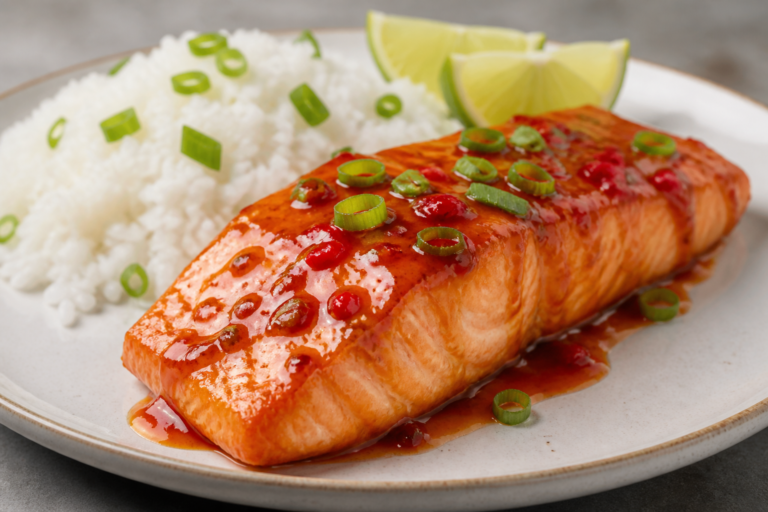
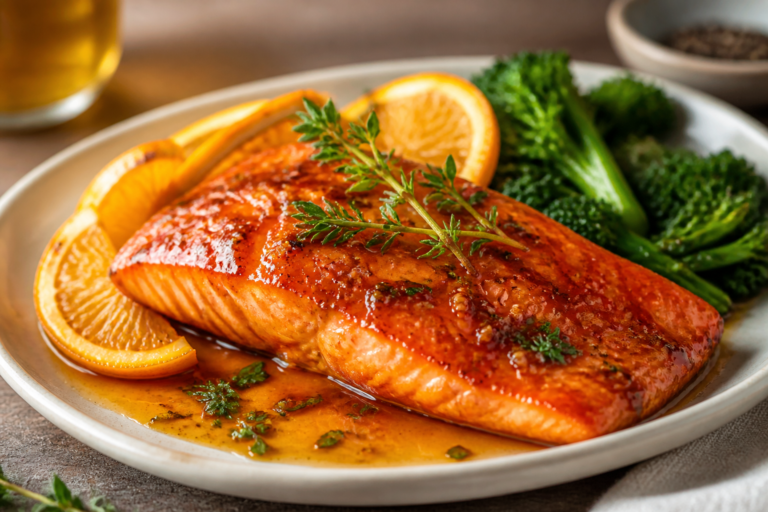
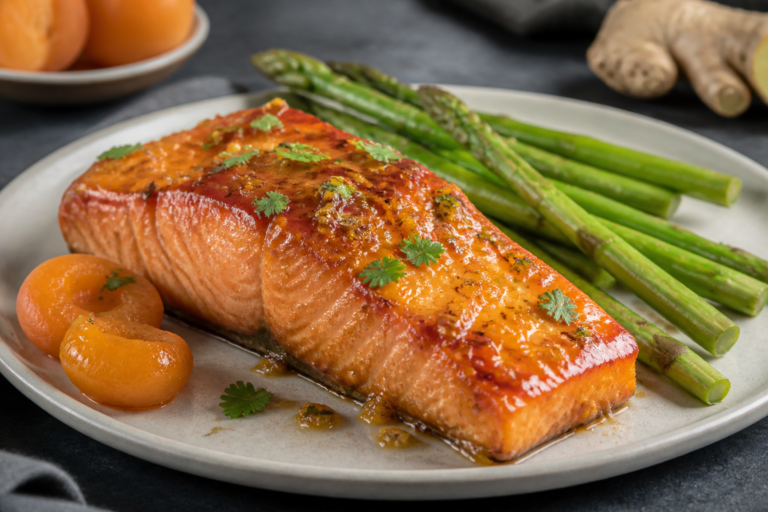
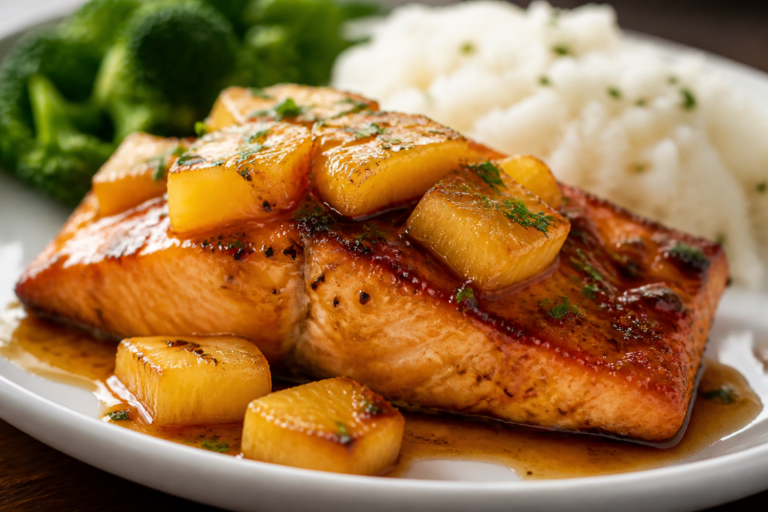
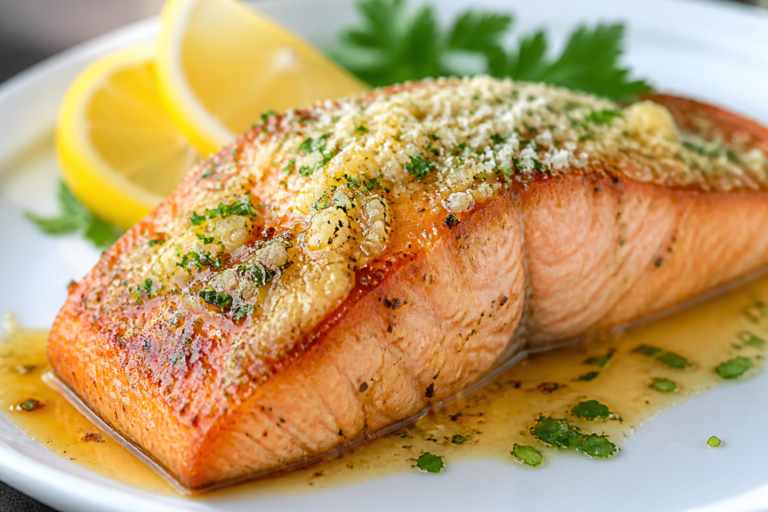
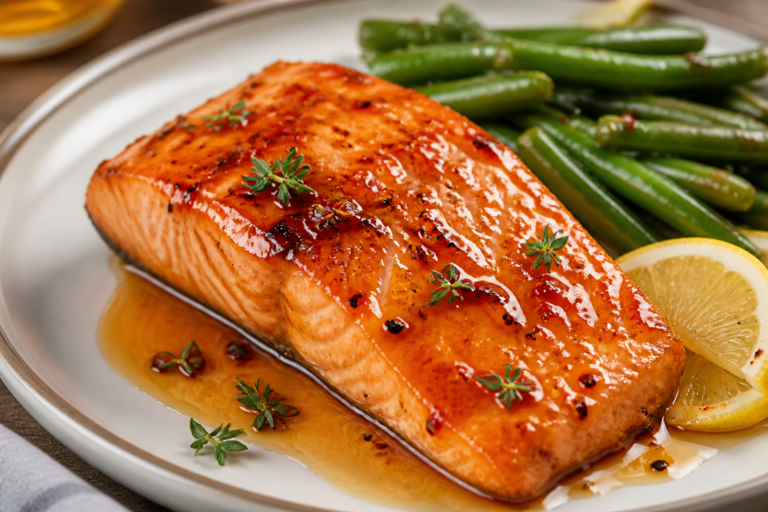
Orange Ginger Glazed Salmon – Bright, Zesty, and Weeknight Easy
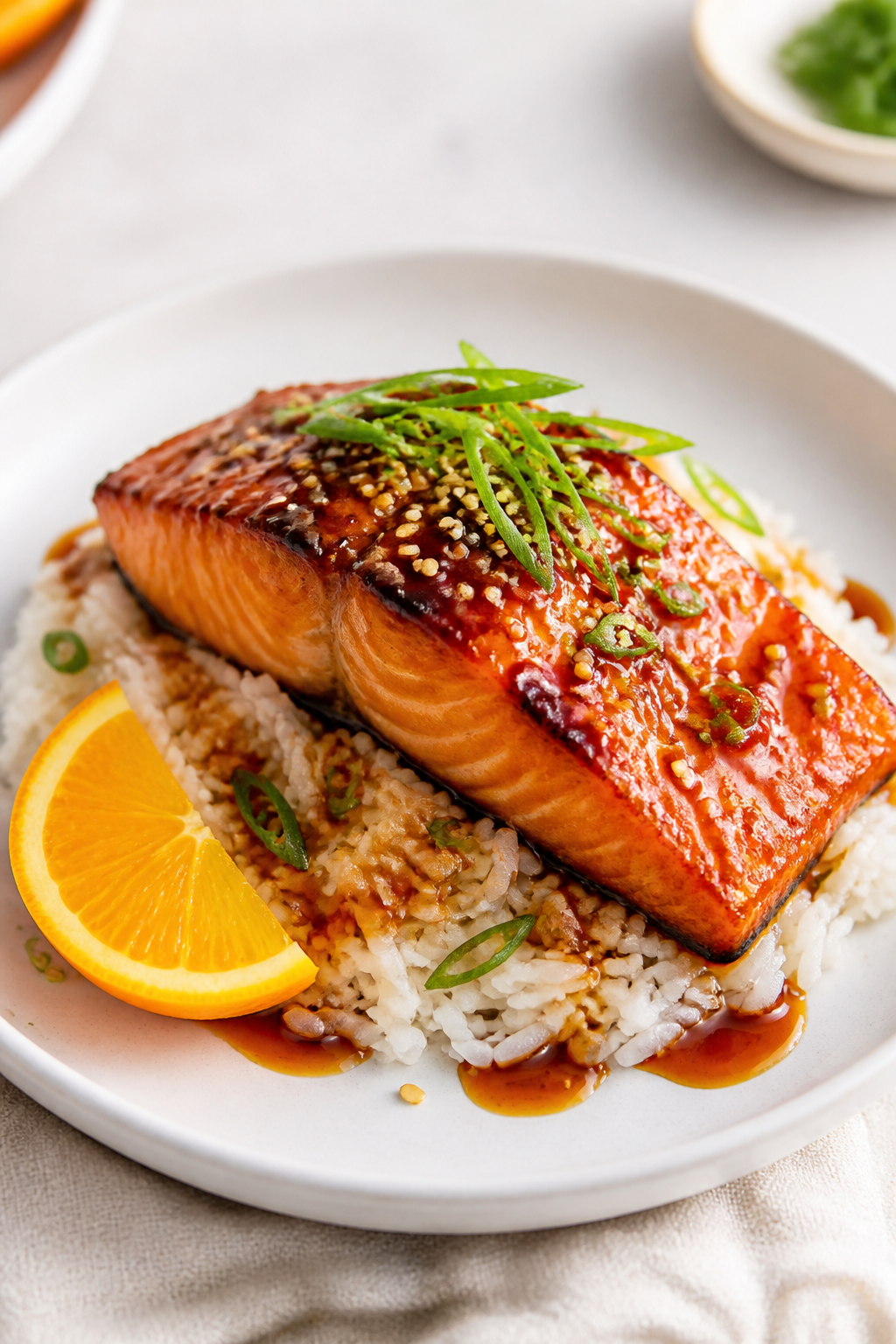
Salmon loves bold flavors, and this orange ginger glaze delivers exactly that. It’s sweet, tangy, a little spicy, and ready in under 30 minutes. Perfect for weeknights, but elegant enough to serve to friends.
FREE 7-Day Easy Dinner Reset
FREE 7-Day Easy Dinner Reset
You don’t need a long ingredient list, just a few pantry staples and fresh citrus. The result is tender, flaky salmon with a glossy, caramelized finish that tastes like you worked way harder than you did.
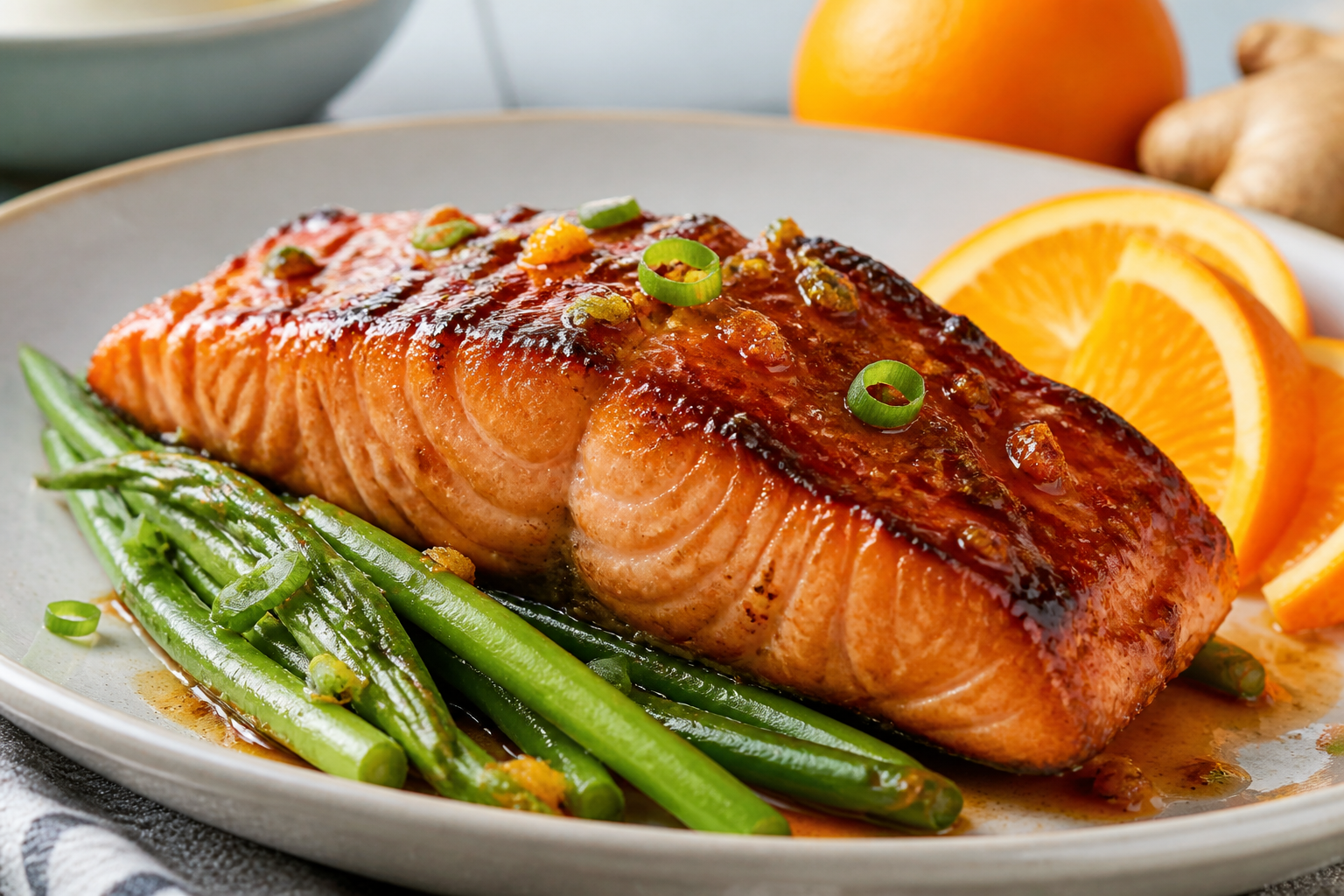
Orange Ginger Glazed Salmon - Bright, Zesty, and Weeknight Easy
Ingredients
Method
- Pat the salmon dry. Use paper towels to remove surface moisture. Season both sides lightly with salt and pepper.Dry fish sears and glazes better.
- Make the glaze. In a small saucepan, combine orange juice, zest, ginger, garlic, soy sauce, honey, vinegar, sesame oil, and red pepper flakes if using. Bring to a simmer over medium heat, stirring occasionally.
- Thicken slightly. Let the glaze bubble for 5–7 minutes until it reduces by about a third. If you want it thicker, stir in the cornstarch slurry and simmer 30–60 seconds until glossy.Taste and adjust sweetness or acidity.
- Preheat the pan. Heat a large nonstick or well-seasoned skillet over medium to medium-high. Add the neutral oil and swirl to coat.
- Sear skin-side down. Place salmon fillets in the skillet, skin-side down. Press gently with a spatula for 10 seconds so the skin stays flat.Cook 4–5 minutes until the skin is crisp and the sides turn opaque about halfway up.
- Flip and brush. Turn the fillets. Spoon or brush a generous layer of glaze over the top. Cook another 2–4 minutes, depending on thickness, basting once more.You’re aiming for medium, about 125–130°F in the center.
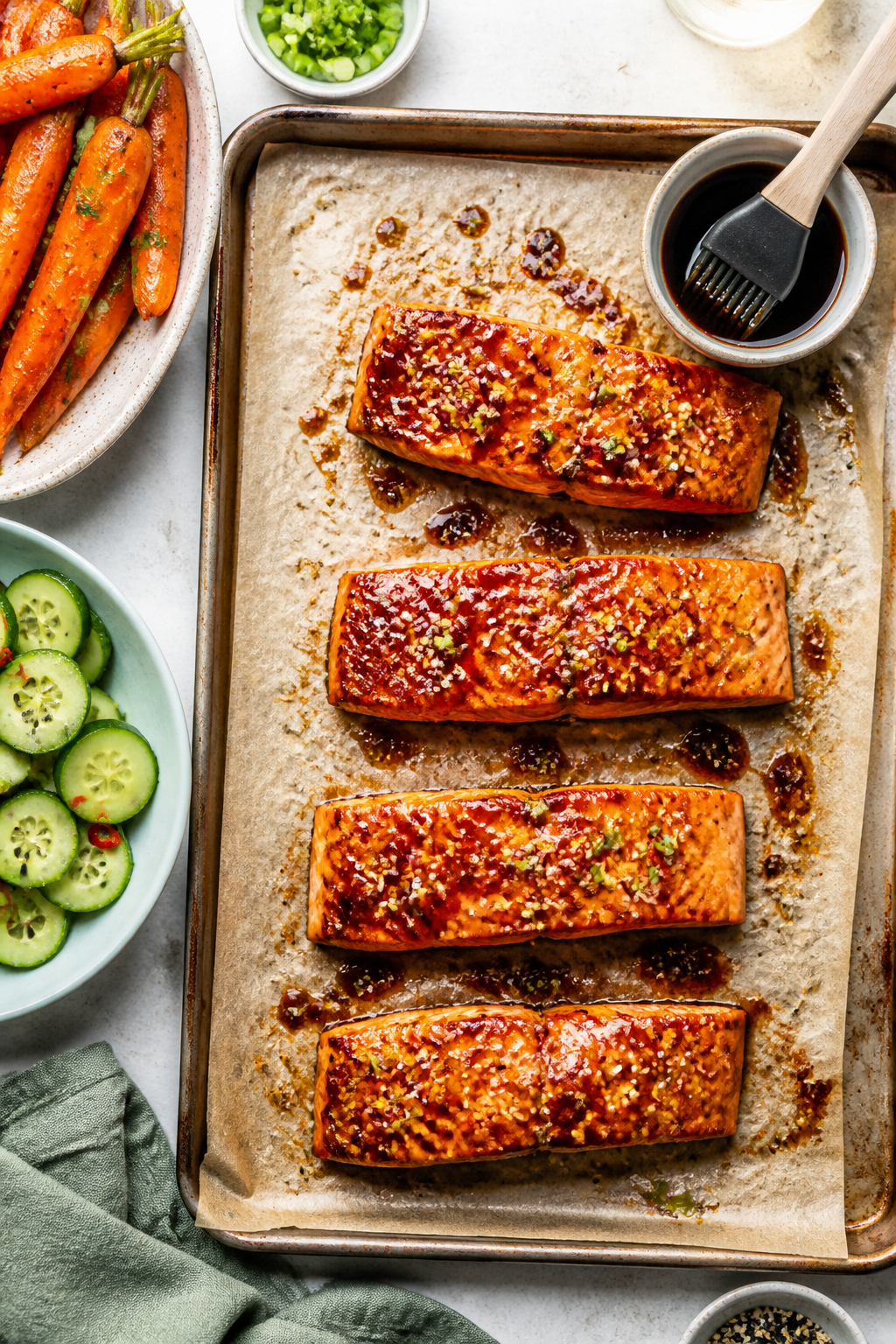
- Optional broil finish. For extra caramelization, transfer the salmon to a foil-lined sheet pan, brush with more glaze, and broil 1–2 minutes. Watch closely—sugars can burn quickly.
- Rest and serve. Let the salmon rest 2 minutes. Plate with a drizzle of remaining glaze and your choice of sides.Garnish with green onion, sesame seeds, and a squeeze of fresh orange.
What Makes This Special
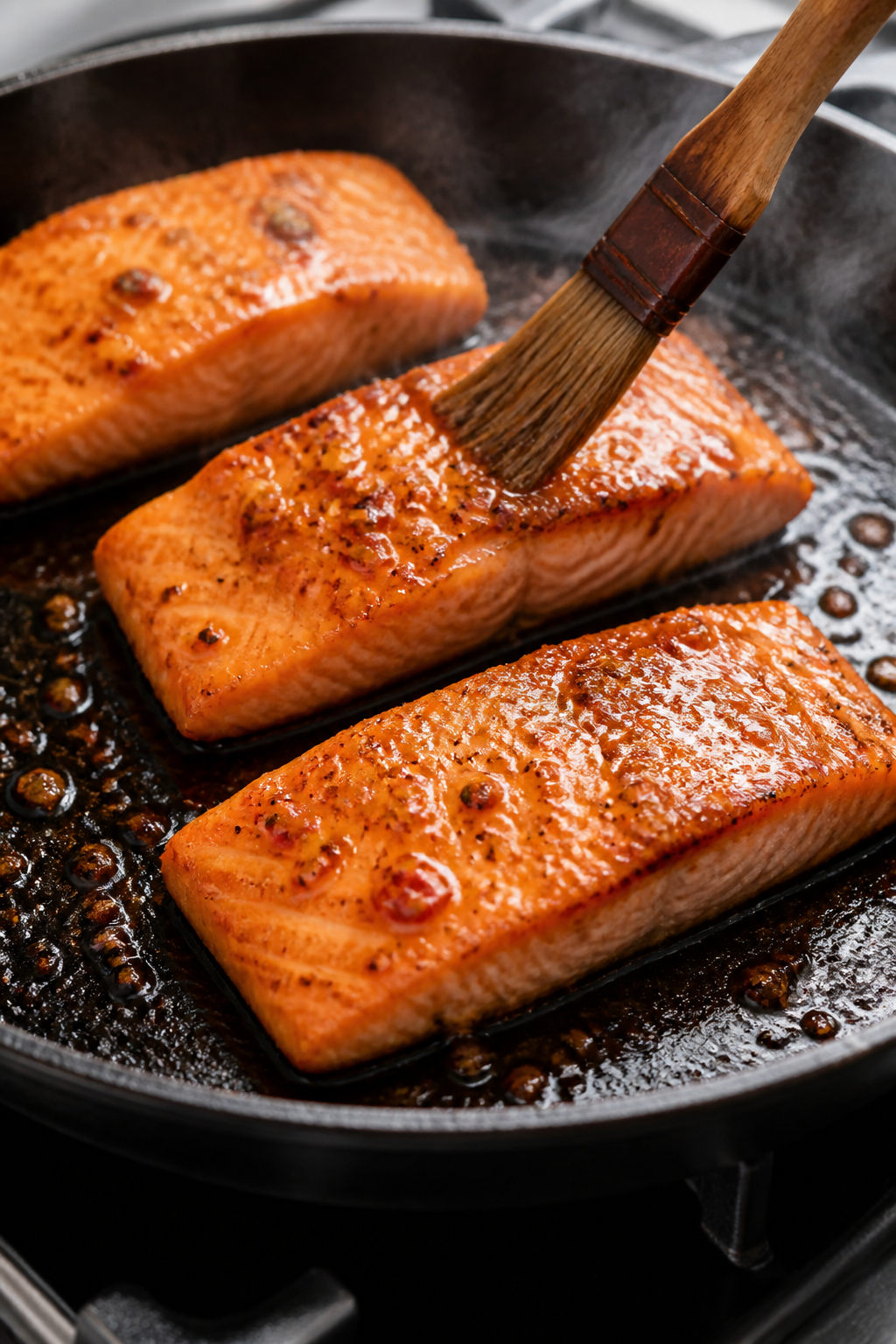
This glaze balances sweet orange, warm ginger, and savory soy for a flavor that hits all the right notes. It reduces quickly on the stove, so you get a thick, sticky sauce that clings to the salmon without drowning it.
The cooking method is simple: sear, brush, and finish. Best of all, it pairs with almost anything—rice, roasted veggies, a crisp salad, or noodles.
What You’ll Need
- Salmon: 4 skin-on fillets (about 5–6 ounces each)
- Orange juice: 3/4 cup (freshly squeezed preferred)
- Orange zest: 1 teaspoon (from an organic orange if possible)
- Fresh ginger: 1 tablespoon, finely grated
- Garlic: 2 cloves, minced
- Soy sauce or tamari: 2 tablespoons
- Honey or maple syrup: 2–3 tablespoons (to taste)
- Rice vinegar or lime juice: 1 tablespoon
- Sesame oil: 1 teaspoon (optional, for depth)
- Red pepper flakes or sriracha: 1/4–1/2 teaspoon (optional heat)
- Cornstarch: 1 teaspoon mixed with 2 teaspoons water (optional thickener)
- Neutral oil: 1–2 tablespoons (avocado, canola, or light olive oil)
- Salt and black pepper: to season the fish
- Garnishes: sliced green onion, toasted sesame seeds, and orange wedges (optional)
Step-by-Step Instructions
- Pat the salmon dry. Use paper towels to remove surface moisture. Season both sides lightly with salt and pepper.
Dry fish sears and glazes better.
- Make the glaze. In a small saucepan, combine orange juice, zest, ginger, garlic, soy sauce, honey, vinegar, sesame oil, and red pepper flakes if using. Bring to a simmer over medium heat, stirring occasionally.
- Thicken slightly. Let the glaze bubble for 5–7 minutes until it reduces by about a third. If you want it thicker, stir in the cornstarch slurry and simmer 30–60 seconds until glossy.
Taste and adjust sweetness or acidity.
- Preheat the pan. Heat a large nonstick or well-seasoned skillet over medium to medium-high. Add the neutral oil and swirl to coat.
- Sear skin-side down. Place salmon fillets in the skillet, skin-side down. Press gently with a spatula for 10 seconds so the skin stays flat.
Cook 4–5 minutes until the skin is crisp and the sides turn opaque about halfway up.
- Flip and brush. Turn the fillets. Spoon or brush a generous layer of glaze over the top. Cook another 2–4 minutes, depending on thickness, basting once more.
You’re aiming for medium, about 125–130°F in the center.
- Optional broil finish. For extra caramelization, transfer the salmon to a foil-lined sheet pan, brush with more glaze, and broil 1–2 minutes. Watch closely—sugars can burn quickly.
- Rest and serve. Let the salmon rest 2 minutes. Plate with a drizzle of remaining glaze and your choice of sides.
Garnish with green onion, sesame seeds, and a squeeze of fresh orange.
Keeping It Fresh
– Buy smart: Choose salmon that looks vibrant and moist, not dull or mushy. If it smells strongly “fishy,” skip it. – Storage: Keep raw salmon in the coldest part of your fridge and cook within 1–2 days. Store leftovers in an airtight container for up to 2 days. – Reheating: Warm gently at 275°F (135°C) for 10–12 minutes or in a covered skillet on low with a splash of water.
Avoid the microwave if you can; it can dry the fish and overcook the glaze. – Freezing: The cooked salmon freezes well for up to 2 months. Wrap tightly, thaw overnight in the fridge, and reheat gently.
Health Benefits
– Omega-3 fats: Salmon is rich in EPA and DHA, which support heart health, brain function, and help reduce inflammation. – Lean protein: A serving packs high-quality protein that keeps you full and supports muscle repair. – Vitamin boost: Orange adds vitamin C, while salmon offers vitamin D, B vitamins, and minerals like selenium and potassium. – Balanced flavors, mindful sugars: The glaze satisfies with modest sweetener, so you get bold taste without relying on heavy sauces or cream.
What Not to Do
– Don’t overcrowd the pan. You’ll steam the fish instead of searing it. Cook in batches if needed. – Don’t skip patting dry. Wet fish won’t crisp and the glaze won’t stick as well. – Don’t boil the glaze too hard. It can turn bitter or scorch.
Keep it at a steady simmer and stir. – Don’t overcook. Pull at 125–130°F in the thickest part. The carryover heat will finish the job. – Don’t add the glaze too early. Brush after flipping or near the end to prevent burning.
Variations You Can Try
– Sheet pan version: Place salmon on a lined sheet, brush with glaze, and bake at 400°F (205°C) for 10–14 minutes, broiling the last minute for color. Add broccoli or snap peas to the pan for an all-in-one meal. – Grilled: Oil the grates well.
Stop wondering what's for dinner.
Get 7 healthy, family-friendly dinners complete with recipes and simple meal plans delivered straight to your inbox.
Grill skin-side down over medium heat, lid closed, brushing with glaze in the last few minutes. – Spicy citrus swap: Use blood orange or grapefruit. Add extra sriracha or a pinch of cayenne for kick. – Ginger miso twist: Whisk in 1 teaspoon white miso for umami depth. – No honey? Use brown sugar or maple syrup. Adjust the amount to taste and simmer a touch longer to thicken. – Low-sodium: Choose low-sodium soy sauce and reduce added salt. – No cornstarch: Reduce the glaze a bit longer, or whisk in a tiny knob of cold butter off the heat for body and shine.
Can I use frozen salmon?
Yes.
Thaw it overnight in the fridge or under cold running water in its packaging. Pat it very dry before cooking to get a good sear and help the glaze adhere.
How do I know when the salmon is done without a thermometer?
Look for opaque sides and a center that’s just slightly translucent. The flesh should flake with gentle pressure but still feel moist.
Total cook time is usually 8–10 minutes for average fillets.
Can I make the glaze ahead?
Absolutely. Make it up to 3 days in advance and refrigerate. Rewarm gently and thin with a splash of water or orange juice if it gets too thick.
What sides go best with this?
Steamed jasmine rice, coconut rice, garlicky sautéed greens, roasted carrots, or sesame noodles all work well.
A crisp cucumber salad balances the sweetness.
Is this gluten-free?
Use tamari or a certified gluten-free soy sauce, and ensure other condiments are GF. Everything else is naturally gluten-free.
Can I use skinless salmon?
Yes. Sear carefully and reduce the heat a bit since there’s no skin to protect the flesh.
Flip gently and glaze toward the end to avoid sticking.
What if my glaze is too thin?
Simmer it a few minutes longer to reduce, or whisk in the cornstarch slurry and cook briefly until it thickens. Taste and rebalance the sweetness or acidity if needed.
Wrapping Up
Orange Ginger Glazed Salmon is bright, fast, and flexible—ideal for busy nights and easy entertaining. With a handful of ingredients and a quick simmer, you get a glossy, citrusy glaze that makes salmon shine.
Keep the heat moderate, don’t overcook, and finish with a fresh squeeze of orange. Serve it with simple sides, and you’ve got a meal that feels special without the stress.
Printable Recipe Card
Want just the essential recipe details without scrolling through the article? Get our printable recipe card with just the ingredients and instructions.
Loved This Recipe?
If you're looking for more simple, healthy dinners your family will actually eat, grab my FREE 7-Day Easy Dinner Reset. You'll get 7 easy dinner recipes, simple grocery lists, and a done-for-you plan that takes the stress out of mealtime.