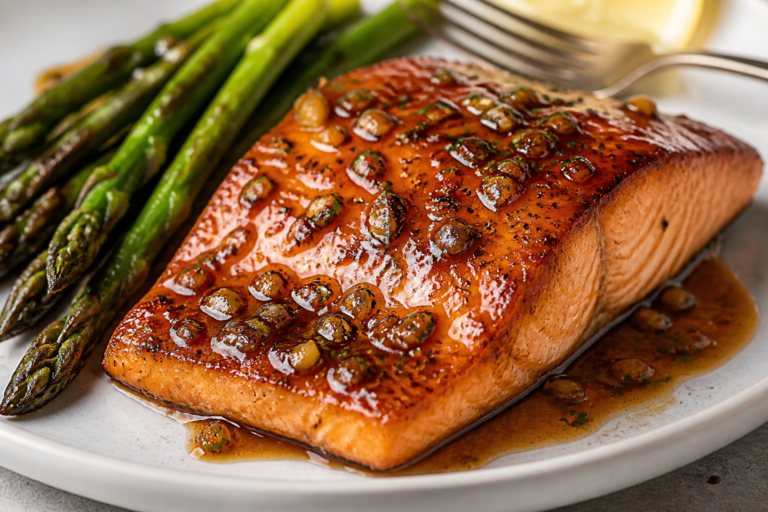
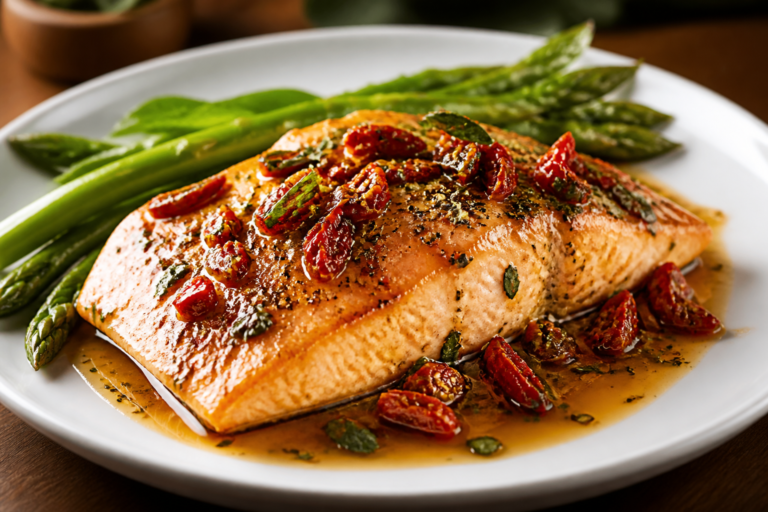
Apple Cider Glazed Salmon – Sweet, Tangy, and Weeknight-Friendly
Apple cider glazed salmon brings together the best of fall flavors with a quick, everyday cooking style. The glaze is glossy, tangy, and a little sweet, and it clings to the fish beautifully. You get crisp edges, tender flakes, and a sauce you’ll want to spoon over everything on your plate.
FREE 7-Day Easy Dinner Reset
FREE 7-Day Easy Dinner Reset
It’s simple enough for a Tuesday, but special enough for company. If you love salmon and want something a little different from lemon and dill, this is a tasty change of pace.
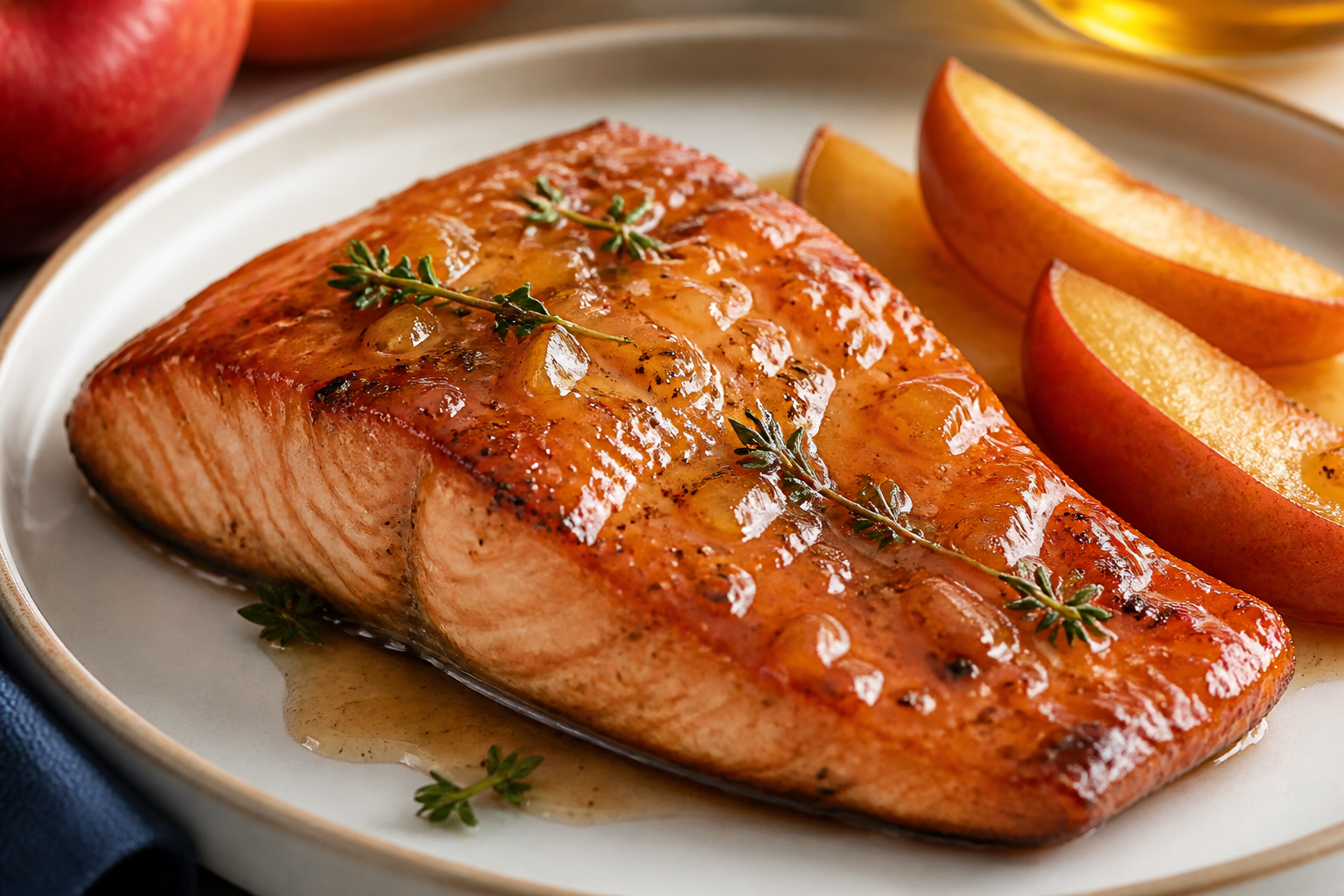
Apple Cider Glazed Salmon – Sweet, Tangy, and Weeknight-Friendly
Ingredients
Method
- Prep the oven: Preheat to 400°F (200°C).Line a sheet pan with foil or parchment for easy cleanup.
- Make the glaze base: In a small saucepan, combine apple cider, apple cider vinegar, maple syrup, Dijon, garlic, ginger, soy sauce, and red pepper flakes. Whisk to blend.
- Reduce the glaze: Bring to a simmer over medium heat. Cook 8–12 minutes, stirring occasionally, until the liquid is reduced by about half and slightly syrupy.You should see slow, glossy bubbles.
- Finish the glaze: Remove from heat and whisk in the butter until melted and smooth. Taste and adjust with a pinch of salt or a splash more vinegar if you want more tang.
- Season the salmon: Pat salmon dry with paper towels. Season both sides with salt and pepper.
- Quick sear (optional but recommended): Heat olive oil in a large oven-safe skillet over medium-high.Place salmon skin-side up and sear 1–2 minutes until lightly browned. Flip skin-side down.
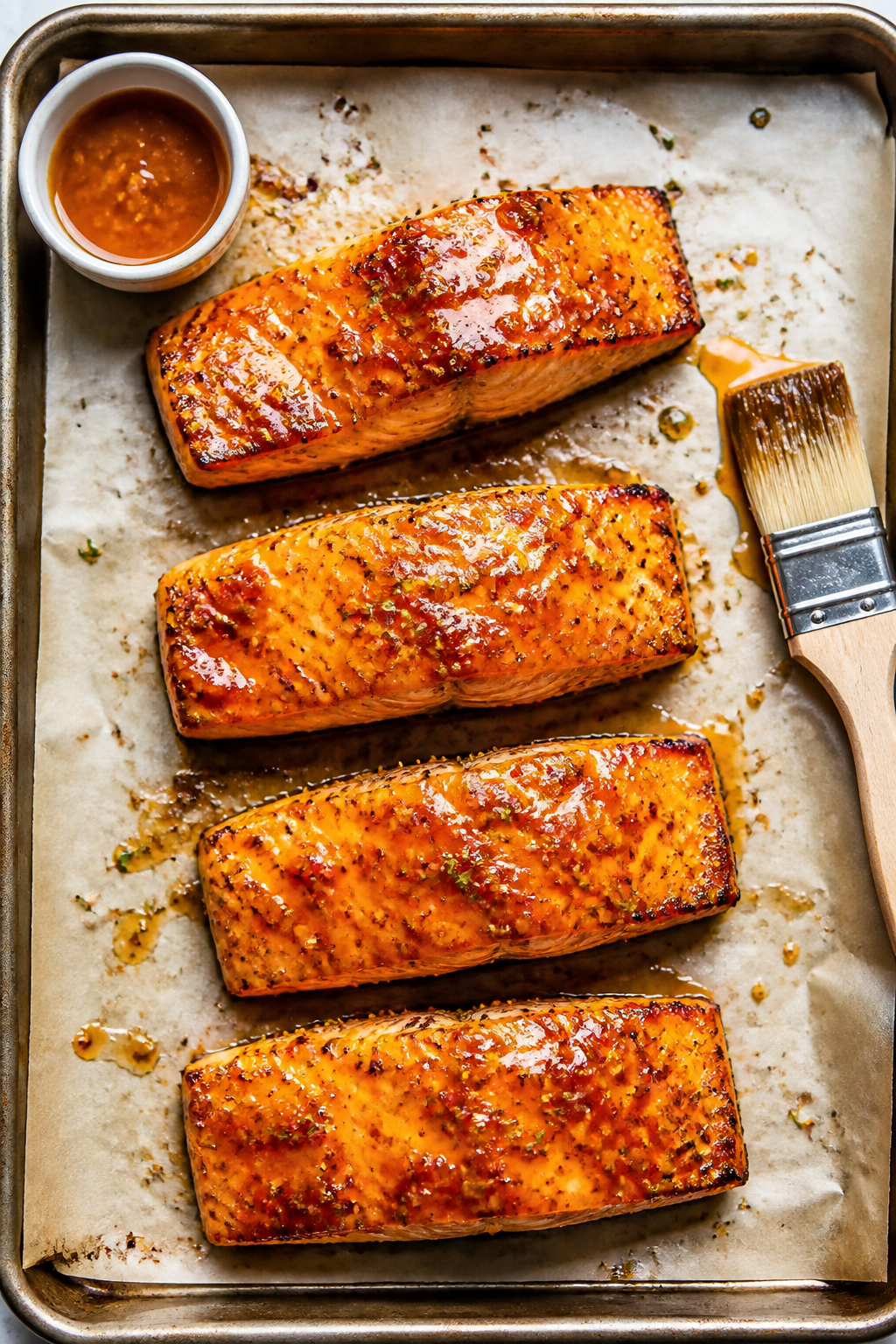
- Glaze and bake: Brush salmon generously with the apple cider glaze. Transfer the skillet to the oven (or move fillets to the prepared sheet pan).Bake 6–9 minutes, depending on thickness, until the salmon flakes easily but is still moist in the center.
- Broil for shine (optional): For extra caramelization, switch to broil for 1 minute at the end. Watch closely to avoid burning.
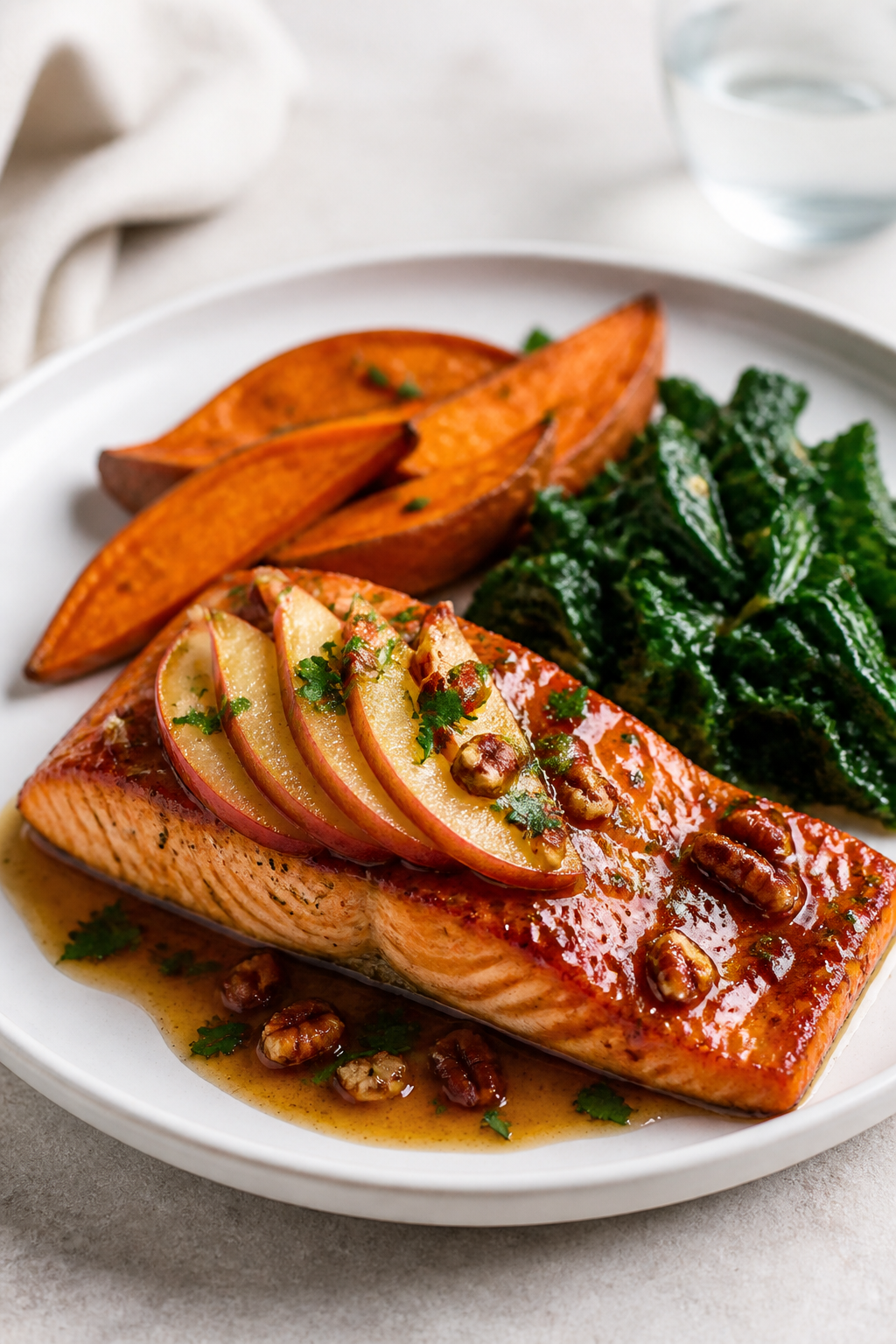
- Rest and serve: Let the salmon rest 2 minutes. Spoon any pan juices over the top.Garnish with thin apple slices and parsley if you like. Serve with rice, roasted sweet potatoes, or sautéed greens.
Why This Recipe Works
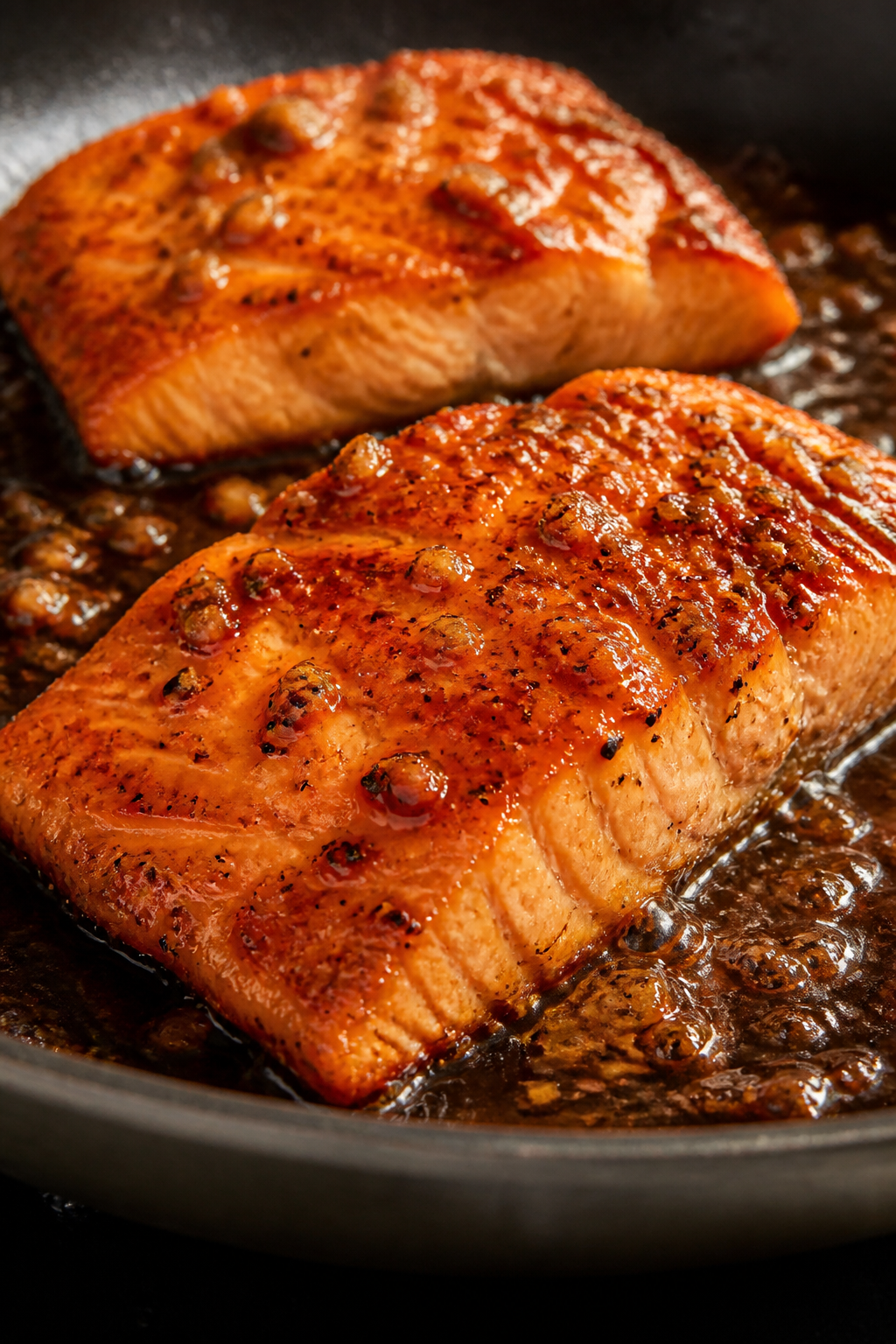
This dish pairs the natural richness of salmon with the bright acidity of apple cider and cider vinegar. That balance keeps every bite lively instead of heavy.
A quick stovetop reduction gives you a glaze that’s thick, shiny, and full of flavor without needing cornstarch.
Finishing in the oven helps the salmon cook evenly while the glaze reduces to a syrupy finish. A little butter at the end rounds things out and helps the glaze cling. The whole process is fast, clean, and reliable—ideal for weeknights or meal prep.
Ingredients
- 4 salmon fillets (5–6 ounces each, skin-on preferred)
- 1 cup apple cider (not apple cider vinegar; look for fresh, unsweetened cider if possible)
- 1 tablespoon apple cider vinegar
- 2 tablespoons pure maple syrup or honey
- 1 tablespoon Dijon mustard
- 1 clove garlic, minced
- 1 teaspoon fresh grated ginger (or 1/4 teaspoon ground ginger)
- 1 tablespoon soy sauce or tamari
- 1 tablespoon unsalted butter
- 1 tablespoon olive oil
- 1/4 teaspoon red pepper flakes (optional)
- Kosher salt and black pepper, to taste
- Optional garnish: thin apple slices, chopped parsley, or toasted pecans
Instructions
- Prep the oven: Preheat to 400°F (200°C).
Line a sheet pan with foil or parchment for easy cleanup.
- Make the glaze base: In a small saucepan, combine apple cider, apple cider vinegar, maple syrup, Dijon, garlic, ginger, soy sauce, and red pepper flakes. Whisk to blend.
- Reduce the glaze: Bring to a simmer over medium heat. Cook 8–12 minutes, stirring occasionally, until the liquid is reduced by about half and slightly syrupy.
You should see slow, glossy bubbles.
- Finish the glaze: Remove from heat and whisk in the butter until melted and smooth. Taste and adjust with a pinch of salt or a splash more vinegar if you want more tang.
- Season the salmon: Pat salmon dry with paper towels. Season both sides with salt and pepper.
- Quick sear (optional but recommended): Heat olive oil in a large oven-safe skillet over medium-high.
Place salmon skin-side up and sear 1–2 minutes until lightly browned. Flip skin-side down.
- Glaze and bake: Brush salmon generously with the apple cider glaze. Transfer the skillet to the oven (or move fillets to the prepared sheet pan).
Bake 6–9 minutes, depending on thickness, until the salmon flakes easily but is still moist in the center.
- Broil for shine (optional): For extra caramelization, switch to broil for 1 minute at the end. Watch closely to avoid burning.
- Rest and serve: Let the salmon rest 2 minutes. Spoon any pan juices over the top.
Garnish with thin apple slices and parsley if you like. Serve with rice, roasted sweet potatoes, or sautéed greens.
Storage Instructions
- Refrigerator: Store cooled salmon in an airtight container for up to 3 days. Keep leftover glaze (if any) in a separate small jar.
- Reheat gently: Warm in a 275°F (135°C) oven for 10–12 minutes or microwave at 50% power in short bursts.
Add a spoonful of water or extra glaze to keep it moist.
- Freezer: Cooked salmon can be frozen up to 2 months. Wrap tightly and thaw in the fridge overnight. The glaze may thin slightly after freezing, but the flavor holds.
Health Benefits
- Omega-3 fats: Salmon is rich in EPA and DHA, which support heart health, brain function, and a balanced inflammatory response.
- High-quality protein: A fillet delivers complete protein for muscle repair and steady energy.
- B vitamins and minerals: Salmon provides B12, niacin, selenium, and potassium, all important for metabolism and nerve health.
- Smart sweetness: Using apple cider and maple syrup keeps the glaze flavorful without overwhelming sugar.
You get brightness and depth with minimal added sweetener.
- Gluten-friendly option: Choose tamari or coconut aminos and confirm your Dijon is gluten-free to fit dietary needs.
What Not to Do
- Don’t skip patting the salmon dry. Moisture on the surface prevents browning and makes the glaze slide off.
- Don’t overreduce the glaze. If it gets too thick on the stove, it can burn in the oven. Aim for a light syrup that coats a spoon.
- Don’t overcook the fish. Salmon is best when still a bit translucent in the center. Pull it at 125–130°F (52–54°C) for medium.
- Don’t use apple cider vinegar instead of apple cider. They aren’t the same.
You need the cider’s natural sweetness and body for the glaze.
- Don’t drown the salmon. A generous brush is great, but too much glaze pools and can scorch. Save extra to spoon on at the end.
Alternatives
- No soy sauce: Use tamari for gluten-free or coconut aminos for a slightly sweeter profile. Add a pinch of salt to balance.
- No maple syrup: Honey or brown sugar works.
With brown sugar, simmer an extra minute to dissolve fully.
- Different fish: Try Arctic char or steelhead trout. Both handle the glaze well and cook in similar times.
- Spice swap: Replace ginger with a pinch of cinnamon and allspice for a warmer, apple-pie vibe. Keep it light to avoid overpowering the fish.
- Grill option: Cook salmon skin-side down over medium heat, lid closed, brushing with glaze in the last few minutes.
Use a grill-safe pan or foil to catch drips.
- Dairy-free: Skip the butter in the glaze and whisk in a teaspoon of olive oil at the end for sheen.
FAQ
Stop wondering what's for dinner.
Get 7 healthy, family-friendly dinners complete with recipes and simple meal plans delivered straight to your inbox.
Can I use apple juice instead of apple cider?
Yes, but choose an unsweetened, high-quality juice. It will be a bit lighter in flavor, so consider adding a teaspoon more vinegar or a splash of lemon to brighten it.
How do I know when the salmon is done?
Look for flakes that separate easily with a fork and a slightly translucent center. An instant-read thermometer should read 125–130°F (52–54°C) for medium.
It will carryover cook a few degrees off heat.
Do I need to remove the skin?
No. Keeping the skin on helps hold the fish together and protects it from overcooking. You can slide a spatula between the flesh and skin after cooking if you prefer not to eat it.
What sides go well with this?
Roasted Brussels sprouts, sautéed kale, wild rice, mashed sweet potatoes, or a crisp apple-fennel slaw all complement the sweet-tangy glaze.
Can I make the glaze ahead?
Yes.
Reduce the glaze and refrigerate for up to 3 days. Rewarm gently on the stove with a splash of water to loosen before brushing on the salmon.
Is this recipe very sweet?
No. The maple adds balance, but acidity from vinegar and mustard keeps it from tasting sugary.
If you prefer less sweetness, reduce the maple by half and taste as you go.
Can I cook this entirely on the stovetop?
Yes. After searing, lower the heat to medium, brush on the glaze, and cover for 3–5 minutes until cooked through. Watch closely to avoid burning the sugars.
What if I only have apple cider vinegar, not cider?
Use half water and half orange juice with the vinegar for body and sweetness.
It won’t be exactly the same, but it makes a solid backup glaze.
Wrapping Up
Apple cider glazed salmon is a fresh twist that’s as practical as it is flavorful. The glaze is simple to make, the cook time is short, and the results feel restaurant-worthy. Keep the ingredients stocked and you’ve got a reliable, crowd-pleasing dinner any night of the week.
Serve it with a bold green and a cozy starch, and enjoy the sweet-tangy balance in every bite.
Printable Recipe Card
Want just the essential recipe details without scrolling through the article? Get our printable recipe card with just the ingredients and instructions.
Loved This Recipe?
If you're looking for more simple, healthy dinners your family will actually eat, grab my FREE 7-Day Easy Dinner Reset. You'll get 7 easy dinner recipes, simple grocery lists, and a done-for-you plan that takes the stress out of mealtime.