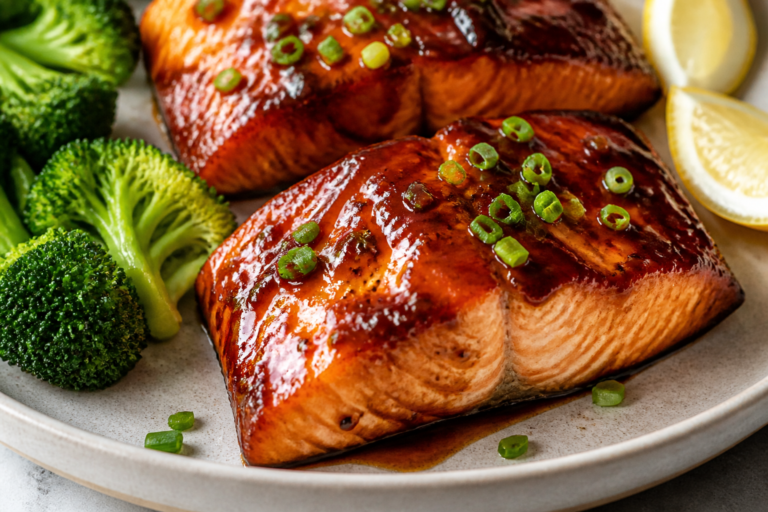
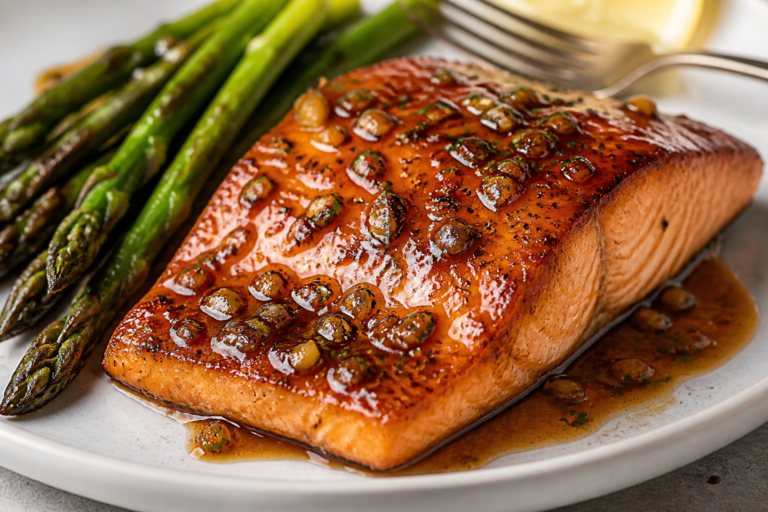
Coconut Lime Glazed Salmon – Bright, Creamy, and Weeknight Easy
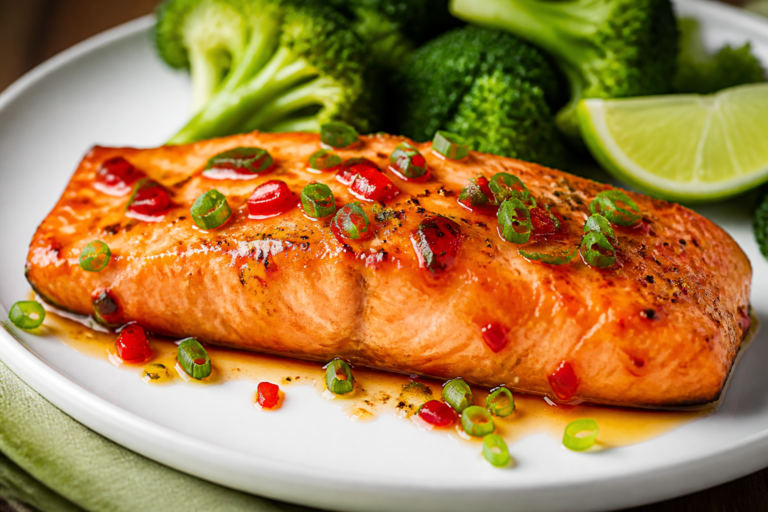
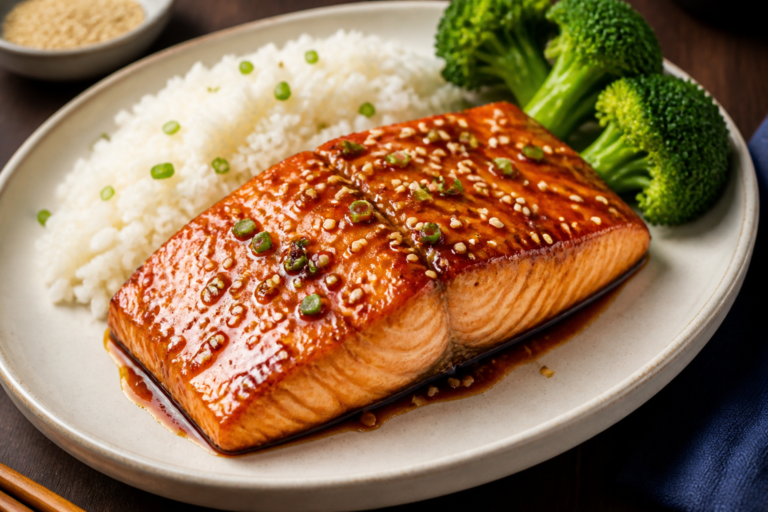
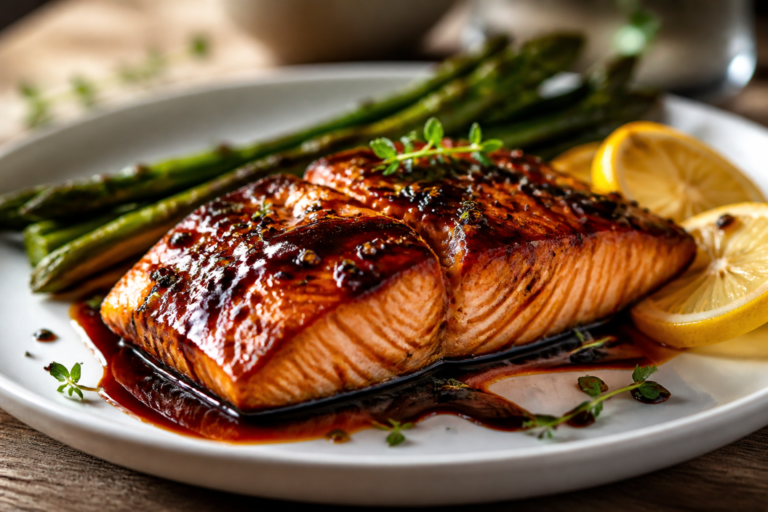
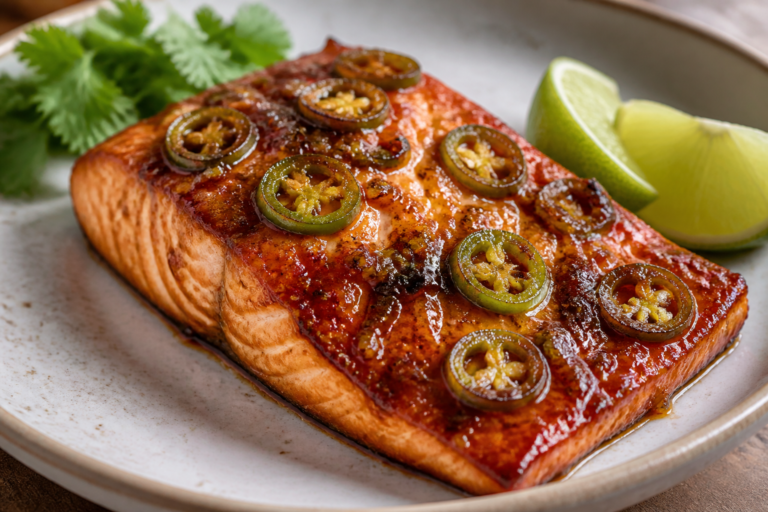
This Coconut Lime Glazed Salmon is the kind of dinner that feels special without asking much of you. The glaze is silky, citrusy, and just sweet enough to balance the richness of the fish. It comes together in one pan, in under 30 minutes, with ingredients you can find almost anywhere.
FREE 7-Day Easy Dinner Reset
FREE 7-Day Easy Dinner Reset
The best part is how flexible it is—serve it with rice, roasted veggies, or a crisp salad and you’re set. If you love big flavor and simple steps, this one belongs in your weekly rotation.
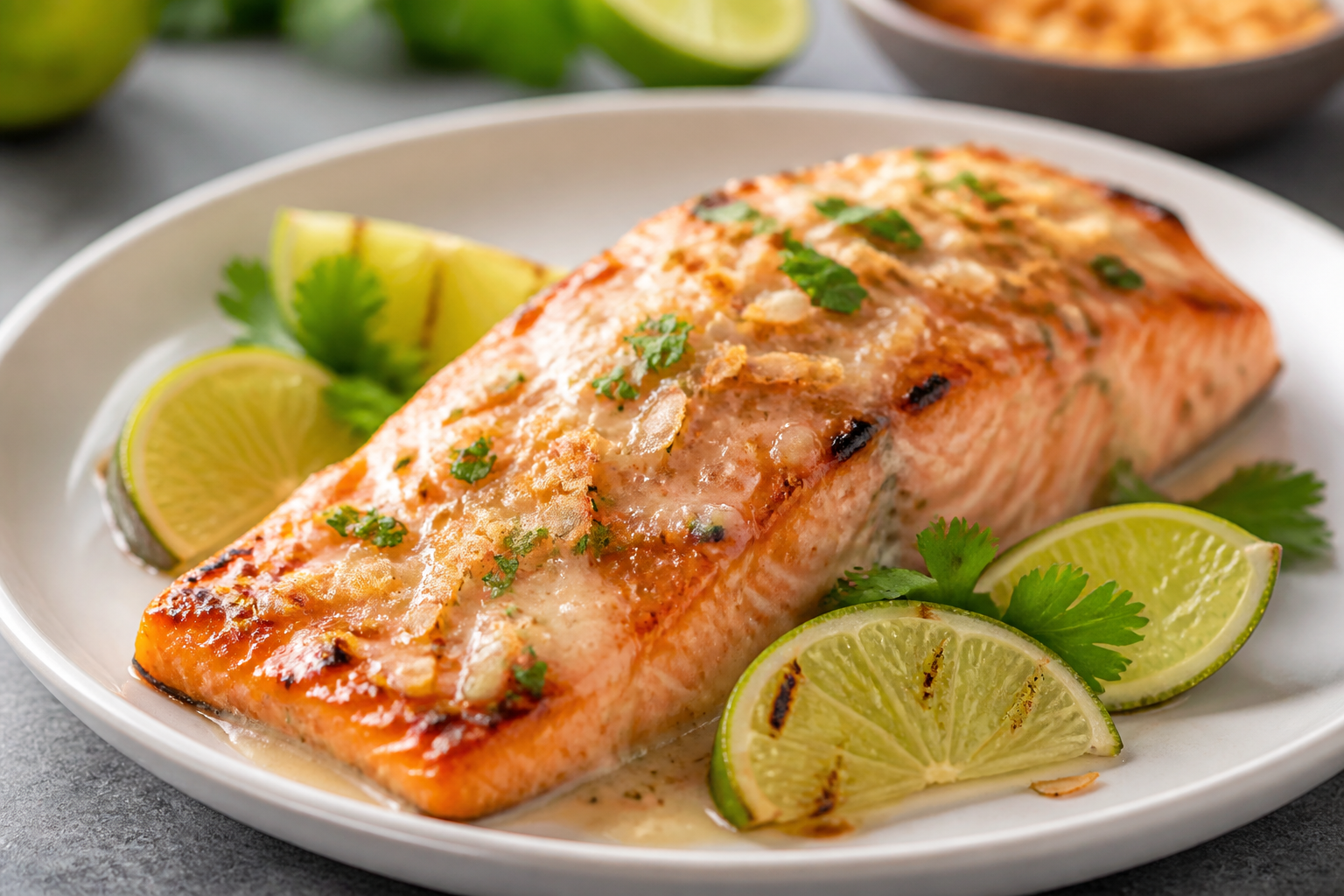
Coconut Lime Glazed Salmon - Bright, Creamy, and Weeknight Easy
Ingredients
Method
- Pat the salmon dry. Season both sides with salt and pepper. Dry fish sears better and helps the glaze stick.
- Whisk the glaze. In a bowl, combine coconut milk, lime zest, lime juice, honey or brown sugar, soy sauce, garlic, ginger, and red pepper flakes if using. Taste and adjust.It should be bright, a little sweet, and slightly salty.
- Heat the pan. Set a large skillet over medium-high heat. Add oil and heat until it shimmers.
- Sear the salmon. Place fillets in the pan, skin-side down if using skin-on. Cook 3–4 minutes until the skin is crisp and the edges turn opaque.Flip and cook another 1–2 minutes. Remove salmon to a plate; it will finish in the glaze.
- Reduce the glaze. Lower heat to medium. Pour the coconut-lime mixture into the pan.Stir and let it bubble gently, about 3–5 minutes, until slightly thickened and glossy. You want it to coat the back of a spoon.
- Finish the fish. Return salmon to the pan, spooning glaze over the top. Cook 2–4 minutes, depending on thickness, until the salmon flakes and is just cooked through.Aim for medium for the most tender texture.
- Garnish and serve. Sprinkle with chopped cilantro or sliced scallions. Serve over rice or vegetables with extra glaze spooned on top.
- Optional oven method. Prefer hands-off? Place seasoned salmon on a lined sheet pan.Bake at 400°F (200°C) for 8–10 minutes, depending on thickness. Meanwhile, reduce the glaze on the stove, then spoon it over the baked salmon to finish.
What Makes This Special
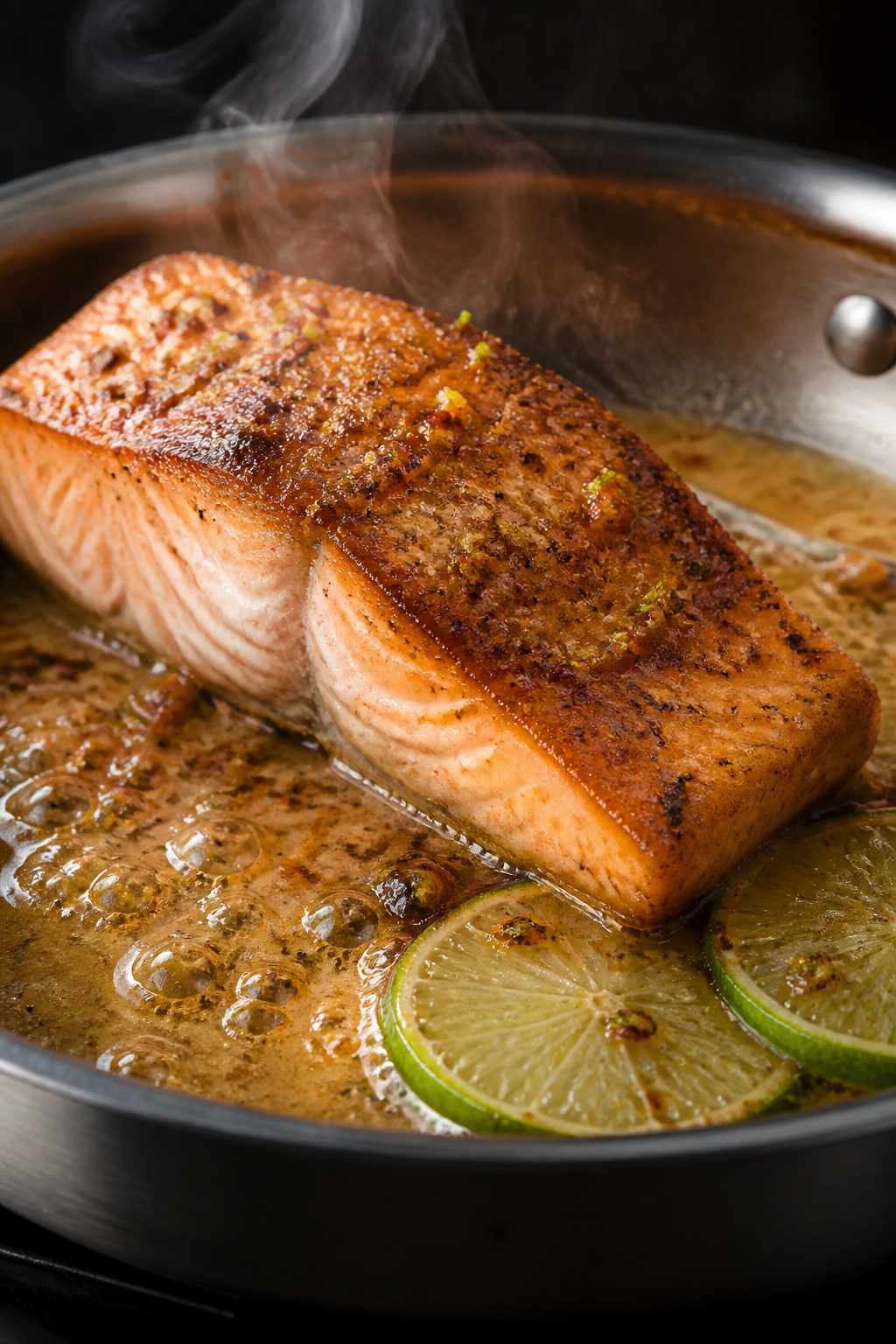
The magic is in the glaze. Coconut milk brings a lush, creamy base, while lime adds a bright, sunny lift that cuts through the salmon’s natural richness.
A touch of honey or brown sugar rounds everything out, helping the glaze cling to the fish.
This dish also nails that sweet spot of weeknight-easy and dinner-party-worthy. You can pan-sear for speed or bake for hands-off cooking. Either way, you get flaky salmon with a glossy, tangy finish that tastes like you worked harder than you did.
It’s also friendly to dietary needs.
The recipe is naturally gluten-free (with a quick check on your soy sauce or tamari), and it’s easy to adjust for spice, sweetness, and acidity.
What You’ll Need
- Salmon fillets: 4 pieces, skin-on or skinless, about 5–6 ounces each
- Coconut milk: 1 cup, full-fat for a richer glaze (lite works, but will be thinner)
- Lime: Zest of 1 lime and 3 tablespoons lime juice (fresh is best)
- Honey or brown sugar: 2–3 tablespoons, to taste
- Soy sauce or tamari: 1 tablespoon, for salty depth
- Garlic: 2 cloves, minced
- Ginger: 1 teaspoon, freshly grated
- Red pepper flakes or chili garlic sauce: 1/4–1/2 teaspoon, optional for heat
- Neutral oil: 1–2 tablespoons (avocado, canola, or light olive oil)
- Salt and black pepper: To season the salmon
- Fresh cilantro or scallions: For garnish
- Optional sides: Steamed jasmine rice, coconut rice, roasted broccoli, snap peas, or a simple cucumber salad
Instructions
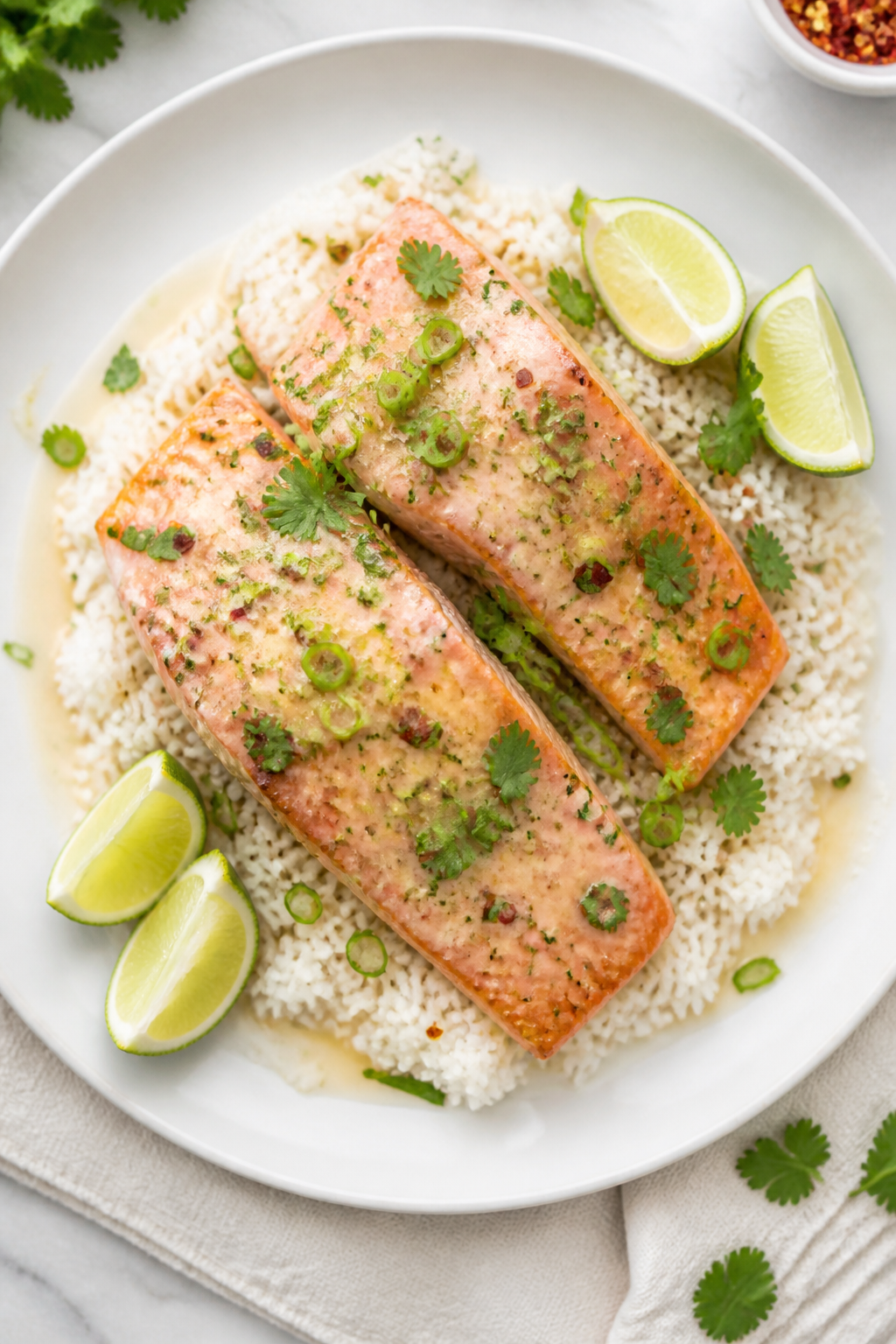
- Pat the salmon dry. Season both sides with salt and pepper. Dry fish sears better and helps the glaze stick.
- Whisk the glaze. In a bowl, combine coconut milk, lime zest, lime juice, honey or brown sugar, soy sauce, garlic, ginger, and red pepper flakes if using. Taste and adjust.
It should be bright, a little sweet, and slightly salty.
- Heat the pan. Set a large skillet over medium-high heat. Add oil and heat until it shimmers.
- Sear the salmon. Place fillets in the pan, skin-side down if using skin-on. Cook 3–4 minutes until the skin is crisp and the edges turn opaque.
Flip and cook another 1–2 minutes. Remove salmon to a plate; it will finish in the glaze.
- Reduce the glaze. Lower heat to medium. Pour the coconut-lime mixture into the pan.
Stir and let it bubble gently, about 3–5 minutes, until slightly thickened and glossy. You want it to coat the back of a spoon.
- Finish the fish. Return salmon to the pan, spooning glaze over the top. Cook 2–4 minutes, depending on thickness, until the salmon flakes and is just cooked through.
Aim for medium for the most tender texture.
- Garnish and serve. Sprinkle with chopped cilantro or sliced scallions. Serve over rice or vegetables with extra glaze spooned on top.
- Optional oven method. Prefer hands-off? Place seasoned salmon on a lined sheet pan.
Bake at 400°F (200°C) for 8–10 minutes, depending on thickness. Meanwhile, reduce the glaze on the stove, then spoon it over the baked salmon to finish.
Keeping It Fresh
Storage: Let leftovers cool, then store in an airtight container for up to 2 days. Keep the salmon and any extra glaze separate from crisp vegetables to avoid sogginess.
Reheating: Warm gently on the stove over low heat with a splash of water or coconut milk.
This keeps the fish from drying out. The microwave works in short bursts, but cover loosely and don’t overdo it.
Freezing: Not ideal for this recipe. The coconut glaze can split after thawing and the fish may turn dry.
If you must freeze, do it without the glaze and add fresh sauce later.
Health Benefits
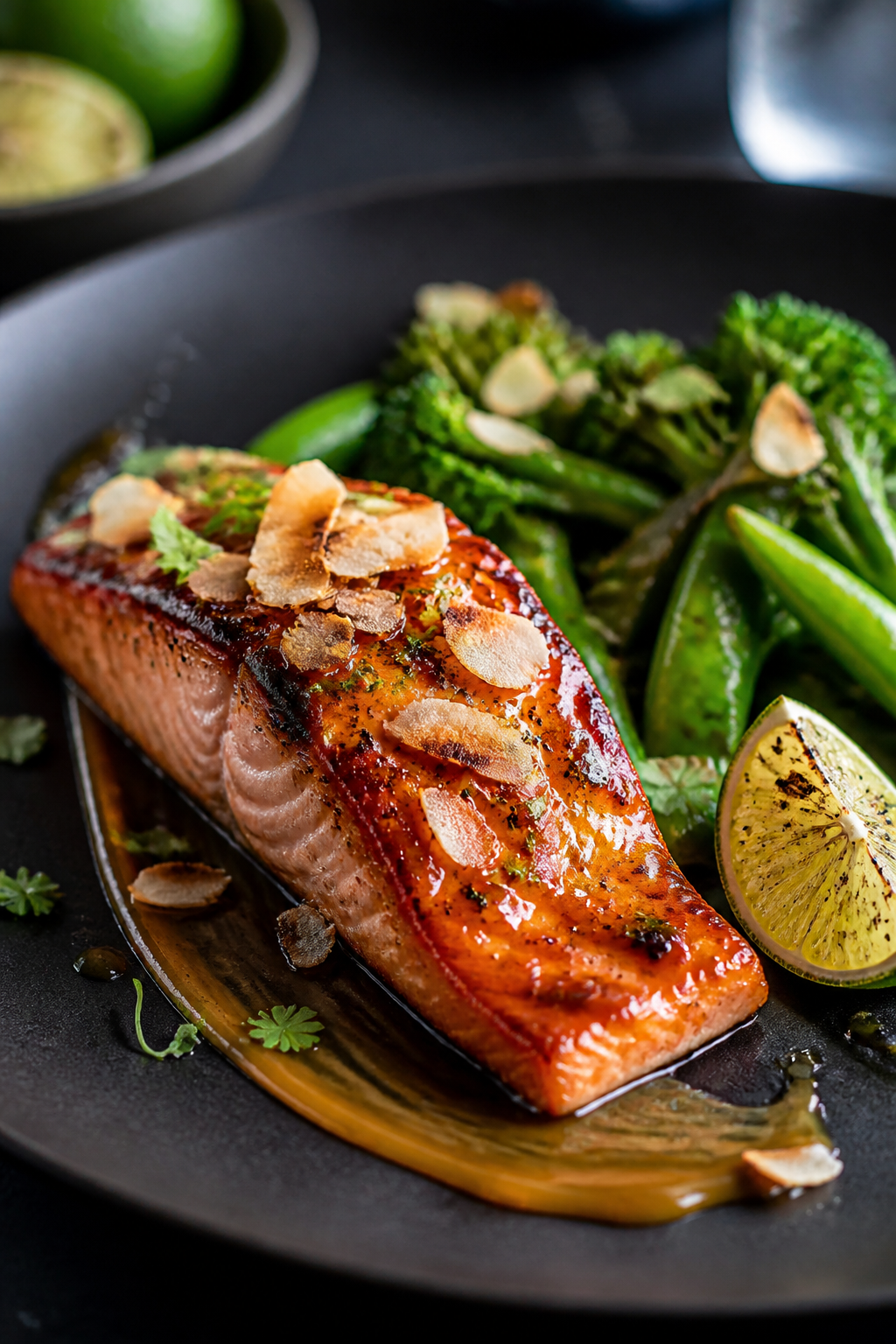
- Omega-3s from salmon: Support heart, brain, and joint health. They also help reduce inflammation.
- Protein-dense: Salmon provides high-quality protein to keep you full and support muscle health.
- Citrus boost: Lime adds vitamin C, which supports immune function and bright flavor without heavy calories.
- Dairy-free creaminess: Coconut milk offers a rich texture without dairy. Use lite coconut milk if you want to lower calories and fat.
- Balanced flavors, balanced portions: The glaze is flavorful, so smaller amounts still satisfy, helping portion control feel easy.
What Not to Do
- Don’t boil the glaze hard. A rapid boil can cause the coconut milk to split.
Keep it to a gentle simmer.
- Don’t overcook the salmon. Dry, chalky salmon is a common mistake. Pull it when it flakes easily and still looks slightly translucent in the center.
- Don’t skip the zest. Lime zest carries intense aroma. Without it, the sauce can taste flat.
- Don’t overcrowd the pan. Crowding traps steam, preventing a good sear and caramelization.
- Don’t forget to taste as you go. Adjust sweetness, salt, and acidity to match your palate and the richness of your coconut milk.
Alternatives
- Protein swaps: Try cod, halibut, steelhead trout, or shrimp.
Adjust cook times—shrimp cook fast, about 2–3 minutes per side.
- Sauce tweaks: Use maple syrup instead of honey, or add a teaspoon of fish sauce for extra umami. For heat, stir in sriracha or a diced jalapeño.
- Creamy factor: If you only have lite coconut milk, reduce it a bit longer. For extra richness, whisk in a teaspoon of coconut cream at the end.
- Herbs and aromatics: Swap cilantro for basil or mint.
Add lemongrass or kaffir lime leaves when simmering the glaze for a Southeast Asian vibe.
- Low-carb sides: Serve with cauliflower rice, sautéed greens, or zucchini noodles to keep it lighter.
- Gluten-free check: Use tamari or coconut aminos instead of regular soy sauce.
FAQ
Stop wondering what's for dinner.
Get 7 healthy, family-friendly dinners complete with recipes and simple meal plans delivered straight to your inbox.
How do I know when the salmon is done?
Look for flakes that separate easily with a fork and a center that’s just slightly translucent. If you use a thermometer, aim for about 125–130°F (52–54°C) for medium. It will rise a couple of degrees as it rests.
Can I make the glaze ahead?
Yes.
Mix all glaze ingredients and refrigerate for up to 24 hours. Stir well and re-taste before cooking, since lime can mellow and sweetness can intensify slightly over time.
Will light coconut milk work?
It will, but the sauce will be thinner. Let it simmer a minute or two longer to reduce.
You may need a touch more sweetener and lime to keep the flavor balanced.
What’s the best pan to use?
A heavy stainless-steel or cast-iron skillet gives the best sear. Nonstick works too, but you’ll get less browning. Either way, make sure the pan is hot before adding the fish.
Can I grill the salmon instead?
Absolutely.
Grill over medium-high heat, 3–4 minutes per side, then brush with reduced glaze in the last minute to prevent burning. Serve with extra glaze on the side.
How can I make it spicier?
Add more red pepper flakes, a spoon of chili garlic sauce, or a drizzle of sriracha. Taste the glaze before adding it to the pan so you can adjust the heat level confidently.
What sides pair best?
Steamed jasmine or coconut rice, roasted broccoli, blistered green beans, or a crunchy cucumber salad all play well with the sauce.
The freshness keeps the dish balanced.
Can I use bottled lime juice?
In a pinch, yes, but fresh lime juice tastes brighter. If using bottled, compensate with extra zest to bring back that fresh citrus aroma.
How do I prevent the coconut milk from curdling?
Keep the heat at a gentle simmer and avoid rapid boiling. Stir regularly, and add acidic ingredients like lime juice as directed, not all at once over high heat.
Is skin-on salmon better?
Skin-on salmon crisps nicely and helps the fillet hold together.
If you prefer skinless, just be gentle when flipping and serve quickly to keep it moist.
Wrapping Up
Coconut Lime Glazed Salmon brings together creamy, bright, and savory in one simple skillet. With a short ingredient list and flexible cooking methods, it fits busy nights and relaxed weekends alike. Keep the heat moderate, taste as you go, and let the glaze do the heavy lifting.
A fresh squeeze of lime and a handful of herbs at the end make it sing. It’s an easy win you’ll come back to again and again.
Printable Recipe Card
Want just the essential recipe details without scrolling through the article? Get our printable recipe card with just the ingredients and instructions.
Loved This Recipe?
If you're looking for more simple, healthy dinners your family will actually eat, grab my FREE 7-Day Easy Dinner Reset. You'll get 7 easy dinner recipes, simple grocery lists, and a done-for-you plan that takes the stress out of mealtime.