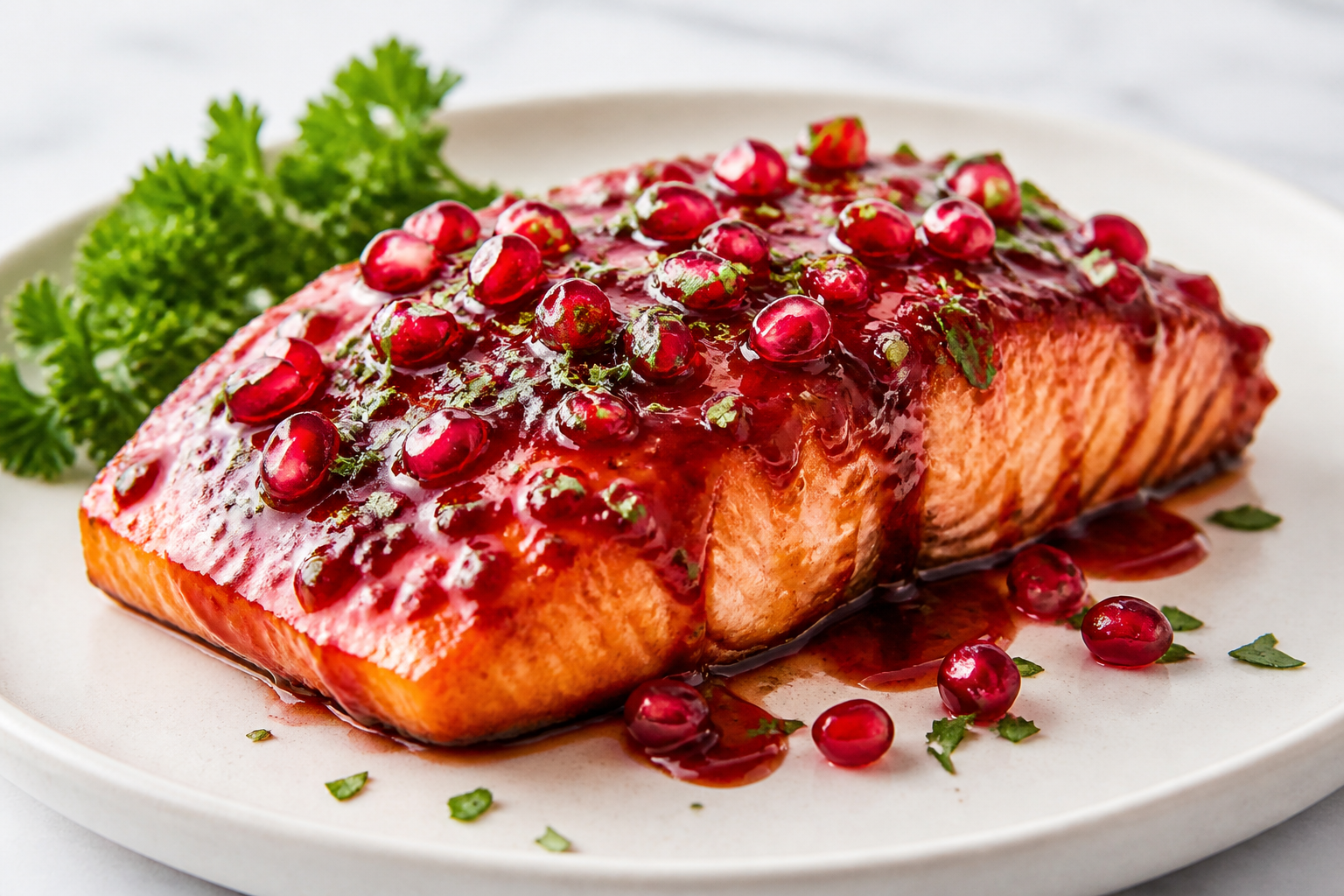
Pat the salmon dry. Use paper towels to remove surface moisture. Season both sides with salt and pepper.
Dry fish sears better and won’t steam in the pan.
Whisk the glaze. In a small bowl, combine pomegranate juice, honey, soy sauce, garlic, and ginger. Taste and adjust the sweet-salty balance. If your juice is very tart, add another teaspoon of honey.
Heat the pan. Set a large skillet over medium-high heat and add oil.
When the oil is shimmering, you’re ready to sear.
Sear the salmon skin-side down. Place fillets in the pan without crowding. Press gently with a spatula for the first 15–20 seconds to keep the skin flat. Cook 3–4 minutes until the skin is crisp and the color is turning opaque halfway up the sides.
Flip and cook briefly. Turn the salmon and cook 1–2 more minutes.
You want it mostly cooked but not done yet because the glaze will finish it.
Add the glaze. Pour the pomegranate mixture around the fish. It will bubble vigorously. Reduce heat to medium.
Spoon the liquid over the fillets as it thickens.
Reduce to a syrupy glaze. Let the sauce simmer 3–5 minutes, stirring and spooning over the salmon. When it coats the back of a spoon and looks glossy, it’s ready. If it reduces too quickly, splash in a tablespoon of water.
Finish with lemon. Stir in the lemon juice and a pinch of red pepper flakes if using.
Taste the sauce and adjust seasoning with a pinch of salt or another squeeze of lemon.
Rest and garnish. Remove the salmon from the heat. Let it sit 2 minutes to relax the juices. Top with pomegranate arils and fresh herbs.
Serve. Spoon extra glaze from the pan over each fillet.
Serve with rice, quinoa, roasted carrots, or a bright salad.