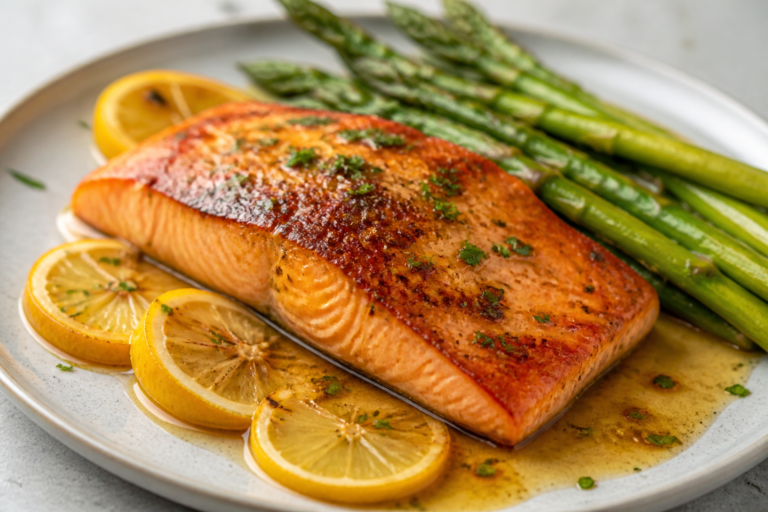
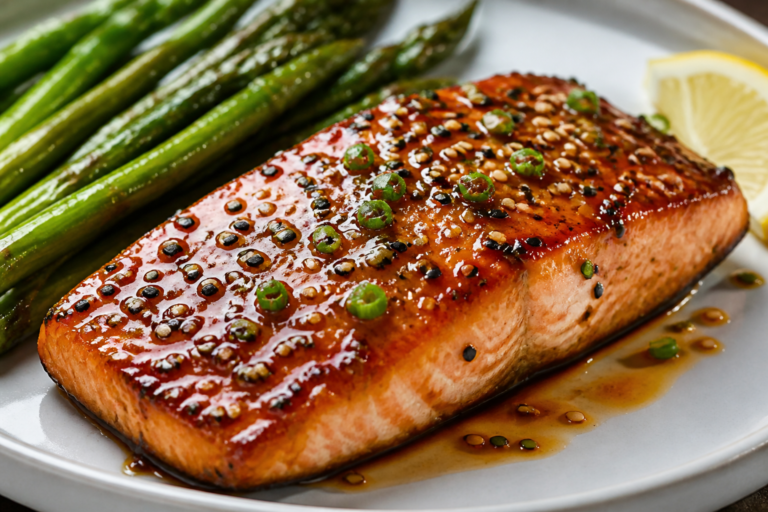
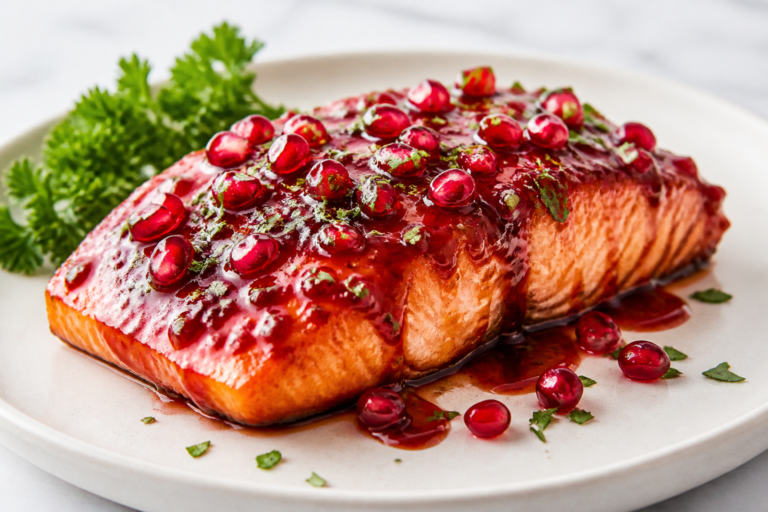
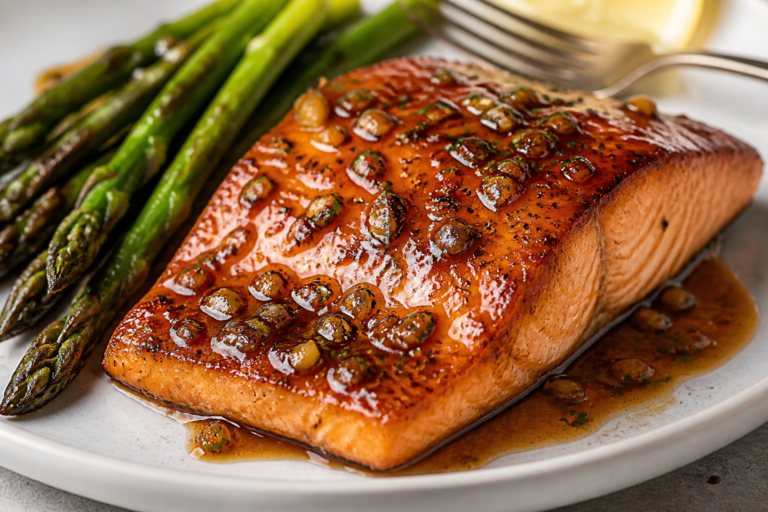
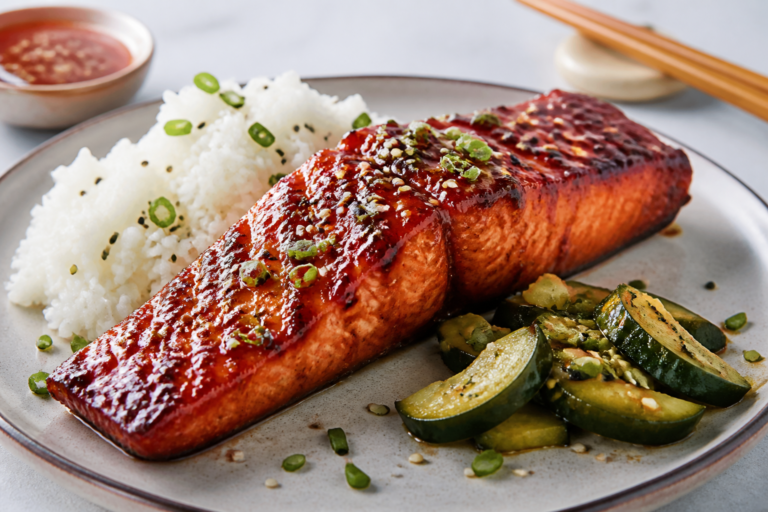
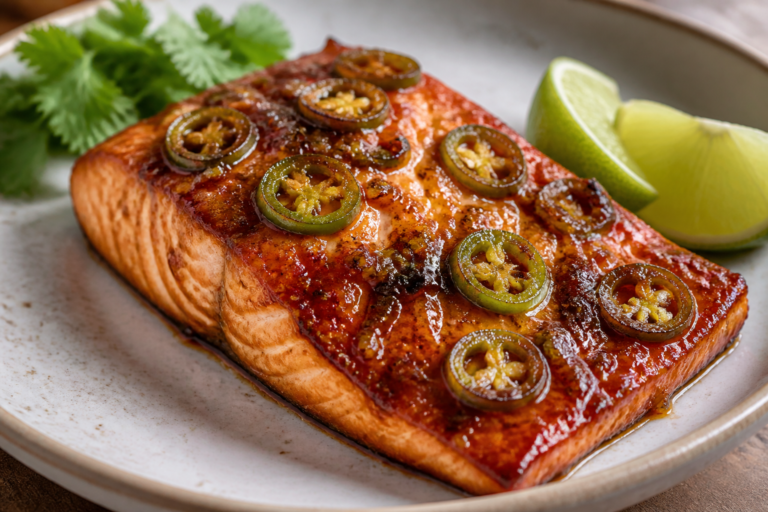
Apricot Ginger Glazed Salmon – Sweet, Bright, and Weeknight-Friendly
This apricot ginger glazed salmon hits the sweet-heat spot without trying too hard. It’s glossy, tender, and full of fresh flavor you can taste in every bite. The glaze comes together in minutes and clings to the fish like a dream.
FREE 7-Day Easy Dinner Reset
FREE 7-Day Easy Dinner Reset
You can make it on a busy weeknight, yet it still feels special enough for company. If you love simple recipes that deliver big payoff, this one’s for you.
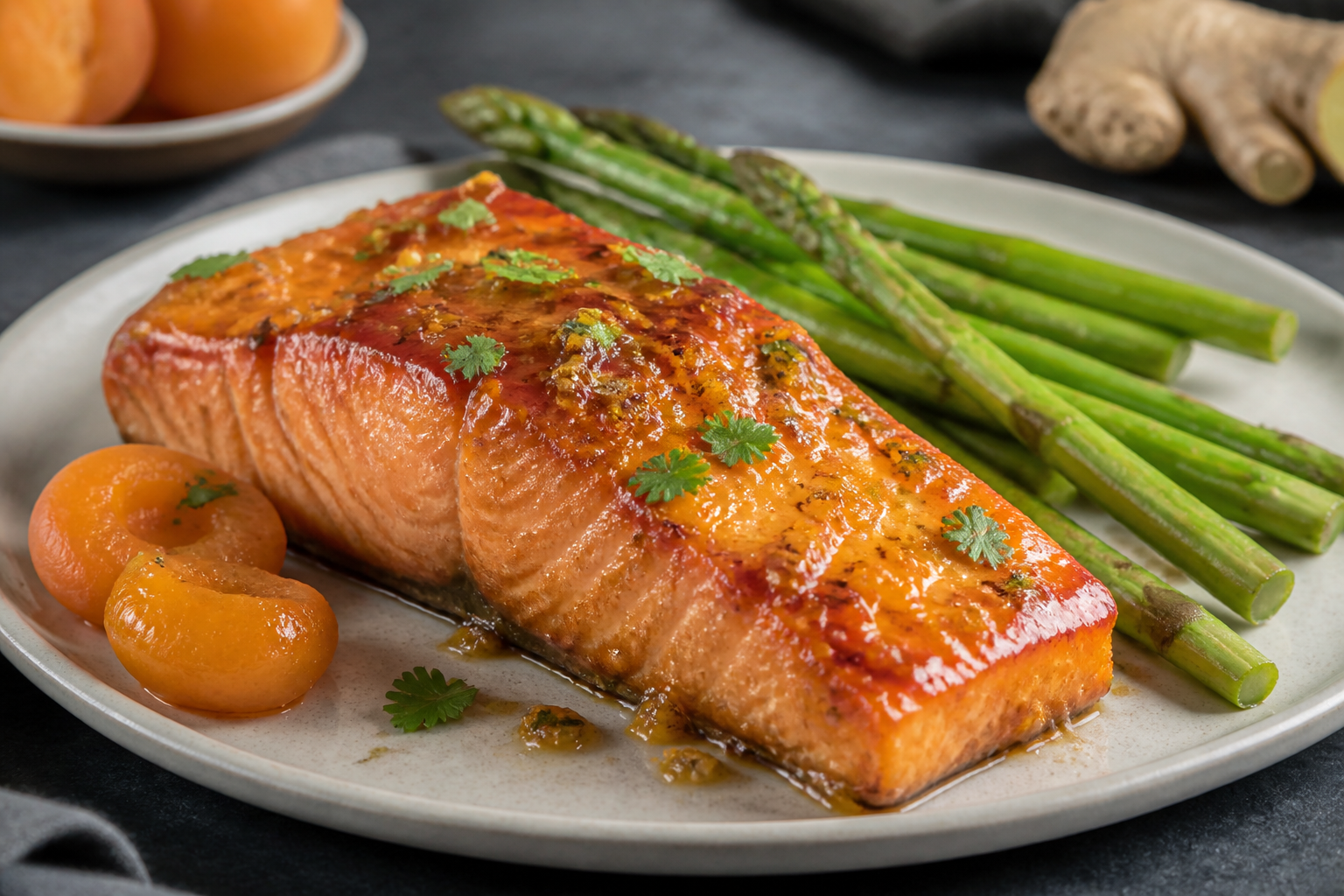
Apricot Ginger Glazed Salmon - Sweet, Bright, and Weeknight-Friendly
Ingredients
Method
- Prep the salmon: Pat the fillets dry with paper towels.Season lightly with salt and pepper on both sides. Let them sit at room temperature for 10 minutes while you make the glaze.
- Make the glaze: In a small bowl, whisk together apricot preserves, ginger, garlic, soy sauce, rice vinegar, honey, and sesame oil. Add red pepper flakes or sriracha if you want some heat.Taste and adjust—add a splash more vinegar if it feels too sweet, or a bit more honey if it tastes sharp.
- Choose your method: You can bake, broil, or pan-sear. Baking is easiest and most hands-off; pan-searing gives a crisp edge; broiling finishes with a glossy char. Times below assume 1-inch thick fillets.
- To bake: Heat the oven to 400°F (200°C).Line a sheet pan with foil and lightly oil it. Place salmon skin-side down. Brush with about half the glaze.Bake 7–9 minutes, then brush with more glaze and bake 2–4 minutes more, until the center is just opaque and flakes gently.
- To broil: Set an oven rack 6 inches from the heat and preheat the broiler. Line a sheet pan with foil. Brush fillets with glaze and broil 5–7 minutes, rotating the pan once for even color.Brush on a final coat in the last minute for a shiny finish.
- To pan-sear and glaze: Heat a nonstick or well-seasoned skillet over medium-high with a thin film of oil. Place salmon skin-side down and cook 4–5 minutes until the skin is crisp and the fish is mostly opaque. Flip, lower heat to medium, and spoon in the glaze.Cook 1–3 minutes more, basting until glossy and just cooked through.
- Check doneness: The salmon should flake easily but still look juicy in the center. Aim for an internal temperature of 125–130°F (52–54°C) for medium. Pull it a touch earlier if you like it more medium-rare.
- Finish and serve: Transfer to plates, spoon any extra glaze from the pan on top, and sprinkle with scallions and sesame seeds.Serve with lime or lemon wedges for a fresh squeeze over the top.
Why This Recipe Works
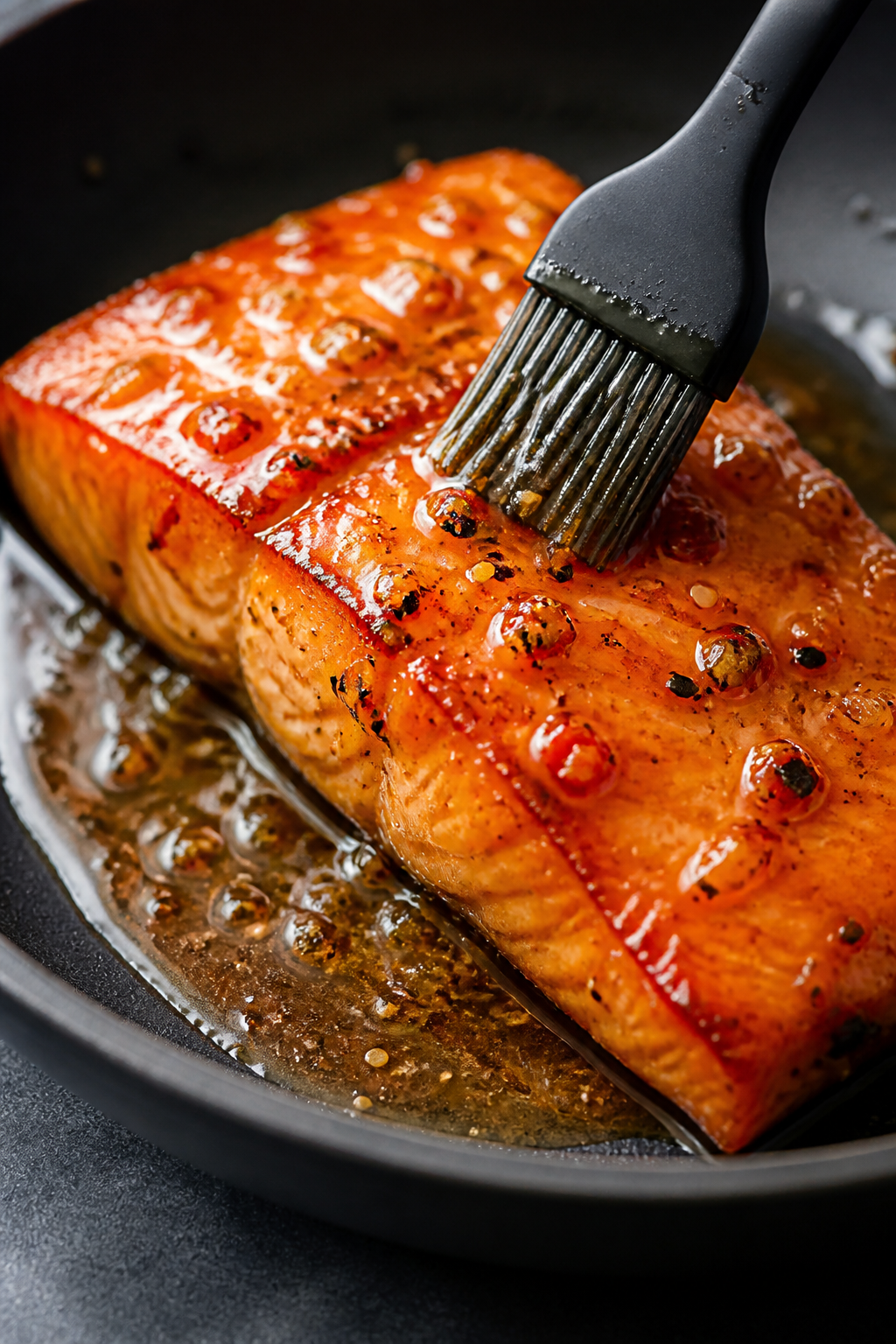
This glaze balances sweet, tangy, and spicy so the salmon shines, not hides. Apricot preserves add body and a natural fruit sweetness that caramelizes beautifully.
Fresh ginger and a touch of garlic wake everything up without overpowering the fish. A splash of soy sauce and rice vinegar brings savory depth and brightness. The result is a lacquered finish and a juicy interior that stays tender, not dry.
What You’ll Need
- Salmon fillets: 4 skin-on fillets, about 6 ounces each.
- Apricot preserves: 1/2 cup, preferably low-sugar or fruit-forward.
- Fresh ginger: 1 tablespoon, finely grated.
- Garlic: 1 small clove, minced.
- Soy sauce or tamari: 1 tablespoon for savory balance.
- Rice vinegar: 1 tablespoon for acidity.
- Honey or maple syrup: 1 teaspoon to help the glaze set.
- Red pepper flakes or sriracha: Pinch or 1/2 teaspoon for heat (optional).
- Sesame oil: 1/2 teaspoon for toasty aroma (optional but great).
- Kosher salt and black pepper: For seasoning the fish.
- Neutral oil: 1 teaspoon for the pan (if pan-searing) or for the foil (if baking).
- Garnishes: Sliced scallions, toasted sesame seeds, and lime or lemon wedges.
How to Make It
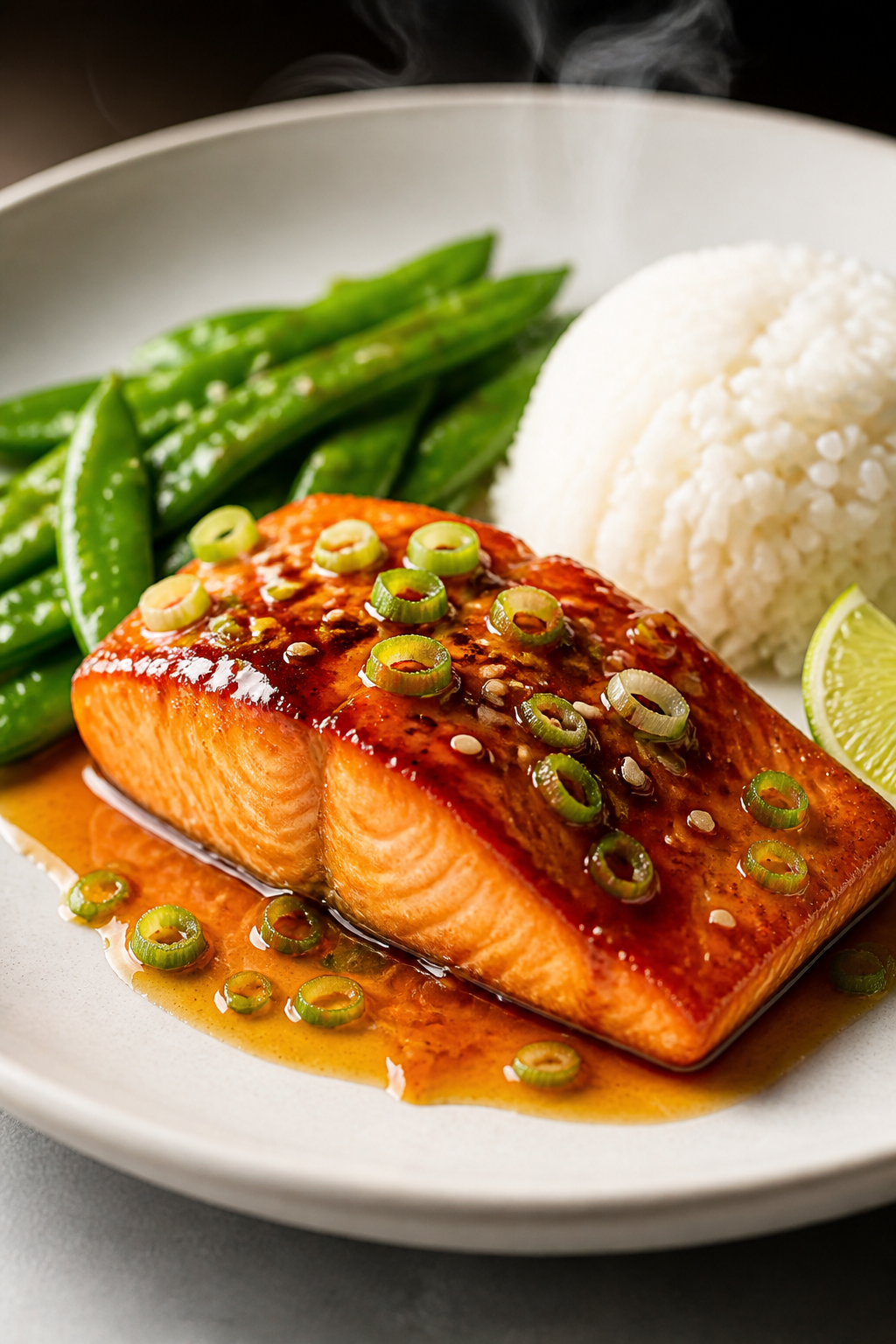
- Prep the salmon: Pat the fillets dry with paper towels.
Season lightly with salt and pepper on both sides. Let them sit at room temperature for 10 minutes while you make the glaze.
- Make the glaze: In a small bowl, whisk together apricot preserves, ginger, garlic, soy sauce, rice vinegar, honey, and sesame oil. Add red pepper flakes or sriracha if you want some heat.
Taste and adjust—add a splash more vinegar if it feels too sweet, or a bit more honey if it tastes sharp.
- Choose your method: You can bake, broil, or pan-sear. Baking is easiest and most hands-off; pan-searing gives a crisp edge; broiling finishes with a glossy char. Times below assume 1-inch thick fillets.
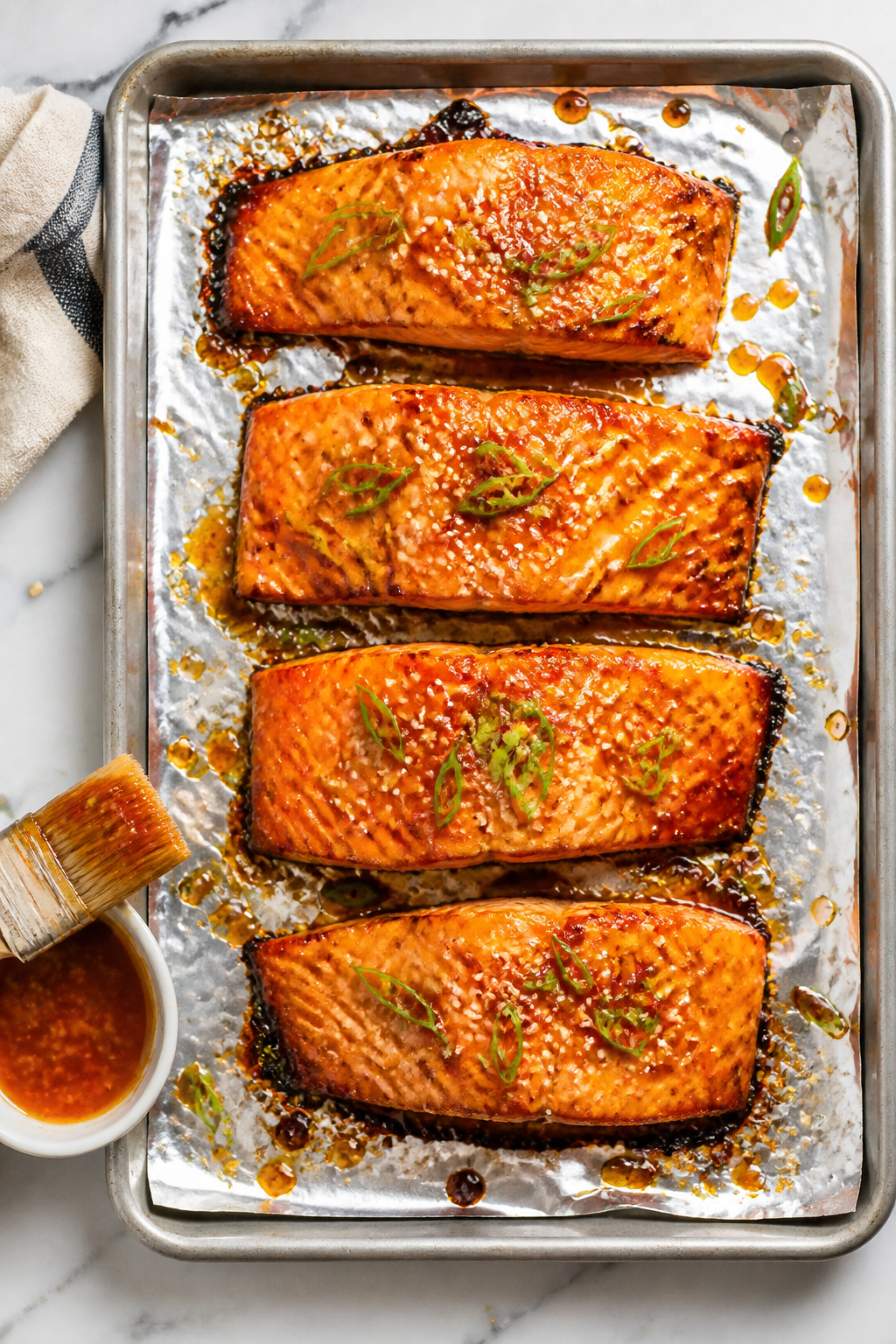
- To bake: Heat the oven to 400°F (200°C).
Line a sheet pan with foil and lightly oil it. Place salmon skin-side down. Brush with about half the glaze.
Bake 7–9 minutes, then brush with more glaze and bake 2–4 minutes more, until the center is just opaque and flakes gently.
- To broil: Set an oven rack 6 inches from the heat and preheat the broiler. Line a sheet pan with foil. Brush fillets with glaze and broil 5–7 minutes, rotating the pan once for even color.
Brush on a final coat in the last minute for a shiny finish.
- To pan-sear and glaze: Heat a nonstick or well-seasoned skillet over medium-high with a thin film of oil. Place salmon skin-side down and cook 4–5 minutes until the skin is crisp and the fish is mostly opaque. Flip, lower heat to medium, and spoon in the glaze.
Cook 1–3 minutes more, basting until glossy and just cooked through.
- Check doneness: The salmon should flake easily but still look juicy in the center. Aim for an internal temperature of 125–130°F (52–54°C) for medium. Pull it a touch earlier if you like it more medium-rare.
- Finish and serve: Transfer to plates, spoon any extra glaze from the pan on top, and sprinkle with scallions and sesame seeds.
Serve with lime or lemon wedges for a fresh squeeze over the top.
Storage Instructions
Let leftovers cool to room temperature, then store in an airtight container in the fridge for up to 3 days. Reheat gently in a covered skillet over low heat with a splash of water to keep it moist, or enjoy it cold flaked over greens. Avoid microwaving at high power, which can dry it out.
If freezing, wrap tightly and freeze for up to 2 months; thaw overnight in the fridge and warm gently.
Benefits of This Recipe
- Balanced flavor: Sweet apricot, zingy ginger, and tangy vinegar keep each bite lively.
- Quick and flexible: Ready in about 20 minutes, with options to bake, broil, or pan-sear.
- Nutritious: Salmon offers omega-3s and protein; the glaze is lighter than heavy cream sauces.
- Pantry-friendly: Uses common staples like preserves, soy sauce, and vinegar.
- Meal-prep friendly: Great warm for dinner and just as good cold in a salad or bowl.
What Not to Do
- Don’t overcook the salmon: Dry salmon is nobody’s favorite. Pull it as soon as it turns just opaque.
- Don’t skip drying the fillets: Moisture on the surface prevents good browning and makes the glaze slide off.
- Don’t use a super-sweet jam without balance: If your preserves are very sweet, add more vinegar or a squeeze of citrus.
- Don’t glaze too early on high heat: Sugary glazes can scorch. Add a final coat near the end if broiling or pan-searing.
- Don’t forget to rest: Let the salmon sit 2 minutes before serving so juices settle.
Alternatives
- Fruit swaps: Peach, mango, or orange marmalade all work.
Choose low-sugar or balance with extra acid.
- Protein swaps: Try trout, arctic char, or chicken thighs. Adjust cooking time as needed.
- Gluten-free: Use tamari or coconut aminos instead of soy sauce.
- No fresh ginger: Use 1/2 teaspoon ground ginger, but add a squeeze of fresh lemon to brighten.
- Spice profile: Replace red pepper flakes with gochujang or a dash of chili crisp for deeper heat.
- Herb twist: Add chopped cilantro or basil over the top for a fresh finish.
- Veg sides: Roast broccolini, snap peas, or carrots on the same sheet pan while the salmon cooks.
FAQ
Stop wondering what's for dinner.
Get 7 healthy, family-friendly dinners complete with recipes and simple meal plans delivered straight to your inbox.
Can I use frozen salmon?
Yes. Thaw it overnight in the fridge and pat it very dry before seasoning.
Frozen fillets can release extra moisture, so drying helps the glaze stick and the fish brown.
How do I prevent the glaze from burning?
Keep the heat moderate and add the final layer of glaze toward the end. If broiling, watch closely in the last minute. A darker sheet pan also browns faster, so line with foil to buffer the heat.
What if I don’t have apricot preserves?
Use peach, mango, or orange marmalade.
Taste and adjust the vinegar to balance sweetness, since different preserves vary a lot.
How can I tell when the salmon is done without a thermometer?
Gently press the thickest part with a fork. It should flake easily but still look slightly glossy in the center. If it’s dry and fully opaque throughout, it’s overdone.
Can I grill the salmon with this glaze?
Yes.
Oil the grates well and grill skin-side down over medium heat. Brush on the glaze in the last few minutes to avoid flare-ups, then finish with a final coat off the heat.
Is this recipe spicy?
Only if you want it to be. The base glaze is sweet-tangy, and you can add red pepper flakes or sriracha to taste.
Start small and build up.
What can I serve with it?
Try jasmine rice, coconut rice, or quinoa, plus a simple side like steamed green beans, roasted broccoli, or a cucumber salad with lime. The bright glaze pairs well with crisp, fresh sides.
Can I make the glaze ahead?
Yes. Mix and refrigerate for up to 5 days.
If it thickens in the fridge, loosen with a splash of warm water before brushing on the fish.
In Conclusion
Apricot ginger glazed salmon checks all the boxes: fast, flavorful, and reliable. The glaze is simple to stir together, yet it delivers layered taste and a restaurant-style sheen. Whether you bake, broil, or sear, you’ll end up with tender fish and a glossy finish that won’t let you down.
Keep this one in your weeknight rotation, and bring it out when you want an easy win for guests, too.
Printable Recipe Card
Want just the essential recipe details without scrolling through the article? Get our printable recipe card with just the ingredients and instructions.
Loved This Recipe?
If you're looking for more simple, healthy dinners your family will actually eat, grab my FREE 7-Day Easy Dinner Reset. You'll get 7 easy dinner recipes, simple grocery lists, and a done-for-you plan that takes the stress out of mealtime.