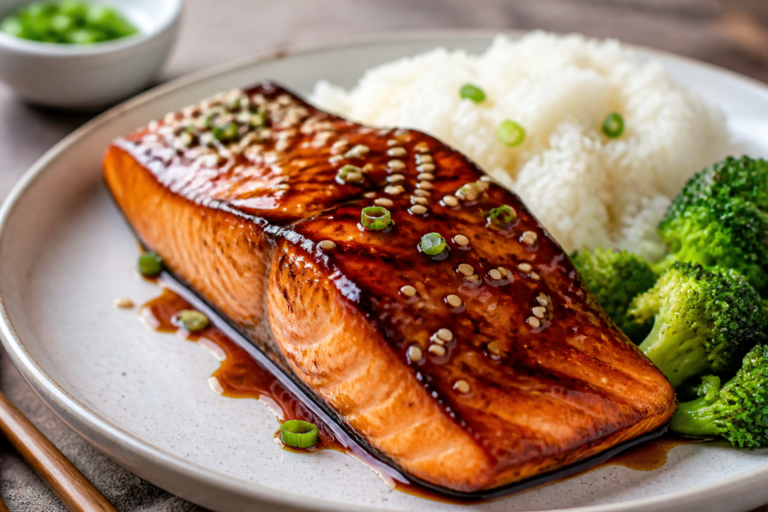
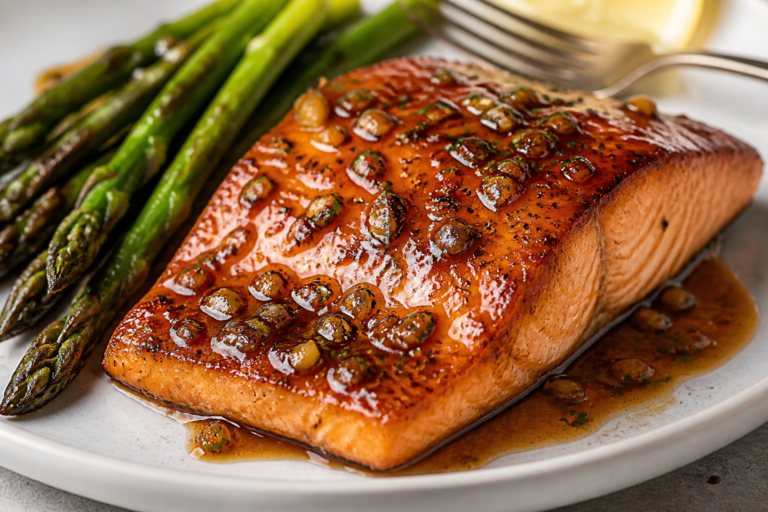
Pineapple Glazed Salmon – Sweet, Tangy, and Weeknight Easy
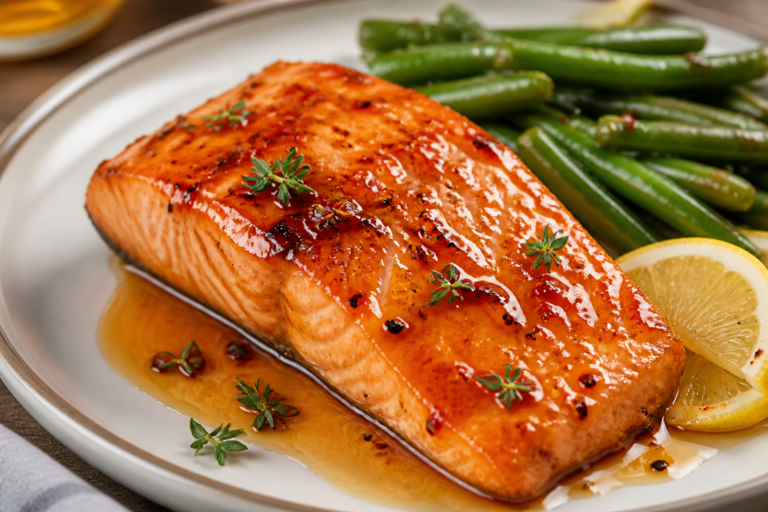
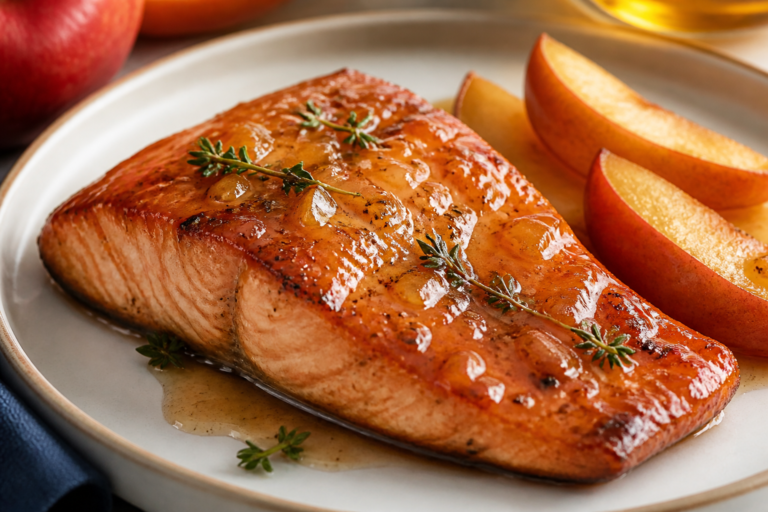
You don’t need a special occasion to make something that tastes restaurant-worthy. Pineapple glazed salmon brings bright, tropical flavor to rich, flaky fish, and it comes together fast. The glaze is a simple mix of pineapple, soy, garlic, and a touch of heat, and it turns glossy and sticky in the oven.
FREE 7-Day Easy Dinner Reset
FREE 7-Day Easy Dinner Reset
Serve it with rice, a crunchy slaw, or simple greens, and dinner feels special without extra work. If you love a sweet-savory combo, this one’s bound to be a keeper.
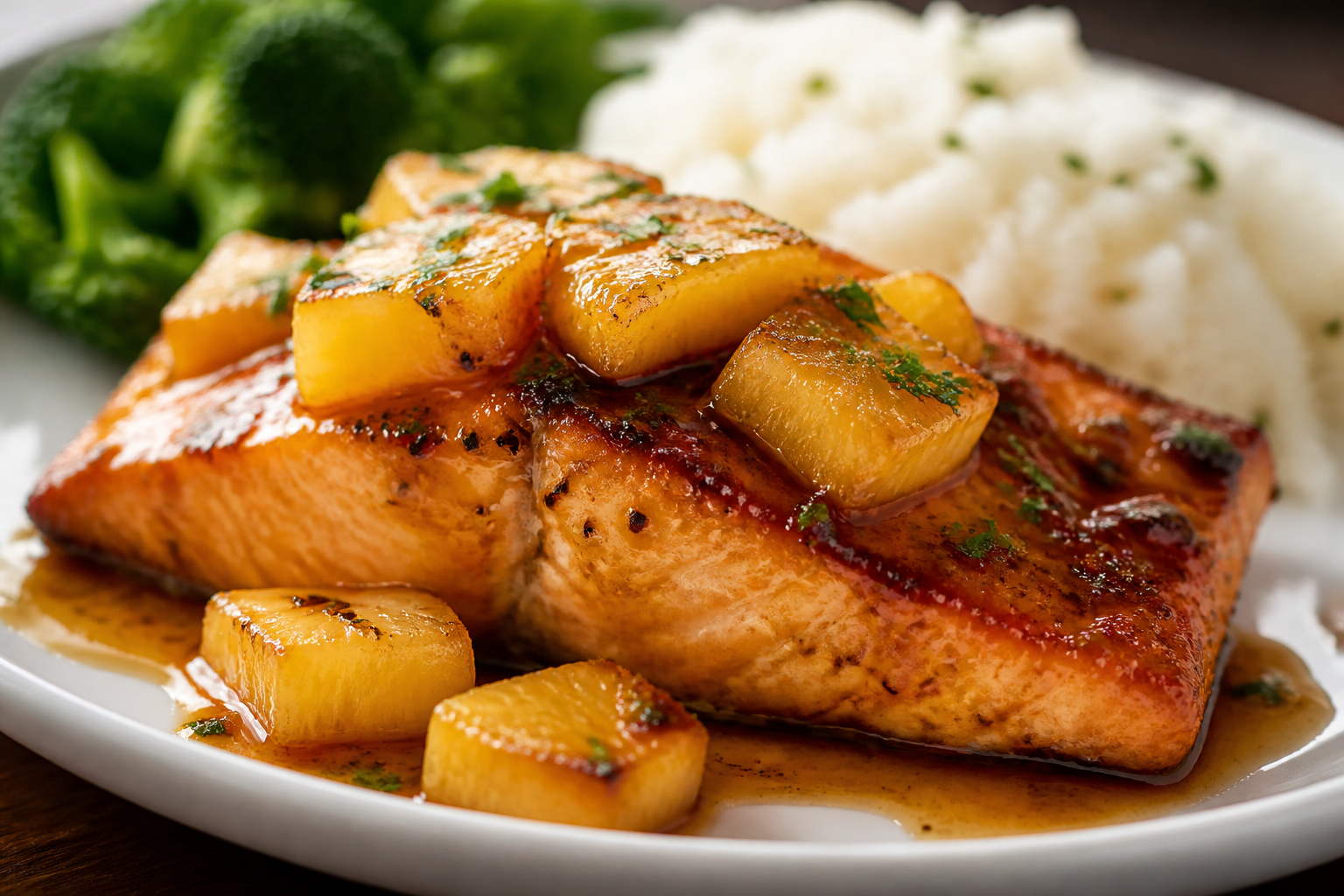
Pineapple Glazed Salmon - Sweet, Tangy, and Weeknight Easy
Ingredients
Method
- Prep the salmon: Pat the fillets dry with paper towels.Season lightly with salt and pepper. Let sit at room temperature for 10–15 minutes while you make the glaze.
- Make the pineapple glaze: In a small saucepan, combine pineapple juice, soy sauce, honey, vinegar or lime juice, ginger, garlic, and sriracha if using. Bring to a simmer over medium heat and cook 4–5 minutes, stirring occasionally.
- Thicken the glaze: Stir the cornstarch slurry, then pour it into the simmering sauce.Cook 1–2 minutes more until glossy and slightly thickened. Stir in pineapple tidbits, if using. Remove from heat.
- Prep the pan: Heat the oven to 400°F (200°C).Line a sheet pan with foil or parchment. Lightly brush the foil with oil to prevent sticking.
- Coat the salmon: Place fillets on the pan, skin-side down if skin-on. Spoon about half the glaze over the tops, reserving the rest for basting and serving.
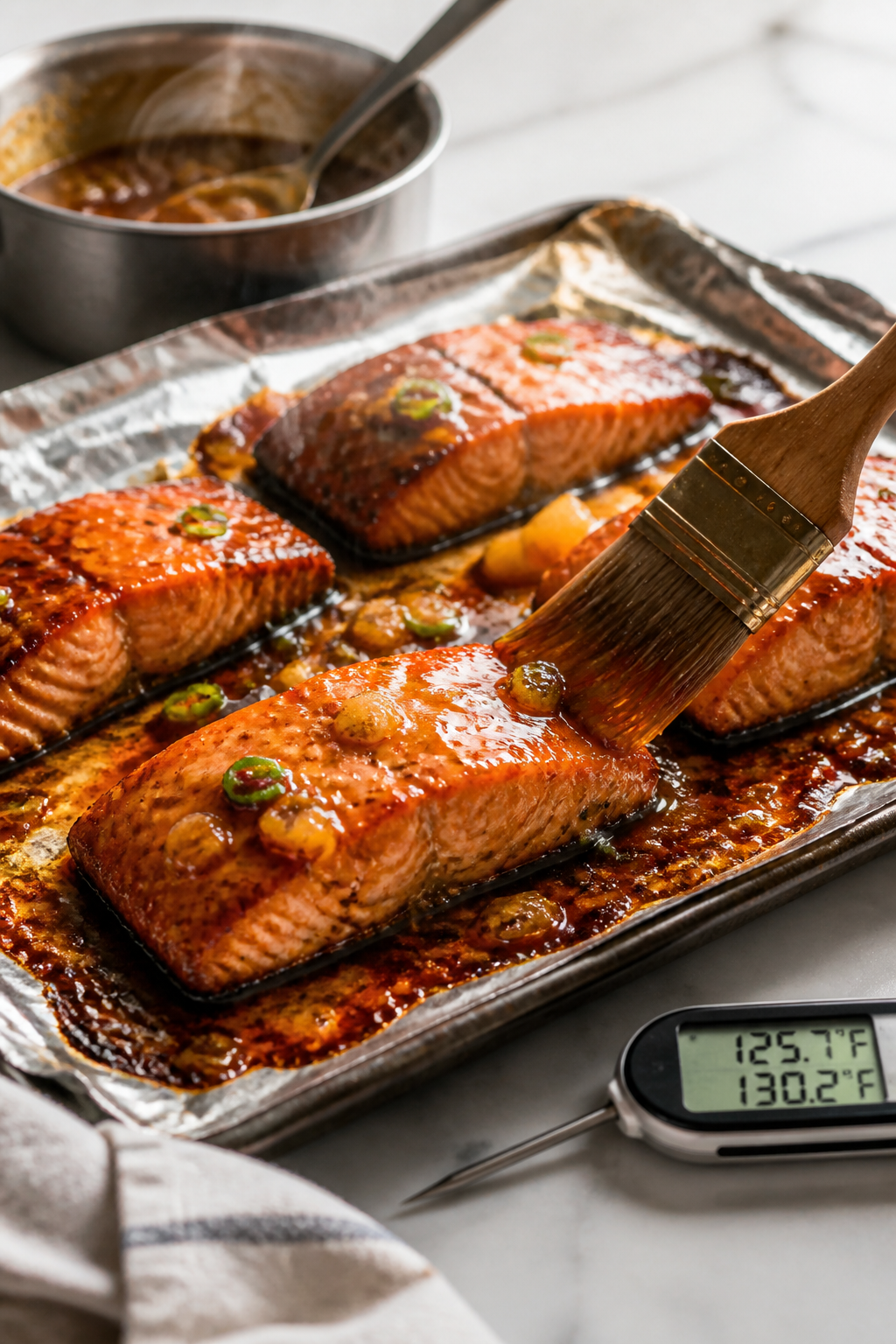
- Bake: Cook 8–10 minutes, depending on thickness.Salmon is done when it flakes easily and reaches an internal temperature of 125–130°F (52–54°C) for medium, or up to 135°F (57°C) for more well-done.
- Broil for caramelization: Switch the oven to broil. Brush with more glaze and broil 1–2 minutes until the edges are lightly charred and sticky. Watch closely—glaze can burn fast.
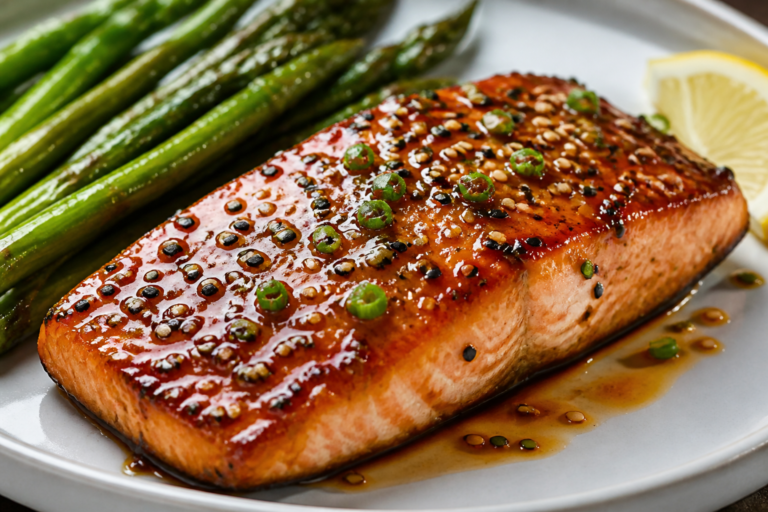
- Rest and finish: Let salmon rest 3 minutes.Spoon on a little of the remaining warm glaze. Garnish with scallions, sesame seeds, and a squeeze of lime.
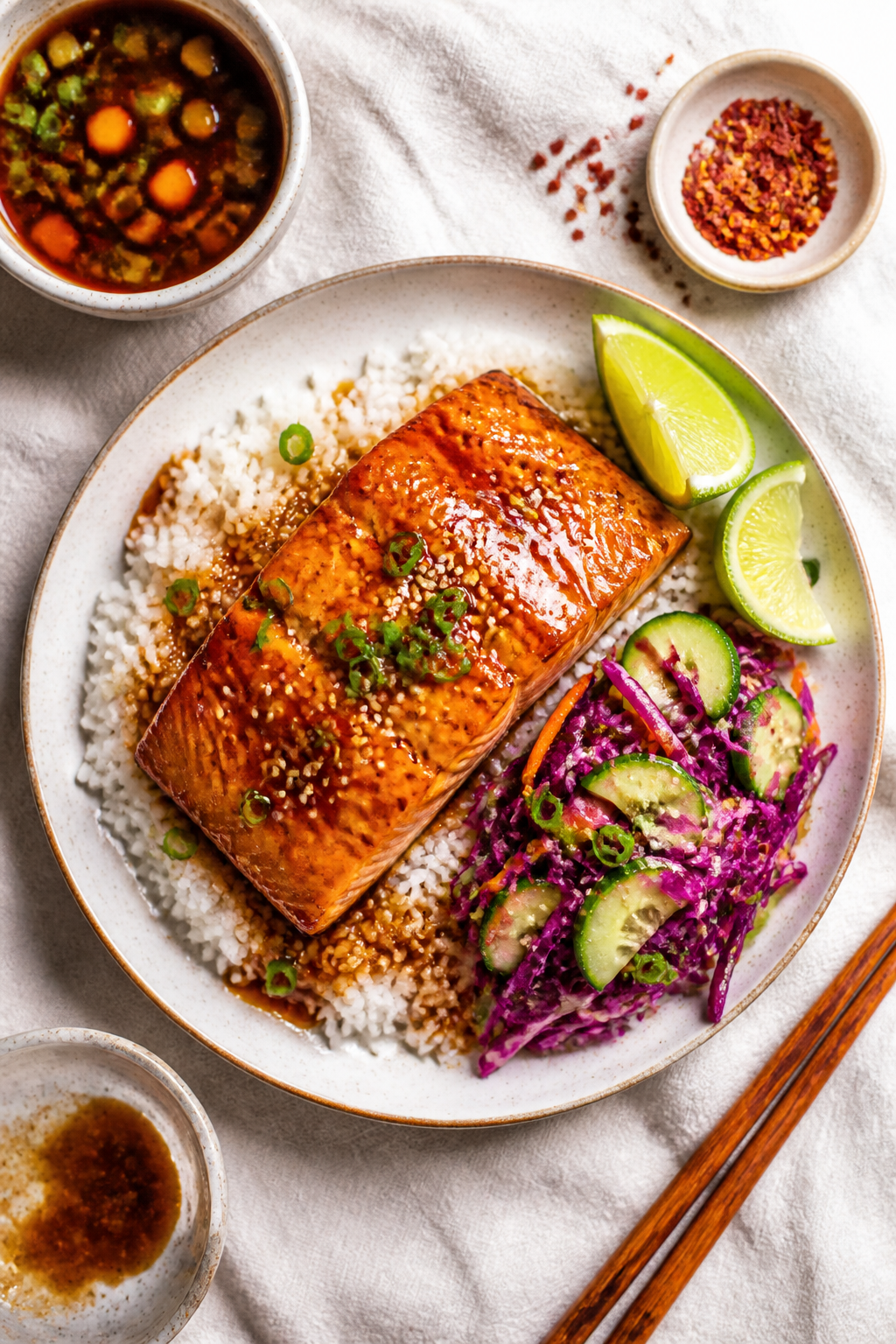
- Serve: Pair with rice, coconut rice, or quinoa, and add a crisp side like cucumber salad or a red cabbage slaw for contrast.
What Makes This Recipe So Good
- Fast and forgiving: Salmon cooks quickly, and the glaze is done in minutes on the stove. Perfect for a busy weeknight.
- Balanced flavor: Sweet pineapple, salty soy, tangy lime, and a hint of ginger create a bright, well-rounded bite.
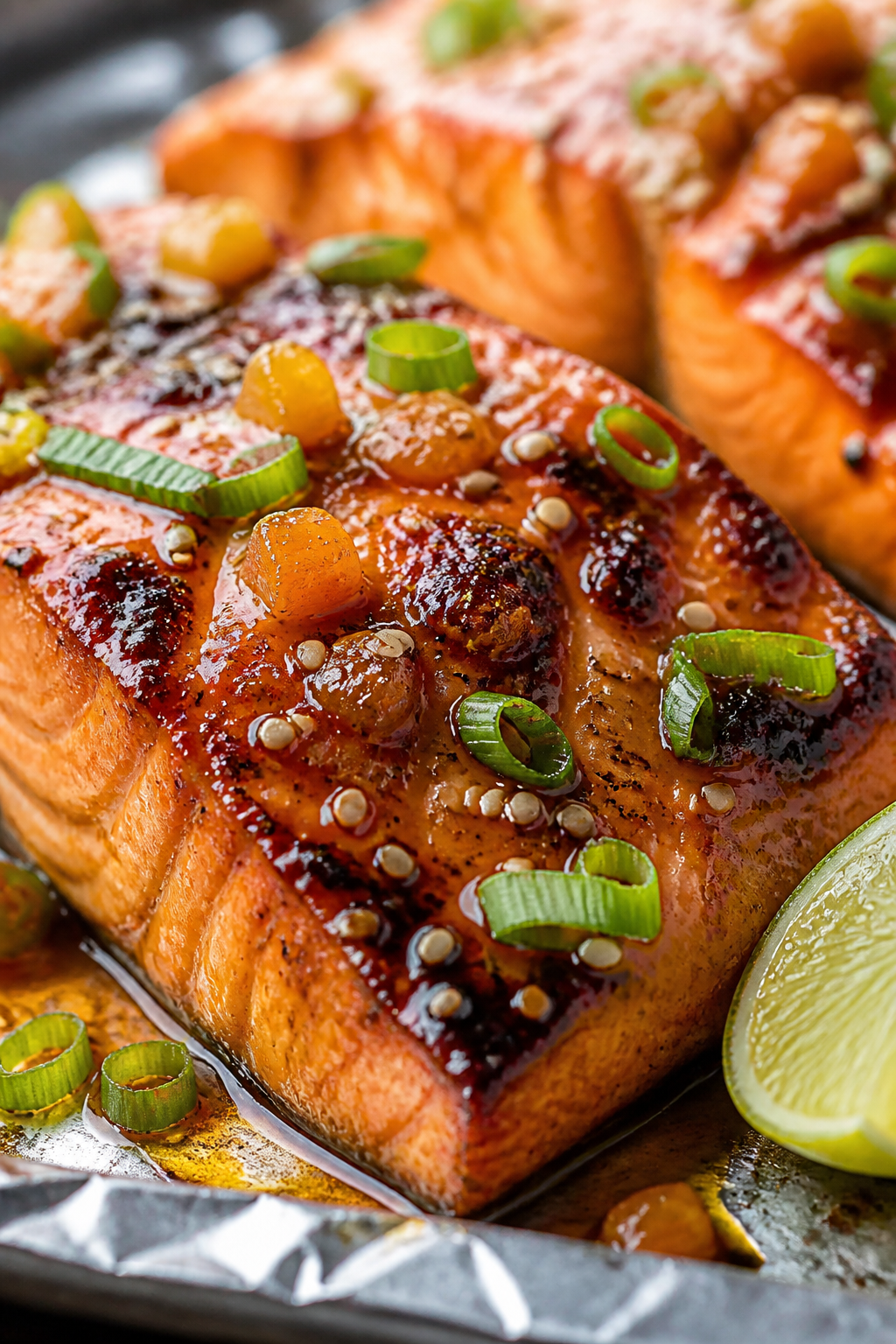
- Sticky, caramelized edges: A quick broil at the end gives you that gorgeous, lacquered finish.
- Minimal cleanup: Lining your pan with foil or parchment keeps cleanup easy.
- Flexible: Works with fresh or canned pineapple, skin-on or skinless salmon, and can be cooked in the oven, air fryer, or on the grill.
Ingredients
- 4 salmon fillets (about 6 ounces each), skin-on or skinless
- 1 cup pineapple juice (100% juice; from a can or carton)
- 1/2 cup small pineapple tidbits (fresh or canned), optional for texture
- 3 tablespoons low-sodium soy sauce or tamari
- 2 tablespoons honey or brown sugar
- 1 tablespoon rice vinegar or lime juice
- 2 teaspoons fresh grated ginger (or 1/2 teaspoon ground ginger)
- 2 garlic cloves, minced
- 1 teaspoon sriracha or 1/4 teaspoon red pepper flakes (optional, for heat)
- 1 tablespoon cornstarch mixed with 1 tablespoon cold water
- 1 tablespoon neutral oil (avocado, canola, or light olive oil)
- Salt and black pepper, to taste
- To serve: sliced scallions, sesame seeds, lime wedges, cooked rice, and steamed veggies or a cabbage slaw
How to Make It
- Prep the salmon: Pat the fillets dry with paper towels.
Season lightly with salt and pepper. Let sit at room temperature for 10–15 minutes while you make the glaze.
- Make the pineapple glaze: In a small saucepan, combine pineapple juice, soy sauce, honey, vinegar or lime juice, ginger, garlic, and sriracha if using. Bring to a simmer over medium heat and cook 4–5 minutes, stirring occasionally.
- Thicken the glaze: Stir the cornstarch slurry, then pour it into the simmering sauce.
Cook 1–2 minutes more until glossy and slightly thickened. Stir in pineapple tidbits, if using. Remove from heat.
- Prep the pan: Heat the oven to 400°F (200°C).
Line a sheet pan with foil or parchment. Lightly brush the foil with oil to prevent sticking.
- Coat the salmon: Place fillets on the pan, skin-side down if skin-on. Spoon about half the glaze over the tops, reserving the rest for basting and serving.
- Bake: Cook 8–10 minutes, depending on thickness.
Salmon is done when it flakes easily and reaches an internal temperature of 125–130°F (52–54°C) for medium, or up to 135°F (57°C) for more well-done.
- Broil for caramelization: Switch the oven to broil. Brush with more glaze and broil 1–2 minutes until the edges are lightly charred and sticky. Watch closely—glaze can burn fast.
- Rest and finish: Let salmon rest 3 minutes.
Spoon on a little of the remaining warm glaze. Garnish with scallions, sesame seeds, and a squeeze of lime.
- Serve: Pair with rice, coconut rice, or quinoa, and add a crisp side like cucumber salad or a red cabbage slaw for contrast.
How to Store
- Refrigerate: Store cooled salmon in an airtight container for up to 3 days. Keep extra glaze in a separate container.
- Reheat gently: Warm in a 275°F (135°C) oven for 10–12 minutes or in a covered skillet over low heat with a splash of water.
Avoid microwaving at high power—it can dry out the fish.
- Freeze: For best texture, freeze cooked salmon without glaze for up to 2 months. Thaw overnight in the fridge and warm gently, then add fresh glaze.
- Repurpose: Flake chilled salmon over salads, tuck into wraps with slaw, or add to fried rice for a quick lunch.
Health Benefits
- Omega-3s for heart health: Salmon is rich in EPA and DHA, which support heart and brain health and help reduce inflammation.
- High-quality protein: Each serving provides complete protein to keep you satisfied and support muscle repair.
- Vitamins and minerals: Salmon offers B vitamins, selenium, and potassium, while pineapple brings vitamin C and manganese.
- Lighter sweetness: Using pineapple juice and a modest amount of honey or brown sugar keeps the glaze flavorful without being heavy.
- Gluten-friendly option: Use tamari or coconut aminos to keep it gluten-free.
What Not to Do
- Don’t overcook the salmon: Dry salmon loses its silky texture. Pull it at 125–130°F for best results.
- Don’t skip drying the fillets: Moisture prevents browning and can dilute the glaze.
- Don’t add the slurry too early: Thicken the glaze after it simmers.
Adding starch to a cold mixture can leave it chalky.
- Don’t broil unattended: The sugars in the glaze burn quickly. Keep the door ajar and eyes on the pan.
- Don’t use very thin fillets: Super thin pieces cook too fast and may overcaramelize. Aim for 1- to 1.5-inch thick pieces.
Recipe Variations
- Grilled version: Grill salmon over medium heat, skin-side down, 6–8 minutes.
Brush with glaze during the last 2–3 minutes. Finish with a quick sear skin-side up for char.
- Air fryer: Cook at 390°F (200°C) for 7–9 minutes, brushing with glaze halfway. Add a final brush and cook 1 extra minute.
- Tropical twist: Add 2 tablespoons coconut milk to the glaze and finish with toasted coconut flakes.
- Spicy pineapple teriyaki: Increase sriracha, add 1 teaspoon sesame oil, and sprinkle with togarashi.
- Citrus swap: Replace rice vinegar with fresh orange or lime juice and add orange zest to brighten the sauce.
- No-sugar-added: Skip honey and rely on 100% pineapple juice; reduce glaze a bit longer to thicken, or use a touch more cornstarch.
- Sheet-pan dinner: Roast broccoli florets or snap peas on the same tray.
Toss veggies with a little oil, salt, and pepper, and start them 5 minutes before the salmon.
FAQ
Can I use frozen salmon?
Stop wondering what's for dinner.
Get 7 healthy, family-friendly dinners complete with recipes and simple meal plans delivered straight to your inbox.
Yes. Thaw it overnight in the fridge, then pat it very dry before seasoning. If the fillets are still cold in the center, add a couple of extra minutes to the bake time.
What if I don’t have pineapple juice?
Orange juice works well and still gives a sweet, tangy glaze.
You may want to reduce the added sweetener slightly since orange juice can be sweeter.
How do I know when the glaze is thick enough?
It should coat the back of a spoon and look glossy. If it seems thin, simmer for another minute. Remember, it will thicken a bit more as it cools and when it hits the hot salmon.
Is the skin edible?
Absolutely.
When roasted or grilled, the skin gets crisp and flavorful. If you prefer not to eat it, cook with the skin on to help protect the fish, then slide it off after cooking.
Can I make the glaze ahead?
Yes. Make it up to 3 days in advance and store it in the fridge.
Warm gently before using so it spreads evenly.
What sides pair best with pineapple glazed salmon?
Steamed jasmine rice, coconut rice, quinoa, or rice noodles are great bases. Add crunchy sides like cucumber salad, cabbage slaw with lime, or roasted asparagus for balance.
How spicy is this recipe?
Mild by default. Increase or decrease the sriracha or red pepper flakes to suit your taste.
You can also serve chili crisp or extra hot sauce on the side.
Can I cook it in a skillet?
Yes. Sear salmon in a little oil, 3–4 minutes per side, then reduce heat and spoon in the glaze to coat and thicken around the fish. Watch closely to prevent scorching.
Final Thoughts
Pineapple glazed salmon is the kind of recipe that feels sunny no matter the season.
It uses simple pantry staples and just a few fresh ingredients to turn weeknight salmon into something memorable. Keep the glaze on hand, and you can riff on it for chicken, shrimp, or tofu too. With sweet tang, sticky edges, and tender fish, this is a low-effort, high-reward dinner you’ll want on repeat.
Printable Recipe Card
Want just the essential recipe details without scrolling through the article? Get our printable recipe card with just the ingredients and instructions.
Loved This Recipe?
If you're looking for more simple, healthy dinners your family will actually eat, grab my FREE 7-Day Easy Dinner Reset. You'll get 7 easy dinner recipes, simple grocery lists, and a done-for-you plan that takes the stress out of mealtime.