Blueberry Balsamic Salmon – A Bright, Savory-Sweet Weeknight Dinner
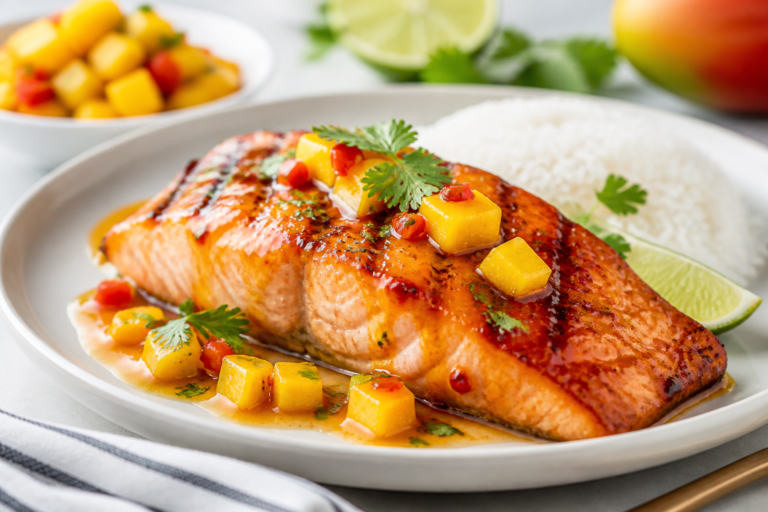
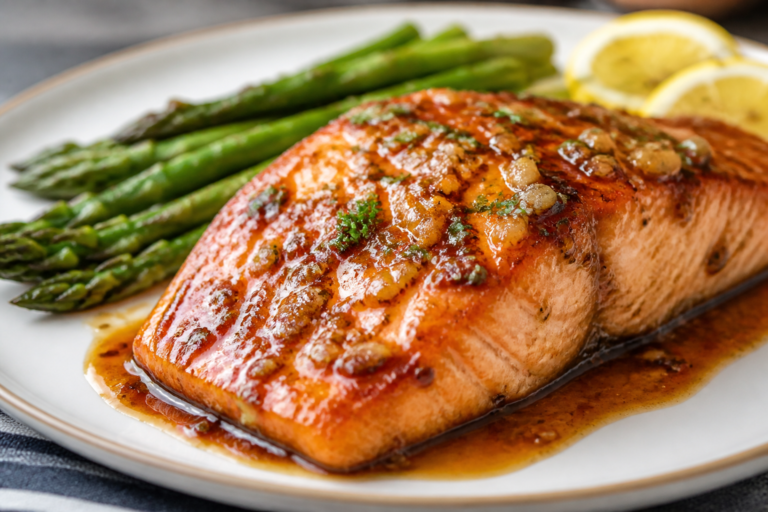
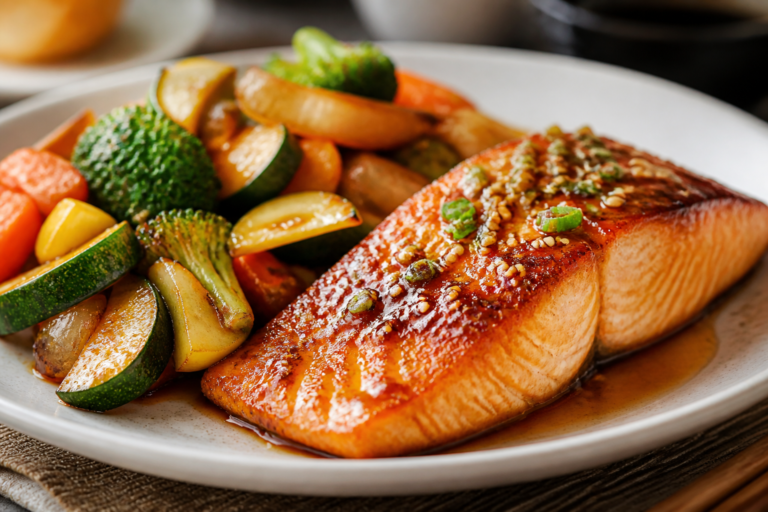
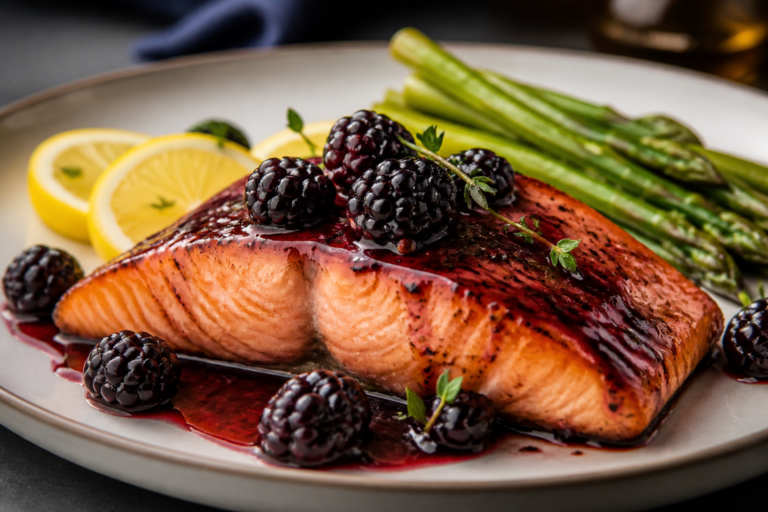
This Blueberry Balsamic Salmon hits that sweet spot between simple and special. Think juicy salmon fillets glazed with a glossy blueberry balsamic sauce that’s tangy, slightly sweet, and full of depth. It’s easy enough for a weeknight but feels like something you’d order at a nice restaurant.
FREE 7-Day Easy Dinner Reset
FREE 7-Day Easy Dinner Reset
You get a beautiful balance of flavors without a complicated ingredient list. Serve it with rice, roasted potatoes, or a crisp salad, and dinner is done.
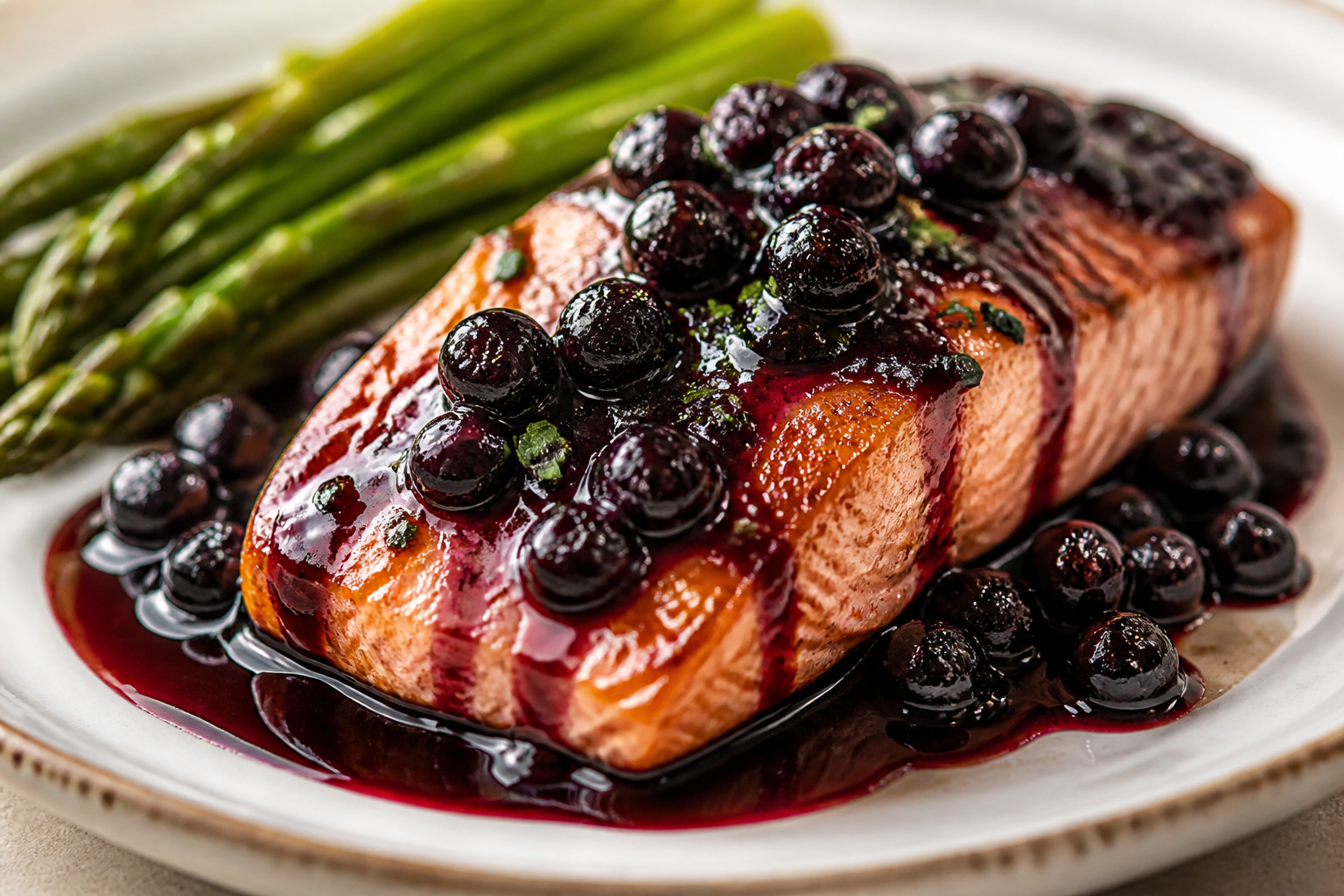
Blueberry Balsamic Salmon - A Bright, Savory-Sweet Weeknight Dinner
Ingredients
Method
- Prep the salmon. Pat the fillets dry with paper towels. Season both sides with salt and pepper.Let them sit at room temperature for about 10 minutes while you make the sauce.
- Start the blueberry balsamic sauce. In a small saucepan, combine blueberries, balsamic vinegar, maple syrup, Dijon, garlic, olive oil, lemon zest (if using), lemon juice, and red pepper flakes. Stir to combine.
- Simmer until glossy. Set the pan over medium heat and bring to a gentle bubble. Cook for 6–8 minutes, stirring and lightly smashing a few blueberries with the back of a spoon.The sauce should thicken enough to coat a spoon. Taste and adjust salt, pepper, or sweetness.
- Preheat your pan or oven. For stovetop, heat a large nonstick or cast-iron skillet over medium-high and add a light film of oil. For oven, preheat to 400°F (200°C) and line a sheet pan with parchment.
- Cook the salmon (stovetop). Place salmon skin-side down and cook 3–4 minutes until the sides turn opaque about halfway up.Flip and cook another 2–3 minutes, depending on thickness. You’re aiming for medium to medium-rare in the center, about 125–130°F (52–54°C).
- Or bake the salmon (oven method). Place fillets on the prepared sheet pan. Brush with a little olive oil.Bake 9–12 minutes, depending on thickness, until just opaque and flaky.
- Glaze and finish. Spoon some blueberry balsamic sauce over the salmon during the last minute of cooking, then remove from heat. Rest 2 minutes, then add more sauce on top. Garnish with fresh thyme or parsley if you like.
- Serve. Pair with rice, couscous, roasted baby potatoes, or a simple arugula salad.Add lemon wedges for a bright finish.
What Makes This Special
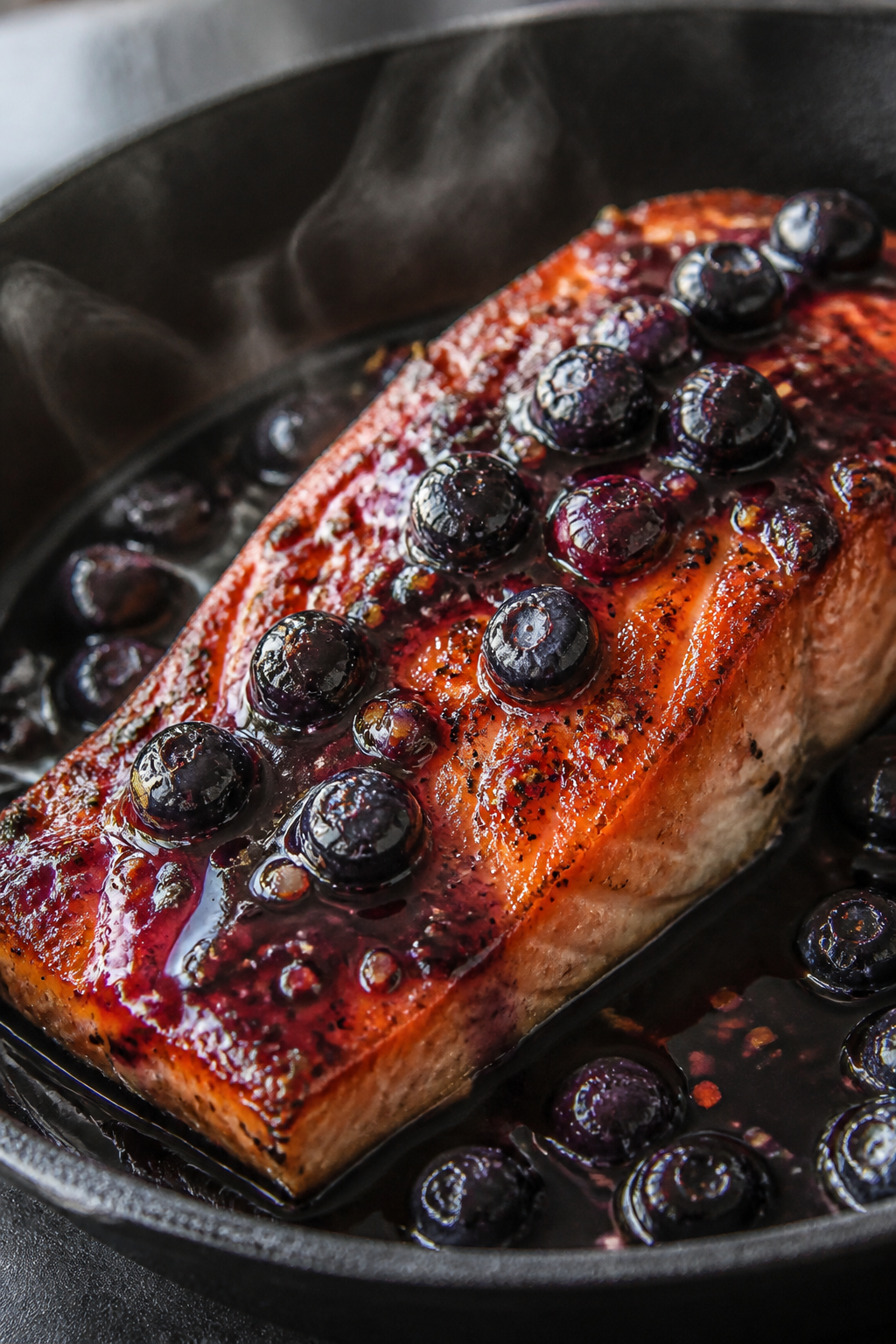
This recipe leans on a short list of pantry staples to deliver big flavor. The balsamic vinegar adds a rich, tangy backbone, while blueberries bring natural sweetness and a gorgeous color.
A touch of garlic and Dijon ties everything together, so the glaze is bright but not sugary. Best of all, the sauce simmers in minutes and the salmon cooks fast, which means less time in the kitchen and more time at the table.
Ingredients
- 4 salmon fillets (about 6 ounces each, skin-on or skinless)
- 1 cup fresh or frozen blueberries (no need to thaw frozen)
- 1/3 cup balsamic vinegar
- 2 tablespoons maple syrup or honey
- 1 tablespoon Dijon mustard
- 1 clove garlic, minced
- 1 tablespoon olive oil, plus more for the pan
- 1 teaspoon fresh lemon zest (optional) and 1 tablespoon lemon juice
- 1/4 teaspoon crushed red pepper flakes (optional, for subtle heat)
- Kosher salt and freshly ground black pepper, to taste
- Fresh thyme or parsley, for garnish (optional)
Step-by-Step Instructions
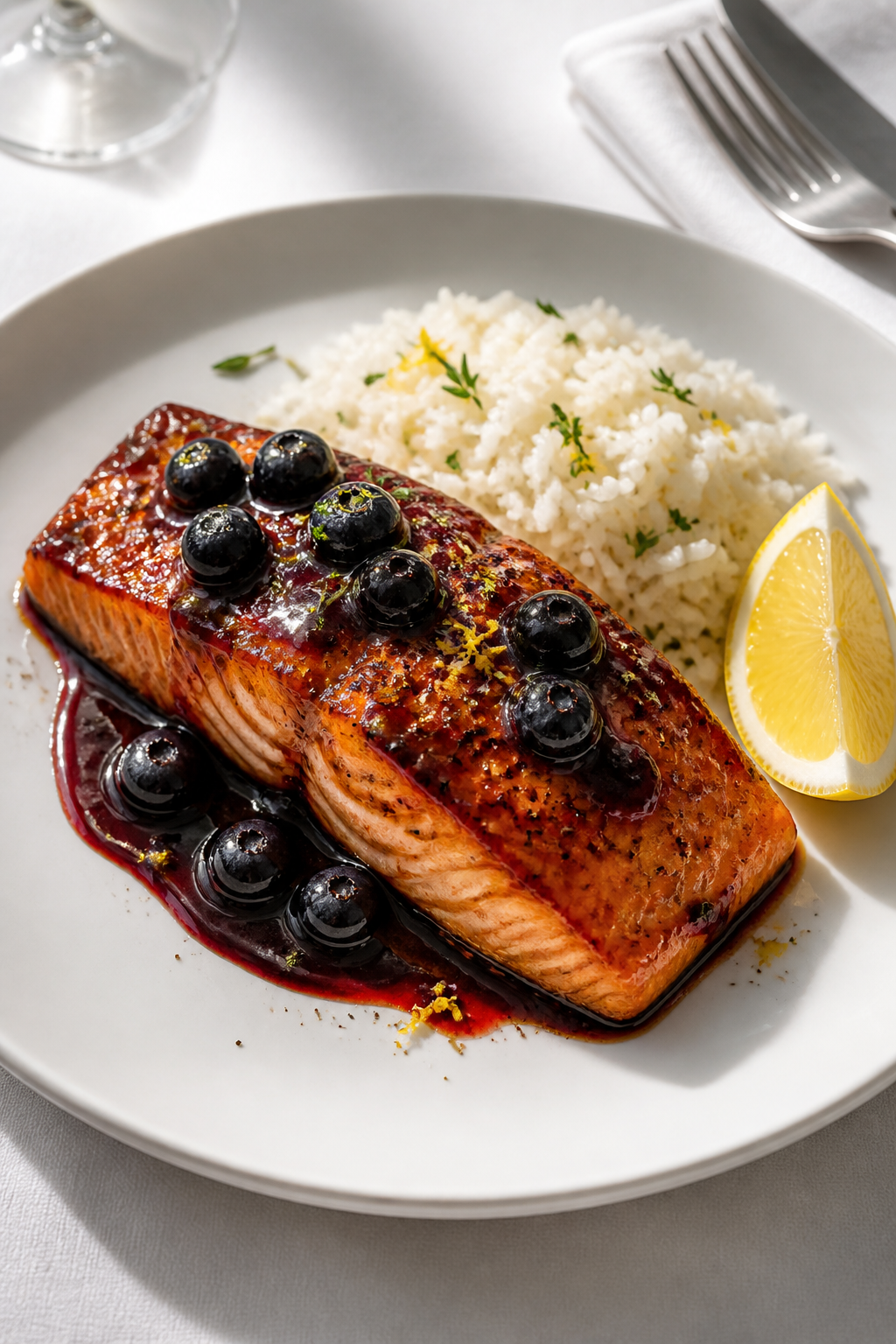
- Prep the salmon. Pat the fillets dry with paper towels. Season both sides with salt and pepper.
Let them sit at room temperature for about 10 minutes while you make the sauce.
- Start the blueberry balsamic sauce. In a small saucepan, combine blueberries, balsamic vinegar, maple syrup, Dijon, garlic, olive oil, lemon zest (if using), lemon juice, and red pepper flakes. Stir to combine.
- Simmer until glossy. Set the pan over medium heat and bring to a gentle bubble. Cook for 6–8 minutes, stirring and lightly smashing a few blueberries with the back of a spoon.
The sauce should thicken enough to coat a spoon. Taste and adjust salt, pepper, or sweetness.
- Preheat your pan or oven. For stovetop, heat a large nonstick or cast-iron skillet over medium-high and add a light film of oil. For oven, preheat to 400°F (200°C) and line a sheet pan with parchment.
- Cook the salmon (stovetop). Place salmon skin-side down and cook 3–4 minutes until the sides turn opaque about halfway up.
Flip and cook another 2–3 minutes, depending on thickness. You’re aiming for medium to medium-rare in the center, about 125–130°F (52–54°C).
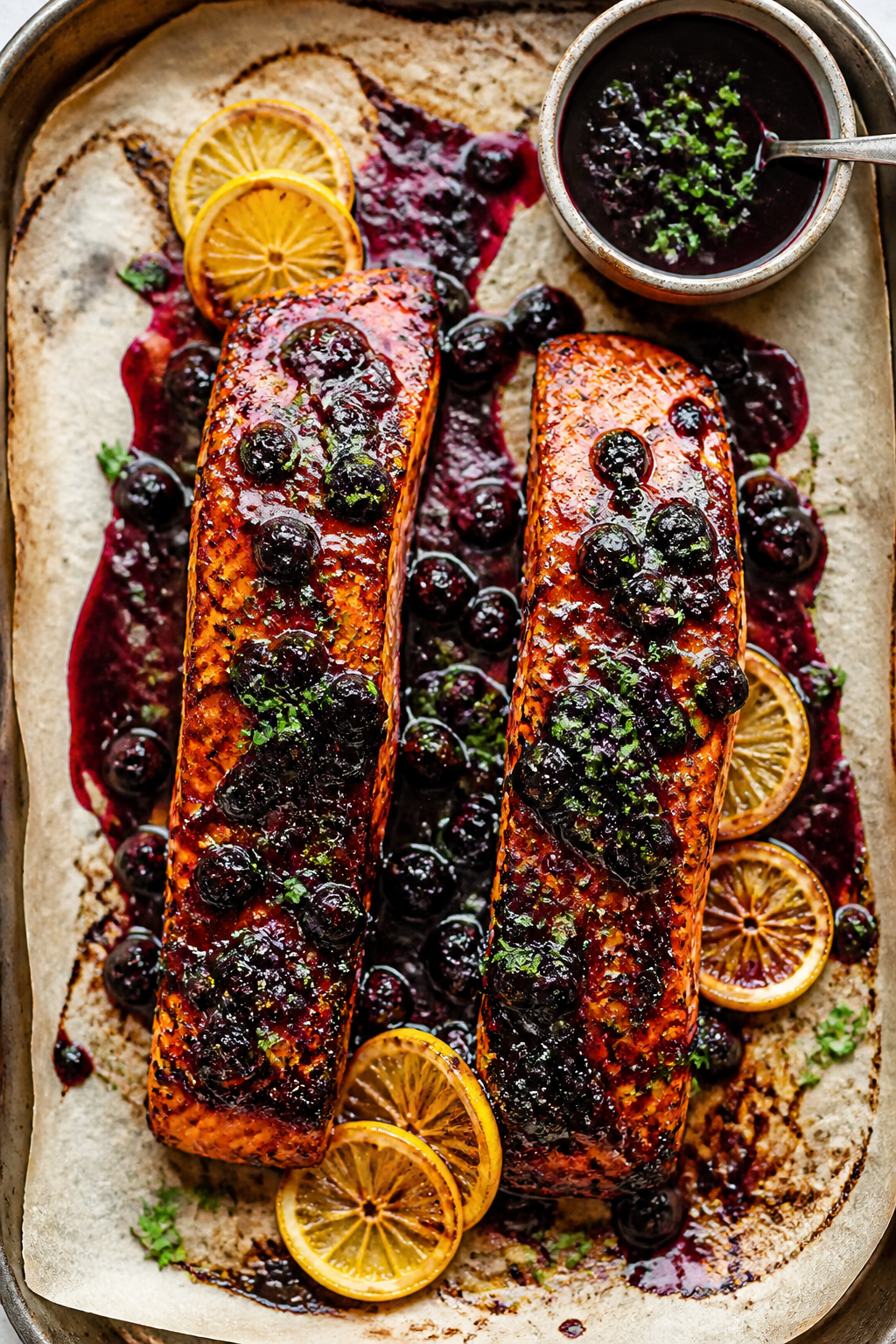
- Or bake the salmon (oven method). Place fillets on the prepared sheet pan. Brush with a little olive oil.
Bake 9–12 minutes, depending on thickness, until just opaque and flaky.
- Glaze and finish. Spoon some blueberry balsamic sauce over the salmon during the last minute of cooking, then remove from heat. Rest 2 minutes, then add more sauce on top. Garnish with fresh thyme or parsley if you like.
- Serve. Pair with rice, couscous, roasted baby potatoes, or a simple arugula salad.
Add lemon wedges for a bright finish.
Storage Instructions
- Refrigerate leftovers in an airtight container for up to 2 days. Store the sauce separately if possible.
- Reheat gently on low heat in a skillet with a splash of water, or in the microwave at 50% power in short bursts to avoid overcooking.
- Freeze the sauce for up to 2 months. The salmon itself is best eaten fresh rather than frozen after cooking.
Benefits of This Recipe
- Balanced flavor: Sweet blueberries and tangy balsamic highlight salmon’s natural richness.
- Quick and simple: Ready in about 25 minutes with minimal prep.
- Nutritious: Salmon brings protein and omega-3s; blueberries add antioxidants.
- Versatile: Works with stovetop or oven, fresh or frozen fruit.
- Make-ahead friendly: Sauce can be made in advance and warmed when needed.
What Not to Do
- Don’t overcook the salmon. Dry salmon loses its delicate texture and flavor.
Pull it when it’s just opaque and flakes easily.
- Don’t reduce the sauce too far. Over-thickened sauce can taste harsh and sticky. Aim for a pourable glaze that coats a spoon.
- Don’t skip seasoning. A light sprinkle of salt and pepper on the salmon and a pinch in the sauce make the flavors pop.
- Don’t stir the blueberries nonstop. Let some berries stay whole for bursts of flavor and a pretty look.
- Don’t add the glaze too early. Sugars can burn in a hot pan. Glaze at the end or just before serving.
Recipe Variations
- Herb-forward: Add chopped fresh rosemary or thyme to the sauce for an earthy note.
- Citrus twist: Swap lemon for orange zest and juice for a rounder, warmer finish.
- Spicy-sweet: Stir in 1–2 teaspoons of harissa or a pinch of chipotle powder.
- Garlic butter finish: Whisk 1 tablespoon of cold butter into the warm sauce to make it silkier.
- Grilled version: Grill salmon over medium heat and warm the sauce separately.
Glaze during the last minute on the grill.
- Different protein: Try the glaze with chicken thighs or pork tenderloin; adjust cook times accordingly.
- Berry swap: Use blackberries or a mix of berries if that’s what you have.
FAQ
Can I use frozen salmon?
Yes. Thaw it in the fridge overnight or under cold running water in its packaging. Pat very dry before cooking so it sears well.
Do I have to use maple syrup or honey?
No.
Stop wondering what's for dinner.
Get 7 healthy, family-friendly dinners complete with recipes and simple meal plans delivered straight to your inbox.
You can use brown sugar instead. Start with 1 to 1 1/2 tablespoons, taste, and adjust. The sweetness balances the vinegar.
How do I know when the salmon is done?
Look for the flesh to turn opaque and flake easily with a fork.
An instant-read thermometer should read about 125–130°F (52–54°C) for medium. It will rise slightly as it rests.
Can I make the sauce ahead?
Absolutely. Make it up to 3 days in advance and refrigerate.
Reheat gently on low, adding a splash of water if it’s too thick.
What sides go best with this?
Try lemony rice, garlic mashed potatoes, roasted Brussels sprouts, green beans, or a peppery arugula salad with shaved Parmesan.
Is the sauce very sweet?
No. It’s more tangy-sweet than sugary. If you prefer a brighter sauce, add a squeeze of lemon.
For sweeter, add a bit more maple or honey.
Can I make this dairy-free and gluten-free?
It’s naturally dairy-free and gluten-free as written. Just check your Dijon and balsamic labels to be sure.
What if I don’t have balsamic vinegar?
Use red wine vinegar and add 1–2 teaspoons of brown sugar to round it out. It won’t be exactly the same, but it’s still tasty.
Should I remove the salmon skin?
It’s up to you.
Cooking skin-side down helps protect the fish and keeps it moist. You can slide a spatula between the skin and flesh after cooking if you prefer it off.
Can I double the sauce?
Yes. Double all sauce ingredients and simmer a little longer to maintain the right consistency.
Extra sauce is great on roasted veggies or grain bowls.
Final Thoughts
Blueberry Balsamic Salmon is a simple, crowd-pleasing way to make dinner feel special without extra effort. The sauce is bright and balanced, and it comes together while the salmon cooks. Keep the heat moderate, don’t over-reduce the glaze, and finish with a fresh squeeze of lemon.
With a few pantry staples, you’ve got a colorful, flavorful meal that works on any night of the week.
Printable Recipe Card
Want just the essential recipe details without scrolling through the article? Get our printable recipe card with just the ingredients and instructions.
Loved This Recipe?
If you're looking for more simple, healthy dinners your family will actually eat, grab my FREE 7-Day Easy Dinner Reset. You'll get 7 easy dinner recipes, simple grocery lists, and a done-for-you plan that takes the stress out of mealtime.