Easy Healthy Salmon and Asparagus – A Simple, Fresh Weeknight Dinner
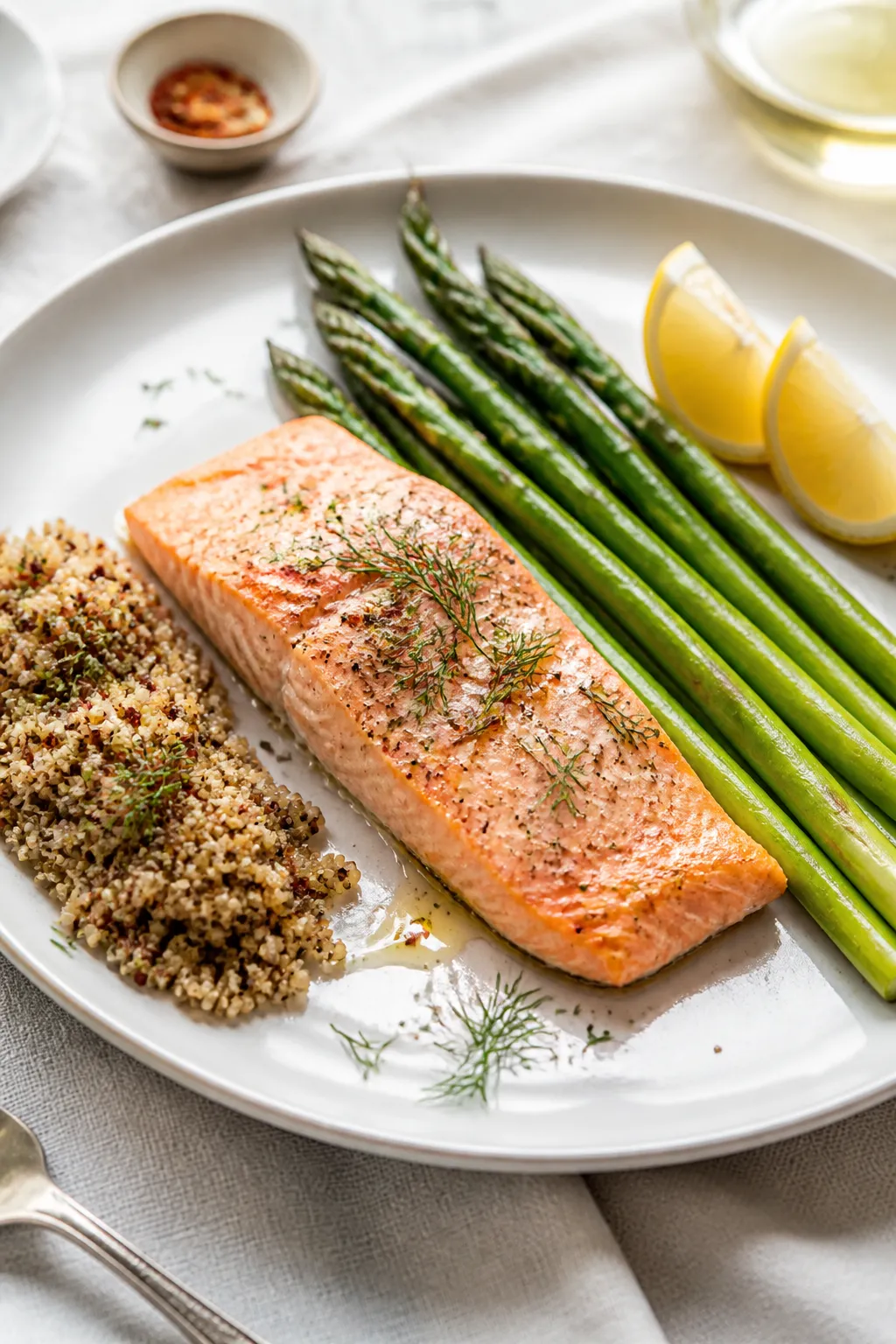
This is the kind of recipe you make when you want something wholesome without spending your whole evening in the kitchen. Salmon and asparagus cook at the same time, on the same pan, and taste like you put in a lot more effort than you actually did. The flavors are clean and bright: a little lemon, garlic, and olive oil bring everything together.
FREE 7-Day Easy Dinner Reset
FREE 7-Day Easy Dinner Reset
It’s fast enough for a weeknight but special enough for a quiet date night at home. And the best part? You’ll feel good after eating it.
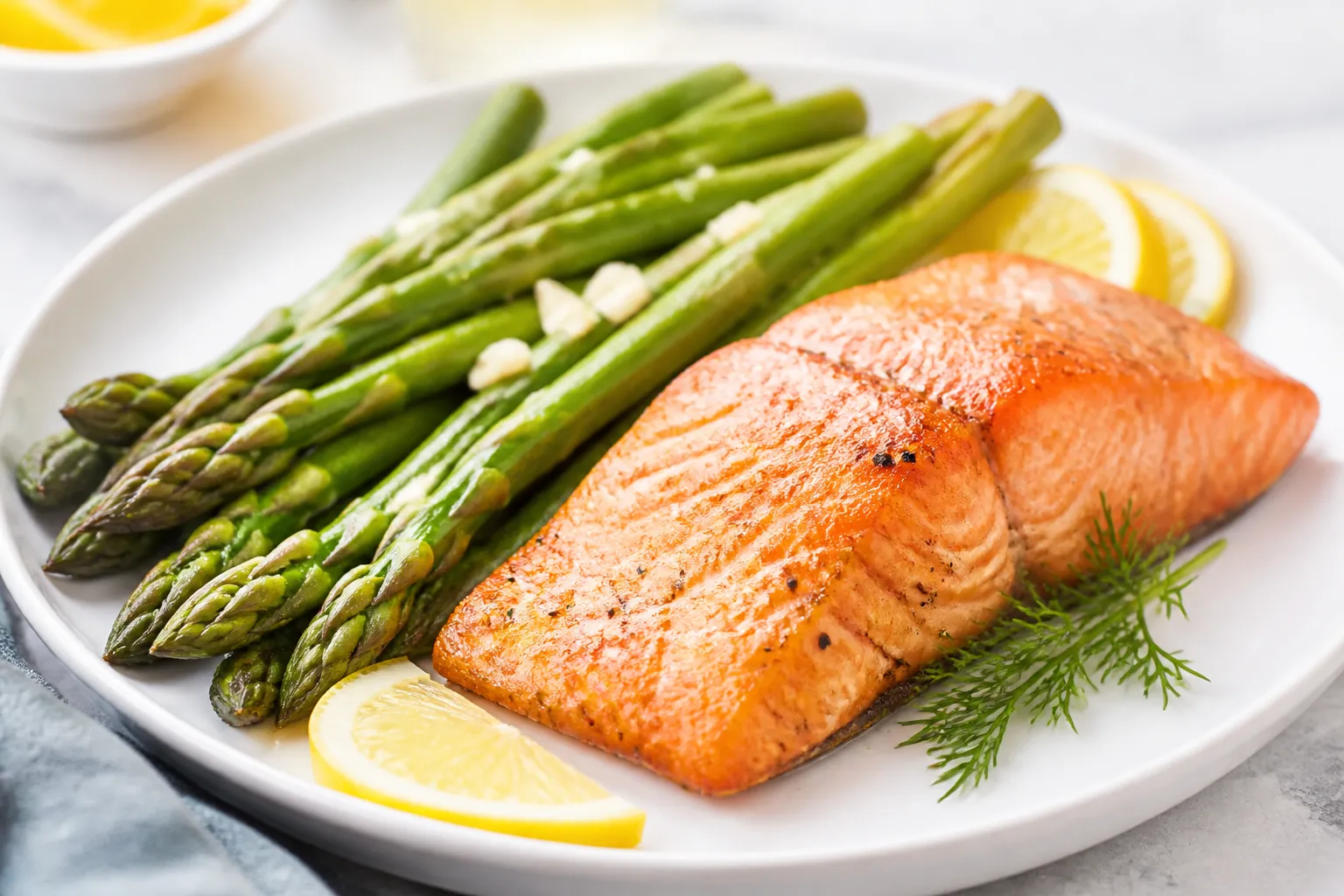
Easy Healthy Salmon and Asparagus - A Simple, Fresh Weeknight Dinner
Ingredients
Method
- Preheat and prep: Heat your oven to 425°F (220°C).Line a large sheet pan with parchment for easy cleanup.
- Season the asparagus: Place trimmed asparagus on the pan. Drizzle with 1 tablespoon olive oil and sprinkle with 1/4 teaspoon salt and a pinch of pepper. Toss and spread into a single layer along the sides of the pan.
- Make the salmon glaze: In a small bowl, mix remaining 1 tablespoon olive oil, lemon juice, lemon zest, garlic, Dijon, 1/2 teaspoon salt, 1/4 teaspoon pepper, and paprika.Stir until smooth.
- Add the salmon: Pat salmon dry with paper towels. Set fillets in the center of the pan, leaving a little space between each. Brush the glaze generously over the tops and sides.
- Roast: Bake for 9–12 minutes, depending on the thickness of your fillets.Thicker pieces may need up to 14 minutes. Asparagus should be crisp-tender with lightly browned tips.
- Check for doneness: Salmon is ready when it flakes easily with a fork and looks slightly translucent in the center. For precision, aim for an internal temperature of 125–130°F for moist, medium salmon, or up to 140°F if you prefer it more done.
- Finish and serve: Sprinkle with fresh dill or parsley and a few red pepper flakes if you like heat.Serve with lemon wedges. Add a simple side like quinoa, brown rice, or roasted potatoes if you want a more filling meal.
What Makes This Recipe So Good
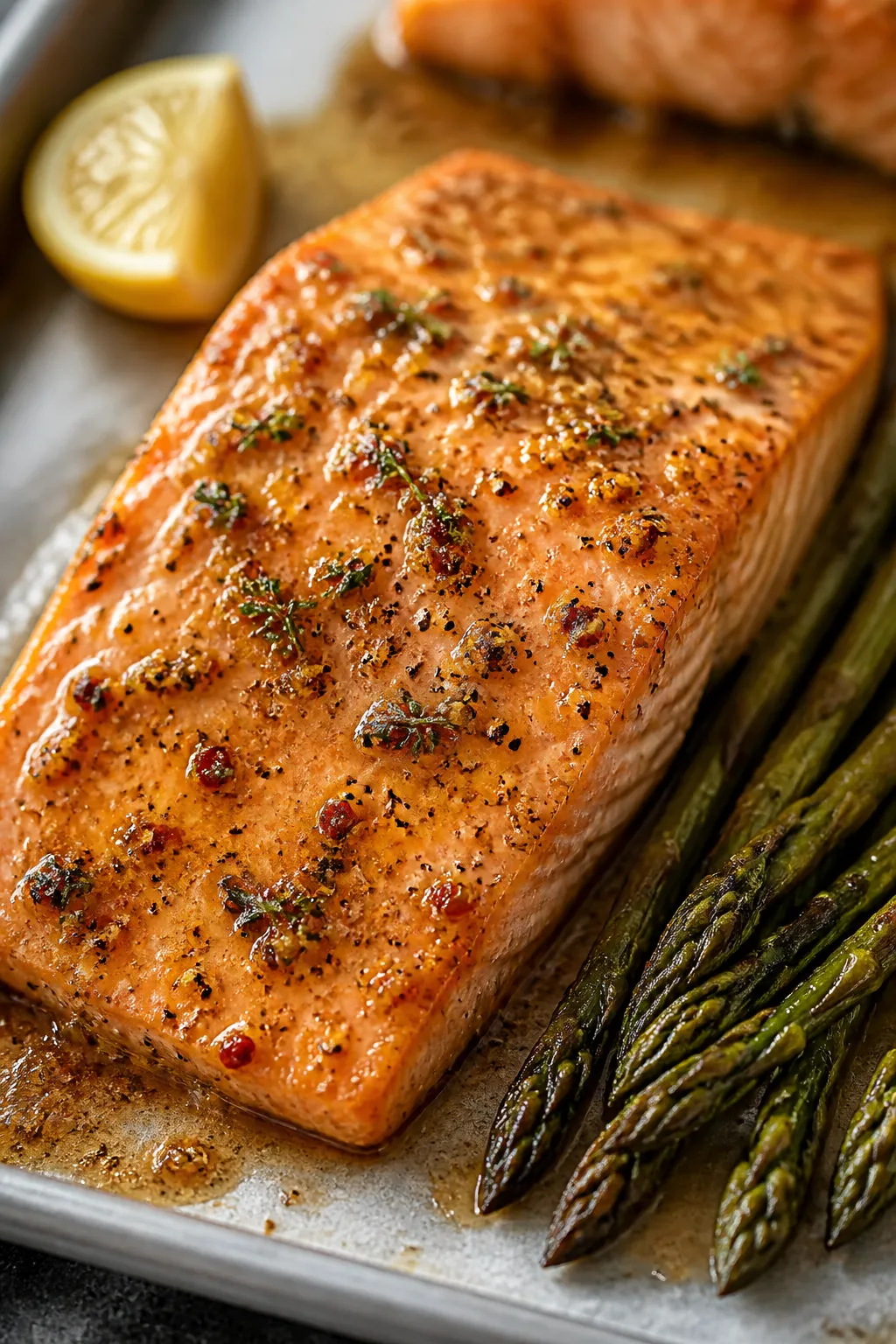
- One-pan convenience: Everything roasts together, so cleanup is minimal and stress is low.
- Balanced flavor: Lemon, garlic, and a touch of Dijon give the salmon zing without overpowering it.
- Reliable texture: Roasting at a higher heat gives you tender salmon with crisp-tipped asparagus.
- Flexible and forgiving: Works with skin-on or skinless fillets, thick or thin asparagus, and fresh or dried herbs.
- Nutrient-dense: Protein, omega-3s, fiber, and plenty of vitamins in a single sheet pan.
Ingredients
- 4 salmon fillets (about 5–6 ounces each), skin-on or skinless
- 1 pound asparagus, trimmed (snap off woody ends)
- 2 tablespoons extra-virgin olive oil, divided
- 1 tablespoon lemon juice (plus extra lemon wedges for serving)
- 1 teaspoon lemon zest
- 2 garlic cloves, minced (or 1/2 teaspoon garlic powder)
- 1 teaspoon Dijon mustard
- 3/4 teaspoon kosher salt, divided
- 1/2 teaspoon black pepper, divided
- 1/2 teaspoon smoked paprika (or regular paprika)
- 1 tablespoon fresh chopped dill or parsley (optional but great)
- Red pepper flakes, to taste (optional)
How to Make It
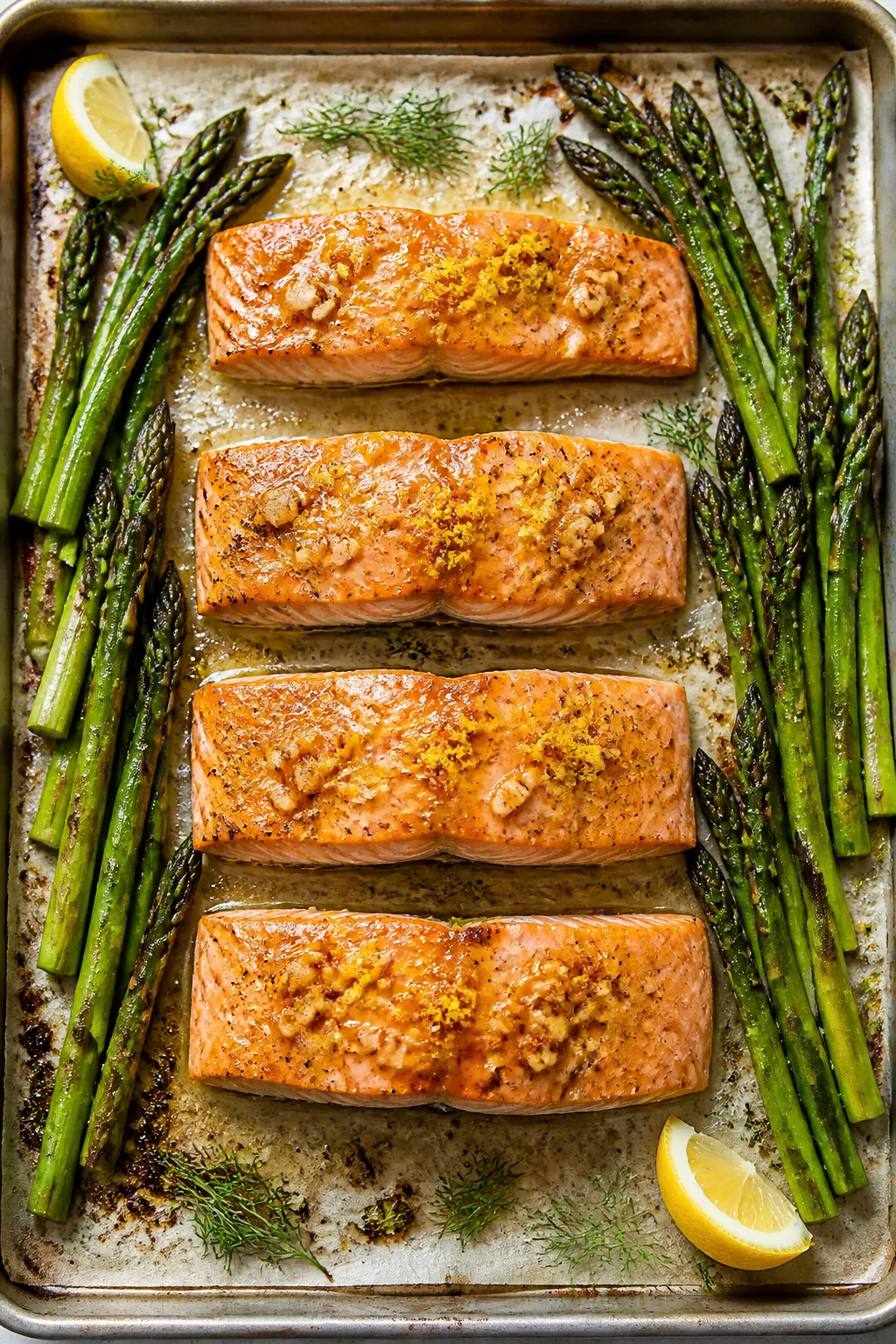
- Preheat and prep: Heat your oven to 425°F (220°C).
Line a large sheet pan with parchment for easy cleanup.
- Season the asparagus: Place trimmed asparagus on the pan. Drizzle with 1 tablespoon olive oil and sprinkle with 1/4 teaspoon salt and a pinch of pepper. Toss and spread into a single layer along the sides of the pan.
- Make the salmon glaze: In a small bowl, mix remaining 1 tablespoon olive oil, lemon juice, lemon zest, garlic, Dijon, 1/2 teaspoon salt, 1/4 teaspoon pepper, and paprika.
Stir until smooth.
- Add the salmon: Pat salmon dry with paper towels. Set fillets in the center of the pan, leaving a little space between each. Brush the glaze generously over the tops and sides.
- Roast: Bake for 9–12 minutes, depending on the thickness of your fillets.
Thicker pieces may need up to 14 minutes. Asparagus should be crisp-tender with lightly browned tips.
- Check for doneness: Salmon is ready when it flakes easily with a fork and looks slightly translucent in the center. For precision, aim for an internal temperature of 125–130°F for moist, medium salmon, or up to 140°F if you prefer it more done.
- Finish and serve: Sprinkle with fresh dill or parsley and a few red pepper flakes if you like heat.
Serve with lemon wedges. Add a simple side like quinoa, brown rice, or roasted potatoes if you want a more filling meal.
Storage Instructions
- Refrigerate: Store cooled salmon and asparagus in airtight containers for up to 3 days.
- Reheat gently: Warm in a 275°F (135°C) oven for 10–12 minutes or in a skillet over low heat with a splash of water and a lid. Avoid microwaving on high—salmon dries out quickly.
- Enjoy cold: Flake leftover salmon over salads or tuck into a whole-grain wrap with yogurt-dill sauce.
Asparagus is great chilled in grain bowls.
- Freezing: You can freeze cooked salmon for up to 2 months. Asparagus doesn’t freeze well; it becomes mushy.
Why This is Good for You
- Heart-healthy fats: Salmon is rich in omega-3s, which support heart, brain, and joint health.
- Lean protein: A serving of salmon brings satisfying protein that helps with fullness and muscle repair.
- Fiber and micronutrients: Asparagus offers fiber plus vitamins A, C, K, and folate.
- Balanced plate: Pairing protein with veggies stabilizes energy without heavy sauces or refined carbs.
- Minimal processing: Real ingredients, simple seasoning, and a quick cook time preserve nutrients.
Pitfalls to Watch Out For
- Overcooking the salmon: This is the most common mistake. Start checking early, especially if fillets are thin.
- Wet salmon surface: If you don’t pat the fillets dry, the glaze won’t stick well and browning suffers.
- Crowding the pan: Give everything room.
Crowding traps steam and prevents caramelization.
- Too-thick asparagus: Very thick spears may need a head start. Roast them for 5 minutes before adding salmon so both finish together.
- Underseasoning: Salmon can handle more seasoning than you think. Taste the glaze and adjust salt and lemon.
Recipe Variations
- Honey-Garlic: Add 1–2 teaspoons honey to the glaze for a lightly sweet finish.
Great with sesame seeds and green onion.
- Herb-Lemon: Swap paprika for 1 teaspoon Italian seasoning or a mix of thyme and oregano. Finish with extra zest.
- Spicy Cajun: Replace paprika with Cajun seasoning and add a pinch of cayenne. Serve with lime instead of lemon.
- Pesto Drizzle: Skip the Dijon.
Brush salmon with a thin layer of store-bought pesto and squeeze fresh lemon over the asparagus.
- Air Fryer Option: Cook salmon at 380°F (193°C) for 7–10 minutes, depending on thickness. Roast asparagus separately or air fry in batches for 6–8 minutes.
- Foil Packets: Wrap each fillet with a handful of asparagus, the glaze, and a lemon slice in foil. Bake at 425°F for 12–15 minutes for juicy, mess-free portions.
- Dairy Boost: Add a dollop of Greek yogurt mixed with dill, lemon, and salt on the side for creamy contrast.
FAQ
Stop wondering what's for dinner.
Get 7 healthy, family-friendly dinners complete with recipes and simple meal plans delivered straight to your inbox.
Should I buy wild or farmed salmon?
Wild salmon tends to be leaner with a deeper flavor, while quality farmed salmon is more buttery and often less pricey.
Either works here. Choose the freshest option available and look for firm flesh with no off smell.
How do I know my salmon is done without a thermometer?
Press the top gently with a fork. If it flakes easily and the center is slightly translucent, it’s ready.
The carryover heat will finish it off after you pull it from the oven.
Can I use frozen salmon?
Yes. Thaw it overnight in the fridge or under cold running water in sealed packaging. Pat it very dry before seasoning to prevent steaming.
What if I don’t like asparagus?
Broccolini, green beans, or zucchini work well.
Adjust timing: green beans and broccolini are similar to asparagus; zucchini cooks faster, so start the salmon first and add zucchini halfway.
Is the skin supposed to be eaten?
If your salmon has skin, you can eat it. It gets crisp around the edges in the oven and is full of nutrients. If you prefer not to, the skin peels off easily after cooking.
How can I make it meal-prep friendly?
Cook a double batch, then portion salmon with asparagus and a whole grain like quinoa.
Keep the lemon wedges separate and add right before eating to keep flavors bright.
Can I grill this instead of roasting?
Absolutely. Oil the grates, place salmon skin-side down, and grill over medium heat for 6–10 minutes, covered. Grill asparagus crosswise on the grates or in a grill basket for 5–7 minutes, turning once.
In Conclusion
Easy Healthy Salmon and Asparagus is the kind of recipe that makes you feel on top of your week.
It’s quick, full of flavor, and uses everyday ingredients you probably have on hand. With a few smart tips, you’ll get perfectly tender fish and crisp veggies every time. Keep this one on repeat—it’s simple, reliable, and genuinely satisfying.
Printable Recipe Card
Want just the essential recipe details without scrolling through the article? Get our printable recipe card with just the ingredients and instructions.
Loved This Recipe?
If you're looking for more simple, healthy dinners your family will actually eat, grab my FREE 7-Day Easy Dinner Reset. You'll get 7 easy dinner recipes, simple grocery lists, and a done-for-you plan that takes the stress out of mealtime.