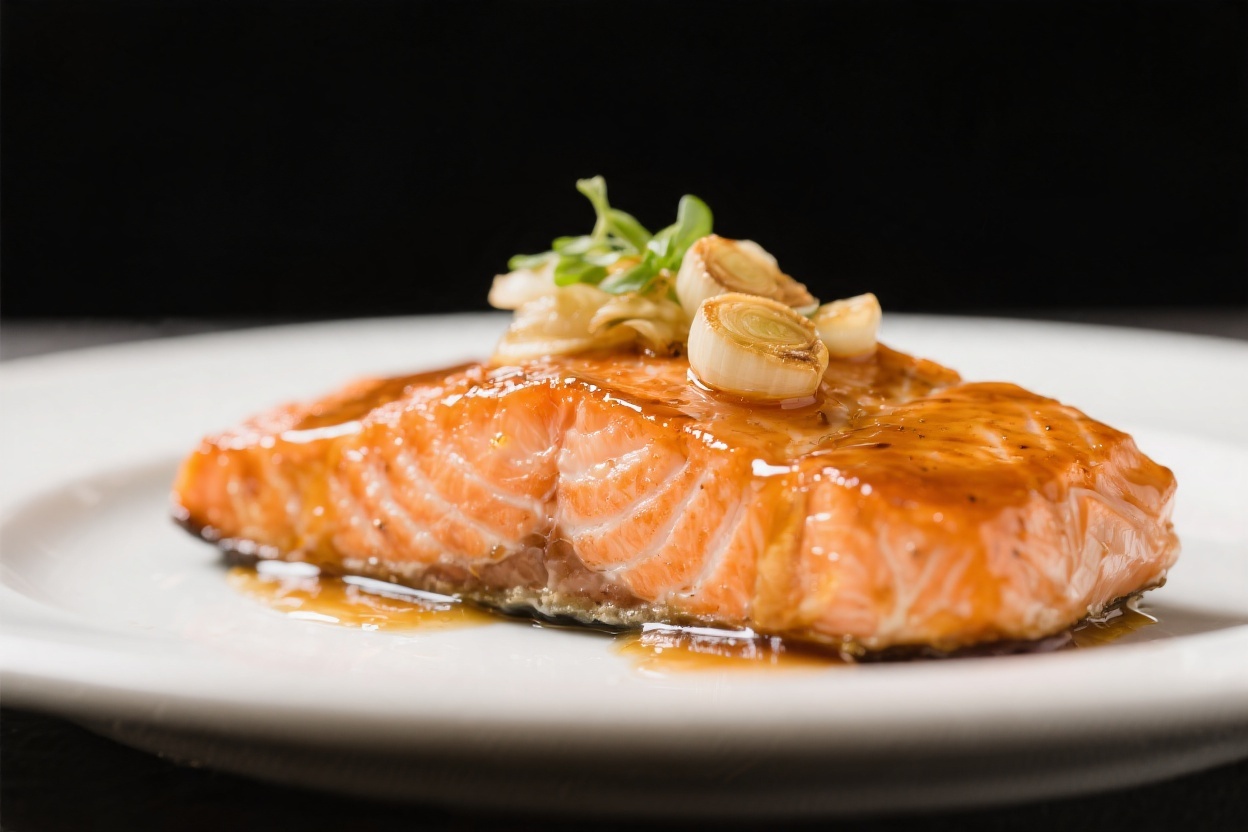
Pat the salmon dry. Use paper towels to remove surface moisture. This helps get a better sear and prevents steaming.
Season both sides.
Sprinkle with salt and black pepper. Keep it simple—there’s plenty of flavor coming from the glaze.
Preheat your pan. Set a large skillet over medium to medium-high heat.
Add 1 tablespoon of oil and let it heat until it shimmers.
Sear the salmon. Place fillets skin-side down if they have skin. Cook 3–4 minutes without moving them to develop a crust.
Flip and cook another 2–3 minutes. Transfer salmon to a plate; it will finish in the sauce.
Make the glaze. Lower the heat to medium.
In the same pan, add a touch more oil if needed and the minced garlic. Cook 30 seconds until fragrant—don’t let it brown.
Stir in the sauce ingredients. Add honey, soy sauce, lemon juice, and vinegar.
If you like heat, add a pinch of red pepper flakes. Stir and let it bubble for 1–2 minutes until it thickens slightly.
Add butter (optional). Whisk in 1 tablespoon of butter for a glossy, restaurant-style finish.
Return the salmon to the pan.
Spoon the glaze over the fillets. Cook 1–2 minutes, basting often, until the salmon is just cooked through and the glaze is sticky.
Check doneness. The salmon should flake easily with a fork and be opaque with a slightly translucent center.
Aim for an internal temperature of 125–130°F (52–54°C) for moist, medium doneness.
Finish and serve. Garnish with chopped parsley or chives and a squeeze of fresh lemon. Serve with rice, quinoa, mashed potatoes, steamed green beans, or roasted broccoli.