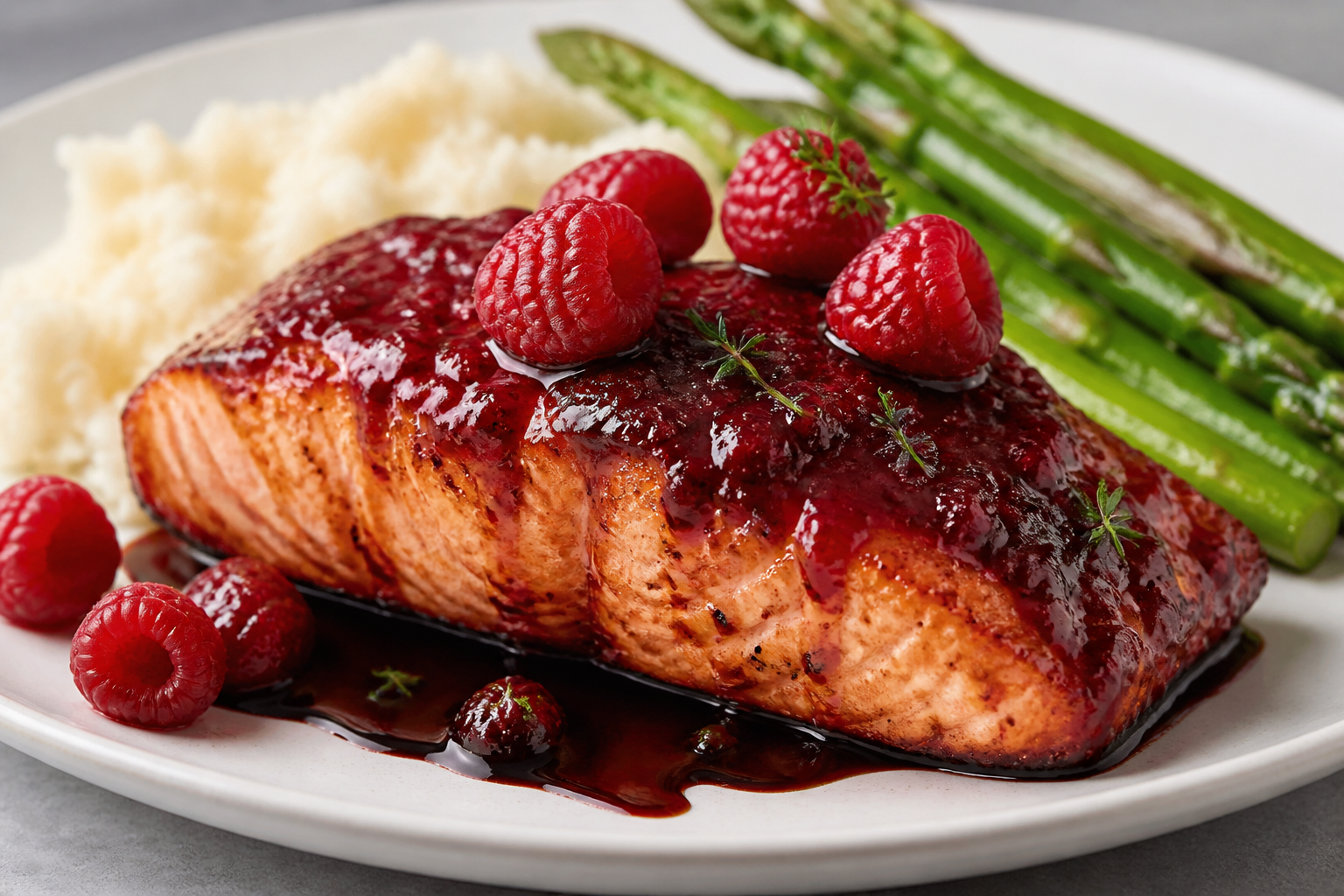
Prep the salmon: Pat the fillets dry with paper towels. Season both sides with salt and pepper.
Dry surfaces help you get a good sear and prevent sticking.
Make the raspberry balsamic base: In a small saucepan, combine raspberries, balsamic vinegar, honey (or maple), Dijon, garlic, and lemon zest. Stir and set aside. You’ll reduce this after the salmon starts cooking.
Sear the salmon: Heat the olive oil in a large skillet over medium-high heat until it shimmers.
Add salmon, presentation side down (the side that was skinless or the side you want facing up when served). Cook for 3–4 minutes without moving it to develop a golden crust.
Flip and finish: Carefully flip the salmon. Cook another 2–4 minutes, depending on thickness, until the internal temperature reaches 125–130°F for medium (or to your preferred doneness).
Transfer salmon to a plate and tent loosely with foil.
Reduce the sauce: Place the saucepan with the raspberry mixture over medium heat. Bring to a simmer and cook, stirring occasionally, until the raspberries break down and the sauce thickens, about 4–6 minutes. It should coat the back of a spoon.
Strain if you like: For a smoother sauce, push the mixture through a fine mesh strainer into a clean bowl, discarding seeds and pulp.
This step is optional but gives a sleek, glossy finish.
Finish with butter: Return the strained sauce to low heat (or keep it in the pot if you skipped straining). Whisk in the butter until the sauce looks shiny and slightly thick. Taste and adjust: add a pinch of salt, a touch more honey for sweetness, or a splash of balsamic for extra tang.
Glaze and serve: Spoon the warm sauce over the salmon.
Garnish with chopped thyme or parsley and serve with lemon wedges. A light squeeze of lemon at the table brightens every bite.