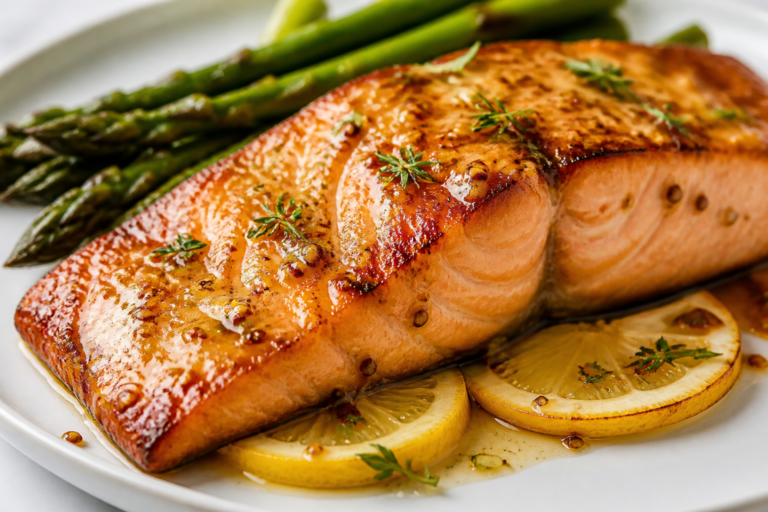
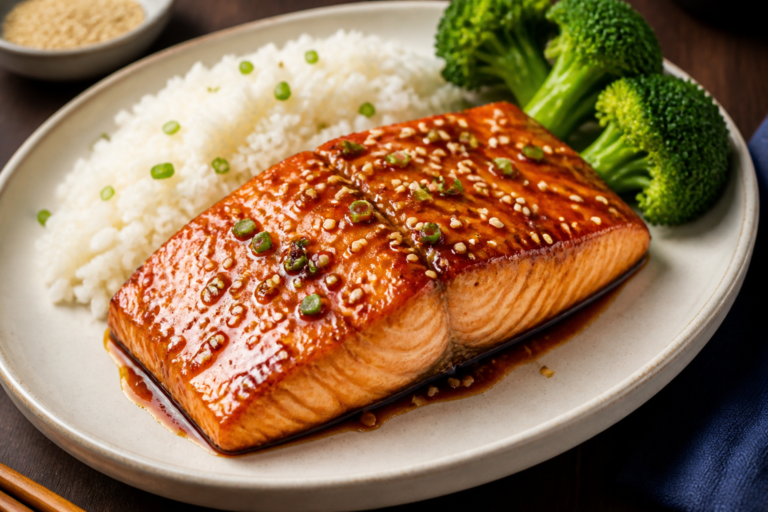
Maple Soy Glazed Salmon – Sweet, Savory, and Fast to Make
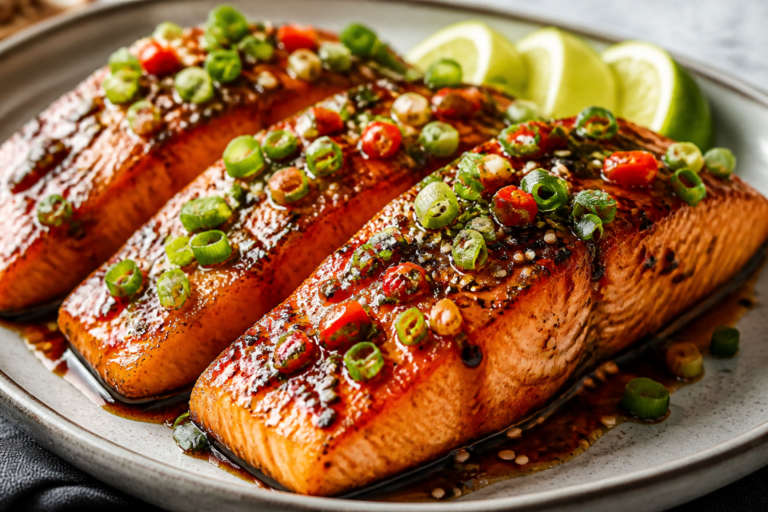
This Maple Soy Glazed Salmon hits that perfect balance of sweet, salty, and a little sticky. It’s the kind of weeknight dinner that feels special without demanding a lot of time or effort. The glaze is simple—just pantry staples—but it packs a ton of flavor.
FREE 7-Day Easy Dinner Reset
FREE 7-Day Easy Dinner Reset
The salmon cooks in minutes, and the sauce reduces to a glossy finish that clings to each bite. Serve it with rice, noodles, or a crisp salad, and you’ve got a restaurant-worthy meal at home.
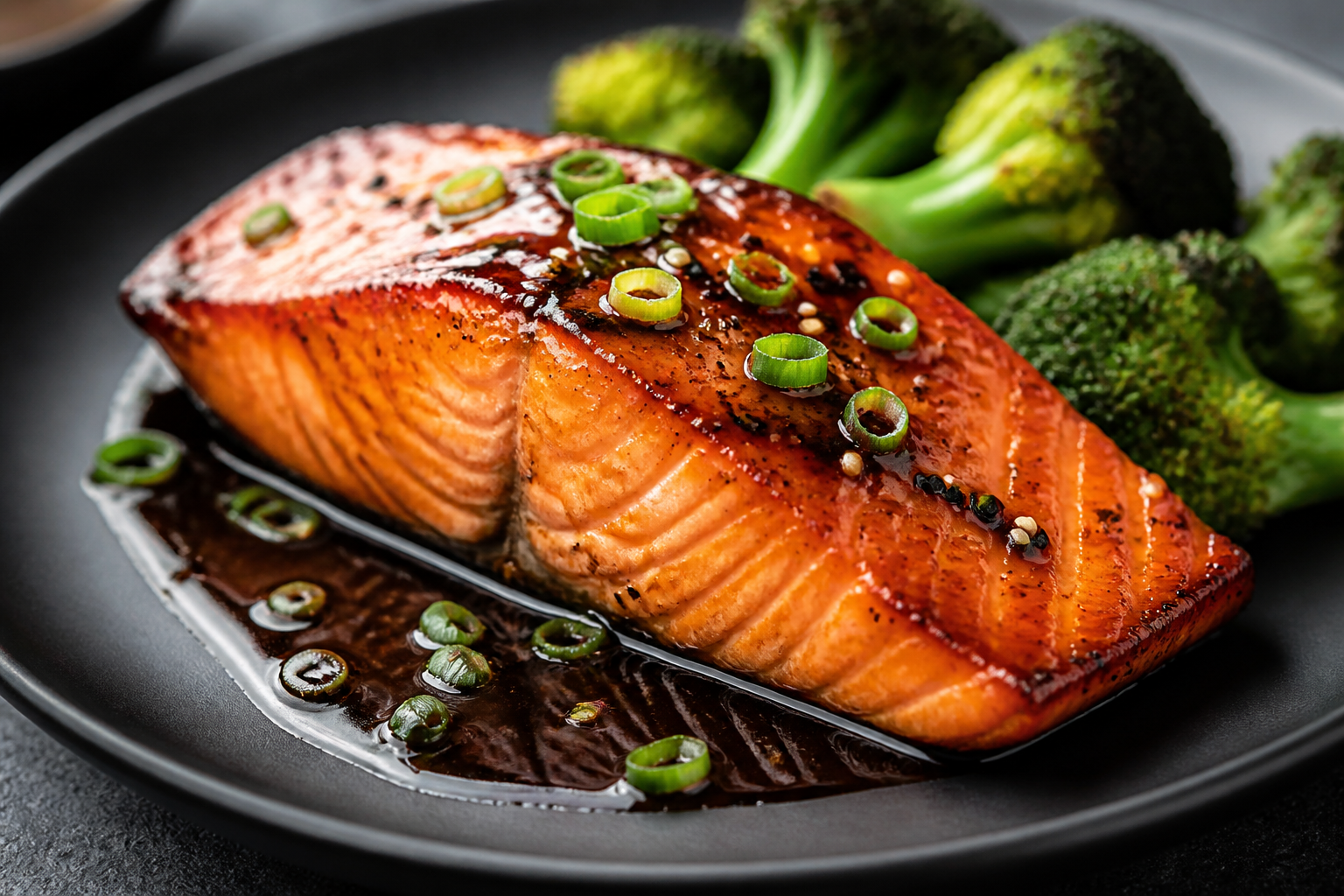
Maple Soy Glazed Salmon - Sweet, Savory, and Fast to Make
Ingredients
Method
- Prep the glaze: In a small bowl, whisk together maple syrup, soy sauce, rice vinegar, sesame oil, garlic, ginger, and sriracha (if using). Taste and adjust for sweetness or saltiness.Set aside.
- Pat the salmon dry: Use paper towels to dry the fillets. Season lightly with salt and pepper. Dry fish sears better and helps the glaze stick.
- Choose your cooking method: You can bake, broil, or pan-sear.All work well. For the fastest, glossiest finish, pan-sear and finish with the glaze on the stovetop.
- To bake: Heat oven to 400°F (200°C). Line a sheet pan with foil or parchment.Place salmon skin-side down. Spoon half the glaze over the fillets. Bake 8–12 minutes, depending on thickness, until the salmon flakes easily but is still slightly translucent in the center.
- To broil: Set the rack 6 inches from the heat and preheat the broiler.Broil salmon with half the glaze for 6–8 minutes, watching closely to prevent burning. Broiling gives great caramelization fast.
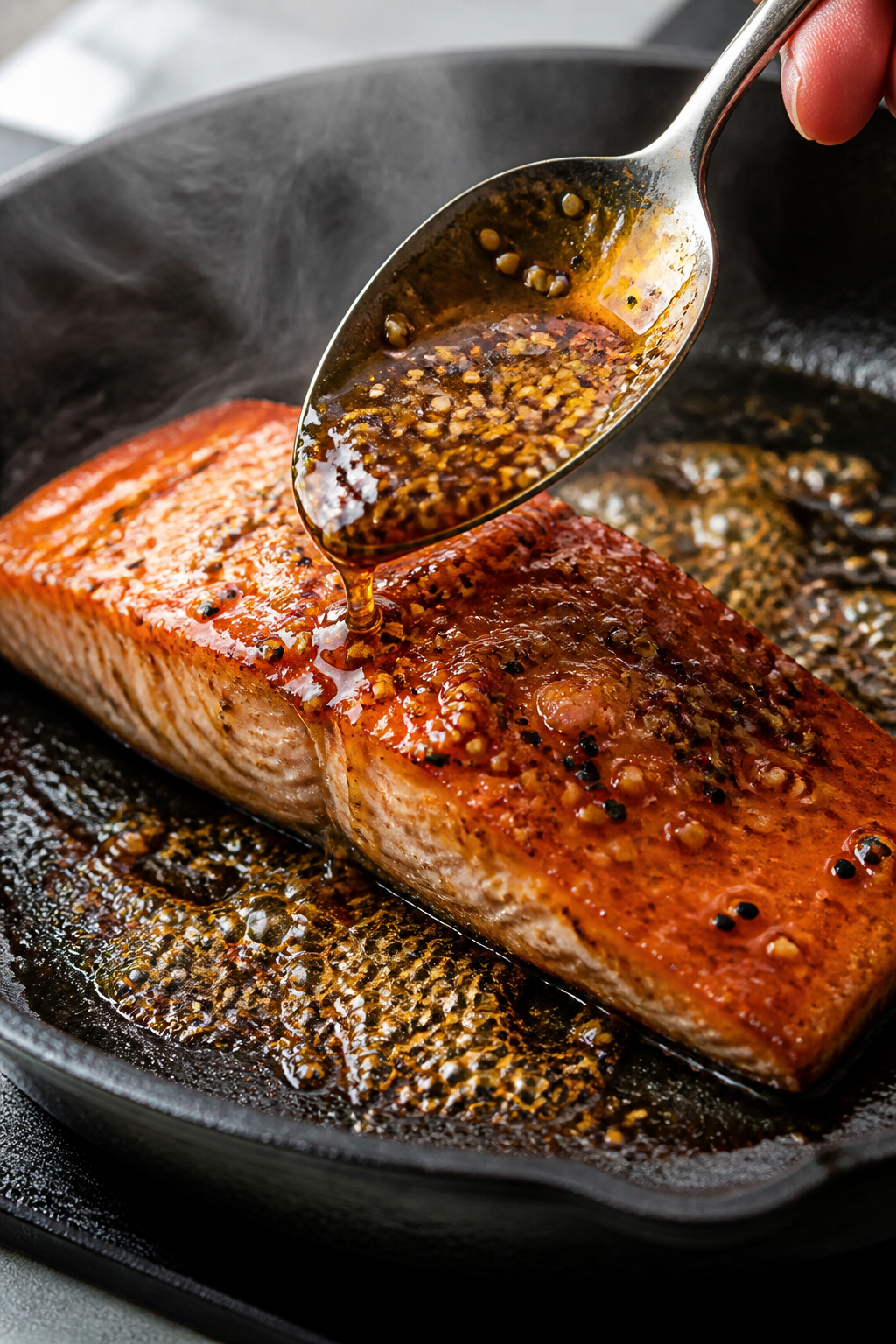
- To pan-sear: Heat a large skillet over medium-high. Add the neutral oil.Place salmon in the pan, presentation side down (or skin-side up), and sear 2–3 minutes until lightly browned. Flip, lower heat to medium, and pour in half the glaze. Cook 3–4 more minutes, basting as it thickens.
- Thicken the glaze (optional): For a stickier finish, whisk cornstarch with 1 tablespoon water.Remove the salmon from the pan or sheet pan. Pour remaining glaze into a small saucepan, bring to a simmer, then whisk in the slurry. Cook 30–60 seconds until glossy.
- Glaze and garnish: Brush or spoon the thickened glaze over the salmon.Sprinkle with sesame seeds and sliced green onions. Add a squeeze of citrus for brightness.
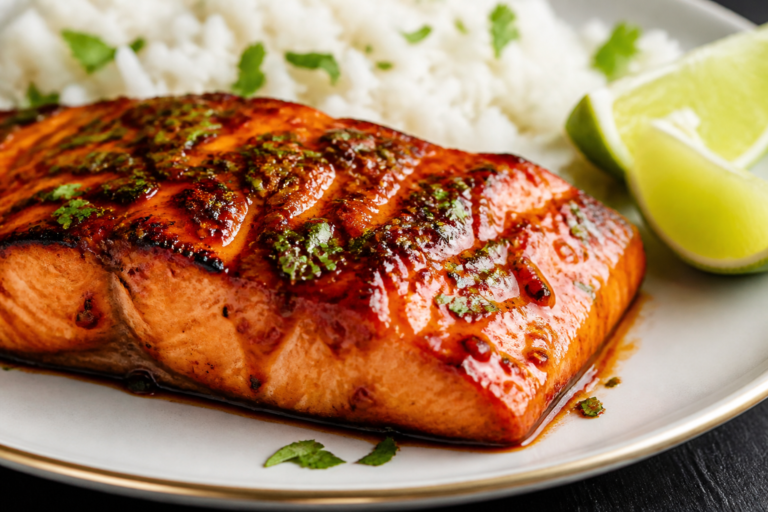
- Serve: Pair with steamed rice, quinoa, roasted broccoli, sautéed bok choy, or a crunchy cabbage slaw. Spoon extra glaze over everything.
What Makes This Recipe So Good
- Big flavor, minimal effort: The glaze uses a handful of ingredients and comes together in one bowl.
- Quick cook time: Salmon cooks fast, so dinner’s ready in 20–25 minutes, start to finish.
- Balanced taste: Maple syrup brings warmth, soy adds depth, and garlic and ginger brighten it up.
- Versatile: Works with fillets or a whole side of salmon, and pairs well with vegetables, grains, or noodles.
- Meal-prep friendly: Leftovers hold up well and taste great cold or reheated gently.
Ingredients
- 4 salmon fillets (about 5–6 ounces each), skin-on or skinless
- 1/4 cup pure maple syrup
- 3 tablespoons low-sodium soy sauce (or tamari for gluten-free)
- 1 tablespoon rice vinegar (or apple cider vinegar)
- 2 teaspoons sesame oil
- 2 cloves garlic, minced
- 1 teaspoon fresh ginger, finely grated (or 1/4 teaspoon ground ginger)
- 1 teaspoon sriracha or red pepper flakes (optional, for heat)
- 1 tablespoon cornstarch (optional, for a thicker glaze)
- 1 tablespoon water (if using cornstarch)
- 1 tablespoon neutral oil (for searing, if pan-cooking)
- Salt and black pepper, to taste
- Sesame seeds and sliced green onions, for garnish (optional)
- Lemon or lime wedges, for serving (optional)
Step-by-Step Instructions
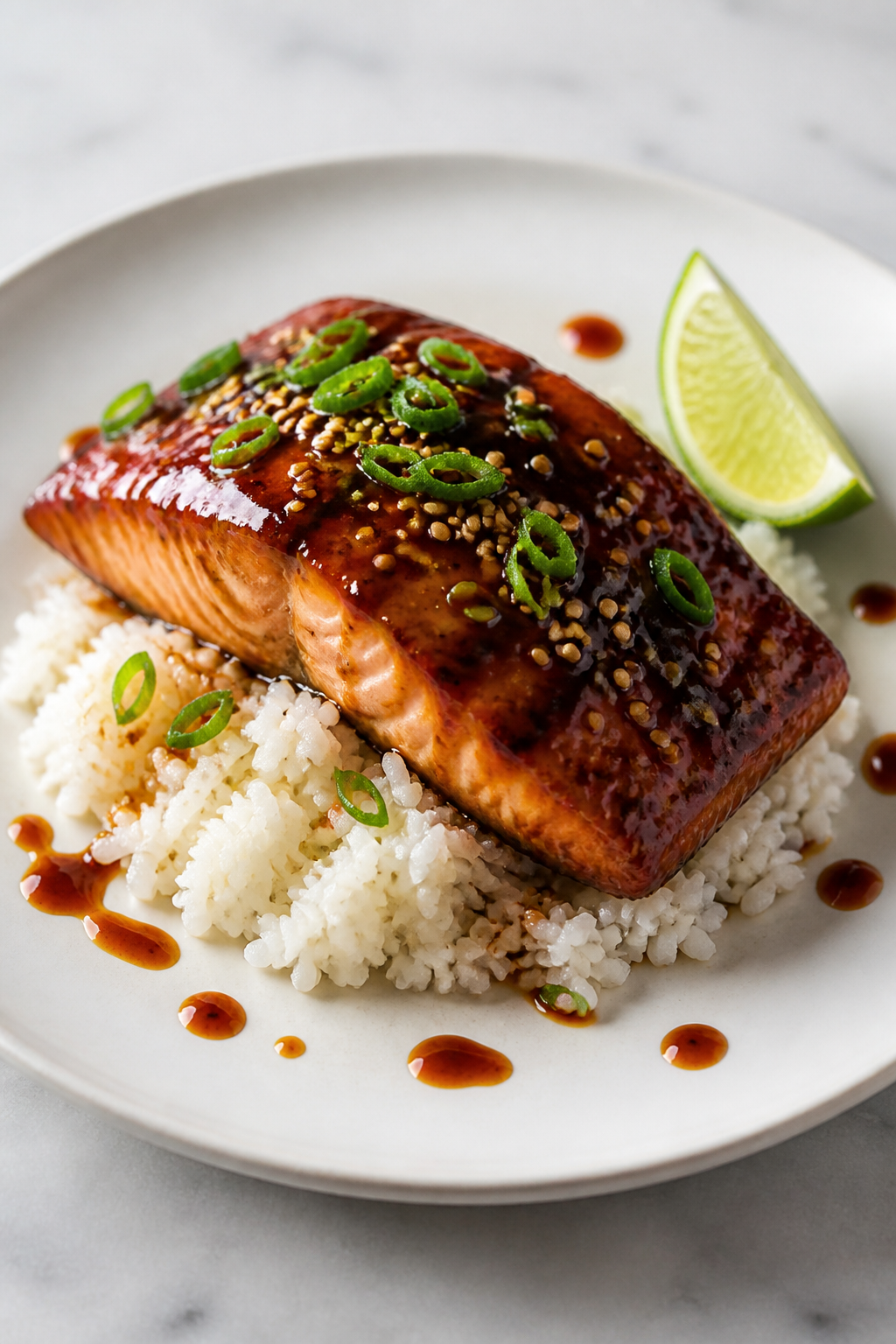
- Prep the glaze: In a small bowl, whisk together maple syrup, soy sauce, rice vinegar, sesame oil, garlic, ginger, and sriracha (if using). Taste and adjust for sweetness or saltiness.
Set aside.
- Pat the salmon dry: Use paper towels to dry the fillets. Season lightly with salt and pepper. Dry fish sears better and helps the glaze stick.
- Choose your cooking method: You can bake, broil, or pan-sear.
All work well. For the fastest, glossiest finish, pan-sear and finish with the glaze on the stovetop.
- To bake: Heat oven to 400°F (200°C). Line a sheet pan with foil or parchment.
Place salmon skin-side down. Spoon half the glaze over the fillets. Bake 8–12 minutes, depending on thickness, until the salmon flakes easily but is still slightly translucent in the center.
- To broil: Set the rack 6 inches from the heat and preheat the broiler.
Broil salmon with half the glaze for 6–8 minutes, watching closely to prevent burning. Broiling gives great caramelization fast.
- To pan-sear: Heat a large skillet over medium-high. Add the neutral oil.
Place salmon in the pan, presentation side down (or skin-side up), and sear 2–3 minutes until lightly browned. Flip, lower heat to medium, and pour in half the glaze. Cook 3–4 more minutes, basting as it thickens.
- Thicken the glaze (optional): For a stickier finish, whisk cornstarch with 1 tablespoon water.
Remove the salmon from the pan or sheet pan. Pour remaining glaze into a small saucepan, bring to a simmer, then whisk in the slurry. Cook 30–60 seconds until glossy.
- Glaze and garnish: Brush or spoon the thickened glaze over the salmon.
Sprinkle with sesame seeds and sliced green onions. Add a squeeze of citrus for brightness.
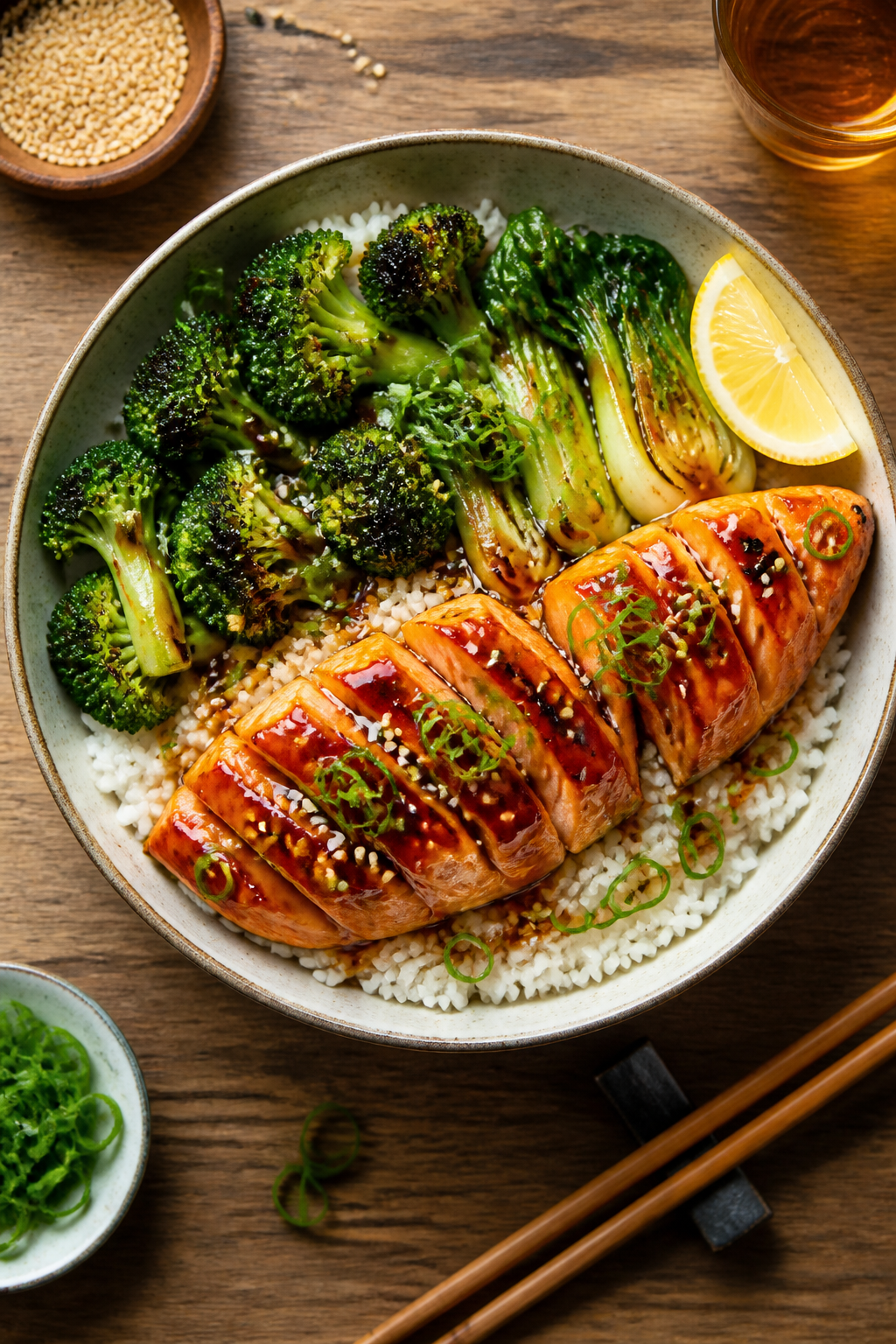
- Serve: Pair with steamed rice, quinoa, roasted broccoli, sautéed bok choy, or a crunchy cabbage slaw. Spoon extra glaze over everything.
Keeping It Fresh
- Storage: Cool the salmon, then store in an airtight container in the fridge for up to 3 days.
Keep extra glaze in a separate container.
- Reheating: Warm gently in a covered skillet over low heat with a splash of water until just heated through. Avoid microwaving on high—it can dry the fish.
- Freezing: Cooked salmon can be frozen for up to 2 months. Wrap tightly and thaw overnight in the fridge.
Glaze may thin slightly after thawing but still tastes great.
- Meal prep tip: Cook extra rice and veggies while the salmon is in the oven. Pack bowls with rice, greens, and sliced salmon, then drizzle with leftover glaze.
Health Benefits
- Omega-3 fats: Salmon is rich in EPA and DHA, which support heart, brain, and joint health.
- High-quality protein: Each fillet delivers a solid dose of protein to keep you full and support muscle repair.
- Balanced sauce: Using pure maple syrup gives natural sweetness, and you control the amount. Low-sodium soy keeps salt in check.
- Micronutrients: Salmon provides B vitamins, selenium, and potassium.
Ginger and garlic add antioxidants and flavor without extra calories.
Common Mistakes to Avoid
- Overcooking: Salmon keeps cooking after it leaves the heat. Pull it when it reaches 120–125°F (49–52°C) in the thickest part for medium.
- Wet fish: Not patting the fillets dry prevents good browning and glaze adhesion.
- Too much heat with sugar: Maple can burn if the pan is smoking hot. Lower the heat once the glaze goes in and keep it moving.
- Skipping acid: A touch of vinegar or citrus balances the sweetness.
Don’t leave it out.
- Salting too early: Salt draws out moisture. Season right before cooking for best texture.
Recipe Variations
- Garlic-lime twist: Swap rice vinegar for lime juice and add extra garlic. Finish with lime zest.
- Spicy gochujang: Stir 1–2 teaspoons gochujang into the glaze for heat and depth.
Great with kimchi fried rice.
- Miso maple: Whisk in 1 tablespoon white miso for umami richness. Thin with a splash of water if needed.
- Citrus pepper: Add orange zest and cracked black pepper to the glaze. Serve with roasted carrots and fennel.
- Grilled version: Grill salmon over medium heat, brushing with glaze in the last few minutes to avoid flare-ups.
- Sheet-pan dinner: Add broccoli florets, snap peas, or carrot coins to the pan.
Toss veggies with a little oil and salt, then roast alongside the salmon.
FAQ
Can I use frozen salmon?
Stop wondering what's for dinner.
Get 7 healthy, family-friendly dinners complete with recipes and simple meal plans delivered straight to your inbox.
Yes. Thaw it overnight in the fridge, then pat it very dry before cooking. Frozen fillets can release more moisture, so drying well helps you get a good sear and prevents a watery glaze.
What can I substitute for maple syrup?
Honey works well and gives a slightly different floral sweetness.
Brown sugar also works; just whisk it thoroughly to dissolve before cooking. Taste and adjust vinegar to keep the glaze balanced.
How do I know when salmon is done?
Look for opaque flesh that flakes easily with a fork but still feels moist in the center. An instant-read thermometer should read about 120–125°F (49–52°C) for medium.
It will rise a few degrees off heat.
Is this recipe gluten-free?
Use tamari or a certified gluten-free soy sauce. Everything else in the recipe is naturally gluten-free, but always check labels to be sure.
Can I make the glaze ahead?
Absolutely. Mix the glaze up to 3 days in advance and keep it chilled.
Give it a quick stir before using, and thicken on the stovetop if you like a sticky finish.
Should I keep the skin on?
Skin helps hold the fish together and protects it from overcooking. If you prefer it without skin, you can remove it after cooking—it peels off easily.
What sides go best with this?
Steamed jasmine rice, coconut rice, or quinoa are great bases. For veggies, try roasted broccoli, blistered green beans, sautéed bok choy, or a crunchy cucumber salad.
Can I use a whole side of salmon?
Yes.
Roast a 1.5–2-pound side at 400°F (200°C) for 12–18 minutes, brushing with glaze a few times. Start checking doneness early to avoid overcooking the thinner end.
Final Thoughts
Maple Soy Glazed Salmon is the kind of recipe that earns a spot in your regular rotation. It’s fast, flavorful, and flexible enough to fit whatever you’ve got in the pantry.
With a glossy, sweet-savory finish and tender, flaky fish, it feels both comforting and a little special. Keep this one in your back pocket for busy nights, dinner guests, or anytime you want a reliable win at the table.
Printable Recipe Card
Want just the essential recipe details without scrolling through the article? Get our printable recipe card with just the ingredients and instructions.
Loved This Recipe?
If you're looking for more simple, healthy dinners your family will actually eat, grab my FREE 7-Day Easy Dinner Reset. You'll get 7 easy dinner recipes, simple grocery lists, and a done-for-you plan that takes the stress out of mealtime.