One Pot Creamy Tomato Pasta – Easy, Comforting, and Weeknight-Friendly
A bowl of creamy tomato pasta is the kind of comfort that makes a long day feel lighter. This one pot version keeps things simple without sacrificing flavor or texture. Everything cooks together—from the dry pasta to the sauce—so there’s less cleanup and more time to relax.
FREE 7-Day Easy Dinner Reset
FREE 7-Day Easy Dinner Reset
The result is a silky, rich sauce that clings to every noodle, with bright tomato flavor and a gentle touch of cream. It’s cozy, budget-friendly, and ready in about 30 minutes.
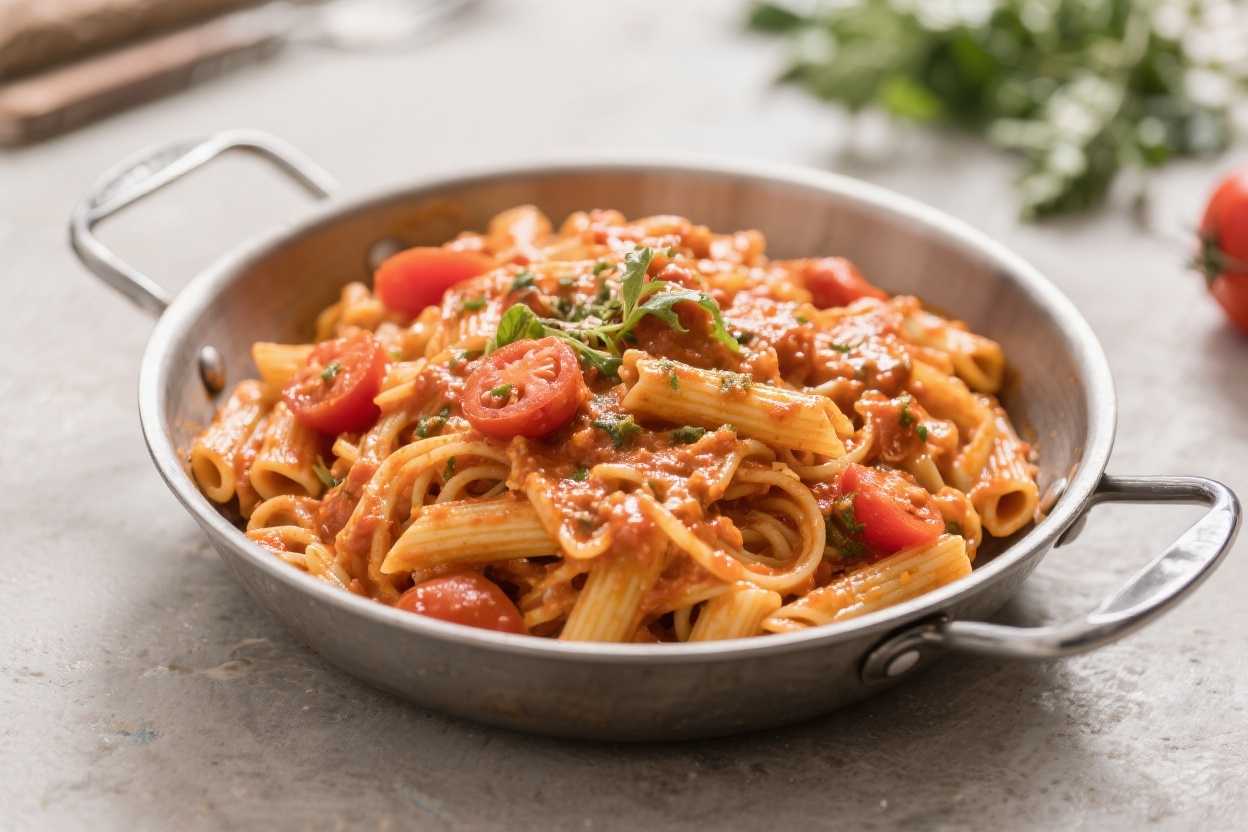
One Pot Creamy Tomato Pasta - Easy, Comforting, and Weeknight-Friendly
Ingredients
Method
- Warm the pot: Set a large, wide pot or deep skillet over medium heat. Add 1 tablespoon olive oil and 1 tablespoon butter (if using).
- Sauté aromatics: Add chopped onion with a pinch of salt. Cook 3–4 minutes until soft and translucent.Stir in minced garlic for 30 seconds, until fragrant.
- Toast the tomato paste: Add 2 tablespoons tomato paste. Stir and cook 1–2 minutes. This step caramelizes the paste and boosts flavor.
- Add tomatoes and seasoning: Pour in the crushed tomatoes, 1 teaspoon Italian seasoning, a pinch of red pepper flakes, and black pepper.Stir to combine.
- Add pasta and liquid: Stir in 12 ounces dried pasta and about 3 to 3 1/2 cups broth. The liquid should just cover the pasta. If not, add a bit of water.
- Simmer gently: Bring to a steady simmer, then reduce heat to medium-low.Cook uncovered, stirring every 1–2 minutes to prevent sticking. Adjust heat to maintain a gentle bubble.
- Monitor doneness: After 8–10 minutes, taste the pasta. It should be close to al dente and the sauce should be thickening.If it’s too tight, add a splash of broth or water. If it’s too loose, keep simmering.
- Creamy finish: Stir in 1/2 cup heavy cream and 1–2 teaspoons balsamic vinegar (or a pinch of sugar). Simmer 1–2 minutes until the sauce turns rosy and glossy.
- Cheese and herbs: Turn off heat.Stir in 1/2 cup freshly grated Parmesan until melted and smooth. Fold in chopped basil or parsley. Taste and adjust salt, pepper, and acidity.
- Serve: Plate hot with extra Parmesan, a drizzle of olive oil, and a little lemon zest if you like.The sauce will continue to thicken as it sits.
What Makes This Special
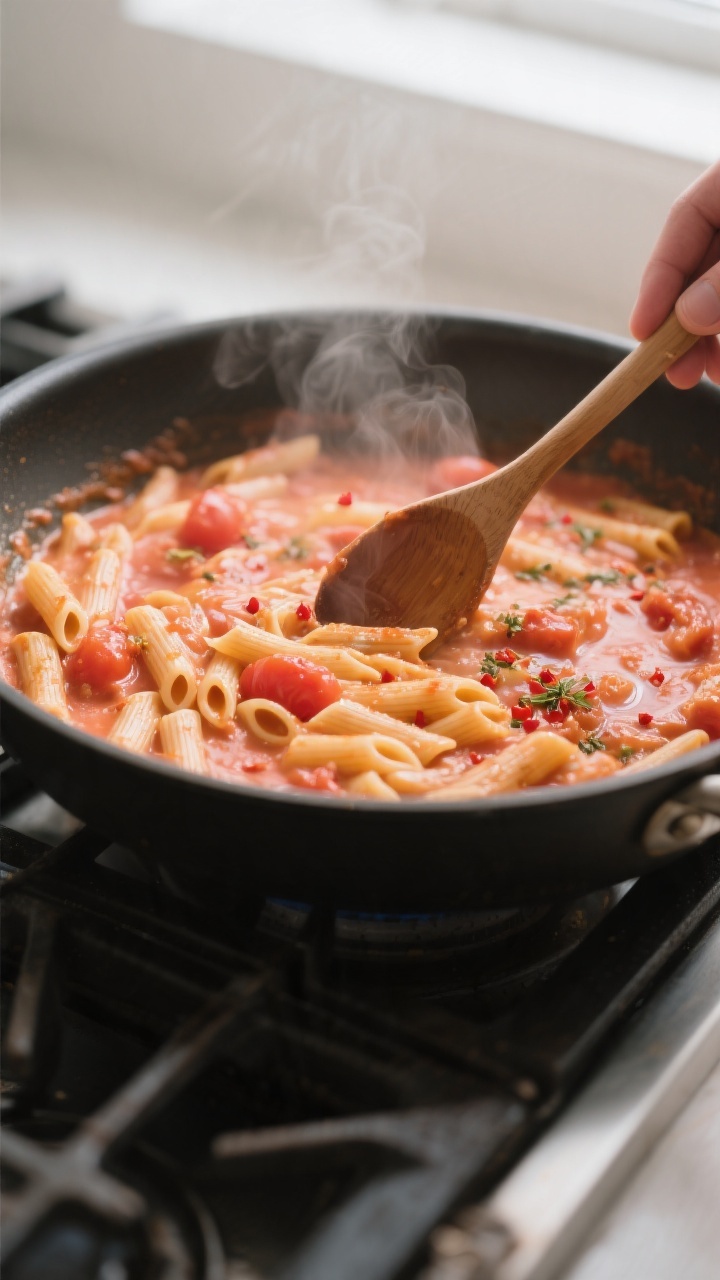
Most pasta recipes call for boiling pasta in one pot and making the sauce in another. Not here.
Cooking everything together lets the pasta release starch right into the sauce, making it naturally thick and velvety.
You’ll get layers of flavor from onions, garlic, and tomato, rounded out with cream and a splash of tangy balsamic. The technique is simple, the ingredients are familiar, and the taste is restaurant-level. Best of all, it’s flexible—easy to make vegetarian, dairy-free, or protein-packed.
What You’ll Need
- Olive oil: For sautéing and flavor.
- Unsalted butter (optional): Adds richness.
- Yellow onion: Finely chopped for sweetness.
- Garlic: Fresh cloves, minced.
- Tomato paste: Deepens the tomato flavor.
- Crushed tomatoes: One 14–15 oz can, or tomato passata.
- Low-sodium vegetable or chicken broth: The main cooking liquid.
- Heavy cream: For a silky finish.
Substitutions below.
- Dried pasta: Short cuts like penne, rigatoni, or fusilli work best.
- Salt and black pepper: To season.
- Italian seasoning or dried oregano + basil: For classic flavor.
- Red pepper flakes (optional): For a gentle kick.
- Balsamic vinegar or a pinch of sugar: Balances acidity.
- Parmesan cheese: Freshly grated, for serving and body.
- Fresh basil or parsley: For brightness at the end.
- Lemon zest (optional): A fresh lift before serving.
How to Make It
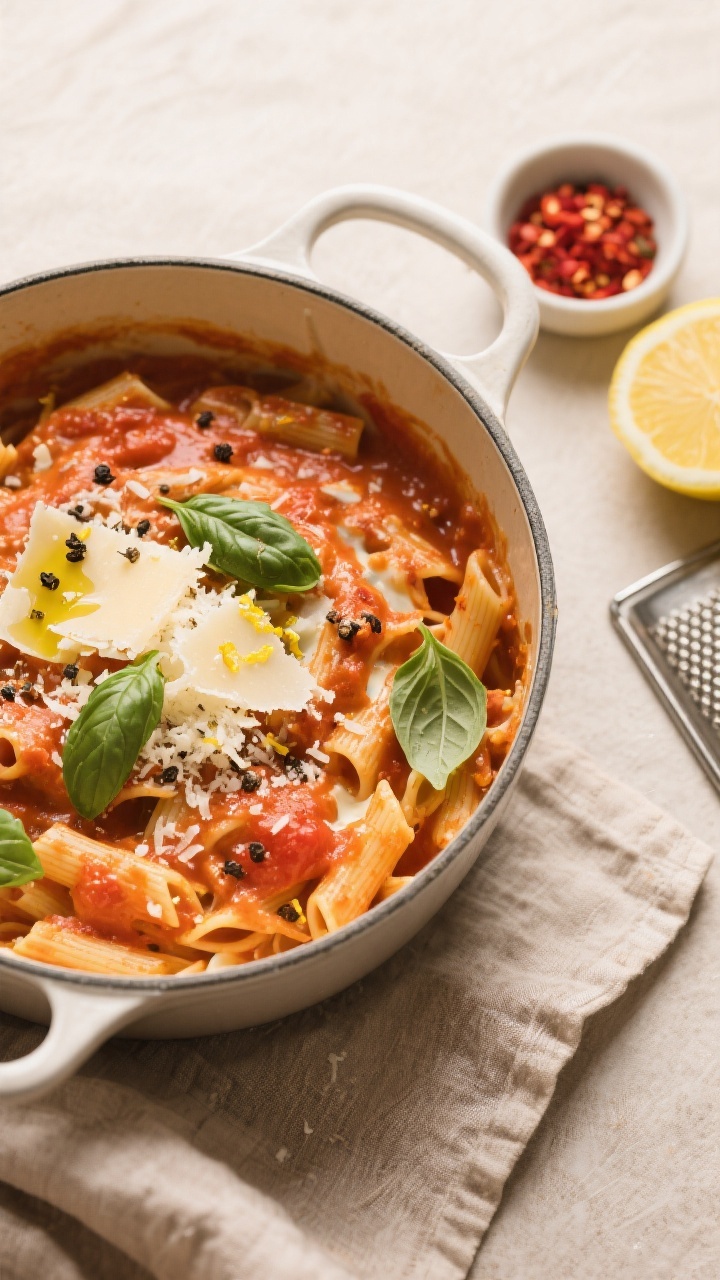
- Warm the pot: Set a large, wide pot or deep skillet over medium heat. Add 1 tablespoon olive oil and 1 tablespoon butter (if using).
- Sauté aromatics: Add chopped onion with a pinch of salt. Cook 3–4 minutes until soft and translucent.
Stir in minced garlic for 30 seconds, until fragrant.
- Toast the tomato paste: Add 2 tablespoons tomato paste. Stir and cook 1–2 minutes. This step caramelizes the paste and boosts flavor.
- Add tomatoes and seasoning: Pour in the crushed tomatoes, 1 teaspoon Italian seasoning, a pinch of red pepper flakes, and black pepper.
Stir to combine.
- Add pasta and liquid: Stir in 12 ounces dried pasta and about 3 to 3 1/2 cups broth. The liquid should just cover the pasta. If not, add a bit of water.
- Simmer gently: Bring to a steady simmer, then reduce heat to medium-low.
Cook uncovered, stirring every 1–2 minutes to prevent sticking. Adjust heat to maintain a gentle bubble.
- Monitor doneness: After 8–10 minutes, taste the pasta. It should be close to al dente and the sauce should be thickening.
If it’s too tight, add a splash of broth or water. If it’s too loose, keep simmering.
- Creamy finish: Stir in 1/2 cup heavy cream and 1–2 teaspoons balsamic vinegar (or a pinch of sugar). Simmer 1–2 minutes until the sauce turns rosy and glossy.
- Cheese and herbs: Turn off heat.
Stir in 1/2 cup freshly grated Parmesan until melted and smooth. Fold in chopped basil or parsley. Taste and adjust salt, pepper, and acidity.
- Serve: Plate hot with extra Parmesan, a drizzle of olive oil, and a little lemon zest if you like.
The sauce will continue to thicken as it sits.
Storage Instructions
- Refrigerator: Store leftovers in an airtight container for up to 3–4 days. Add a splash of water or milk when reheating to loosen the sauce.
- Freezer: Creamy pasta doesn’t freeze perfectly, but it’s doable. Freeze up to 2 months.
Thaw overnight in the fridge and reheat gently with extra liquid to restore creaminess.
- Reheating: Warm on the stovetop over low heat or in the microwave in short bursts, stirring between intervals. Avoid high heat to prevent splitting.
Health Benefits
- Tomatoes: Rich in lycopene, vitamin C, and potassium, which support heart health and immunity.
- Olive oil: Provides heart-healthy monounsaturated fats.
- Onions and garlic: Offer antioxidants and compounds that may support cardiovascular health.
- Balanced plate: Pair with a side salad or roasted veggies to add fiber and micronutrients. Add grilled chicken, shrimp, or white beans for extra protein.
- Portion control: The creamy sauce is satisfying, so a moderate serving goes a long way.
Common Mistakes to Avoid
- Not stirring often: One pot pasta can stick.
Stir every 1–2 minutes, especially early on.
- Boiling too hard: A rapid boil evaporates liquid too quickly and can cause uneven cooking. Keep it at a steady simmer.
- Adding cream too early: Wait until the pasta is nearly done. Early addition can curdle or over-reduce the sauce.
- Skipping seasoning: Salt in layers—onions, simmering liquid, and final taste.
Tomatoes need enough salt to shine.
- Wrong pasta shape: Very long or very tiny shapes can cook unevenly. Choose sturdy, short shapes for best texture.
Recipe Variations
- Vegetarian protein boost: Stir in a can of white beans or chickpeas during the last 5 minutes.
- Spicy arrabbiata style: Increase red pepper flakes and add a pinch of smoked paprika.
- Vodka twist: Add 1/4 cup vodka after toasting tomato paste. Let it cook off 1–2 minutes before adding tomatoes.
- Dairy-free: Use full-fat coconut milk or a creamy oat milk and skip the Parmesan.
Add nutritional yeast for cheesy flavor.
- Protein add-ins: Fold in cooked Italian sausage, rotisserie chicken, or sautéed shrimp at the end.
- Extra veggies: Add diced bell peppers, spinach, or mushrooms after the onions. Wilt spinach in during the last minute.
- Herb swap: Try thyme or rosemary for a more rustic profile.
- Bright and fresh: Finish with lemon zest and a handful of arugula for peppery bite.
FAQ
Stop wondering what's for dinner.
Get 7 healthy, family-friendly dinners complete with recipes and simple meal plans delivered straight to your inbox.
Can I use milk instead of heavy cream?
Yes, but choose whole milk for better body. Add 1 teaspoon cornstarch mixed with a splash of cold milk to help thicken, and heat gently to avoid curdling.
What if my sauce gets too thick before the pasta is done?
Add warm broth or water, 1/4 cup at a time, and keep stirring.
Maintain a gentle simmer so the pasta cooks evenly.
Can I make this gluten-free?
Use a sturdy gluten-free pasta, like brown rice or chickpea penne. Start with a little less liquid and add as needed, since gluten-free pasta releases starch differently.
Is fresh pasta okay for this recipe?
Fresh pasta cooks too quickly for one pot timing and can turn mushy. Stick to dried pasta for best results.
How can I make it lighter?
Use half-and-half or evaporated milk instead of heavy cream, and reduce the Parmesan.
Add extra veggies to increase volume without extra calories.
Can I double the recipe?
Yes. Use a wider pot to prevent crowding, stir more often, and expect to add a bit more liquid. Taste frequently to avoid overcooking.
What can I use instead of balsamic vinegar?
A pinch of sugar or a splash of red wine vinegar works.
The goal is to balance acidity and bring out the tomato’s sweetness.
Why did my sauce split?
High heat or adding cream too early can cause splitting. Lower the heat, add cream at the end, and stir in cheese off the heat.
In Conclusion
One Pot Creamy Tomato Pasta delivers the cozy flavor you want with the weeknight ease you need. It’s creamy, bright, and reliably delicious, with minimal cleanup and maximum comfort.
Keep this method in your back pocket, then customize it with the add-ins you love. Dinner, solved—without a sink full of dishes.
Printable Recipe Card
Want just the essential recipe details without scrolling through the article? Get our printable recipe card with just the ingredients and instructions.
Loved This Recipe?
If you're looking for more simple, healthy dinners your family will actually eat, grab my FREE 7-Day Easy Dinner Reset. You'll get 7 easy dinner recipes, simple grocery lists, and a done-for-you plan that takes the stress out of mealtime.