Sheet Pan Salmon & Asparagus – A Fast, Flavorful Weeknight Dinner
If you want a fresh, satisfying dinner that doesn’t make a mess, this sheet pan salmon and asparagus is the answer. Everything cooks together on one pan in under 20 minutes, and the flavors are bright, clean, and comforting. You’ll get crisp-tender asparagus, flaky salmon, and a punchy lemon-garlic finish with almost no effort.
FREE 7-Day Easy Dinner Reset
FREE 7-Day Easy Dinner Reset
It’s the kind of meal you can make after work and still feel like you treated yourself. Plus, it scales up easily if you’re feeding a crowd.
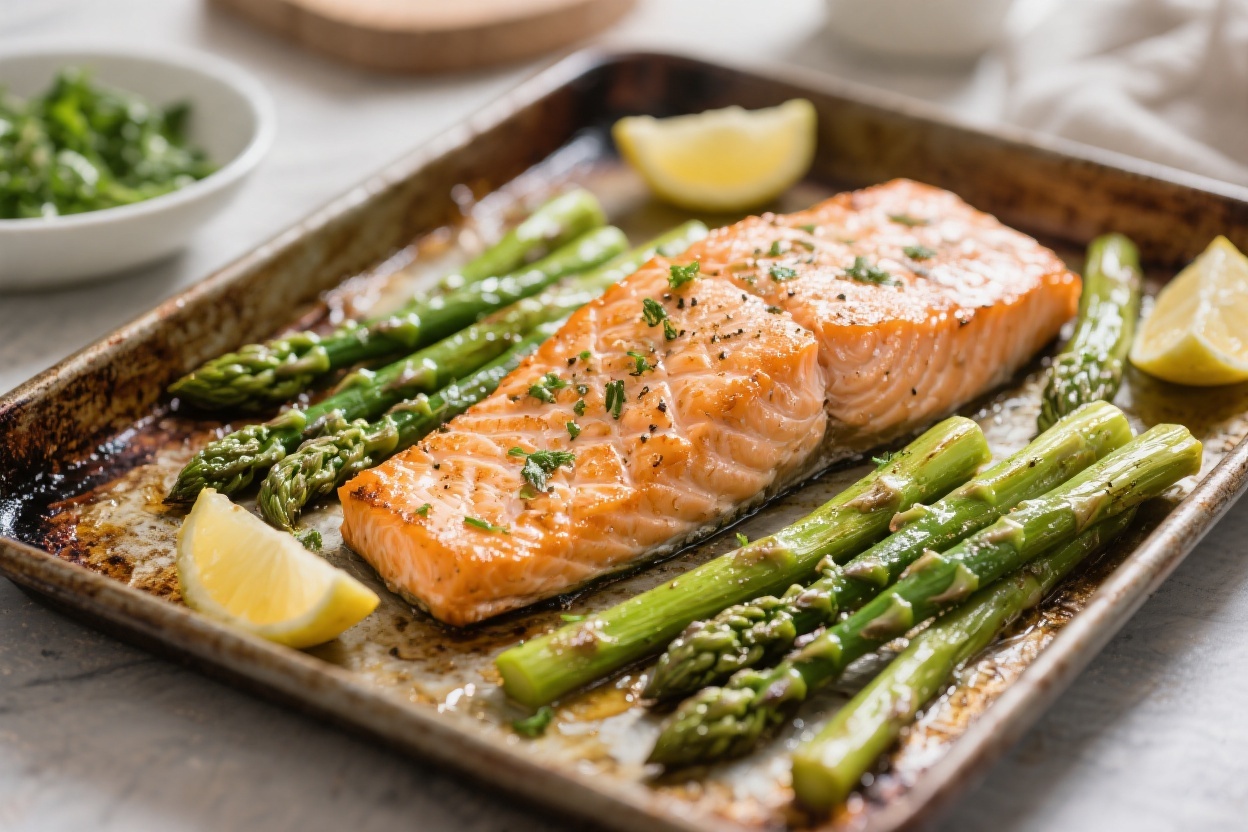
Sheet Pan Salmon & Asparagus - A Fast, Flavorful Weeknight Dinner
Ingredients
Method
- Preheat and prep the pan: Heat the oven to 425°F (220°C). Line a large, rimmed baking sheet with parchment paper or foil for easy cleanup.
- Trim the asparagus: Snap off the woody ends. Pat dry so it roasts instead of steaming.
- Toss the asparagus: On the sheet pan, toss asparagus with 1–2 tablespoons olive oil, a big pinch of salt, and pepper.Spread into an even layer, leaving room in the center for the salmon.
- Make the lemon-garlic mixture: In a small bowl, whisk 2 tablespoons olive oil, the zest of 1 lemon, 1 tablespoon lemon juice, minced garlic, honey, Dijon, 1/2 teaspoon salt, black pepper, and a pinch of red pepper flakes if using.
- Season the salmon: Pat salmon dry. Place fillets skin-side down in the center of the pan. Spoon or brush about half of the lemon-garlic mixture over the salmon.Drizzle the rest over the asparagus and toss lightly again.
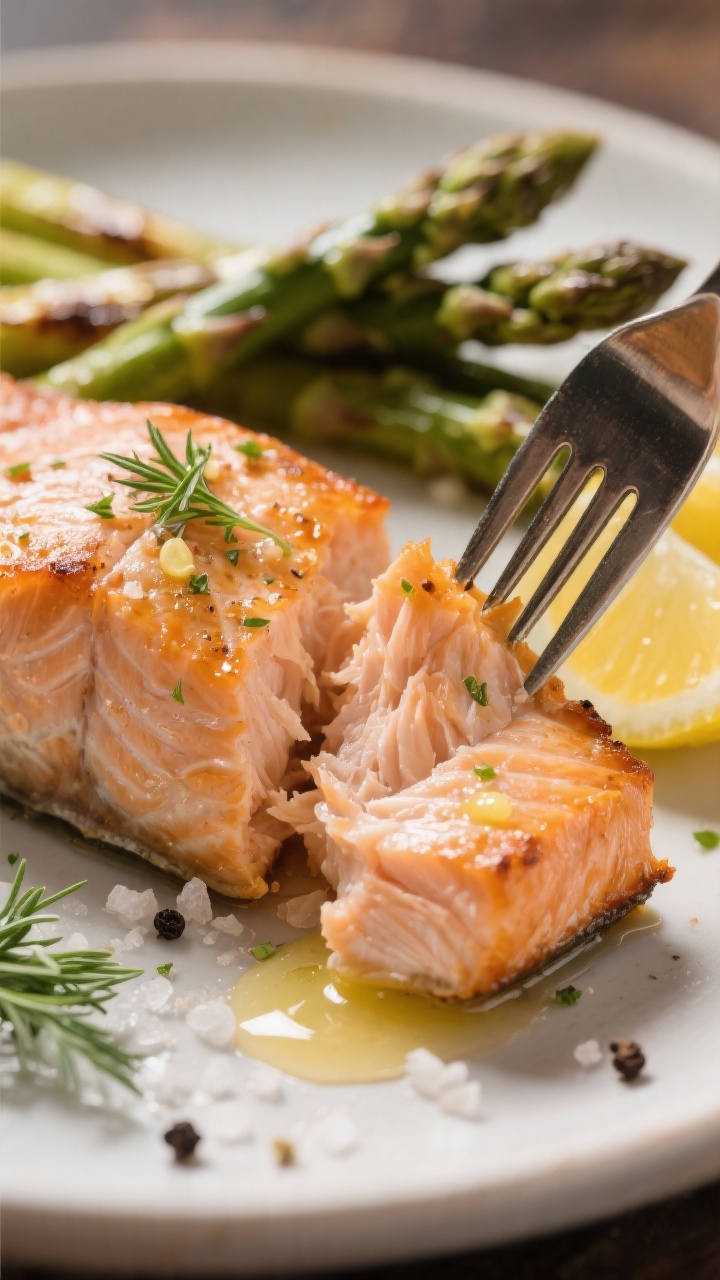
- Roast: Bake for 10–12 minutes for medium, depending on thickness. The salmon should flake easily and be just opaque in the center. Thicker fillets may need 2–3 extra minutes.
- Optional finish: Dot the hot salmon with a little butter and squeeze more lemon over everything.Sprinkle with chopped dill, parsley, or chives.
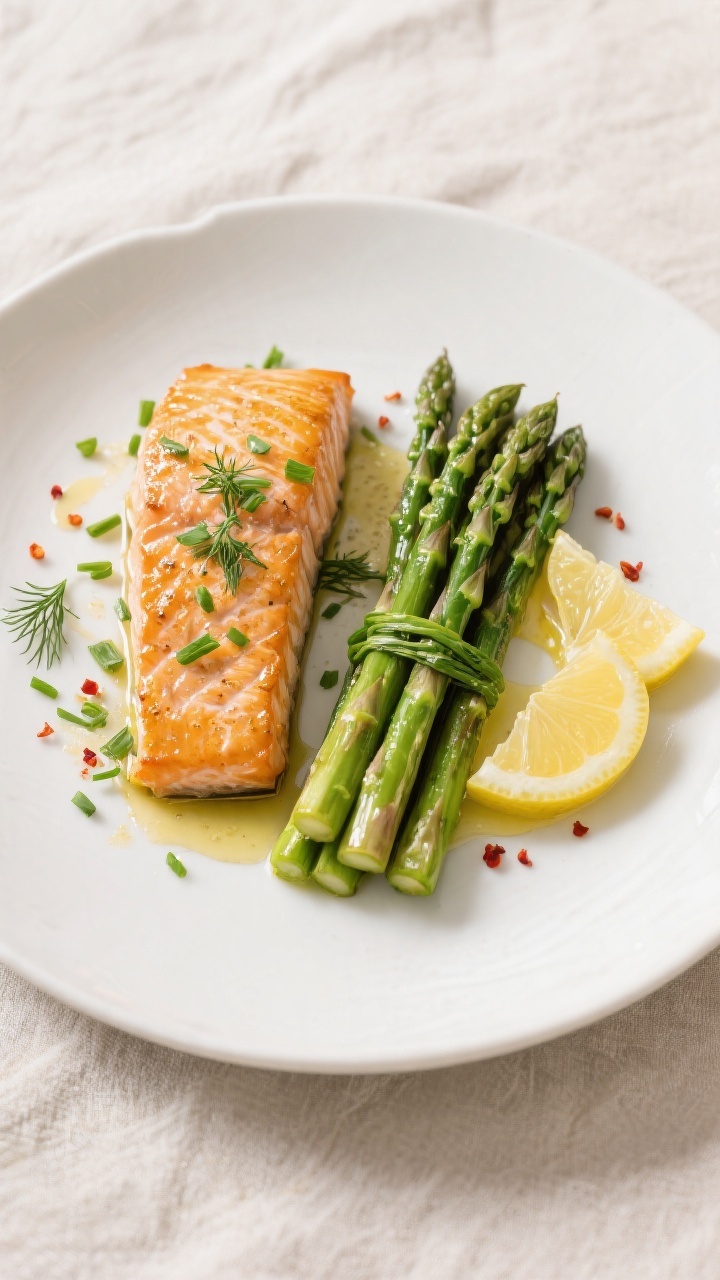
- Serve: Plate salmon with asparagus. Add lemon wedges on the side for an extra burst of brightness.
What Makes This Recipe So Good
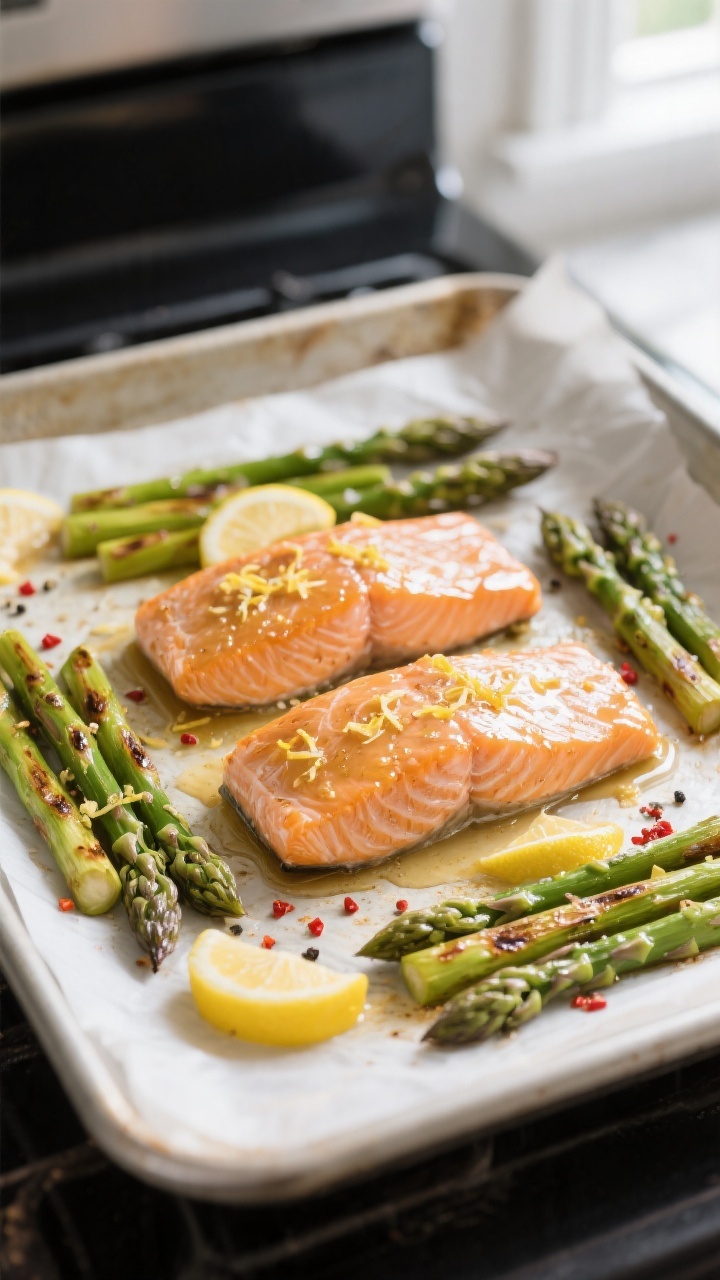
- One pan, minimal cleanup: Toss everything on a sheet pan, roast, and you’re done. Less time washing dishes, more time eating.
- Fast cook time: From preheat to plate in about 25 minutes.
Dinner on the table without stress.
- Balanced flavors: Zesty lemon, garlic, and a touch of honey balance the richness of salmon and the earthiness of asparagus.
- Foolproof texture: High heat ensures crisp edges on asparagus and tender, juicy salmon.
- Flexible and customizable: Swap seasonings, add potatoes, or use a different veggie if that’s what you have.
Shopping List
- Salmon fillets: 4 skin-on fillets (about 5–6 ounces each)
- Asparagus: 1 to 1.5 pounds, trimmed
- Olive oil: Extra-virgin preferred
- Fresh lemon: 1–2 lemons (zest and juice)
- Garlic: 2–3 cloves, minced
- Honey or maple syrup: 1–2 teaspoons
- Dijon mustard: 1 teaspoon (optional but recommended)
- Fresh herbs: Dill, parsley, or chives
- Salt and pepper: Kosher salt and freshly ground black pepper
- Red pepper flakes: A pinch for heat (optional)
- Butter: 1 tablespoon, to finish (optional)
- Lemon wedges: For serving
Instructions
- Preheat and prep the pan: Heat the oven to 425°F (220°C). Line a large, rimmed baking sheet with parchment paper or foil for easy cleanup.
- Trim the asparagus: Snap off the woody ends. Pat dry so it roasts instead of steaming.
- Toss the asparagus: On the sheet pan, toss asparagus with 1–2 tablespoons olive oil, a big pinch of salt, and pepper.
Spread into an even layer, leaving room in the center for the salmon.
- Make the lemon-garlic mixture: In a small bowl, whisk 2 tablespoons olive oil, the zest of 1 lemon, 1 tablespoon lemon juice, minced garlic, honey, Dijon, 1/2 teaspoon salt, black pepper, and a pinch of red pepper flakes if using.
- Season the salmon: Pat salmon dry. Place fillets skin-side down in the center of the pan. Spoon or brush about half of the lemon-garlic mixture over the salmon.
Drizzle the rest over the asparagus and toss lightly again.
- Roast: Bake for 10–12 minutes for medium, depending on thickness. The salmon should flake easily and be just opaque in the center. Thicker fillets may need 2–3 extra minutes.
- Optional finish: Dot the hot salmon with a little butter and squeeze more lemon over everything.
Sprinkle with chopped dill, parsley, or chives.
- Serve: Plate salmon with asparagus. Add lemon wedges on the side for an extra burst of brightness.
Storage Instructions
- Refrigerator: Store leftovers in an airtight container for up to 2 days.
- Reheating: Warm gently in a 300°F (150°C) oven for 8–10 minutes or microwave at 50% power in short bursts. Avoid overcooking.
- Freezing: Not ideal for asparagus.
If freezing salmon only, wrap tightly and freeze up to 2 months. Thaw in the fridge and reheat gently.
- Meal prep tip: Enjoy cold over greens with extra lemon and olive oil for a simple next-day lunch.
Health Benefits
- Omega-3 fats: Salmon is rich in EPA and DHA, which support heart and brain health and help reduce inflammation.
- High-quality protein: Supports muscle repair and keeps you full longer without feeling heavy.
- Vitamins and minerals: Asparagus brings folate, vitamin K, and fiber; salmon adds vitamin D, B12, and selenium.
- Balanced plate: Protein plus non-starchy veggies keeps calories in check and stabilizes energy.
- Lower sodium, higher flavor: Fresh lemon, herbs, and garlic bring brightness without needing much salt.
Common Mistakes to Avoid
- Overcooking the salmon: Pull it when it’s just opaque and flakes easily. Residual heat will finish the job.
- Crowding the pan: Give the asparagus space, or it will steam instead of roast.
Use two pans if needed.
- Skipping the pat-dry step: Moisture on salmon and asparagus leads to soggy textures.
- Using very thick asparagus without adjusting time: Thicker spears may need 2–3 extra minutes. Roast them for a few minutes before adding salmon if needed.
- Not seasoning enough: Salt brings everything to life. Taste and add a squeeze of lemon at the end to brighten flavors.
Recipe Variations
- Herb crust: Mix panko, chopped parsley, lemon zest, and olive oil.
Press onto salmon before roasting for a crisp top.
- Maple-soy glaze: Whisk 1 tablespoon soy sauce, 1 tablespoon maple syrup, and 1 teaspoon rice vinegar. Brush on salmon; skip the Dijon and honey in the base recipe.
- Smoky paprika twist: Add 1 teaspoon smoked paprika to the lemon-garlic mixture for a deeper, smoky note.
- Add potatoes: Par-cook thin baby potatoes for 10 minutes at 425°F with oil and salt, then add asparagus and salmon to finish.
- Different veggies: Swap in green beans, broccolini, or zucchini. Adjust cook time so veggies roast until just tender.
- Dairy-free finish: Skip butter and finish with extra-virgin olive oil and more herbs.
FAQ
Stop wondering what's for dinner.
Get 7 healthy, family-friendly dinners complete with recipes and simple meal plans delivered straight to your inbox.
How do I know when the salmon is done?
It should flake easily with a fork and look just opaque in the center.
If you use an instant-read thermometer, aim for 125–130°F in the thickest part for medium. It will rise a few degrees as it rests.
Can I use frozen salmon?
Yes, but thaw it fully in the refrigerator first, then pat it very dry. Frozen fillets can release excess moisture, so drying helps you avoid a watery pan and ensures better browning.
Do I have to use skin-on salmon?
No, but skin-on helps keep the fish moist and makes it easier to handle.
After roasting, the skin often separates cleanly from the flesh if you prefer not to eat it.
What if my asparagus is very thin?
Thin spears cook fast. Check for doneness at 8–10 minutes and pull the pan as soon as they’re crisp-tender and bright green to avoid limp asparagus.
Can I make this without honey or mustard?
Absolutely. The honey balances acidity and adds light caramelization, but you can skip it or use a splash of orange juice.
If you omit mustard, add a pinch more salt and lemon zest for flavor.
What should I serve with it?
Try quinoa, couscous, or roasted baby potatoes. For a lighter option, serve over arugula or mixed greens with extra lemon and olive oil.
How do I prevent the white albumin from forming on the salmon?
Cook at a steady heat and avoid overcooking. You can also bring the salmon closer to room temperature for 10–15 minutes before roasting and use a gentle, even bake at 425°F.
Wrapping Up
Sheet pan salmon and asparagus is the kind of recipe that fits into real life: quick to prep, easy to clean up, and consistently delicious.
With bright lemon, savory garlic, and fresh herbs, it tastes restaurant-worthy without the hassle. Keep this one in your weeknight rotation, and tweak the seasonings to match your mood. It’s simple cooking that feels special every time.
Printable Recipe Card
Want just the essential recipe details without scrolling through the article? Get our printable recipe card with just the ingredients and instructions.
Loved This Recipe?
If you're looking for more simple, healthy dinners your family will actually eat, grab my FREE 7-Day Easy Dinner Reset. You'll get 7 easy dinner recipes, simple grocery lists, and a done-for-you plan that takes the stress out of mealtime.