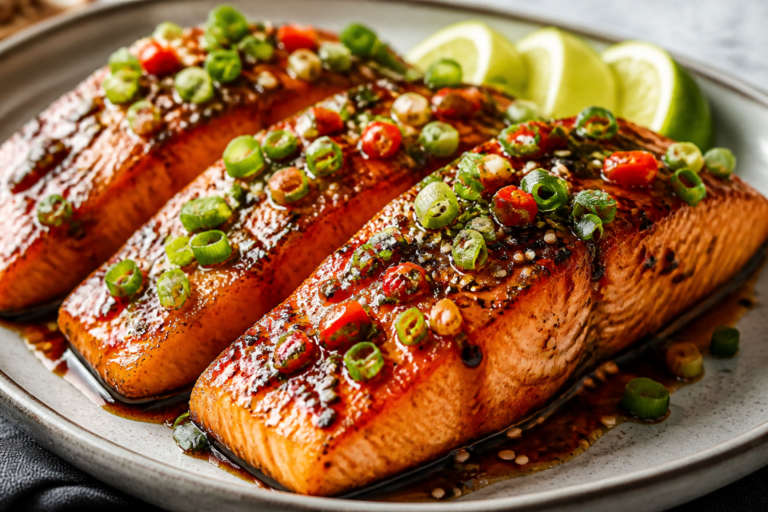
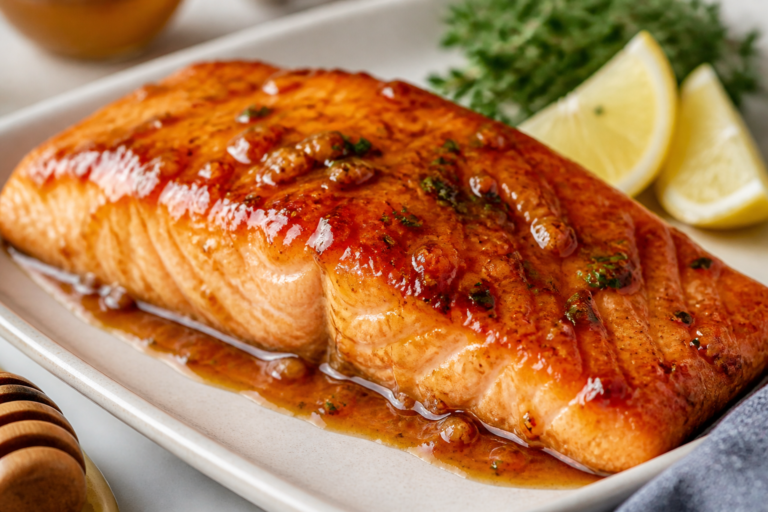
Sweet Garlic Butter Glazed Salmon – A Fast, Flavor-Packed Weeknight Favorite
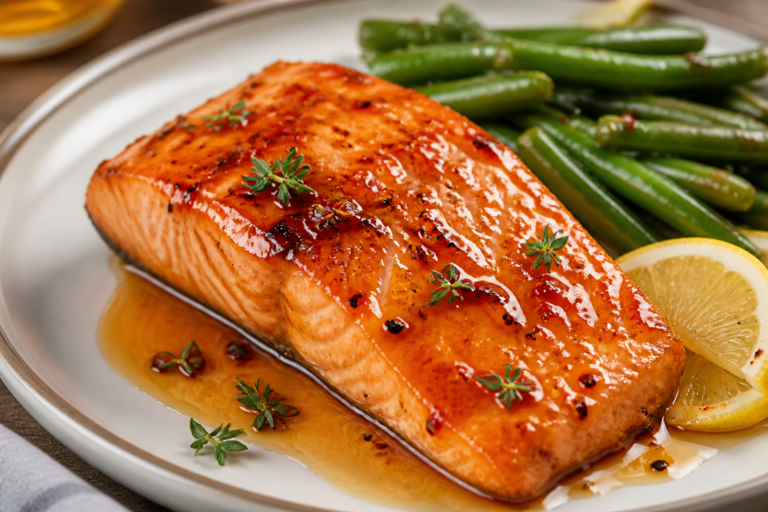
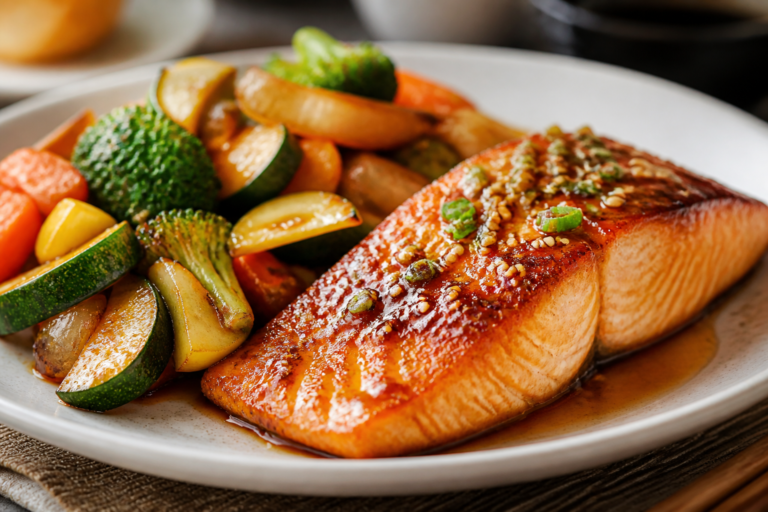
This is the kind of salmon that makes weeknights feel special without making a mess of your kitchen. It’s sweet, savory, buttery, and ready in minutes. The garlic caramelizes in the glaze, the salmon turns tender and flaky, and you get a glossy finish that looks like you spent hours.
FREE 7-Day Easy Dinner Reset
FREE 7-Day Easy Dinner Reset
You can serve it with rice, greens, or roasted veggies, and it works for both busy schedules and casual dinners with friends.
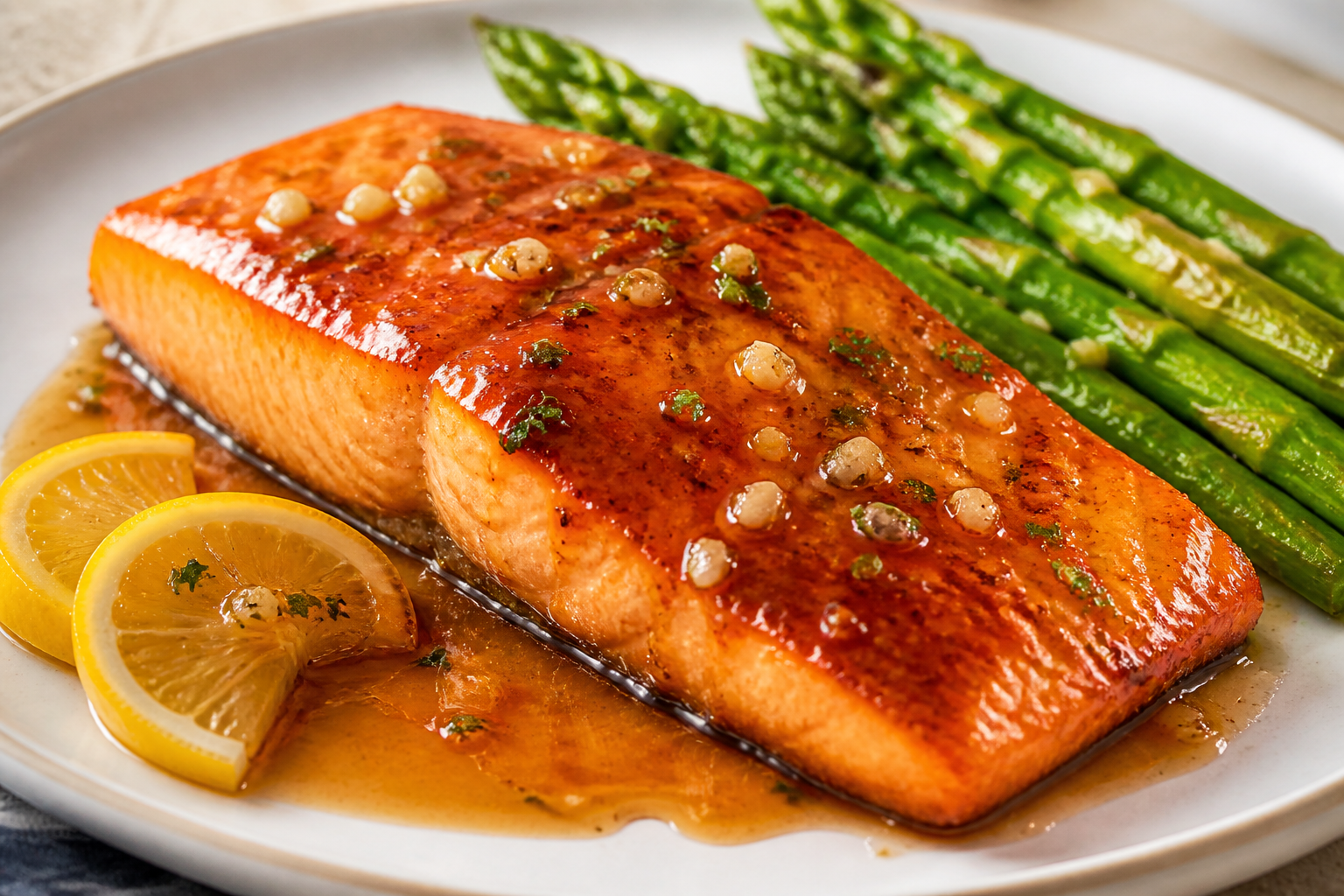
Sweet Garlic Butter Glazed Salmon - A Fast, Flavor-Packed Weeknight Favorite
Ingredients
Method
- Pat the salmon dry. Moisture is the enemy of a good sear. Use paper towels to blot both sides. Season lightly with salt and pepper.
- Make the glaze. In a small bowl, whisk together melted butter, minced garlic, honey or brown sugar, soy sauce, lemon juice, and vinegar if using.Add a pinch of red pepper flakes. Taste and adjust sweetness or acidity as needed.
- Heat your pan. Place a large skillet over medium-high heat. Add olive oil and let it shimmer.A hot pan prevents sticking and builds color.
- Sear the salmon. Place fillets in the skillet, presentation side down (the side that faces up when serving). Cook without moving for 3–4 minutes until a deep golden crust forms.
- Flip gently. Use a thin spatula to flip the fillets. Lower heat to medium.
- Add the glaze. Pour the garlic butter mixture around and over the salmon.It will bubble quickly. Spoon the sauce over the fish as it reduces. Cook another 3–5 minutes, depending on thickness, until the salmon is just opaque and flakes easily.
- Finish with zest and herbs. Turn off the heat.Sprinkle lemon zest and chopped parsley or chives over the top. Spoon the thickened glaze over the fillets one last time.
- Rest briefly. Let the salmon sit in the pan for 2 minutes, then transfer to plates. Serve with lemon wedges and any extra glaze from the pan.
What Makes This Special
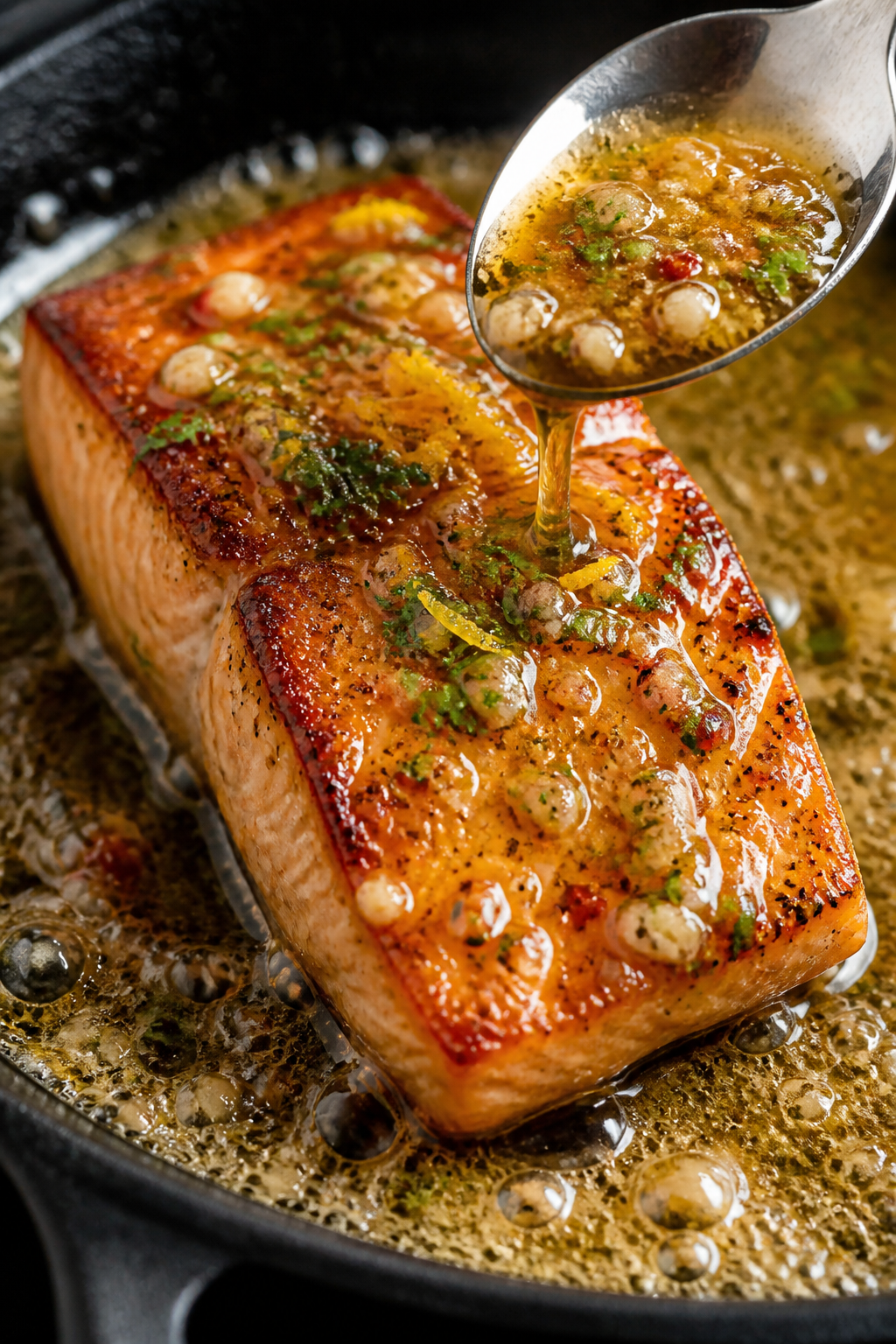
This salmon is all about balance. The sweetness rounds out the rich fish, while garlic and lemon keep everything bright. The butter helps the glaze cling to the salmon, creating a golden crust with a hint of caramel.
It’s quick to cook, easy to clean up, and uses simple pantry ingredients you probably already have. Beyond taste, the method is forgiving. The sauce reduces fast, the fish cooks evenly, and you don’t need any fancy tools.
Whether you’re new to cooking salmon or just want something reliable and delicious, this hits the mark.
What You’ll Need
- Salmon fillets: 4 pieces, about 5–6 ounces each, skin-on or skinless
- Unsalted butter: 3 tablespoons
- Garlic: 4 cloves, finely minced
- Honey or brown sugar: 3 tablespoons (honey gives a cleaner sweetness; brown sugar adds deeper caramel notes)
- Soy sauce: 1 tablespoon (or tamari for gluten-free)
- Lemon juice: 1 tablespoon, plus extra wedges for serving
- Apple cider vinegar: 1 teaspoon (optional, for brightness)
- Red pepper flakes: A pinch (optional, for gentle heat)
- Salt and black pepper: To taste
- Olive oil: 1 tablespoon, for searing
- Fresh parsley or chives: Chopped, for garnish
- Lemon zest: From 1 lemon (optional, but great aroma)
Step-by-Step Instructions
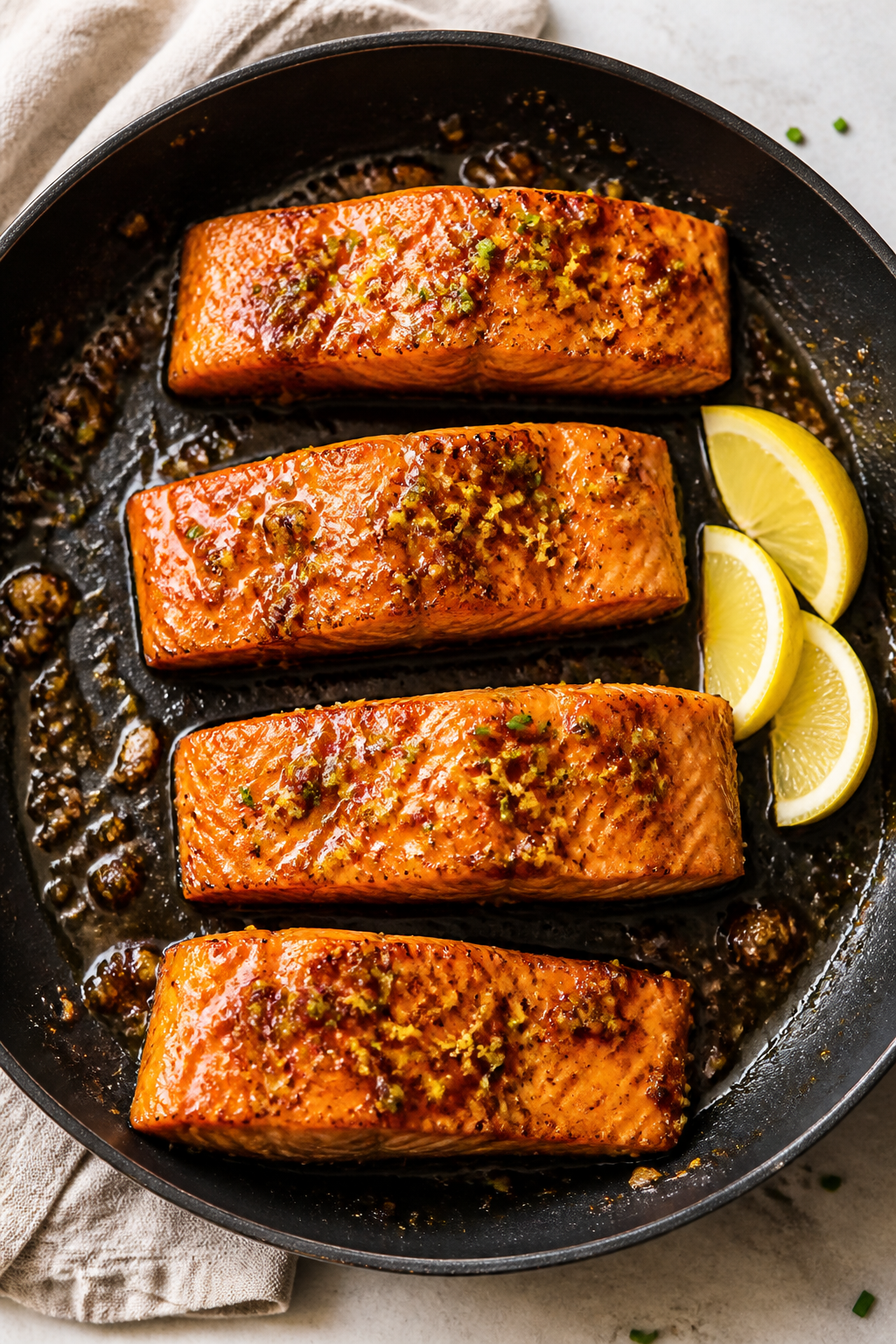
- Pat the salmon dry. Moisture is the enemy of a good sear. Use paper towels to blot both sides. Season lightly with salt and pepper.
- Make the glaze. In a small bowl, whisk together melted butter, minced garlic, honey or brown sugar, soy sauce, lemon juice, and vinegar if using.
Add a pinch of red pepper flakes. Taste and adjust sweetness or acidity as needed.
- Heat your pan. Place a large skillet over medium-high heat. Add olive oil and let it shimmer.
A hot pan prevents sticking and builds color.
- Sear the salmon. Place fillets in the skillet, presentation side down (the side that faces up when serving). Cook without moving for 3–4 minutes until a deep golden crust forms.
- Flip gently. Use a thin spatula to flip the fillets. Lower heat to medium.
- Add the glaze. Pour the garlic butter mixture around and over the salmon.
It will bubble quickly. Spoon the sauce over the fish as it reduces. Cook another 3–5 minutes, depending on thickness, until the salmon is just opaque and flakes easily.
- Finish with zest and herbs. Turn off the heat.
Sprinkle lemon zest and chopped parsley or chives over the top. Spoon the thickened glaze over the fillets one last time.
- Rest briefly. Let the salmon sit in the pan for 2 minutes, then transfer to plates. Serve with lemon wedges and any extra glaze from the pan.
Keeping It Fresh
Leftovers keep well, but salmon dries out if overheated.
Store cooled salmon in an airtight container for up to 2 days. Keep the glaze in a separate small container if possible. For reheating, use gentle heat.
Warm in a skillet over low with a splash of water or broth, covered, for 3–4 minutes. You can also flake the cold salmon into salads, rice bowls, or tacos to skip reheating altogether. If freezing, wrap portions tightly and freeze for up to 2 months.
Thaw overnight in the fridge before reheating.
Health Benefits
Salmon is rich in omega-3 fatty acids, which support heart and brain health. It’s also a solid source of high-quality protein and vitamin D. The small amount of butter adds richness, but the portion stays reasonable since most of the flavor comes from garlic, lemon, and soy.
If you prefer, you can use ghee for a higher smoke point or olive oil to reduce saturated fat. Adjusting sweetness with honey or a little maple syrup keeps the glaze simple and recognizable, without heavy additives.
What Not to Do
- Don’t start with a wet fillet. Water on the surface steams the fish and prevents browning.
- Don’t overcrowd the pan. Give each piece space or you’ll lose that golden crust.
- Don’t blast the heat after adding the glaze. High heat will burn the sugars and turn the garlic bitter.
- Don’t overcook. Pull salmon when it’s just opaque and flakes easily. It keeps cooking off the heat.
- Don’t skip tasting the glaze. Adjust sweetness, salt, and acid before it hits the pan so the flavor is balanced.
Recipe Variations
Stop wondering what's for dinner.
Get 7 healthy, family-friendly dinners complete with recipes and simple meal plans delivered straight to your inbox.
- Oven-baked option: Place seasoned salmon on a lined sheet tray.
Bake at 400°F (200°C) for 8–10 minutes, then brush on the glaze and broil for 1–2 minutes to caramelize.
- Air fryer method: Air fry at 390°F (200°C) for 7–9 minutes, brushing with glaze halfway and at the end. Line the basket or use parchment designed for air fryers.
- Citrus twist: Swap lemon for orange juice and zest. Add a touch of grated ginger for a bright, slightly spicy note.
- Maple garlic version: Use pure maple syrup in place of honey or sugar.
It adds a smooth, woody sweetness that pairs well with soy.
- Spicy glaze: Stir in a teaspoon of sriracha or gochujang. The sweet-heat combo is great over rice with steamed broccoli.
- Dairy-free: Replace butter with a neutral oil or a dairy-free butter alternative. Add a small knob of coconut oil at the end for roundness.
- Herb-forward: Add thyme or dill to the glaze and finish with extra fresh herbs.
FAQ
How do I know when the salmon is done?
Look for the flesh to turn opaque and flake easily with a fork.
If you use a thermometer, aim for about 125–130°F (52–54°C) for medium, as it will carry over a few degrees after you remove it from heat.
Can I use frozen salmon?
Yes. Thaw it fully in the fridge overnight, then pat very dry before cooking. Frozen fillets can release extra moisture, so drying is key for a good sear.
What sides go well with this?
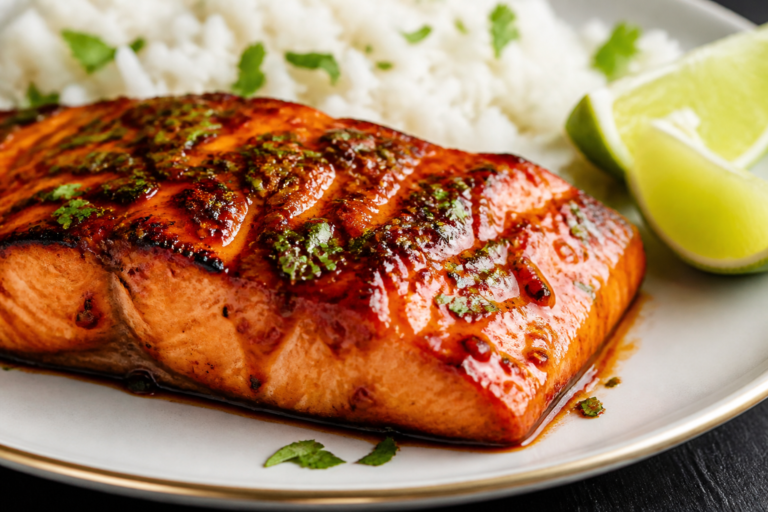
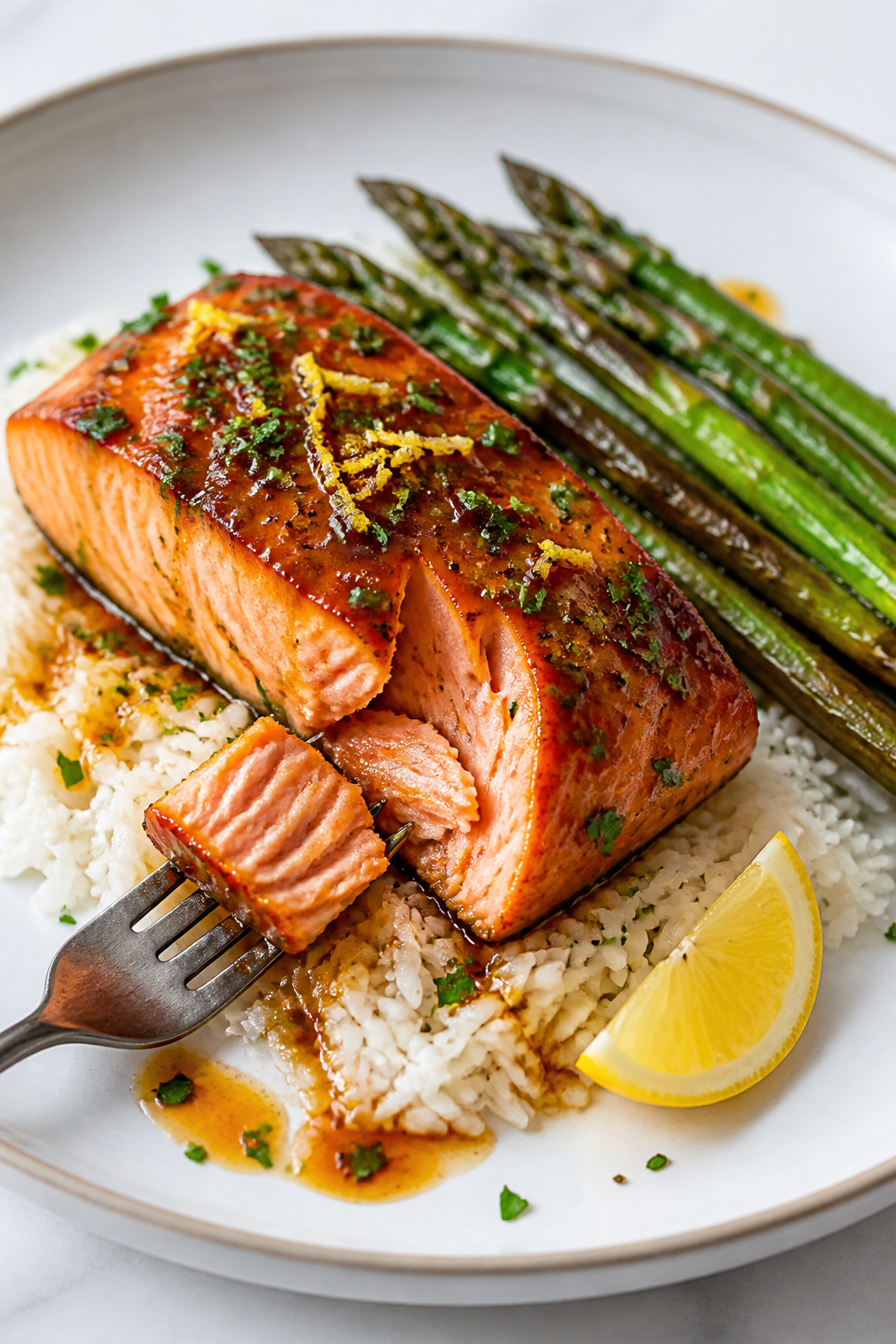
Steamed rice, garlic mashed potatoes, quinoa, or couscous all work nicely.
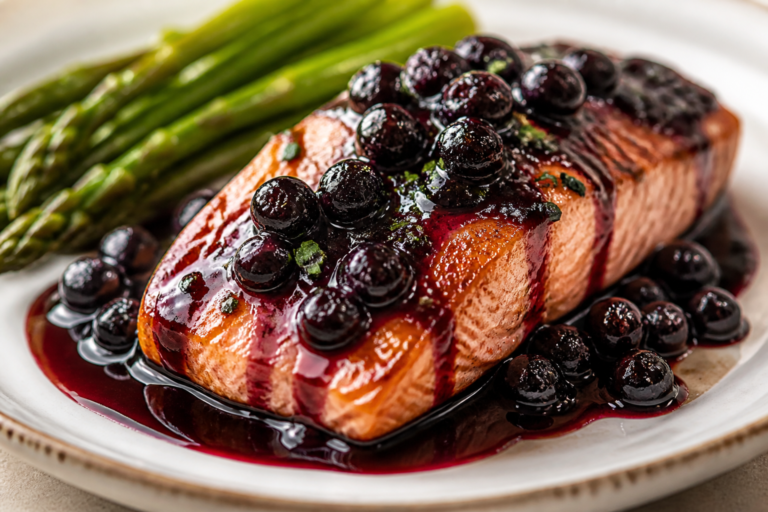
For veggies, try roasted asparagus, sautéed green beans, or a crisp cucumber salad with lemon.
Is there a substitute for soy sauce?
Use tamari for gluten-free or coconut aminos for a milder, slightly sweeter taste. Adjust salt since coconut aminos are less salty.
Can I make the glaze ahead of time?
Absolutely. Mix it up to 3 days in advance and store it in the fridge.
Re-whisk before using, and warm gently if the butter has solidified.
Will this recipe work with other fish?
Yes. It’s great on trout, black cod, or halibut. Cooking times will vary slightly based on thickness and fat content.
Why did my garlic taste bitter?
Garlic burns fast.
Keep the heat at medium once the glaze is in the pan, and don’t walk away. If your pan is scorching, add a tablespoon of water to cool it down and keep the sugars from burning.
Can I grill the salmon?
You can, but use skin-on fillets and a clean, well-oiled grate. Grill over medium heat and brush the glaze on in the last couple of minutes to prevent flare-ups.
Wrapping Up
Sweet Garlic Butter Glazed Salmon is simple to make, big on flavor, and easy to pair with whatever you have on hand.
The glaze brings out the best in the fish without overpowering it, and the method is quick and reliable. Keep this in your weeknight rotation, and you’ll have a restaurant-level dinner on the table in under 20 minutes. Enjoy it hot, drizzle on every last bit of sauce, and serve with something bright on the side.
Printable Recipe Card
Want just the essential recipe details without scrolling through the article? Get our printable recipe card with just the ingredients and instructions.
Loved This Recipe?
If you're looking for more simple, healthy dinners your family will actually eat, grab my FREE 7-Day Easy Dinner Reset. You'll get 7 easy dinner recipes, simple grocery lists, and a done-for-you plan that takes the stress out of mealtime.