Warm the stock: In a saucepan, bring the stock to a gentle simmer and keep it warm over low heat.
Warm stock helps the rice cook evenly and release starch.
Prep the shrimp: Pat the shrimp dry. Season with salt, pepper, and a pinch of red pepper flakes if you like heat. Set aside.
Sauté aromatics: In a wide, heavy pan, heat 1 tablespoon olive oil and 1 tablespoon butter over medium heat.
Add finely chopped onion (or shallot) and a pinch of salt. Cook until translucent, 3–4 minutes. Stir in minced garlic and cook 30 seconds, until fragrant.
Toast the rice: Add 1½ cups arborio rice to the pan.
Stir to coat in the fat and toast for 1–2 minutes. The grains should look slightly pearly around the edges.
Deglaze with wine: Pour in 1/2 cup dry white wine. Stir until it’s mostly absorbed.
This step adds brightness and depth; skip if you prefer and start with stock instead.
Add stock gradually: Add a ladle (about 1/2–3/4 cup) of warm stock to the rice. Stir gently and consistently as it simmers. When most of the liquid is absorbed and the spoon leaves a trail, add another ladle.
Continue this rhythm for 16–20 minutes.
Season and taste as you go: Add small pinches of salt along the way, tasting every few additions of stock. Risotto should taste well-seasoned, not salty.
Cook the shrimp: When the rice is close to al dente (creamy with a slight bite), push it to the sides of the pan or use a separate skillet. Add a drizzle of olive oil and 1 tablespoon butter.
Sear shrimp 1–2 minutes per side, just until pink and opaque. Squeeze in a little lemon juice. Don’t overcook.
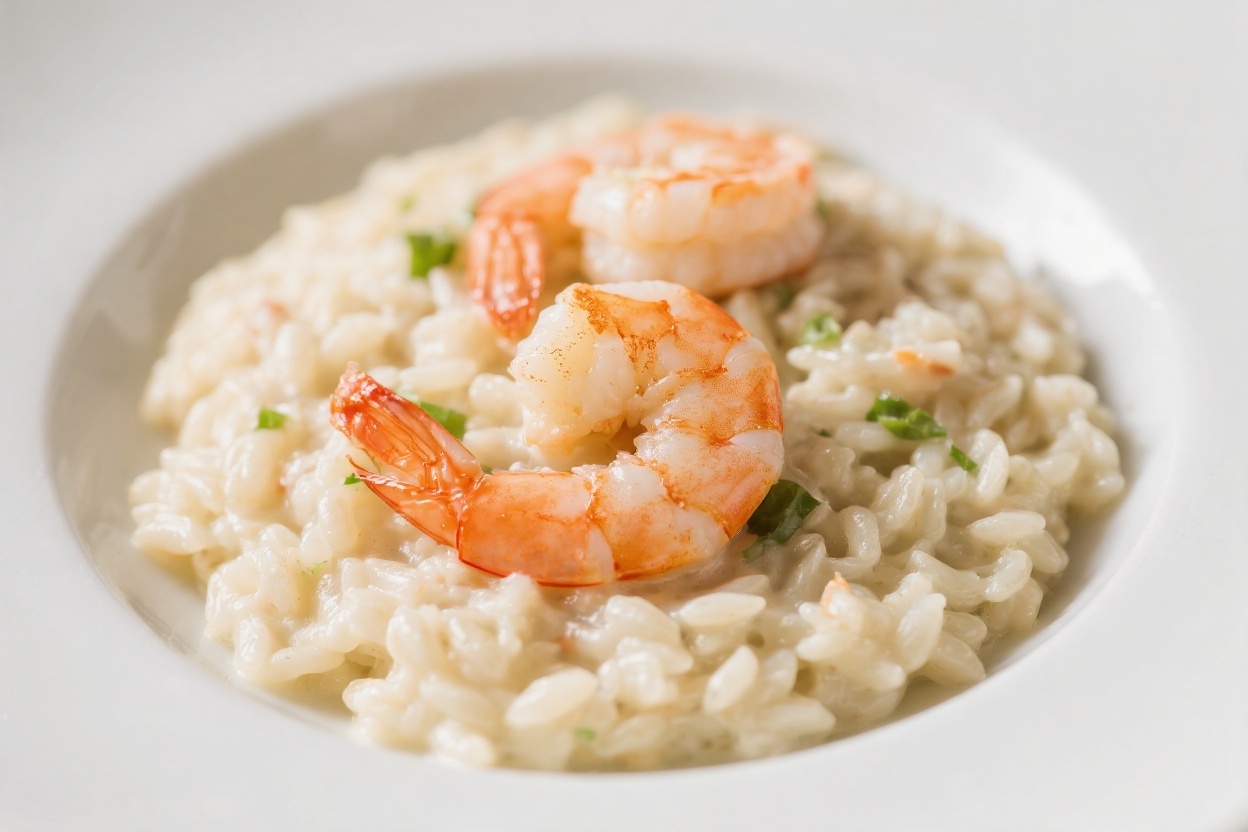
Finish the risotto: Stir the shrimp and any buttery juices into the risotto.
Off the heat, add a handful of grated parmesan, 1 tablespoon butter, lemon zest, and chopped parsley. Stir until glossy and loose. If it tightens too much, add a splash of warm stock.
Adjust and serve: Taste and adjust with salt, pepper, and more lemon if needed.
The risotto should softly mound on a spoon and gently spread on the plate—neither soupy nor stiff.