Fig Balsamic Salmon – Sweet, Savory, and Weeknight Friendly
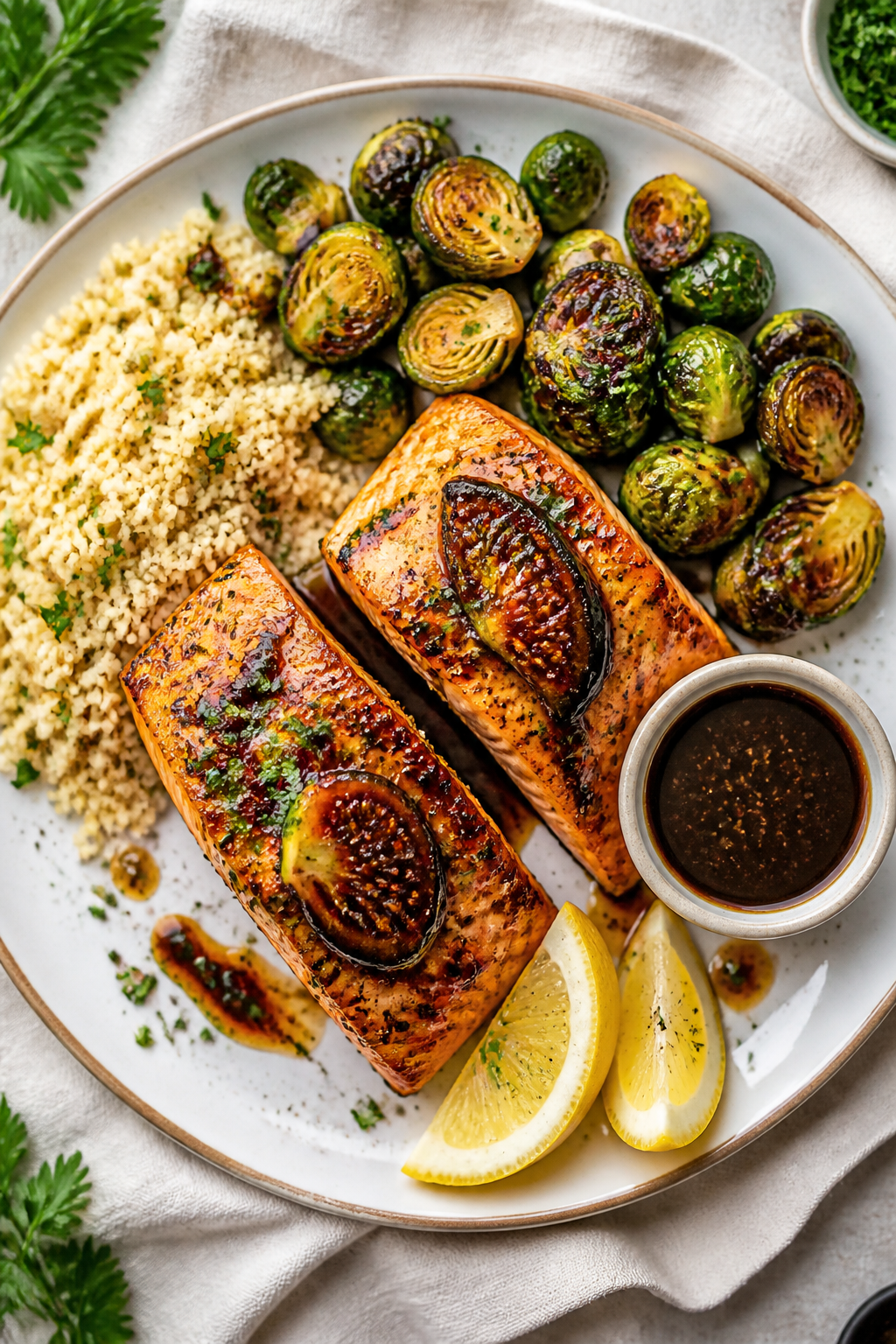
This fig balsamic salmon is the kind of dinner that feels special without asking much of you. It’s sweet, tangy, a little sticky, and full of rich salmon flavor. You whisk a quick glaze, brush it on, and let the oven do the rest.
FREE 7-Day Easy Dinner Reset
FREE 7-Day Easy Dinner Reset
It’s the kind of meal you can pull together on a Wednesday but still serve to guests on Saturday. Pair it with roasted veggies or a simple salad, and you’ve got a complete plate that tastes restaurant-worthy.
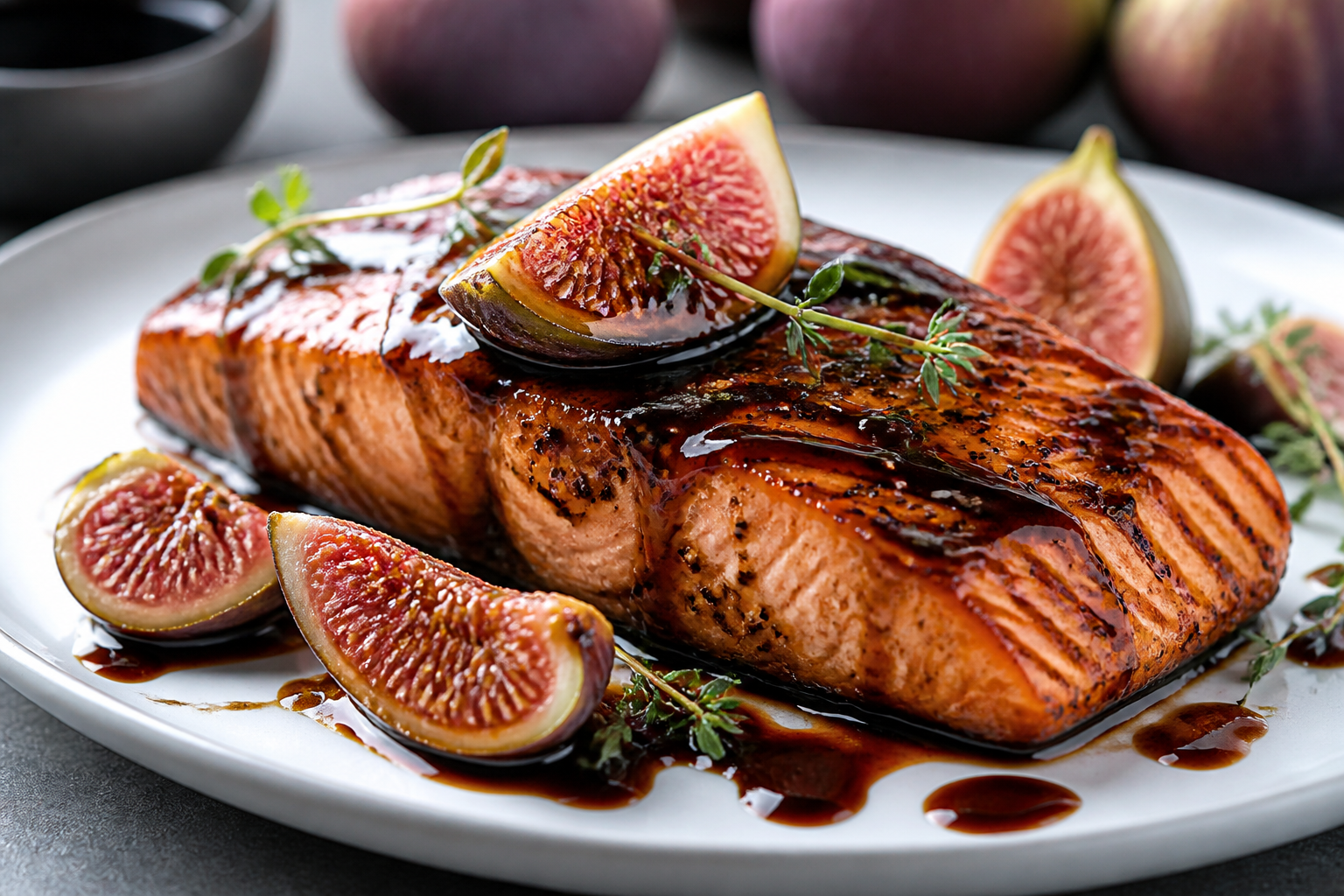
Fig Balsamic Salmon - Sweet, Savory, and Weeknight Friendly
Ingredients
Method
- Preheat and prep: Heat the oven to 400°F (200°C).Line a baking sheet with foil or parchment for easy cleanup. Pat the salmon dry with paper towels.
- Season the salmon: Place the fillets on the sheet, skin-side down if using skin-on. Sprinkle with salt and pepper on top and sides.
- Make the glaze: In a small bowl, whisk together fig jam, balsamic vinegar, Dijon, garlic, olive oil, a pinch of salt, pepper, and red pepper flakes if using.It should be glossy and spoonable.
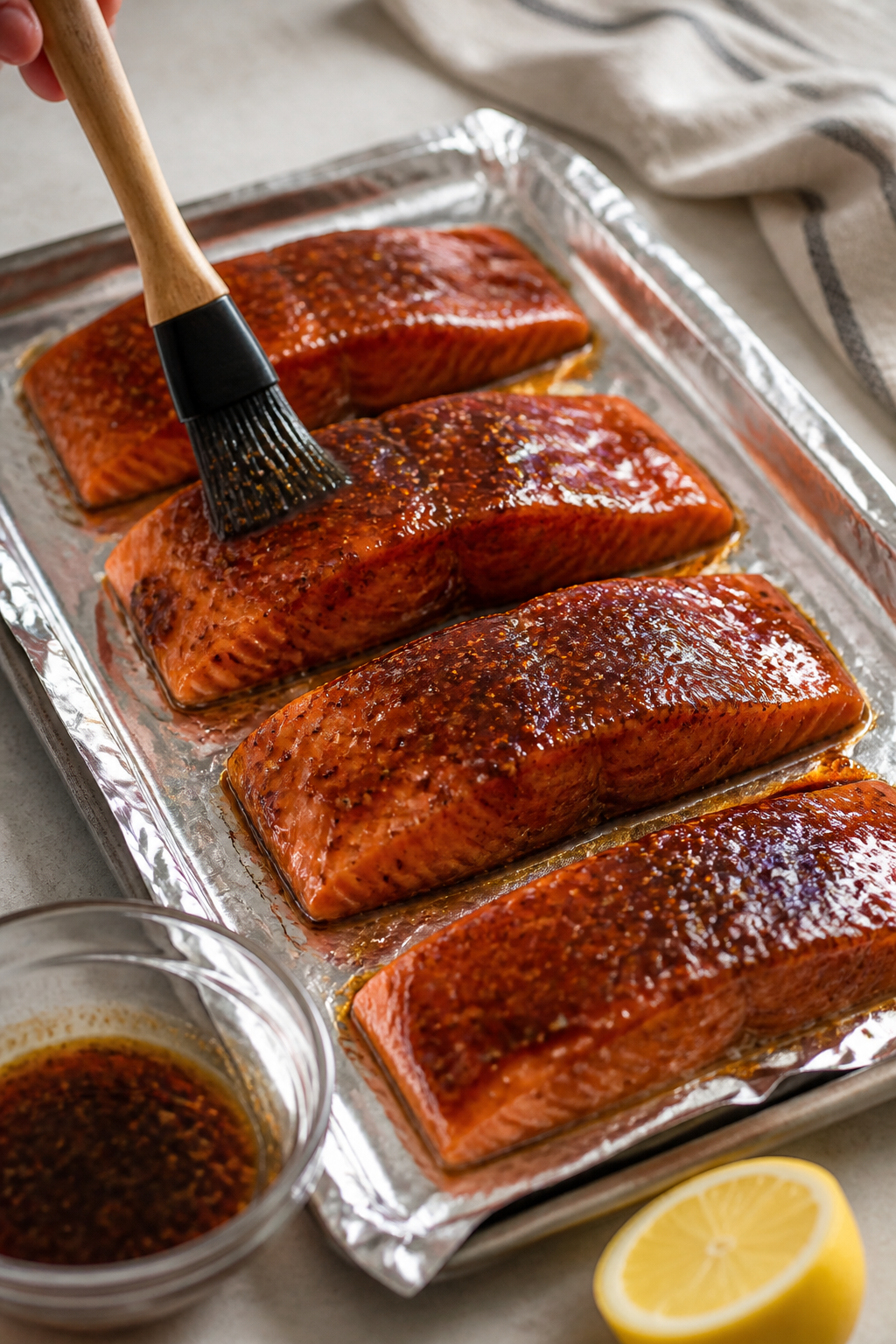
- Brush generously: Spoon or brush the glaze over each fillet, coating the tops and sides. Reserve a tablespoon or two for finishing, if you like extra gloss.
- Bake: Cook for 10–12 minutes, depending on thickness. A general rule is about 4–6 minutes per 1/2 inch of thickness.The salmon should flake easily but still be slightly translucent in the center.
- Optional broil: For a light char and stickier finish, switch the oven to broil for 1–2 minutes at the end. Watch closely to avoid burning the sugars in the glaze.
- Finish with lemon: Squeeze fresh lemon over the salmon right out of the oven. Brush with the reserved glaze, if desired.Top with chopped herbs.
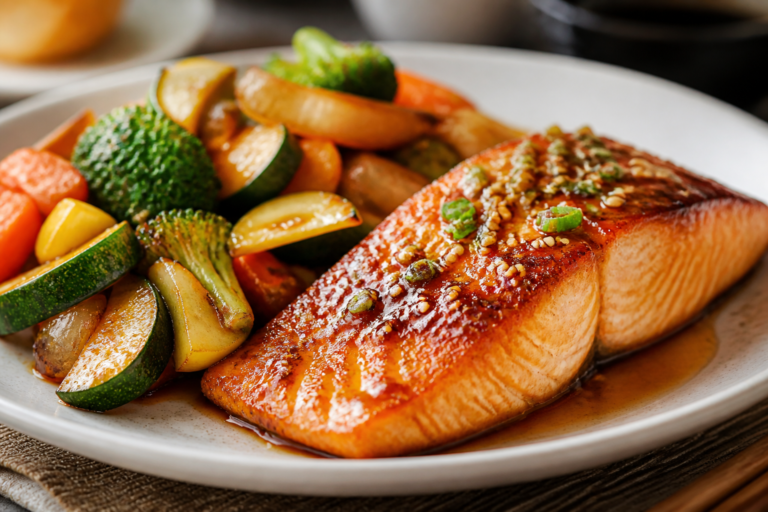
- Serve: Plate with roasted vegetables, grains, or a crisp salad. Spoon any pan juices over the top.
What Makes This Recipe So Good
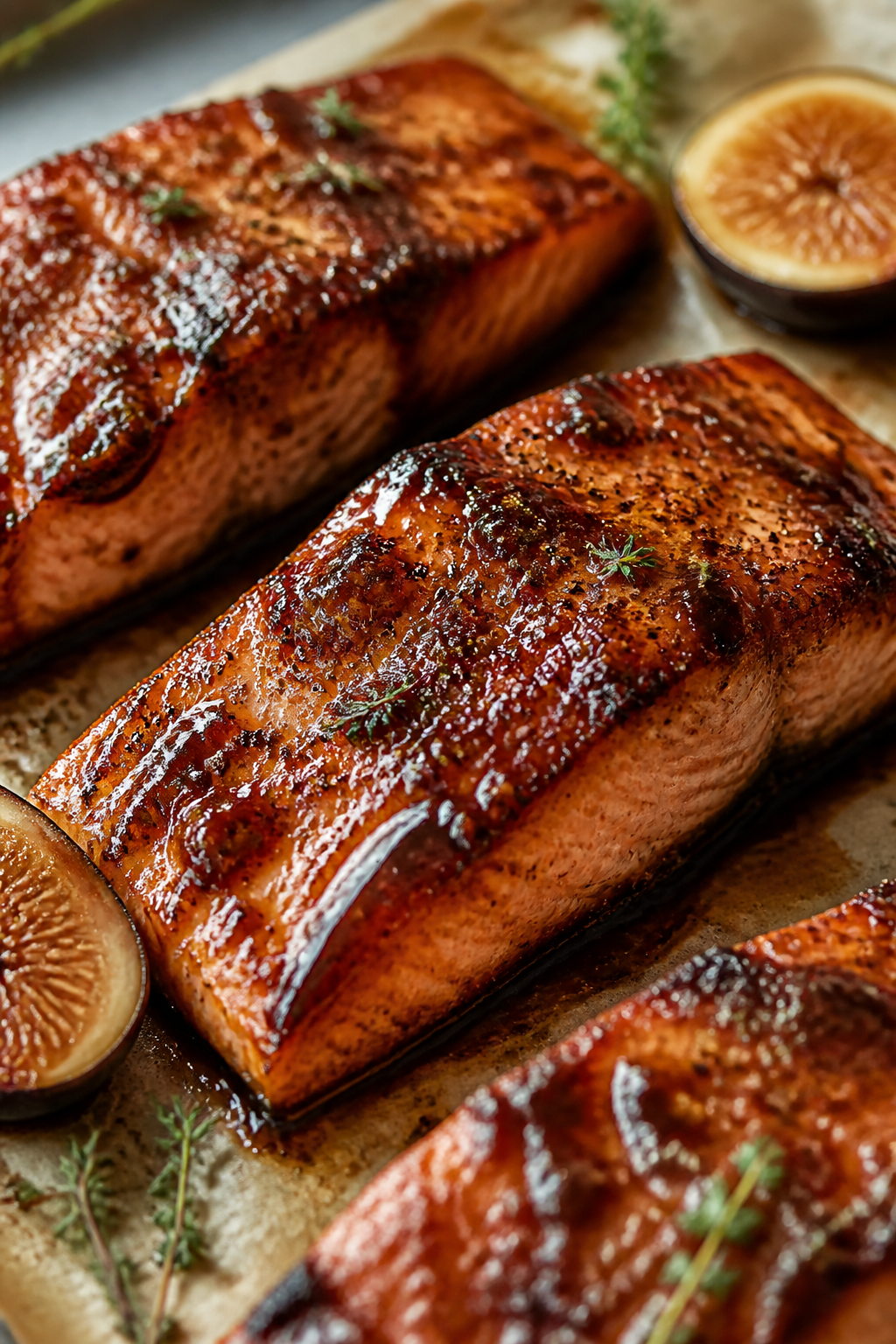
- Balanced flavor: The fig jam brings natural sweetness, while balsamic vinegar adds brightness and depth. Garlic and Dijon round things out so nothing tastes too sugary.
- Fast and simple: You can have this on the table in about 25 minutes, with almost no prep.
The glaze comes together in one bowl.
- Works with fresh or frozen: Fresh salmon is ideal, but thawed frozen fillets work beautifully once patted dry.
- Versatile sides: The glaze plays well with roasted Brussels sprouts, green beans, couscous, or creamy mashed potatoes.
- Make-ahead friendly: Mix the glaze up to 3 days in advance and store it in the fridge. Brush it on right before baking or broiling.
What You’ll Need
- Salmon fillets: 4 individual fillets (about 6 ounces each), skin-on or skinless.
- Fig jam or fig preserves: 1/3 cup, preferably not too chunky.
- Balsamic vinegar: 2 tablespoons. Use a good-quality vinegar for best flavor.
- Dijon mustard: 1 teaspoon for a gentle bite and emulsification.
- Garlic: 1–2 cloves, minced or grated.
- Olive oil: 1 tablespoon to help the glaze coat the fish.
- Salt and black pepper: For seasoning the salmon and glaze.
- Red pepper flakes (optional): A pinch for warmth.
- Lemon: 1, for finishing and serving.
- Fresh herbs (optional): Chopped thyme or parsley for garnish.
How to Make It
- Preheat and prep: Heat the oven to 400°F (200°C).
Line a baking sheet with foil or parchment for easy cleanup. Pat the salmon dry with paper towels.
- Season the salmon: Place the fillets on the sheet, skin-side down if using skin-on. Sprinkle with salt and pepper on top and sides.
- Make the glaze: In a small bowl, whisk together fig jam, balsamic vinegar, Dijon, garlic, olive oil, a pinch of salt, pepper, and red pepper flakes if using.
It should be glossy and spoonable.
- Brush generously: Spoon or brush the glaze over each fillet, coating the tops and sides. Reserve a tablespoon or two for finishing, if you like extra gloss.
- Bake: Cook for 10–12 minutes, depending on thickness. A general rule is about 4–6 minutes per 1/2 inch of thickness.
The salmon should flake easily but still be slightly translucent in the center.
- Optional broil: For a light char and stickier finish, switch the oven to broil for 1–2 minutes at the end. Watch closely to avoid burning the sugars in the glaze.
- Finish with lemon: Squeeze fresh lemon over the salmon right out of the oven. Brush with the reserved glaze, if desired.
Top with chopped herbs.
- Serve: Plate with roasted vegetables, grains, or a crisp salad. Spoon any pan juices over the top.
Storage Instructions
- Refrigerate: Store leftovers in an airtight container for up to 3 days. Let the salmon cool to room temperature before sealing to prevent condensation.
- Reheat gently: Warm at 275°F (135°C) for 10–12 minutes, or microwave at 50% power in short bursts.
Add a squeeze of lemon or a drizzle of olive oil to refresh.
- Freezing: Cooked salmon can be frozen up to 2 months. Wrap tightly, then place in a freezer bag. Thaw overnight in the fridge before reheating.
- Leftover ideas: Flake the salmon over arugula, tuck it into a grain bowl, or make salmon salad with Greek yogurt, lemon, and dill.
Benefits of This Recipe
- Nutrient-dense: Salmon is rich in omega-3s, high-quality protein, and B vitamins.
It’s satisfying without feeling heavy.
- Low effort, big payoff: The glaze tastes complex but uses pantry staples. No marinating or special equipment required.
- Flexible with diet goals: Easy to make gluten-free. The glaze is naturally dairy-free.
- Restaurant flavor at home: The glossy, tangy-sweet finish makes the dish feel elegant and special.
What Not to Do
- Don’t overbake: Dry salmon is the quickest way to ruin this dish.
Pull it when it reaches 125–130°F in the thickest part for moist, tender fillets.
- Don’t skip the salt: Even with a sweet glaze, the fish needs proper seasoning. Salt brings out the savory notes and balances the fig.
- Don’t use old balsamic: Stale or harsh vinegar will make the glaze sharp. Use a fresh, decent-quality bottle.
- Don’t broil unattended: The sugars in the jam can go from caramelized to burnt quickly.
Keep your eyes on it.
- Don’t sauce too early if grilling: If you take this outside to a grill, brush the glaze in the last few minutes to prevent flare-ups.
Recipe Variations
- Sheet pan dinner: Add halved Brussels sprouts or green beans tossed with olive oil, salt, and pepper to the pan. Start the veggies 10 minutes early, then add the salmon.
- Pan-seared and glazed: Sear salmon in a hot skillet with oil, 3–4 minutes per side. Remove fish, simmer the glaze in the pan for 1 minute, then spoon over.
- Maple-fig twist: Stir in 1 tablespoon of maple syrup for extra shine and a deeper caramel note.
- Herb-forward: Add 1 teaspoon fresh thyme leaves or chopped rosemary to the glaze for an earthy layer.
- Spicy version: Mix in 1–2 teaspoons Calabrian chili paste or a dash of hot honey to keep the sweetness in check.
- Citrus swap: Replace part of the balsamic with orange juice and add zest for a brighter profile.
- Grilled: Cook salmon over medium heat on well-oiled grates.
Brush with glaze in the last 3–4 minutes to avoid burning.
FAQ
Can I use dried figs instead of fig jam?
You can, but you’ll need to make a quick compote. Simmer chopped dried figs with a splash of water and balsamic until soft and thick, then blend or mash. Sweeten lightly with honey if needed.
Stop wondering what's for dinner.
Get 7 healthy, family-friendly dinners complete with recipes and simple meal plans delivered straight to your inbox.
What type of salmon is best for this?
Use what you enjoy and can find fresh.
Atlantic salmon is fatty and forgiving, while wild varieties like sockeye or coho are leaner and cook faster. Adjust time and keep an eye on doneness.
Do I need to remove the skin?
No. Skin-on fillets bake nicely and release easily from the pan.
If you prefer skinless, that’s fine too. Either way, oil or line the pan to prevent sticking.
How do I know when the salmon is done?
Look for flesh that flakes with a fork and is just opaque with a slightly rosy center. If you use a thermometer, aim for 125–130°F in the thickest part, then rest a couple of minutes.
What can I substitute for balsamic vinegar?
Use red wine vinegar plus a small drizzle of honey to replace balsamic’s sweetness and tang.
Start with 2 tablespoons vinegar and 1 teaspoon honey, then adjust to taste.
Is this recipe good for meal prep?
Yes. Bake the salmon, cool, and store in portions. Reheat gently and add a fresh squeeze of lemon.
The glaze holds up well and keeps the fish moist.
Can I make it without mustard?
You can skip it, but the Dijon helps emulsify the glaze and adds a subtle savory note. If you’re out, a tiny pinch of ground mustard or even mayo can stand in.
What sides pair best?
Roasted Brussels sprouts, green beans, or asparagus are great. For starch, try couscous, quinoa, or creamy polenta.
A peppery arugula salad balances the sweetness.
Wrapping Up
Fig balsamic salmon is the perfect mix of simple steps and standout flavor. The glaze turns glossy and caramelized, the fish stays tender, and dinner feels just a little more special. Keep the ingredients on hand, and you’ll always have a reliable, company-worthy meal ready in under half an hour.
Once you try it, you might start keeping a jar of fig jam in the pantry just for this recipe.
Printable Recipe Card
Want just the essential recipe details without scrolling through the article? Get our printable recipe card with just the ingredients and instructions.
Loved This Recipe?
If you're looking for more simple, healthy dinners your family will actually eat, grab my FREE 7-Day Easy Dinner Reset. You'll get 7 easy dinner recipes, simple grocery lists, and a done-for-you plan that takes the stress out of mealtime.